9 Spooktacular 3D Prints to Celebrate Halloween
Halloween is the one time of year when your printer can go from making keychains and prototypes… to ...

News and Insights of 3D Printing and Manufacturing
HomeConsumer
Halloween is the one time of year when your printer can go from making keychains and prototypes… to ...
The new, $14K Bianchi Oltre RC hyperbike is the flagship of the Aerovolution collection from leading Italian bicycle brand Bianchi. Among its state-of-the-art features, the bike has one that has now become kind of a must for top-level bikes: the RC 139 Carbon Air 3D printed saddle.
Mass customization, consumer 3D printing, on-demand, local, digital manufacturing. These are no longer just far away goals of 3D printing: for some people, they are already a reality. According to 3dpbm’s newest Polymer AM market report, there were 4.17 million units of entry-level desktop 3D printers installed globally. If we factor in prosumer-level 3D printers – such as those from Ultimaker and Prusa – the total grows to about 4.75. million units. There are those, an increasingly large number of people, that use farms of these 3D printers to build new businesses. That’s certainly the case of Tesla enthusiast Matthew Budraitis and his SnapPlate 3D printed accessories sold on the EveryAmp website.
As Esports continue to grow, custom gaming components and accessories are becoming a major business opportunity for 3D printing service providers. Canadian start-up Formify has developed a personalized gaming mouse designed to enhance gaming performance. The company used MJF 3D printing technology and teamed up with 3D printing experts at Hubs (part of global AM service provider Proto Labs) to bring this idea to life.
Stases is a range of cork stoppers made for luxury spirits that celebrates the essence of the liquids contained within. The cork stoppers were created when WertelOberfell, a design studio based in Berlin and Munich, was tasked by Stratasys to design objects for the company’s J55 PolyJet printer, within the realms of packaging and retail.
Cloud Factory, one of the world’s first companies to use direct metal 3D printing to scalably manufacture fine jewelry, cost-effectively and sustainably, has raised a €2M ($2.1M) seed round, led by Change Ventures, one of the leading early-stage funds in the Baltics.
Filippo Ganna, the 26-year-old cycling champion from Team Ineos, set a new hour speed world record, after covering 56.792 Km of track in 60 minutes at the Grenchen velodrome. The world record holder, Dan Bigham, set the previous record just last August 19th at 55.548 Km. How did Ganna do it? For sure his amazing talent and a lot of work but also thanks to a largely 3D printed Pinarello bike: the BOLIDE F HR 3D.
According to Tetra Pak, almost 200 billion beverage cartons were produced in 2021, and there are an estimated 5 billion buildings in the world. Therefore, it only makes sense to explore turning these cartons into high-value architectural materials, and decreasing humanity’s reliance on virgin materials used for building and furnishing our daily living and working spaces. This is exactly what Dutch interior design brand, Aectual, is doing – using PolyAl (polymers and aluminum from recycled cartons).
Award-winning Austrian Designer and Creative Director of JK3D, Julia Koerner, presented her 3D printed Crystal Lamellas installation at The Gritti Palace, a Luxury Collection Hotel in Venice. The installation formed part of the Italian Glass Weeks within the emblematic setting of the Explorer’s Library in one of the most historic and iconic spaces overlooking the Grand Canal.
Signify, previously known as Philips Lighting, and Philips MyCreation have used recycled fishing net filament, made by Fishy Filaments, in Cornwall, UK, to 3D print lamps – known as the Philips MyCreation Dropli Fishnet Lamps.
Print4Taste first debuted their mycusini 3D chocolate printer on Kickstarter in 2019. A few months ago, the company released the mycusini 2.0 – an upgraded version of the original. Prior to the Kickstarter campaign, the mycusini 3D chocolate printer was completely unknown, but is now a feature in many private kitchens around Europe.
Visitors to the LEGO House’s adult fan event were gifted a LEGO 3D printed duck, which was an ongoing AFOL (Adult Fan Of LEGO) project at the LEGO House development studio. Ronen Hadar, LEGO’s Senior Director Additive Design and Manufacturing proudly shared the project on his LinkedIn feed adding that “the team has been working hard to develop, approve and manufacture this super cool element, in collaboration with our talented designers. This is an important milestone for the team. We are looking forward to share more news with you in the coming future.”
Formula One team McLaren Racing is responding to the FIA’s tighter vehicle production time and budget limits by 3D printing tens of thousands of parts with the large Neo 800 stereolithography 3D printers from Stratasys.
Cooksongold is a jewelry manufacturer that has been around for more than a century and is referred to as a “one-stop shop for anything jewelry”. Therefore, it should come as no surprise that it is one of the biggest jewelry manufacturers—and one of the most advanced companies in direct precious metal 3D printing—in the UK and one of the leading companies globally.
Whether you like firearms or not, you might agree that they can serve the purpose of maintaining order when used in the proper way by the proper people. In order to be effective, and in the right hands, firearms need to first and foremost be reliable. If an “operator” has to press the trigger, he or she needs to be sure that the gun will fire. In that sense, any homemade gun, whether it involves 3D printing or not, cannot offer this guarantee, making it de facto useless for any legitimate purpose. Here opinions differ greatly. But even in the case of guns that are 3D printed for fun, or for the pure thrill of going against gun control regulations, where such regulations exist, how functional are 3D printed guns that are entirely or partially made of plastics?
Adidas has revealed the new 4DFWD, its most advanced running shoe. At the forefront of innovation, the shoe is the first to overcome a barrier that has long held runners back from reaching their full potential. Designed to move runners forward, thanks to the shoe’s industry-first bowtie-shaped lattice midsole transforming vertical pressure into a horizontal force – providing runners with a non-stop, smooth forward transition.
A team of researchers at Texas A&M University has developed a new class of biomaterial inks that mimic native characteristics of highly conductive human tissue, much like skin, which are essential for the ink to be used in 3D printing. This biomaterial ink leverages a new class of 2D nanomaterials known as molybdenum disulfide (MoS2). The thin-layered structure of MoS2 contains defect centers to make it chemically active and, combined with modified gelatin to obtain a flexible hydrogel, is comparable to the structure of Jell-O.
Minkeshi is the toy design and creation project of a product designer father, and his two children, based in Kobe, Japan. While the was staying at home, he taught himself how to make toy figures using 3D printing. The father works as a writer, and also creates these original figures based on his children’s unique sketches.
Anycubic, a global leading consumer 3D printing brand, and JBD, a leading manufacturer of MicroLED displays, are collaborating to develop the world’s first consumer portable MicroLED 3D printer. The new system, currently known by the name J1 (it is not yet clear if this will be the final name), is the first collaboration between the two companies to explore the application and innovation of 3D printing technology.
Jewelry brand Eternha has chosen CRP Technology and its Windform GT, glass fiber reinforced composite material, commonly used to manufacture high resistance and advanced applications, to create some of the elements of their Men’s collection bracelets. This is an absolute novelty in the jewelry sector
For over 20 years, Moto GP racing Champion Valentino Rossi amazed and entertained the world of motorcycle racing with his exploits. A giant 3D printed helmet, a replica of his trademark helmet, has now been unveiled in the city of Pesaro, to celebrate the many achievements of his racing career. The special event serves to promote Pesaro as Italy’s Culture Capital in 2024.
Magnum ice cream has partnered with luxury Dutch fashion designer, Iris Van Herpen – one of the industry’s most talented and forward-thinking creatives – to design an Haute Couture vegan 3D printed dress inspired by the iconic Magnum Vegan Ice Cream.
Is it possible to almost entirely 3D print a functioning firearm? It may be. But only if your name is Beretta and you have been pioneering manufacturing processes in the firearms industry for five centuries. Beretta, the oldest industrial dynasty in the world, recorded its first transaction on October 3, 1526, when master gun-barrel maker Bartolomeo Beretta sold 185 arquebus barrels to the Republic of Venice for 296 ducats.
ASICS has launched its new ACTIBREEZE 3D SANDAL – a 3D printed sandal specifically designed to help the body and mind of a recovering athlete in the ‘After Performance’ phase. The ACTIBREEZE 3D SANDAL features a novel geometric structure, made possible through parametric design and advanced 3D printing technology, to deliver outstanding comfort and protection for the wearer.
Mutiny Shaving, a Welsh startup that specializes on reusable razors, introduced the first, completely 3D printed, stainless steel reusable razor. The stainless steel R1 is the only fully manufactured razor in the UK, created with 100% transparency & 0% waste pollution. It was additively created from sustainable materials, carbon neutral, with no manufacturing pollution. Mutiny is pushing heavily to break barriers, push the envelope and create the coolest razors and become the most eco-friendly shaving company on the planet.
What happens if you combine a thousand-year-old castle overlooking the sea in Liguria and a startup that produces aerospace parts in additive technology with anthropomorphic robotic arms? You may be in for one of the most unforgettable experiences ever at the 3D printed suite of the Capitolare Tower, in Porto Venere, Liguria, Italy. 3dpbm will be visiting the Tower for its grand opening next week and we’ll bring you more exclusive images.
Ahead of the launch of Valve‘s new handheld PC, the Steam Deck, the publisher has released CAD f ...
Alfa Romeo F1 Team ORLEN unveiled a new partnership with the Camozzi Group, the global leader in the production of components and systems for high-tech industrial automation. The partnership, both a technological and sporting venture involving Sauber Technologies, is based on the two companies’ commitment to delivering excellence through cooperation and shared synergies.
Materialise, a global leader in 3D printing solutions, paves the way toward a sustainable eyewear industry by expanding its range of materials to include Polyamide 11 (PA11). The 100% bio-based polymer is made from sustainably farmed castor beans and offers excellent properties for eyewear. By addressing overproduction, the fashion industry’s biggest environmental challenge, 3D printing helps brands meet the expectations of environmentally conscious eyewear consumers.
Spanish start-up ATHOS, is looking to change the sports footwear industry with a first-of-its-kind 3D printed climbing shoe, made to fit the feet and needs of each climber using HP Multi Jet Fusion 3D printing.
Mainly as a result of the effects of global warming in the Northern Hemisphere and Polar Regions, the market for gardening additive manufacturing, and more generally for additive manufacturing of gardening products, is now expected to reach $5 billion yearly by 2025, just three years from now. These are the findings of the latest 3dpbm Research report, titled “Gardening Additive Manufacturing, the next major opportunity”, that was released today, April 1st, on the official start of 3D Printing Media Network’s AM Focus Gardening.
The Boxing Hand Grenade, the creation of a UK-based personal trainer and martial arts instructor, John Docherty, was developed after sustaining a cumulative injury to his hand and wrist. The handheld device has been ergonomically designed to fit the contours of the hand and to be worn under traditional boxing hand wraps inside boxing gloves.
Cults is a 3D model marketplace that connects designers to people wanting to make real-world objects through 3D printing. As not everyone has an artistic soul, or the ability to use CAO 3D software, Cults highlights the work of designers who wish to make 3D printing accessible to all. In addition to this, Cults is a social network that brings together fans of the 3D printer world – enabling them to interact with each other.
Milan Design Week takes place during the Salone del Mobile, the largest furniture fair in the world. It has become a place to see some of the latest advances in product design and 3D printing has been introduced as a development and a production process for some time. In fact, the 3dpbm team has been organizing events focusing on 3D printing during Milan Design Week since 2014. Now the use of 3D printing technology has become almost omnipresent, so much so that some 3D printed products are no longer presented as such. So it’s no longer a matter of finding the 3D printed products among traditionally manufactured ones, as much as finding some particularly interesting ones.
Campfire Audio, a high-quality, hand-crafted, earphone manufacturer has released its new range of Custom In-Ear Monitors, consisting of Equinox, Solstice, and Supermoon. Each pair is handmade, designed, and assembled in Portland, Oregon, USA. As close attention to detail is critical to delivering a superior musical experience, these in-ear monitors feature an acoustically optimized, 3D printed, interior model – as seen in Campfire Audio’s other in-ear monitors – that allows each driver to deliver the very best sound quality. When heard together, the drivers offer a seamless musical experience as a result of the process.
Desktop Metal has qualified 925 sterling silver for 3D printing on its Production System platform, including both the P-1 and P-50 – offering jewelry and luxury goods manufacturers one of the fastest ways to directly 3D print high-quality jewelry and accessories such as watches, belt buckles, decorative hardware for handbags, etc.
In 2014 Dr. James Novak 3D printed the world’s first full-size bicycle frame as a single piece. It went on to win the Dick Aubin Distinguished Paper award at RAPID 2015 and was exhibited around the world over several years, including the Red Dot Design Museum (Essen, Germany) and BOZAR Centre for Fine Arts (Brussels, Germany) with Materialise. The bicycle is now available as a NFT (non-fungible token), another world-first
The Phantom of the Opera is a musical based on the 1910 French novel of the same name by Gaston Leroux. First performed in 1986, it has become the longest-running show in musical history. Back in March 2022, the show was performed at the Handa Opera on Sydney Harbour, Australia. Only this time, with a slightly more contemporary touch – the Phantom of the Opera masks were 3D printed.
Remember the ‘SMART PASTA – 3D Shapes with a Purpose’ contest orchestrated by Barilla in 2015? The winners of this contest produced some really interestingly-designed pasta forms – for example, the ‘Water Lilly’, designed by Cornelius Comanns. Now, after several years of research & development, the first 15 designs of 3D printed pasta are commercially available on the BluRhapsody website’s shop and are already being used by chefs – especially in Italy to create high end custom dishes.
GRDXKN (pronounced GRIDSKIN) is a 4D printing solution offered by Bastian Müller, based in Munich, Germany. It is a functional textile printing technology that is lightweight and highly flexible. The integrated, volume-forming material is test-proven to be abrasion-resistant and shock-absorbent – creating a novel interplay between graphics and structure and a balance between design and function.
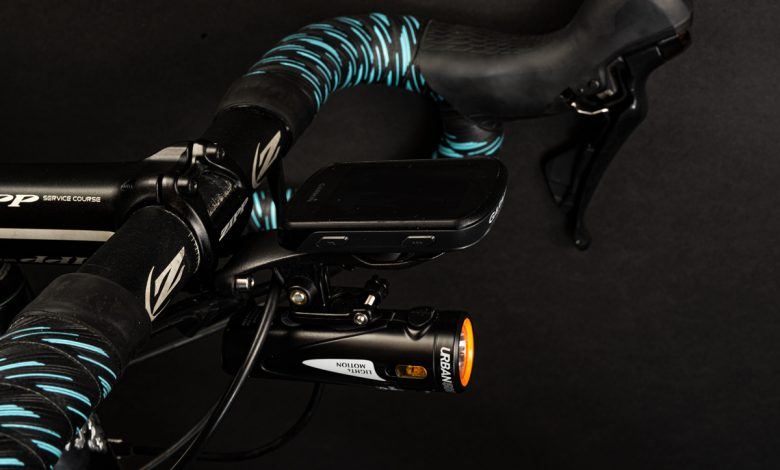
SILCA is further expanding its line of titanium 3D printed products with the Chisela – a sleek computer mount for Wahoo and Garmin bike computers. It leverages aerodynamic development, 3D printing, and state-of-the-art ceramic coating for the cleanest airflow possible, and is still lightweight and strong.
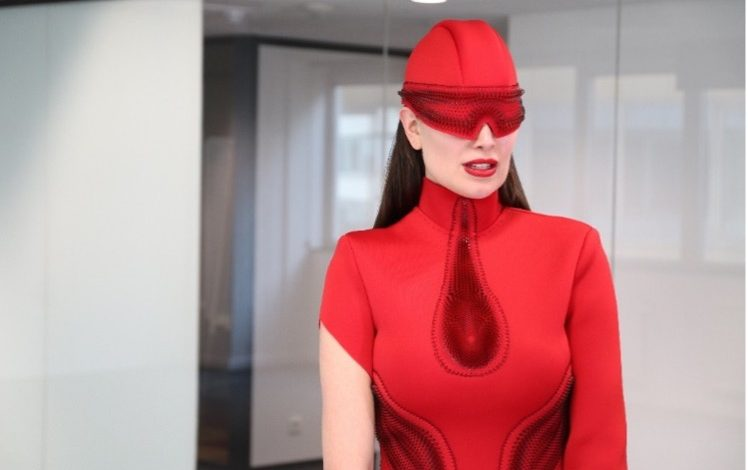
Stratasys Ltd. (NASDAQ: SSYS), a leader in polymer 3D printing solutions, is launching the first 3D printer designed specifically to 3D print on fabric, in a direct-to-textile mode. The Stratasys J850 TechStyle 3D printer, the company’s newest PolyJet printer, is being launched during an exclusive event at Milan Design Week’s Fuorisalone to meet the unique needs of design and fashion manufacturers, which include 3D printing for high-end, premium textiles and clothing, bags and accessories and footwear.
Several years ago, Kirby Morgan began researching additive-manufacturing technology to advance its dive helmets with components that are light, durable and comfortable. As part of this process, Pete Ryan, engineer at Kirby Morgan, partnered with Diversified Plastics, Inc. (DPI), to manufacture parts for one of their newest dive helmet models via the company’s Acceleration Station.
Bicycle accessories manufacturer fi’zi:k has introduced Argo Adaptive, an all-new 3D printed saddle that will be presented exclusively at the Sea Otter Classic between 07-10 April 2022. Utilizing Carbon DLS 3D printed “digital-padding”, the new saddle expands the Argo family and joins the best-selling Antares Versus Evo within the fi’zi:k Adaptive range.
Elli srl is an Italian startup developing a new stylistic language in the field of furniture design, with a focus on product innovation and sustainability. Post Elli’s release of their ‘Soho’ and ‘Bryant’ pieces, and pre the release of their latest ‘Zero’ modular systems, we had the opportunity to speak with their founder, Alessio Elli, and find out more about how he has integrated AM into his world of furniture design and his ‘New Made in Italy’ philosophy.
Saving an ancient tower dating back to 1161 from decadence. This is where the project that led to the construction of the Capitolare Suite Tower begins: an exclusive luxury location created by Andrea Borlenghi, a 29-year-old entrepreneur with career in the world of AM startups. Now you can book to spend a magical night there, across the ancient past and the future of manufacturing.
HP Inc. and Legor Group SPA have entered a strategic collaboration for the development of precious metal materials for HP’s Metal Jet system. Legor, a leader in metals science and production of best-in-class alloys, powders, and plating solutions, is the first to produce specialty precious metal materials for the jewelry and fashion accessories markets designed to work with HP’s 3D metal binder jet platform. Legor emerged as a leading provider of precious metal powders for metal PBF processes, however, the use of direct precious metal AM in PBF is catching on very slowly. Because it offers more geometric freedom and requires no supports, binder jetting could finally open up new opportunities for direct 3D printing of precious metal jewelry.
3D Coffee is a project financed by the European Union funds as part of the First Open Call of the Digital Innovation Hub World, which sees the innovative startup Additive Appliances and the Kilometro Rosso innovation center as protagonists, with the additive technologies lab Lisa Tech. To prepare quality coffee, pressure and temperature control are essential. The “thermo-mechanical” or traditional machines, such as the Moka, the siphon, or the French press, do not directly control these variables and have well-known process limits; however, they are eco-friendly and have a greatly reduced environmental impact, more than 30%, compared to electric machines.
Plastic, and its use/abuse in the global community, is among the most pressing issues of the last decade, where the high degree of competitiveness and performance of the material is opposed to the environmental and health issues. Interestingly, many plastics used in 3D printing are not used solely to make parts: advanced thermoplastics such as nylon (also known as polyamide or PA) and polyester (PET) are also used to make synthetic textile fibers. Even considering that recycling any type of plastic is a lot more difficult than it appears, we’ve been wondering why no one had yet considered recycling textiles such as post-consumer nylon into filaments for 3D printing. Now an initiative by Roboze and pielleitalia aims to do just that.
Next March 8th, German high-end audio products brand Sennheiser is launching one of the most interesting 3D printed consumer products seen yet: the new Sennheiser IE 600. These 3D printed earphones will be integrating a housing serially additively manufactured on a Trumpf laser PBF system, using an amorphous zirconium from Heraeus, and then finished both automatically and by hand to achieve the perfect housing for the earphones’ transducer.
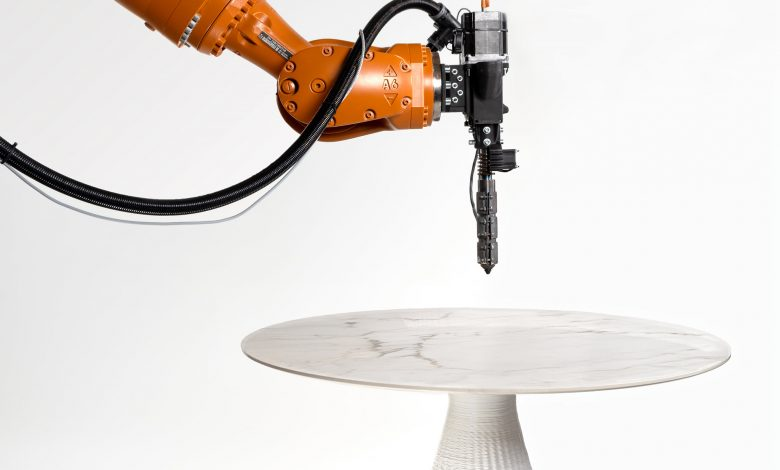
KOHLER, an American manufacturing company, best known for its plumbing products, has collaborated with Daniel Arsham, a contemporary, New York-based artist, to create Rock01 – a 3D printed sink created using paste-based pneumatic material extrusion. Extrusion-based additive manufacturing (EAM), often used for the rapid production of metals and ceramics, works by extruding the metal or ceramic material in solid powder form and mixing the powder with an expendable viscous fluid. In this case, pneumatic extrusion nozzles were used.
Luxexcel, the technology leader for 3D printed prescription lenses and Lumus, the pioneering innovator of reflective waveguide displays for Augmented Reality (AR), have co-developed a demonstrator of an Augmented Reality prescription lens solution that enables OEMs to address users’ prescription requirements in their smart eyewear products and make the lens solution thin, durable, and to be worn like fashion eyewear lenses.
Fitchwork is a collaborative architecture, fashion, and product design practice founded by Travis Fitch. Driven by an obsession with pattern, Travis combines geometric research with novel design and fabrication tools to create radical-yet-rational forms.
After the recent project from VAUDE, Osprey, a leader in top-quality, high-performance packs presented Osprey UNLTD, an industry-changing pack series that harnesses rapidly emerging technology and materials such as Carbon DLS, previously untapped by the backpack industry. Production was once again provided by OECHSLER, an unrivaled specialist in this field.
We’ve seen guitars 3D printed in plastics and then 3D printed in metal (many of these were done by Olaf Diegel, Professor of Additive Manufacturing at the University of Auckland). But we had yet to see a working guitar 3D printed in real wood. For that, we needed Forust technology.
A robotic, dinosaur ghost, that shoots fire out of her 3D printed jaw. That’s Ghost Raptor for the 2022 season of BattleBots but it could be pretty much any maker’s dream bot. Team Raptor (Chuck Pitzer, Eric Diehr, Sabri Sansoy) teamed up with Designer Anouk Wipprecht and Xo Wang for the 2021 BattleBots competition. Team Raptor has been participating in robotic fighting tournaments since 1999 and this year, to add even more style and badassery to the terrordactyl (cit.) bot, the team worked with Wipprecht and metal DED 3D printing company Formalloy to create a metal 3D printed jaw that opens to spit fire at its enemies. Thanks to Anouk’s participation in this season, we had the opportunity to sit down with her and Team Raptor’s Team Captain Chuck Pitzer to learn more about if and how 3D printing is making a difference.
In collaboration with a leading global crystals manufacturer, Dutch fashion tech designer Anouk Wipprecht just released her new 3D printed HeartBeatDress – a dress that records and broadcasts something very ‘intimate’ to you as a provocation to be true to your feelings. Considering that Wipprecht’s 3D printed dress creations are often so advanced that they enjoy popularity for several years after the initial launch, each new release is an event for both the 3D printing and the fashion tech industries.
On Tuesday, December 14, 2021, the German University of Technology in Oman, GUtech, completed 3D printing the walls of what so far is the largest 3D printed building in made with real concrete. The importance of the event was marked by the presence of His Excellency Sultan Al-Habsi, Minister of Finance of Oman together with more than 200 guests including several ministers and VIPs of Oman, who attended the event in Muscat, the capital of Oman.
Furniture and affordable design products giant IKEA has been flirting with 3D printing for some time, with prototypes and experimental projects. Now, under the leadership of Olaf Szukałowicz, the furniture giant introduced FLAMTRÄD, the first commercial line of on-demand, 3D printed decorative items, albeit limited to Germany (for now).
Swiss company Sintratec has developed particular know-how on SLS 3D printing for footwear applications. 3D printing has become a great way to bring some of the most fascinating shoe designs to life – in ways that would not be possible with conventional methods. Dozens of show designers are now turning to 3D printing to bring their creations to life, especially in light of the fact that 3D printing can be used in the footwear production workflow and even for final footwear parts such as midsoles, insoles and uppers. If you have a unique idea for footwear but no access to industrial 3D printers, the Sintratec Shoe Design Contest may be the ideal opportunity for you.
After extensive research on 3D printed footwear and 3D printed footwear tooling on Stratasys Origin systems, ECCO is now ready to offer 3D printed tooling for product development and commercial samples to the wider footwear market.
The upcoming Apple TV series Severance, which deals with a high-tech way to achieve a work-life balance, features a room with hundreds of Stratasys F123 3D printers.
German design company DQBD is leveraging the Stratasys H350 3D printer to produce personalized cycling saddles that offer a higher level of comfort and performance efficiency compared to regular versions. DQBD is additively manufacturing several of the saddle’s load-bearing parts at scale, saving thousands of euros in costs and cutting lead times from months to just several days compared to traditional molding methods.
The Thalassic Masks project focuses on re-thinking the protective mask, transforming a medical product, born in a state of emergency, into a design statement expressing contemporary identities. The latest creation by designer Filippo Nassetti uses PolyJet technology to create a series of wearable masks that define and represent the times we are living in.
And that’s why you really should never say never in 3D printing. When Sarco was introduced a couple of years ago as a 3D printed assisted suicide pod to simplify euthanasia we wrote that off as a publicity—or at most an artistic—stunt (so much so that we did not even cover the story). But we should not have written it off. Now the Sarco pod has been OK’d by the Swiss authorities (one of the first nations to legalize euthanasia).
Over three billion people are expected to need affordable housing by 2030. This issue is most acute in Africa, with countries like Kenya already facing an estimated shortage of two million houses. With 3D printing, constructions giant Holcim wants to be part of the solution via the joint venture 14Trees.
The Mission R is the latest vision from Porsche. With this study of a fully electric GT racing car, the pioneer for sustainable mobility shows what customer motorsport could look like in the future. And the 3D printed lattice seats ensure maximum comfort.
Materialise released new research which shows UK hospitality and retail sectors are not just suffering from finding staff, but their workers are suffering from physical pain. The large amounts of time staff spend on their feet is impacting their quality of work and mental wellbeing, with nearly one in five, 19%, having considered their future in the sector to avoid on-the-job pain.
Watches and plastic, two words not commonly seen in the same sentence, however Kairod, a small Frenc ...
If you haven’t heard about it by now, Squid Game is the most popular show ever on Netflix. ...
Hidden away a few hundred meters from Acireale’s Duomo, in this small town near Catania, in Sicily, a new ice cream and cocktail bar just opened, offering some of the most creative hand-made ice cream flavors that you can imagine. From Campari grapefruit to ricotta and black vanilla (just to start), the Riso Paradiso bar wants to deliver a unique sensory experience leveraging Sicily’s unique tradition in ice-cream making. These innovative flavors, however, are not the only reason why Riso Paradiso stands out. What makes the bar truly unique and different from any other ice cream parlor anywhere in the world is that just about everything in its interior and exterior decor is 3D printed, making it the first almost entirely 3D printed ice-cream bar.
Built as a single unit by composite PBF experts CRP Technology, the structural part of the Pleko spike shoes features a 3D printed outsole, midsole, pins and ribbing. The result is a functional prototype, flexible and resistant to deformation, which is innovative both in terms of customization and for the technologies and material used: carbon fiber-reinforced Windform SP composites.
Antwerp Fashion’s Noga Karpel is an Israeli fashion designer who focuses her work on femininity, the female body, feminist art, and her own journey in life as a female artist. Inspired by the work of Louise Bourgeouis, a late French-American artist who explored the concept of feminist art, Noga’s latest collection revolves around needlework, a craft that connects women over history as it is passed down from one woman to another over generations.
During Dutch Design Week 2021, Aectual is launching a collection of 3D printed room dividers and office partitions designed by House of DUS and through collaboration between Roos Meeder and Michiel Wijnen. The exhibition is located at Strijp R in Eindhoven. On Sunday, October 24th, the winner of the ‘Aectual Screen Design competition 2021’ will be announced during a celebratory closing event.
Stratasys in collaboration with the design team at Paisley Park in Chanhassen has created a custom set of 3D printed display pieces to showcase Prince’s expansive shoe collection in a new Paisley Park exhibit, ‘The Beautiful Collection: Prince’s Custom Shoes. Paisley Park designers and museum curators worked with Stratasys to bring their designs to life by pushing the limits of what’s possible with 3D printing. The ‘Beautiful Collection’ highlights approximately 300 pairs of shoes worn by Prince throughout his career. The Paisley Park team has thoughtfully displayed the shoes in a way that highlights Prince’s impact on fashion, performance, and popular culture.
Even the most organized gardener will have misplaced a few of their tools or left a couple of hoses ...
Reddit user Brandon Withrow designed and 3D printed a miniature replica of the highly recognizable purple Simpsons TV set. The best part is that the TV actually works and runs 11 seasons of the much-loved cartoon TV series stored on a 32 GB card.
Dimensional Innovations, the Kansas-based company responsible for 3D printing the 93-foot-tall Al Davis Memorial Torch for the new Allegiant Stadium in Nevada (home of the Las Vegas Raiders), has been put to work again, this time delivering a series of large-scale 3D printed benches for the IDS Center in Minneapolis. The organically shaped 3D printed furniture complements a new design in the building’s popular Crystal Court atrium.
Sculptur, a Swedish company specialized in large-scale additive manufacturing and circular transition showed they have just 3D printed 50 Reform lounge chairs that are now ready to be shipped to customers around the world. The company highlighted that 3D printed furniture, intended as final products and not just prototypes, is now a reality.
A 3D printed rudder blade suspension has helped propel the Australian sailing team to victory at the ...
A skeletal floor for the ESA-supported lunar habitat design was created by leading architects Skidmore, Owings and Merrill and is currently on show at this year’s Venice Biennale. This prototype lunar floor design section was 3D printed in stainless steel by Dutch company MX3D, known for creating a metal 3D printed bridge in Amsterdam using internally developed large format, robotic WAAM technology
French company AddUp, a metal AM hardware manufacturer and service provider, joined forces with KIF Parechoc, one of the flagship companies in Swiss precision watchmaking subcontracting.
Since 2016, Bastion Cycles as been a pioneer in applying 3D printing to custom bicycle production (with internal Renishaw metal systems). The Australian company just unveiled the latest development at the Handmade Bicycle Show Australia (HBSA) in Melbourne: a fully integrated 3D printed bicycle cockpit system incorporating an internally routed fork and one-piece bar-stem made entirely in-house at their facility in Fairfield, Australia.
Swedish company Celwise AB has developed a method of using specially designed mixes of wood pulp to create water-resistant, plastic-like products using ExOne‘s unique porous metal tooling.
SILCA a bicycle parts manufacturer that was founded in 1917, introduced MENSOLA, as “the world’s smartest computer mount, designed by the wind and [additively] manufactured in 6Al/4V Titanium by lasers”. Each MENSOLA mount is designed for specific stem face-plate geometry, ensuring minimum weight and maximum strength and improved aerodynamics over the previous computer mount solutions.
From the ice to the roads, Californian startup KAV has expanded its range of protective gear today with the launch of a 3D printed bike helmet. The new product follows the company’s original release last year: a custom 3D printed helmet for ice hockey.
Tailor-made orthopedic footwear typically takes several weeks to manufacture – particularly because traditional shoe lasts still need to be made from wood, which is a fairly time-consuming process. PROTIQ demonstrated how this can be done faster: with the help of additive manufacturing. Custom shoe lasts can now be virtually printed overnight and are available on the production bench within a few days. This offer is completed by a free online shoe last configurator that drastically simplifies the design of 3D data and seamlessly integrates it into the ordering process. The web application is built on the parameter software system from trinckle.
Dutch company Aectual, specialized in the creation of 3D printed architectural and interior desi ...
Albéa has set a new milestone in the development of 3D cosmetics packaging, two years after first including 3D printing technology in its services through a business partnership with start-up Erpro 3D Factory (see image above). The company is now developing applications leveraging industry-leading HP Multi Jet Fusion 3D printing technology combined with the cosmetics production know-how of Erpro. As a result, the first generation of cosmetic parts, designed and produced to take advantage of the advanced capabilities of HP’s platform, are in the latest phases of development. Albéa will launch the first products very soon.
Early last year the Swiss brand NOW 3D printed by SLS a set of generatively designed bindings that were put through a simulated testing environment (and passed). A new collaboration between Stratasys and Slicelab + Fequalsf (Aaron Porterfield), just produced a new set of 3D printed snowboard bindings that were produced using the Stratasys Origin One high-speed photopolymerization 3D printer using the Loctite 3172 material. The printed bindings were functionally tested with a weekend of boarding at Breckenridge, Colorado and performed perfectly.
Last fall, Canadian hockey equipment designer, manufacturer, and marketer CCM introduced its ‘SuperT ...
3dpbm, via the company’s CEO Davide Sher, will be a judge for Anycubic‘s upcoming Garden Printing Contest. Everyone can participate in the contest by creating and 3D printing a garden model that can help to inspire and decorate a living area.
Hush Puppies, the iconic Wolverine Worldwide brand, will commercialize Voxel8‘s digital manufacturing technology in unique midsoles that provide enhanced comfort, support and longevity.
Voxel8, a Boston-area multi-material digital manufacturing company, and Eddy Ricami, a leading Italian manufacturer to the fashion industry, entered an exclusive arrangement for Eddy Ricami to produce and sell high-fashion accessories using Voxel8 technology and ActiveLab system.
Working with artist Ricardo Ragazzoni, MX3D began working on the Tresse project in 2020. This fully 3D printed stainless steel sculpture has now been placed in a private garden in the South of France.
Presented globally last week, Syng‘s Cell Alpha trisonic speaker system is a revolution in home audio. It features 3D printed parts that enable to be the first all-encompassing audio product that renders sound for the wide spectrum of the content we consume today – from music to TV to anything else.
RIZE, a company dedicated to bringing industrial 3D printing to all users, has partnered with Little You so that kids can turn their wildest imaginings into functional 3D anime toys made using RIZE’s technology and materials.
The 3D printed gradient furniture collection is Philipp Aduatz’s latest project in the field of 3D concrete printing, in collaboration with Austrian manufacturer Incremental3D.
3D printing as a hobby is expensive. As a result, most designers try to sell their creations to family and friends. However, it starts to get tricky when orders start rolling in and exceed what a singular person can do with their printer. To get around this, Youtuber Devin Montes turned to the Angled platform to produce his Tippi Tree game.
Superstrata, the company founded by Arevo Labs to commercialize composite 3D printed bikes and e-bikes, has shipped the first Superstrata bike. The bike marks a significant milestone as it represents one of the very first continuous fiber-reinforced composites 3D printed consumer products ever to hit the market. As such it was highlighted by 3dpbm as one of the best 3D printed products of 2020.
In spite of all the doubts about pricing and workflow, in spite of tough competition from Asian footwear manufacturers, adidas’ idea to bet on Carbon’s technology for footwear midsoles continues to pay off. Pricepoints for some models have dropped below $150 and new models keep coming out, such as the multi-colored 4D Fusio. And with many new technologies coming into this segment, 3D printed footwear is most definitely here to stay.
Since its founding in 2017, Dutch company Aectual has taken the tenets of 3D printing—including customization, design freedom and sustainability—to heart, applying them to the areas of architecture and interior design. Many of our readers will be familiar with the company: in 2018, it gained notice for 3D printing a section of terrazzo-style flooring in Amsterdam’s Schiphol Airport. Just a few months ago, it also unveiled a collection of 3D printed fully-circular furniture made from plant-based materials.
As affordable 3D printers, especially high-resolution resin LED systems, continue to gain adoption within fan communities around the world, entirely new business models are starting to take shape, with the support of modern fund-raising tools, Patreon in particular. Graphic studios are creating collectible action figures, table-top game figurines, cosplay accessories, busts, movie memorabilia, and more for users to buy, download, and 3D print at home as part of ongoing 3D model subscriptions.
Last month Stratasys bought Origin and Desktop Metal bought EnvisionTEC. Both acquisitions were not casual. They were strategic decisions made by companies that, for different reasons, had some cash to bet on the next 3D printing growth area and decided to go for high-speed photopolymerization technology: EnvisionTEC’s founder Al Siblani invented and patented the technology for high-speed, continuous DLP but never thought much of its potential; Origin’s Programmable Photopolymerization (P³) is one of the technologies that went after the potential of these processes for digital mass production through durable photopolymerizable materials.
UAE-based Proto21, one of the most prolific 3D printing service providers in the Middle East and possibly worldwide, just 3D printed 1,008 pieces to form the 32-meter long modular facade of the new adidas flagship store in Dubai Mall.
Ok, it’s gossip. But Oprah’s interview with Meghan Markle and Prince Harry was one of the events that will go down in interview history. And Oprah thought that 3D printed glasses looked good enough to wear for the occasion. The US queen of talk shows wore a pair of glasses from Götti Switzerland in her interview with Meghan and Harry. The glasses are 3D printed using SLS technology and finished using DyeMansion‘s print2product workflow.
Atol les Opticiens, a French optical company, is additively manufacturing glasses with HP’s multi jet fusion technology to provide cost-effective options for dyslexic children. The Lexilens smart glasses bring two trends together: the development of connected solutions designed to improve the lives of people with learning difficulties; and technical advances in additive manufacturing.
Designed by Khawarizm Studio for the 3D Printed Luminaire Competition, the Lou’Lou’ lamp is the winning proposal submitted by Huda Lighting and Immensa Labs, revisiting the relationship between cultural heritage and nature in an innovative 3D printed lighting fixture.
3DRap is a startup based in a small town on the hills of Irpinia, in Southern Italy, in the medieval town of Capocastello. As the name implies the company was founded around the idea of RepRap 3D printing: they created an open-source system, leveraged the Arduino platform for a number of projects and built a digital production facility. But the sweet spot where their open-source 3D printers began to truly make business sense is sim racing: 3DRap is now a manufacturer of custom 3D printed mods for sim racing peripherals, hitching a ride on one of today’s key technology trends to reach people all over the world.
Atol les Opticiens, a French optical company, is additively manufacturing glasses with HP’s multi jet fusion technology to provide cost-effective options for dyslexic children. The Lexilens smart glasses bring two trends together: the development of connected solutions designed to improve the lives of people with learning difficulties; and technical advances in additive manufacturing.
Luxexcel, the undisputed technology leader in 3D printed prescription lenses, and WaveOptics, a leading designer and manufacturer of waveguides and light engines, have collaborated to create an innovative module integrating three of the vital elements required for developing consumer Augmented Reality smartglasses: a 3D printed prescription lens, a waveguide, and a projector.
Shapeways reached milestones in scaling its manufacturing solutions to meet diverse customer requirements worldwide. The company has produced more than 20 million parts to date using 10 different printing technologies and 90 different materials and finishes.
Last night, as I watched the latest episode of RuPaul’s Drag Race UK—the British spinoff of the long-running American reality TV competition that seeks to crown the next drag superstar—I was surprised and excited to hear the words 3D printing pop up.
Netherlands-based Luxexcel is a pioneer of 3D printed lenses. The company’s proprietary technology—first developed over a decade ago—stands on a strong foundation of optic, material, process and, of course, 3D printing expertise. Today, Luxexcel remains the only company to have developed a 3D printing process for creating prescription lenses.
Audio specialist Sennheiser’s AMBEO division is developing a production method that enables customers to affordably and easily customize their earphones to fit their unique ears. The custom-fit, 3D printed AMBEO ear tip prototypes in development further refine an immersive sound experience.
Google’s Advanced Technology and Project (ATAP) division has created Jacquard, a wearable platform that brings the digital world into everyday experiences. The Jacquard team used Stratasys‘ PolyJet technology to create a product that fits seamlessly into its user’s lifestyle.
This is how I designed 3d printed frames around lenses that can be made by any optometrist! I ...
3D printing is now changing how glasses are designed and manufactured. Many eyewear ma ...
In 1827, The Book of English Trades summarized the cobbler’s profession: “There are few trades more useful than that of a shoe-maker, and, perhaps, not many that are more profitable, when it is carried on to a considerable extent.” We have largely forgotten this profession as, two hundred years on, the cobbler has been replaced by mass production. Additive manufacturing, however, promises a return in some ways to the personalized shoe of earlier extraction. Such a return, as with many things relating to AM, makes mechanisms and their operators artisans.
There is a high chance that you already heard about the amazing applications of Additive Manufacturi ...
Will you be 3D printing frames at home in the near future? Online eyewear retailer GlassesUSA.com seems to think so.
The introduction of 3D printing – in any form – into the construction industry is among the most fascinating and, at the same time, challenging endeavor. On the one hand, the most advanced and technologically complex, digital manufacturing processes; on the other an industry that has notoriously been slow to introduce change. For these reasons, many see construction as the area with the highest potential for 3D printing innovation. And business. The shift is going to be gradual and any potential adopter will benefit from introducing 3D printing technologies that can significantly enhance traditional construction practices. Massivit 3D’s large-volume 3D printing technology for construction is doing just that. By providing cost-effective 3D printed tools to leverage the geometric benefits of AM, without foregoing the use of traditional materials, Massivit 3D is enabling innovative constructions and restorations. These projects – from statues to capitols and decorations of historical Italian palaces – would not have been cost-effective by either traditional construction methods or direct concrete 3D printing.
A new collaboration between ERPRO Group, VIKTOR&ROLF, and L’Oréal is using Carbon‘s Digital Light Synthesis technology to produce an exclusive 3D printed bottle for the Flowerbomb perfume.
Luxexcel‘s VisionPlatform systems installed in the US and Europe have printed over 50,000 lenses for customers in the traditional and smart eyewear, and high-tech industries. The Dutch company is the leading technology provider for 3D printed prescription lenses.
Bicycles were one of the first consumer products to embrace 3D printing, with dozens of examples of both concept models, one-offs and actual production already underway. One reason is that personalization and weight-optimization play a big role in bicycling; another (related) is that two key materials for bicycles are carbon fiber composites and titanium, which are also key materials in 3D printing. For Tom Sturdy of Sturdy Cycles in Somerset, UK, titanium is it and he turned to AM service RAM3D to 3D print it.
The ability to leverage parametric online customization tools to create and personalize entire products is embedded in the potential of 3D printing as a production technology. Until now this potential has been only marginally exploited but the possibilities are rapidly increasing: more optimized products, more customized, more innovative, more sustainable: in the footwear segment, Impact Footwear is introducing all these features truly next-gen 3D printed flip flops: the Impact F1.
From going camping to a beach getaway, or even to another country, it’s important to pack what’s nec ...
HP’s additive manufacturing division and Cobra Golf have partnered to create the KING Supersport-35 putter. This putter, two years in the making, was a collaborative effort to produce a 3D printed golf club with exceptional balance and ideal blade shape. The club sports a metal lattice structure to optimize weight distribution along the body and the blade is designed to deliver the highest-possible MOI. The KING Supersport-35 also features a face insert designed in partnership with SIK Golf, which uses SIK’s patented Descending Loft Technology (DLT) to create the most consistent and accurate roll on every putt.
Ever since metal 3D printing became sufficiently cost-effective to be used for certain luxury goods, designer faucets have attracted the interest of designers and metal 3D printer service providers. A few attempts have been made at commercialization but mostly they have remained an exercise in style. This is where the new UNIQ-Ǝ! steps in, combining nearly thirty years of experience in the sanitary fittings industry with the new design possibilities offered by metal additive manufacturing.
Under the motto “Partnering for the next step to industrialize Additive Manufacturing”, and in collaboration with EOS and DyeMansion, Siemens is introducing the first virtual AM reference factory for selective laser sintering with polymers.
HP strengthened its partnership with DECATHLON ADD LAB (ADDitive Manufacturing LABoratory), the brand’s research center fully dedicated to 3D printing solutions, located at the BTWIN VILLAGE in Lille (France). The laboratory is now equipped with two HP JetFusion 5200 3D printers (Production range), four processing stations and six manufacturing units making it possible to print on different materials: PA12, TPU and PP. Thanks to HP’s 3D technology, DECATHLON can now provide its partners with 3D printed spare parts of its products for repairs.
Materialise decided it will fully acquire the RS Print and the RSscan dynamic foot measurement technology and the Phits personalized insole product line. The company will also strengthen its strategic partnership with Superfeet to accelerate the distribution of the RSscan intelligent foot measurement solutions and the personalized Phits insoles in North America.
Superstrata, a Silicon Valley-based bicycle brand, known for its 3D printed carbon fiber bicycles and e-bicycles, is launching the Superstrata store with custom products and an advanced online configurator on the company’s official portal. In 3dpbm Research’s recently released market report, the composites AM market is expected to evolve into an over $10 billion dollar yearly business opportunity by the end of this decade. Such end-use composite 3D printed products represent a key driver for the rapidly growing, young composites AM segment.
Italian design studio OpenDot and TOG, supported by the Careables.org platform and network, developed a new design for Glifo – a 3D printed custom aid that helps children with disabilities achieve autonomy in writing an drawing – and its new online configurator
Materialise, a developer of additive manufacturing software, has invested in Ditto, a manufacturer o ...
A few years ago Adidas was among the first companies to think and bring additive manufacturing in ...
Zellerfeld, an original fully 3D printed shoe brand, is presenting the next model, created in collaboration with American artist Heron Preston, at the Copenhagen Fashion Summit, the largest event for sustainability in Fashion.
Although the company generally uses farily standard industrial SLA 3D printers, the team at Kings 3D certainly does not lack imagination when it comes to creating new and innovative ways to use this technology. The Chinese company has established a clear leadership in the Asian footwear 3D printing segment and it has now turned its attention towards eyewear, with the first example of directly 3D printed sunglass lenses.
Formula 1 loves AM (and 3D printing loves F1). So much so that the organization behind the top global racing circuit continues to implement AM processes in the production of new, exclusive F1-branded products. In the latest deal, Formula 1 has announced a new licensing deal with specialist eyewear company Formuleyes to release an exclusive collection of premium glasses, celebrating the sport’s past, present and future as part of its 70th-anniversary celebrations.
Luxexcel, an expert in 3D printing of prescription glasses lenses, has announced plans to further en ...
Designing an interior space is more than just coming up with the size and form of rooms: to really build an environment for human-use other elements must be taken into account, like sound. Acoustics play an integral role in how humans experience a space, whether it’s a concert arena, restaurant or even their own home. Acoustic panels, which can help absorb unwanted sound waves, are traditionally made from fabric and wood, foam or high-density fiberglass. The acoustic panels of the future, however, could very well be crafted using 3D printing.
Luxexcel – the company that pioneered material jetting technology for ophthalmic lens production – is preparing to meet the demand for prescription smart lenses for the next phase of growth in the smart glasses market. This just as Facebook CEO Mark Zuckerberg announced a high profile partnership with Ray-Ban owner Luxottica on the production of smartglasses starting in 2021.
Almost a year ago, we got wind of an immense 3D printing undertaking in Nevada: the new Allegiant Stadium, soon to be the home of the Las Vegas Raiders (formerly Oakland Raiders) NFL team, was installing a giant 3D printed structure to commemorate the late Al Davis, a long-time owner of the Raiders team. The planned structure, an 85-foot-tall memorial torch, was even slated to become the world’s largest 3D printed structure.
HP senior exec Edward Ponomarev showed off a pair of HP-3D printed, HP-branded running shoes prototypes that he just used on a 5 Km run. The shoes are the latest example of 3D printing applied to custom midsole and insole production: they are the first functional running shoes with 3D printed parts from MJF. The shoe weight under 200grams, featuring lightweight uppers (similar to adidas’ Futurecraft), ensuring excellent energy return and cushioning.
Apart from a few exceptions – like SHINING 3D and Farsoon – Chinese 3D printing companies are not easy to reach from this side of the Great Wall. Likewise, it’s not easy for them to make their products known in the West. It’s usually a gradual process. The most successful companies are able to gain enough of a foothold in the – very large – domestic market that they can start to invest in global expansion with initiatives that go beyond the hiring of armies of business developers sending out messages on social media. Kings 3D may be one of the next companies to make the jump. And even if it’s not, the company has been able to stand out enough to be noticed, especially for its vibrant activity in the footwear AM segment, a business that is expected to grow significantly over the next decade.
With Facebook Connect 2020 scheduled to take place next week, the company's Reality Labs team announ ...
We tend not to write articles in the first person on 3D Printing Media Network, however, I will make an exception in this case, as I’m writing about my latest project: the new edition of my study on footwear additive manufacturing, which was just published by SmarTech Analysis. In this new footwear AM 2020 report, I looked at the latest trends in terms of hardware technologies, new materials and new applications of additive manufacturing for footwear serial, mass and mass customized production.
Hockey is an extremely physical sport, where players are checked into sideboards and a dense puck made of vulcanized rubber is launched across the ice and into the air at dizzying speeds. To keep players as protected as possible in these circumstances, they are equipped with heaps of gear, from shin pads and elbow pads, to jock cups and neckguards. The head, of course, is protected too, with a helmet and often face guard or shield.
Stratasys‘ 3D printing technologies have a wide variety of applications, but one area we’ve been particularly interested in in recent years is its creative collaborations in the fashion world. Leveraging its multi-color and multi-material PolyJet technology, Stratasys has worked with designers to not only create some truly interesting pieces but to invent whole new types of garment production. Last year, for instance, fashion collective threeASFOUR debuted striking clothing pieces with details 3D printed directly onto the fabric at NYFW. Stratasys also worked with fashion house KAIMIN to 3D print onto denim, with amazing results.
For nearly a thousand years, the Venetian island of Murano has been home to some of the most beautiful and finest glassmaking in the world. Today, the finely honed skills of Venetian glassmakers are still inspiring and in some cases are being combined with new technologies and processes to amazing effect. Such is the case with architects Arturo Tedeschi and DesignMorphine’s Michael Pryor and Pavlina Vardoulaki, who have combined glass craftsmanship with 3D printing to come up with a new and fascinating glass lamp design.
A research team from the Harvard John A. Paulson School of Engineering and Applied Sciences (SEAS) has drawn inspiration from hair to develop a 3D printable textile that changes its form based on moisture exposure using a shape memory concept. As even the most coiffed hair often becomes curly or frizzy when exposed to water or moisture, the 3D printed material can be engineered with its own shape memory.
Dutch Fashion-Tech Designer Anouk Wipprecht, the Institute for Integrated Circuits at JKU/Johannes Kepler University Linz and Austrian neurotechnology company g.tec medical engineering GmbH announced PANGOLIN SCALES BCI+Dress. The new project combines EEG and brain signals with fashion and art in unique and innovative ways.
Stratasys multi-material, multi-color PolyJet 3D printing process is arguably one of the most artful processes in the AM world. Designers and artists have used the technology to create some truly remarkable pieces: from 3D printed multi-color denim, to Neri Oxman’s haunting 3D printed death masks. Recently, a duo of designers from the MIT Media Lab used the technology to create products with a totally new aesthetic.
It’s no secret that technology is becoming more popular in daily life, especially with kids. What was once reserved for engineers and scientists, 3D printing is an activity available for all. Its uses are endless. If you have a 3D model and a 3D printer, you can create and personalize just about anything. Taking your thoughts and turning them into solid objects is now easier than ever. 3D printers are easy to find, no fuss to get started, and, most importantly, kid-friendly. You (and your kids) already know how cool 3D printers are, but do you know how beneficial they are for kids? The new Little You app wants to help you find out
Matt Denton publishes great videos about XXL 3D printing projects on his YouTube channel Mantis Hacks. And we at 3dpbm love XXL 3D printing projects. The latest is perfectly functional, 3D printed giant Lego Go-Kart
It is hard to imagine that brass instruments—so named because of the metal they are made from—could be produced using any other material. However, a recent, and rather melodious, project led by LOOP 3D and trombone musician Peter Körner has demonstrated that other materials and production methods could be viable for instrument repair. The production method I’m referring to is, of course, 3D printing. And this is the real story of the first 3D printed trombone.
Chinese 3D printer manufacturer LuxCreo is launching its own venture into 3D printed shoes via a Kickstarter crow-funding campaign. The new Bisca360 models are marketed as the first breathable and fully waterproof shoes with a 3D printed midsole. LuxCreo’s high-speed photopolymerization technology LEAP (Light Enabled Additive Production) is used to mass-produce the midsoles.
Santa Cruz Bicycles is not just any bike manufacturer. The company, based in Santa Cruz (where el ...
Created by the founders of pioneering 3D printing companies, Figulo, Boston Ceramics, and Emerging Objects, FORUST is a wood technology company that brings together expertise in design and 21st-century manufacturing to promote healthy forests and sustainable interiors.
I have to admit that I had to read this story twice to grasp (and believe) it. It involves Mike Tyson, the former professional boxer, cannabis and 3D printing: but not in the way you might expect. Tyson-owned The Ranch Companies have obtained a global licence for a special cannabis beverage printer developed by California-based Smart Cups.
While a simple piece of responsive foam goes a long way, modern developments are pushing the threshold of footwear performance through supplemental components; embedded carbon-plates, airbags, and controversial tensile strands. In essence, the capacity of advancement is expanded with greater control over the midsole arrangement. This notion served as the foundation of our project examining ‘The enhancement of running performance through 3D printed midsole design’.
3D printing company EOS has been a critical partner over the years for London-based HEXR, a company that is pioneering the use of 3D printing for custom bicycle helmets. Now, with the launch of the HEXR fitting app, the partners have brought a complete scan-to-product-solution to market for the production of custom-fit cycling helmets.
Makeway is a modular, creative, unique super-puzzle with magnetic bits that attach seamlessly to all ferromagnetic materials-like a fridge, a locker or a whiteboard, a car. Simply move the track, connector and trick pieces around for an exciting brand new marble challenge. Now that it has collected over 4 million euro between the Kickstarter and Indiegogo crowdfunding platforms, the final products will be produced by injection molding, but it probably would have never seen the light if it were not for some intensive 3D printing to make the first prototype in the videos above and below.
Technology has progressed at amazing rates. Think about it: just four decades ago, Sony released the first walkman. Today, you’d be hard pressed to find one in a store and most youngsters wouldn’t even recognize a cassette. For those for whom nostalgia bites hard, a creative design agency has created an homage to the now obsolete Walkman, ironically using state-of-the-art 3D printing technology to do so.
SHINING 3D and Japanese designer footwear brand MAGARIMONO make you walk on clouds using 3D Digital Technology for Design & Production
After Elementum’s own aluminum alloys, APWORKS‘s Scalmalloy aluminum alloy has now also been officially approved by the FIA (Fédération Internationale de l’Automobile) and added to the Formula 1 regulation as one of the additive metal materials. Given that APWORKS is based in Germany it seems safe to assume that the current world champion Mercedes team will be making use of the material for its seemingly unbeatable vehicle. Mercedes F1 has been a major adopter of AM for rapid car development throughout its tenure.
When some hear about 3D printing, they think of a cutting-edge production technique that has little to do with art and creativity, but that is not at all the case. To illustrate this side of the technology, we recently spoke with Serena Fanara, an architect and designer with a strong and versatile portfolio. She designs and produces many product lines, including furnishing accessories, jewelry and gadgets, as ell as lighting systems and arrangements for events. At the core of all her work is the mission of environmental sustainability. To exemplify this ethos, she launched the SeFa Design by Nature brand in 2015.
A New Zealand veteran who was in a helicopter crash 10 years ago and has suffered from long-term injuries is now preparing to participate in the next Invictus Games thanks in part to 3D printing technologies. The New Zealand Defence Force has leveraged additive manufacturing to develop a customized cycling solution for the veteran, Stevin Creeggan.
Since it became accessible to hobbyists, 3D printing has been an essential tool for cosplayers, enabling them to create authentic replicas of even the most complex props from across fantasy and sci-fi worlds. Just take a scroll through Thingiverse to see some very creative and truly impressive cosplay projects. In fact, 3D printing has even helped pave the way for the creation of a cosplay-making industry, with skilled makers designing and creating custom projects for others. This is the case with Lightning Cosplay, a German company that creates tailored costumes for its customers using a range of processes, including 3D printing.
GSD Global, an engineering and design consultancy specializing in premium e-bikes, has teamed up with Swedish engineering company Sandvik to improve e-bike production using titanium additive manufacturing. Together, the companies have developed a 3D printed motor node, which is both significantly lighter and cheaper to produce compared to the traditionally manufactured part.
Remember the Spirula Speaker by studio Akemake? It was one of the very first design products showing that it was possible to actually make nice, functional finished consumer products using 3D printing. It was made using a wooden-polymer composite filament in a filament extrusion process and it still had limits both in form and productivity. Now that company is called Deeptime and it has evolved to embrace a more production-ready sand binder jetting 3D printing process: the result is the stunning Ionic Sound System, which consists of two passive sand 3D printed Spirula satellites and an active Thunderstone subwoofer (also 3D printed). The Thunderstone has optical, AUX, and Bluetooth inputs and contains the electronics that power the sound system.
Julia Koerner, an ambitious designer that works with 3D printing technologies, has created many special moments in the intersecting worlds of fashion and tech. Most will know her for working with Ruth E. Carter to create 3D printed costume pieces for Marvel’s Black Panther (2018), but she has a vast portfolio, spanning many 3D printed wearables and sculptures. One of her most recent works is the SETAE Jacket, which was constructed in collaboration with 3D printing company Stratasys.
We are living through a time that is uniquely challenging. The COVID-19 pandemic brought much of the world to a standstill, and has forced us to question many things. In the manufacturing world, for instance, there is now an increased focus on localized, on-site production, as supply chain disruptions were the source of many problems when COVID-19 hit. Additive manufacturing has been touted as a potential solution, especially as it has proved so useful in the rapid production and deployment of essential products like PPE and nasal swabs. Still, the question of AM’s capacity for mass production persists: while we might be ready for it, is it ready for our mass production needs?
A mob of meerkats at the Cincinnati Zoo now have to work a bit harder for their food thanks to a 3D printed feeder system developed in collaboration with GE Additive. Don’t worry though, the extra effort is a good thing, as the feeder enables the meerkats to forage for crickets and other insects, more closely mimicking how their species dines in the wild.
The concept of a mechanical, 3D printed smart dress, to safeguard one’s proximity and personal space, was first explored by Anouk Wipprecht several years ago with her Spider Dress. In times of social distancing, the Dutch designers is presenting an evolution of that early work, extending her research into proxemics and the body. The new Proximity Dress creates physical barriers when a person is detected in the immediate surroundings of the wearer.
The idea of 3D printable replacement parts for house appliances has long been something that large brands and startups have imagined and it now the time seems to have come. With the new 3D4U portal, premium domestic appliance manufacturer Miele becomes the first company in its branch of industry to offer its customers a broad range of 3D printable accessories.
Coming out of a successful crowdfunding round at the beginning of 2020, HERO FORGE is a website for customizing and 3D printing tabletop miniatures and statuettes. Many have tried to build a business model around 3D printed figures before, but HERO FORGE may come at a time when the technology is finally ready to support adequately support it. I tested the website and it really does provide a seamless and fun, very much personalized, experience.
Quant-U, a 3D footwear customization service launched by Danish shoes company ECCO in collaboration with Dow, has stepped up to play a small but meaningful role in the fight against COVID-19. According to the company, it has donated 100 pairs of customized shoes to frontline ICU medical staff at OLVG hospitals in Amsterdam. The company’s gesture will help provide some much needed comfort to the strained and undoubtedly tired medical staff and showcases that there are many ways people and companies can play a role in helping essential workers.
An IBM scientist has taken it upon himself to build a low-cost microscope after being disappointed with image quality results using his lab’s commercial device. The DIY microscope, which just about anyone can recreate at home, costs just $300 and is made of LEGO bricks, a Raspberry Pi computer, an 8MP Raspberry Pi camera and some 3D printed components.
Well if this doesn’t cheer you up after a weekend in isolation, I’m not sure what will. Australian signage company Coleman Group and local large-format 3D printing service Mammoth 3D teamed up to produce a three-dimensional, life-sized Homer Simpson—donut and all. It is unclear if the large-scale cartoon model was created for anything more than fun, but it has certainly succeeded on that front!
Everybody loves Nintendo's game console. The Nintendo Switch is the fastest-selling console in US hi ...
Wanna make your keyboards looking better? The most popular way is to customize a set of keycaps. Key ...
An iPhone case says a lot about a person, that is why there are so many on sale, one to match every ...
The desktop storage system is made of aluminum alloy. One of the main characteristics of aluminu ...
Have you ever think about using 3D printing to aid your cooking? Indeed it's really applicable that ...
3D Printed Faucets DXV launched this amazing set of 3D printing series faucets, including three quit ...
The beginning of 2020 is sad. Under this circumstance, the Spring comes as usual. If you feel boring ...
An Irish PhD student has been awarded first place in the Stratasys Extreme Redesign Challenge, winning a free Stratasys FDM 3D printer for the University of Oxford for a year and a $2,500 scholarship. The student, Daniel Fahy, was recognized for his design of a 3D printed Hoberman Sphere that represents the world globe.
The fishermen all have some tricks. A mysterious place, a special technique, or even a self-made l ...
The eyewear industry is one of the most significant when looking at the breakdown of the consumer AM segment. As one of the first eyewear brands to implement 3D printing for production, Hoet has been in our sights for some time. Over the years, we have kept in touch with the company’s co-founder Bieke Hoet, who has kept us informed about its activities and growth in the consumer eyewear market.
Switzerland-based UrbanAlps, the developer of the 3D printed Stealth Key, has announced a rather unlikely new brand ambassador for its security product: Stephan Lichtsteiner, captain of the Swiss National Football Team and player for German club FC Augsburg. Lichtsteiner has also reportedly invested in UrbanAlps.
In order to push the boundaries of innovation for every toy that is designed, the Giochi Preziosi R&D team leverages several technologies – with Stratasys additive manufacturing at the forefront. Giochi Preziosi recently approached Stratasys’ local partner, Energy Group, to purchase a Stratasys J750 – the world’s only full color, multi-material 3D printer. With the ability to print over 500,000 color combinations, the J750 made an immediate impression on the new 3D printed Gormiti collection prototypes.
Additive manufacturing is increasingly being adopted by consumer brands who take advantage of improved customization, lighter products and faster product development. The consumer sector of additive manufacturing encompasses eyewear, footwear, sports equipment, jewelry and fashion, among others.
One of the big developments of the past year in the consumer 3D printing market has been the introduction of professional-level bike saddles, manufactured using Carbon’s Digital Light Synthesis (DLS) technology. Within the span of a couple of weeks at the end of last summer, Carbon revealed two partnerships with established bike companies: Specialized and fizik. We’re going to take a closer look at what the new trend signifies for additive’s adoption in the cycling world.
Women’s pole vaulting is surprisingly young. Though the sport has been part of the the Olympics s ...
In the world of sports, 3D printing is increasingly becoming a point of interest for a number of reasons. For one, the technology offers unique potential for customization, which is appealing to many sports equipment manufacturers who serve elite or professional athletes. Second, 3D printing is also creating opportunities in the segment because of its design freedom, which can be used to create smart materials with improved functionality and performance.
Designers and design firms around the globe have expressed appreciation for the advancement of 3D printing, because of its creative potential and its accessibility in terms of production costs. One such firm is Gantri, a San Francisco-based online lighting company that leverages digital fabrication to create unique lighting products that are both design-forward and functional. Recently, Gantri teamed up with American design studio Ammunition to launch a new lighting collection consisting of 3D printed lamps and wall sconces.
This next consumer AM case study is a fishy one—literally. FinMan Fishing Innovations, a Michigan-based fishing equipment company has brought to market a multi-function fishing tool made with the support of Carbon’s Digital Light Synthesis technology. The product, described as “the Swiss Army knife” of fishing, integrates several functions into a single, unmoldable structure.
MIT researchers have invented a way to integrate “breadboards” — flat platforms widely used for electronics prototyping — directly onto physical products. The aim of these 3D printed CurveBoards is to provide a faster, easier way to test circuit functions and user interactions with products such as smart devices and flexible electronics.
Footwear 3D printing is set to grow into a 6.3 billion overall revenue opportunity over the next 10 years (according to the latest report from SmarTech Publishing). If this consumer product segment will deliver what many are now quite convinced it will, most of the credit will likely go to five major footwear AM companies that have been making significant investments in developing effective digital footwear manufacturing workflows.
Dimitris Katsanis’ passion for cycling cannot be denied. Once an elite cyclist (he was a member of the Greek National Cycling team in the 1980s), Katsanis is now an important figure in bicycle design and engineering, supporting bicycle production for top-tier sporting events like the Olympics and the Tour de France. Notably, Katsanis’ company Metron Additive Engineering has been a pioneer in the adoption of 3D printing technologies for bicycle design and production.
During the latest webinar organized by 3dpbm for the AM Focus on eyewear 3D printing, the discussion centered on the fact that, after a few years of envisioning a future made of directly 3D printed products, AM technologies are now ready to cater to the demands of the eyewear industry for eyewear production in several ways.
On February 14th, models wearing all manner of avant-garde clothes will take to the runways in London to mark the beginning of London Fashion Week. Days before the week-long spectacle kicks off, a special fringe event will be held to highlight and honour work being done in the intersecting fields of technology and fashion—with an emphasis on 3D printing.
NOW, an innovative Swiss snowboarding products company (part of the Nidecker Group), and Addit-ion, a Barcelona-based studio of Artificial Intelligence design specialists, have unveiled the first-ever 3D-printed A.I. BINDING, entirely designed by Artificial Intelligence. Part of Nidecker Group, NOW is a rider-owned company, with the goal of improving snowboarding through creating innovative, relevant technologies for snowboarders.
Protect3d, a North Carolina-based startup specializing in customized medical devices for athletes, has been awarded $50,000 by the National Football League (NFL) through its 1st and Future competition. The company, which pitched its business in the category of Innovations to Advance Health and Safety, received top prize among four other startups.
Urwahn, a German pioneer of 3D printed bicycles, has collaborated with Schmolke Carbon, a specialist in carbon-fiber-reinforced bike components, to design a stunning copper-coated 3D printed bicycle. The impressive two-wheeler was tested by Track Bike World Champion Stefan Bötticher, who gave it rave reviews.
Youtube channel 3D Maker Things, which specializes in very large format and life-size print jobs, just completed a life-size replica of Drogon, the largest of the three dragons from the Game of Thrones series. With an almost three and a half meter wingspan, the print replicates Drogon in his teenage years (you know, when he ran around burning up sheep and the occasional kid) but it is nonetheless an impressive feat. You can see the project taking shape in this video.
In addition to the shivers that went down my spine when I first watched the trailer for Bombshell ...
3D printing company HP Inc. has announced a collaboration with insole brand Superfeet and sportswear company New Balance. Together, the companies will produce and market customized 3D printed insoles based on customer’s biometric data.
JAMADE Germany, a company focusing on the development and production of electrically powered sports equipment, developed and serially produced the AMAZEA underwater scooter using large format extrusion 3D printing technology. This marks a significant new era for digital mass production, as the AMAZEA will feature an impressive 75% 3D printed parts that actually make the device impossible (or very difficult) to produce by any other manufacturing method.
In the additive manufacturing industry, Olaf Diegel is probably best known for his role as associate consultant at Wohlers Associates, an independent consulting firm focused on the 3D printing market. However, there is another aspect of Diegel’s work which we’d like to focus on today: he is the founder of ODD Guitars, a small venture through which he designs and 3D prints customizable guitars.
Since Pre-Hispanic times the cochineal insect has been used as a natural colorant by indigenous peoples from the Americas. For the upcoming Cooper-Hewitt exhibition, Nature by Design: Cochineal, Emerging Objects produced a series of 3D printed objects using this ancient colorant.
For months, Australia has been combatting some of the most intense bushfires in its history, which have caused unprecedented devastation to its land, wildlife and people. In recent weeks, media attention for the ongoing environmental disaster has picked up significantly, which has led to an outpouring of support from around the world. Wanting to play they part to help their country’s dire situation, Australian metal 3D printing company Titomic is working with British bike manufacturer Vaaru Cycles to raise money for the Victorian bushfire appeal.
With CES 2020 kicking off today, there is a ton of buzz around consumer electronics. As one might expect, 3D printing has figured in to the event in a significant way. Yesterday, for instance, we reported that Korean beauty giant Amorepacific was presenting its new 3D printed facial sheet masks at CES 2020. Now, we’ll take a look at some of the other 3D printing products that are being highlighted in Las Vegas this week.
The potential of using additive manufacturing and lattice structures to improve protective sportswear is becoming increasingly clear. As of last month, what is less clear is the commercial potential of its use—at least for football helmet startup VICIS. The NFL-backed company known for its innovative helmet designs, and which licensed HRL Laboratories’ 3D printed lattices, is coming into 2020 with some serious financial trouble.
Korean beauty giant Amorepacific will be introducing its customizable 3D printed face mask system at CES 2020 this week. In fact, CES 2020 has named the 3D printed cosmetic product, “IOPE Tailored 3D Mask”, as an Honoree of its 2020 Innovation Awards. The customized 3D printed face mask will become available to consumers at Amorepacific’s flagship store in Seoul in April 2020.
For more than a decade, additive technology has been a creative mainstay at LAIKA, evolving with LAIKA’s increasingly ambitious artistic vision and rapid advancements in 3D printing and software. In its latest animated comedy adventure Missing Link, fresh winner of the Golden Globe award for Best Animated Feature Film, the stop-motion studio extensively leveraged 3D printing technology, as we reported back in April.
Canadian footwear company Native Shoes is working with MIT’s Self-Assembly Lab and a team from the Emily Carr University of Art and Design to develop a new type of 3D printed shoe. The collaborative project, called Liquid Printed Natives, involves a novel liquid rubber 3D printing technique.
3D printing company HP has just announced it is deepening its partnership with Oakley, a leading brand of sportswear sunglasses. Together, the companies will continue to leverage HP’s Multi Jet Fusion 3D printing technology to boost Oakley’s product design process and prototyping.
In the additive industry we often talk about 3D printing spare parts for the aerospace and transport industries, but there is another area where on-demand spare parts could make all the difference: toys!
The packaging industry has been a keen adopter of 3D printing technologies. Especially in the luxury market, additive manufacturing has created new possibilities for bespoke or limited series products. Last week, for instance, Formula 1 launched a 3D printed F1 fragrance collection designed by Ross Lovegrove, which exemplifies how AM can be used for original (and frankly stunning) product packaging.
F1 – yes the same Formula 1 circuit where state of the art vehicles race at 300+ Km/h – is launching an official new F1 Fragrance brand using 3D printed bottles. Inspired by Formula 1, arguably the pinnacle of motorsports, the collection was created by Designer Parfums and designed by Ross Lovegrove to convey the excitement, passion, technology and dynamism of Formula 1. The products will go on sale next year.
The Pitt Rivers Museum at the University of Oxford houses a stunning collection of historical musical instruments from around the world. Unlike many types of artefact, which can simply be looked at and understood, having a collection of instruments presents a unique challenge, as hearing them is part of the experience.
Stratasys has worked with many a designer to push the boundaries of what 3D printing can do in design, art and fashion. Their latest collaboration is with KAIMIN, a New York-based fashion house with a high-tech slant that has worked with high profile artists including Lady Gaga, Bjork, Nicki Minaj and Katy Perry.
When Sandvik brought out a smash-proof titanium 3D printed guitar, we’d thought we’d seen it all. But that’s part of the beauty of a versatile technology like 3D printing: there’s always room to be topped. Recently, Panic! At The Disco drummer Dan Pawlovich teamed up with Stratasys Direct Manufacturing to redesign and 3D print a new snare drum that can’t be beat.
Shapemode, a leading 360° 3D printing solution provider based in Northern Italy, has won the Expo Dubai Design Competition with SIKKA, a unique project based on the innovative combination of textiles and 3D printing technology. Created by a team of architects and designers from the Polytechnic and the NUMEN Institute, SIKKA breaks new ground […]
50 years ago, three American astronauts would make history, becoming the first humans to reach and—in the case of two of them—step foot on the moon. Though we don’t often think of it, on the long journey to and from the moon, the astronauts required some pretty mundane items—like brushes, sunglasses and razors. In fact, Collins’ Gillette brand razor and shaving cream are now kept on display at the Smithsonian National Air and Space Museum in Washington, DC.
Precious metals and precious metal 3D printing provider Cooksongold is partnering with 3D LAB on the AtoNoble, a compact powder atomization machine that will help revolutionize powder production and parameter development for precious metals.
Specialty chemicals company LANXESS is offering the next generation of Low Free (LF) isocyanate urethane prepolymers that can be formulated into resins for 3D printing/additive manufacturing. In order to create such resins, LANXESS works together with 3D printing companies. Based on Adiprene LF pPDI (para-phenylene diisocyanate) prepolymers, these high-performance resins are easy to process and safe for industrial manufacturers as well as for the casual home, office or retail user.
When the 2020 Tokyo Olympics roll around, Australia’s cycling team will be mounted on some fairly high-tech bikes. Constructed in partnership with Australian bike brand Bastion, the bikes each feature a set of three 3D printed titanium components: the stems, Madison handlebars and cranksets.
Sportswear brand Adidas has introduced a new sneaker model as part of its ALPHAEDGE 4D series. The new shoe, which leverages Adidas and Carbon’s 3D printed FUTURECRAFT concept, stands out for its reflective style.
After nearly 80 years with minimal innovation, the foam industry is now employing 3D printing to produce products that are more comfortable, safer, lighter, and can be customized for each individual. Now EOS North America and its Additive Minds applied engineering team launched their Digital Foam program – a hub orchestrated by EOS connecting CAD, materials, part qualification, and additive manufacturing.
Spanish footwear brand Camper, recognized for its stylish yet casual and comfy shoes for men and women, has found its own way to benefit from 3D printing technologies. At its headquarters in Inca, on the island of Mallorca, Camper has installed a number of desktop 3D printers from Barcelona’s BCN3D Technologies, which are helping to streamline its shoe design process.
One of the most production-capable photopolymerization technologies, digital light synthesis (DSL) from Carbon, had not yet gotten involved in the eyewear business. Until now, that is, as J of JINS, a luxury eyewear brand from Japan, just launched its Neuron4D brand, with two models integrating a lattice cushion made using Carbon technology.
Despite major developments in technology, 3D printing still intimidates many newer users. Many of the assumptions regarding 3D printing are steeped in confusion about its uses, popularity, and price. Consumers often view 3D printers as million-dollar devices when, in reality, consumer-grade tech costs $700 on average, with professional quality printers rivaling industrial machines at the mid-4-figure price range.
Texas-based bourbon brand Bulleit is taking its recent 3D theme in stride. In April, the company unveiled an elaborate 3D printed bar (as well as 3D printed cocktails) as part of a marketing campaign. Now, it is taking things a step further with a pair of 3D printed sneakers. The limited-edition shoes were unveiled last night at the Bulleit 3D Printed Frontier Experience in Dallas.
Digital manufacturing company Voxel8 has completed a Series B funding round led by the investment arm of DSM, DSM Venturing. The investment round also saw funding from HP Tech Ventures and existing backers Bræmar Energy Ventures and ARCH Venture Partners. The funding—though unspecified in its amount—will enable Voxel8 to ramp up the adoption of its footwear/textile 3D printing technology.
One Piece manga fans had a chance to get interactive with their favorite One Piece characters 3D printed in huge sizes for the publication’s 20th Anniversary celebrations. Fans used the event app’s augmented reality videos to film themselves together with the 24 giant 3D printed props and to customize the videos to share on social media.
In the cycling world, Australia-based company Bastion Cycles has been something of a beacon for additive manufacturing. Though not the first to 3D print bicycle parts, the company was one of the first to demonstrate how metal additive manufacturing could be used to produce functional components for commercial and customizable bike frames. Recently, the company took its AM production to the next level by bringing metal 3D printing in house.
German chemical company Covestro has revealed the first details about a new application for its TPU material for additive manufacturing: 3D printed orthopedic insoles for shoes. The company will be showcasing a prototype of the customizable insoles at the upcoming K 2019 plastics trade fair in Düsseldorf.
Stratasys-owned 3D printer manufacturer MakerBot has announced the release of a new material for its METHOD 3D printer, ASA (acrylonitrile styrene acrylate). The filament is the latest addition to MakerBot’s Precision Materials series for METHOD and is well suited for outdoor applications that require resistance to harsh environments—such as those in the automotive, power and gas, agriculture, oil and gas and transit industries.
Following the success of the first 3D printed sneaker produced using the TripleCell platform—the 990 Sport—partners New Balance and Formlabs have debuted a second sneaker model, the FuelCell Echo Triple. The new running was produced using the innovative footwear 3D printing platform, which combines Formlabs’ stereolithography (SLA) technology with the custom Rebound Resin.
Underwater aquatic research seems to be taking up a new motto: do as the fish do! There is an undeniable trend in the field to explore the development of new research tools that not only blend into the aquatic environment more easily but also mimic deep sea residents. For example, MIT created a robotic fish called SoFi, and even more recently a student at TU Delft utilized 3D printing to create a robotic fish that swims through water like a tuna.
Additive manufacturing of end-use consumer products still has a long way to but every day more steps are made towards achieving that goal. For now, it remains more about highly customized and exclusive products, rather than mass-produced ones, and the first thing that pops up is that these products are becoming more and more appealing. While true appreciation of the futuristic, natural and complex forms made possible by 3D printing may still be confined to a niche of first adopters, products such as the generative 3D printed shoe collection introduced by studio Ica & Kostika are sure to draw a wider public’s awe.
This is not the first time we’ve seen 3D printing take cosplay to the next level, but it is easily one of the most impressive projects we’ve ever seen. Aaron Warbinek, a Vancouver-based teacher and Star Wars enthusiast, has painstakingly created a wearable, fully functional Darth Vader suit and helmet. The suit, which is now seeking funding on Kickstarter, will take you straight to the dark side.
Sports technology company GuardLab Inc. has teamed up with hockey equipment manufacturer Bauer Hockey to bring to market a new line of 3D printed mouthguards. The protective gear, produced using 3D scanning and printing, will become available this month under the Bauer APEX and APEX Lite Mouthguard product series.
In the dynamic world of fashion, technology’s footprint is increasing every day and very few designers in the world know how to combine the two – leveraging 3D printing – better than Anouk Wipprecht. The Dutch designer worked with Cirque du Soleil to create Elixir and Fragrance, a new set of tech-enhanced designs, which were presented during New York’s Fashion Week. The designs utilize Experience Management solutions from SAP (Qualtrics) to capture participant’s inputs and deliver custom-made beverages — cocktails and non-alcoholic drinks — and fragrances to the individual.
Since its founding in 2005, fashion label threeASFOUR has remained at the forefront of avant garde fashion. For the past few years, the collective’s boundary-pushing designs have often overlapped with cutting-edge 3D printing practices, making for some of the fashion-tech world’s most awe-inspiring garments. Once again, at this year’s New York Fashion Week, threeASFOUR has not disappointed 3D printing enthusiasts.
Just nine days in, September is gearing up to be an exciting month for cycling and 3D printing enthusiasts. With Eurobike 2019 taking place last week, bike designers and their manufacturing partners were excited to showcase the latest in 3D printed cycling equipment. We saw 3D printed bike seats by Carbon for Specialized and fizik, as well as a new 3D printed carbon fiber bike frame by AREVO for Pilot. Now, Dutch metal 3D printing company MX3D is getting in on the action with the unveiling of its first 3D printed aluminum bike, Arc Bike II.
Just a week after Carbon unveiled an innovative 3D printed bike saddle made for American bicycle manufacturer Specialized, the digital manufacturing company has announced a new partnership with Italian cycling equipment producer fizik. The partnership, revealed today at Eurobike 2019, will see Carbon leverage its Digital Light Synthesis (DLS) technology to produce a new bike saddle range called Adaptive.
edelkrone, a Germany-based provider of portable filmmaking tools and solutions, is plunging into the world of 3D printing with the launch of a new “co-manufacturing approach” and series of 3D printable products. The 3D printable filmmaking solutions—which currently include two products—are being marketed under the name ORTAK.
Composite 3D printing company AREVO has just announced a partnership with bike design and production company Pilot Distribution Group BV through which it will produce 3D printed carbon fiber unibody frames for a new series of Pilot e-bikes. The announcement, which follows on AREVO’s existing bicycle-focused collaborations with Studio West and Franco Bicycles, was made at Eurobike 2019.
Danish cycling company CeramicSpeed and a team from the Danish Technological Institute (DTI) have partnered to develop a new, higher performing pulley wheel made using SLM Solutions’ additive manufacturing technology. The part meets the demanding requirements of professional cycling with its lightweight and durability.
3D printing company Carbon and American bicycle manufacturer Specialized are tackling the issue of uncomfortable bike seats with the help of 3D printing. Together, the companies are developing the “first digitally printed bike saddle” which is designed to improve not only comfort for the rider, but also performance and protection.
As readers of this website know well, we focus on providing key market insights on additive manufacturing industry operators, working and collaborating with many of the top global companies in this effort. However we can also appreciate DIY 3D printing projects, especially when they are truly impressive, such as the recent Lamborghini replica and any life-size 3D printing project. This latest one brought to our attention by 3D printing celeb Anouk Wipprecht is pretty damn awesome, especially in light of this writer’s past experience as a gaming industry journalist: a functional, life-size, fully 3D printed Portal turret, created by Dutch engineer Yvo de Hass and posted on his YTEC initiative website.
Mats Beckman, a student at the Royal Danish Academy of Fine Arts in Copenhagen, contacted 3dpbm to let us know about his graduation project: the world’s first flexible, compostable menswear outfit created using a 3D printer as well as a 3D pen and heat pressure. The collection was awarded with KADK’s UN Sustainable Development Award.
T.Evolution, the technological and innovative section of the Vicenzaoro fair, will again take place during Vicenzaoro September, the leading European Trade Show for International Gold and Jewelry operators.
The Dutch are known for many things, like tulips, delicious stroopwafels and, above all, design. Globally, the Netherlands is recognized as a prolific hub for architecture, fashion and product design—a reputation that rings true when visiting the Northern European nation, where elegant, minimal and innovative spaces and pieces abound.
When you wonder who will adopt 3D printing and for what, there are two companies that almost always come to mind: Lego and Ferrari. Both companies are very likely candidates for AM adoption for very different reasons. The Danish brickmaker because it is such an intensive user of plastics and because the company has already gone digital in some ways, with videogames and CG movies. The Italian automaker because it is such as high-performance part manufacturer, pushing the limits of technology in many ways. So it is just perfect to see both companies acknowledge 3D printing in one of their collaborations: the Ferrari Lego Speed Champions Development Center (and Wind Gallery) set.
Today, at the same exact time of the Moon landing (20.17 UTC) that, exactly 50 years ago, gave humans the first glimpse into a what the future of space colonization could be, a collaboration between NYC based companies Zellerfeld and Querencia Studio is taking its own first, small step into the market by launching a very limited edition of their Earth Suit Shoe, a fully 3D printed shoe.
Each year, Good Design Australia presents prizes to the most innovative designs in various disciplines. This year, the 61st annual Australian Good Design Awards presented the highest award—the Good Design Award of the Year—to medtech company Inventia for its Rastrum 3D bioprinter, which is designed for advancing cancer treatments.
Though you may know him best as the founder of NY-based 3D design firm Studio Bitonti, Francis Bitonti has a much wider professional repertoire, including a research position at the Digital Arts and Humanities Research Center at Pratt Institute and a teaching job at the Rensselaer Polytechnic Institute’s School of Architecture, USA. Bitonti’s name is now also emblazoned across the cover of a newly published book, entitled 3D Printing Design: Additive Manufacturing and the Materials Revolution.
If you’ve ever been lucky enough to walk the many halls of the Rijksmuseum in Amsterdam, you’ll likely have come across the famous “The Night Watch” painting (1642) by Dutch artist Rembrandt. Actually, perhaps “come across” is the wrong term, as most people bee-line to see the canvas—not only impressive for its massive scale but also for its captivating details. Now, thanks to a project by photographer Julius Rooymans and fashion designer Hans Ubbink, there is an entirely new way to experience the famed 17th century artwork.
Chinese sportswear brand PEAK Sports Products introduced a new model of fully 3D printed sneakers – upper, midsole and outsole – in the domestic Chinese market. As leading Chinese 3D printing media Nanjixiong reports, the first 600 pairs of the new FUTURE FUSION PEAK3D sneakers were briefly available on the company’s online store, on July 5th, for 1,299 Yuan (about $190) and sold out in a matter of seconds.
Ai Build announced a new version of AiMaker with AiCell Medium, the latest addition to its fleet of autonomous large scale 3D printers. This new solution is being demonstrated to the public with a live furniture 3D printing show at Future Lab, during the Goodwood Festival of Speed 2019.
Arnav Wagh, a multi-disciplinary designer with a broad interest in product development, is aiming to make soft robotics more accessible through his latest project, FLXO. The project consists of 3D printed origami-like structures which are used as modular soft actuators and can be integrated with robotic kits already on the market. In short, FLXO makes it easier to produce soft actuator designs, which, in turn, helps those interested in the field to make new discoveries.
Boston-based sportswear giant New Balance has showcased a keen interest in 3D printing technologies since as far back as 2016, when it unveiled the Zante Generate shoe with a 3D printed midsole—the first 3D printed sneaker to become commercially available (though in extremely limited quantities). When, in 2017, New Balance announced a partnership with Formlabs to develop high performance materials, hardware and process for athletic footwear, it was clear its intentions were to keep pursuing AM.
Not that long ago, the concept of printing 3D objects seemed like a sci-fi fantasy and the only famous 3D printer was Star Trek’s meal ‘replicator’. Today, however, 3D printing is an increasingly important technology that is used across industries to speed up processes and cut costs; it is also enabling consumers to benefit from personalized products.
One of the best things about 3D printing is that the technology has been used for versatile applications in a growing range of sectors. A particularly interesting example comes from the world of product design, with the work of Italian architect Marcello Ziliani, who used 3ntr’s 3D printing technology for the creation of stylish home furnishing products.
The decision by Microsoft and Autodesk to not take out a major sponsorship for this year’s Bay Area Maker Faire proved to be the tipping point for Maker Media, forcing the company to shut down. Dale Dougherty, founder of the company that published MAKE magazine and ran the Maker Faire series of global events confirmed it to TechCrunch yesterday.
In 1765, an instrument maker at the University of Glasgow named James Watt came up with a way of radically improving the efficiency of the Newcomen steam engine—a breakthrough that played a role in ushering in the Industrial Revolution. Today, 200 years after his death, the innovative JetX team from the University of Glasgow is honouring the inventor with the creation of a 3D printed miniature model of Watt’s steam engine.
If you like watching robots destroy each other and 3D printing, you’ll love this! BattleBots, the nearly decade-old robot-fighting series, is bringing additive manufacturing into the ring with the help of 3D printing company Markforged. The company, which specializes in metal and carbon fiber 3D printing, was hosted by BattleBots during filming for the 2019 World Championship and assisted in the production of over 160 robot parts.
Over the past year, furniture giant IKEA, 3D printed custom prosthetic company UNYQ and Sweden’s Area Academy have been working together to create a series of ergonomic products for the gaming community. Though it might not seem like the most physically extreme pass-time, gaming can lead to numerous health problems, including carpal tunnel, tennis elbow and more.
Jewelry designer Christian Tse has been in the business since 1996, when he launched his signature collection of platinum and gold mesh jewelry. Since then, his pieces have gone on to be worn by many notable people, including Beyonce, Rihanna, Jennifer Lopez and Sarah Jessica Parker.
In the mobility world, Italian company Momodesign has made a distinctive mark. First founded in the early 1980s, the company has become the benchmark in the field of design for city bikes, e-bikes, helmets and accessories. This has become especially true over the last 20 years, after Momodesign launched the first demi-jet helmet for the metropolitan scooterist, which became something of an international icon. Today, Momodesign is reaching new heights with its most recent creation: Aero, an innovative helmet with a unique design and high performance features.
3D printing has been something of a miracle for product designers, and especially for individual designers or small startups, as it enables the production of unique or one-off pieces. London-based Batch.works is a design startup that has exploited the benefits of additive manufacturing to create a collection of homeware items. The collection, which was unveiled this month, was realized in collaboration with Warsaw-based design practice UAU and Paris-based Bold Design.
In a world that can be tailored to fit an individual’s needs at the click of a button, it is not surprising that customization is king. In a field such as 3D printing, the appeal of custom products draws people in. Though it promises mass customization in a variety of sectors, it often comes at an additional premium and is limited in terms of materials.
Consumer applications have long been the Achille’s heel of additive manufacturing but all that may now be set to change. With the potential to generate as much as $6.3 billion per year within a decade, according to the latest report from leading market research firm SmarTech Analysis, footwear industry AM will drive radical changes in how consumer products are made. In fact, a growing number of applications are emerging within the different areas of footwear production that increasingly justify the use of more automated, digital and additive technologies.
Sneaker News is reporting that adidas is about to launch a new version of its Alphaedge 4D sneakers, yes the ones that sport 3D printed midsoles. The modified part is not expected to be in the midsoles as much as in the upper part of the sneaker.
The recent death of rapper Nipsey Hussle shocked the world, and many mourned the loss of the talented lyricist and community activist, who strove to better the Los Angeles neighbourhood he grew up in. Hussle’s long time partner, Lauren London, received outpourings of support in the wake of his death from the music community and entertainment world at large. Most recently, London received a special gift in memorial of Hussle from Charlamagne tha God: a gold 3D printed pendant of Hussle’s face.
It may have seemed impossible only a couple of years ago – due to high costs of hardware and materials – but life-size 3D printing is now something that consumers can do. It’s not easy, it takes time and dedication. But a growing community of enthusiasts has been creating some amazing projects and there is a dedicated Facebook community – aptly named Life-size 3D print – that tracks them all. We asked the community’s founder, Jeff Vaesken, to highlight some of the most impressive projects so far and they did not disappoint.
Up-and-coming fashion designer Ganit Goldstein may not have had her 3D printed wearables on display at the recent Met Gala (where Zac Posen became the latest designer to use 3D printing in his work), but her designs are striking nonetheless. Her most recent collection, Shifted Craft, was debuted at Milan Design Week last month.
Celebrities at the Met Gala stunned last night with their take on Camp and most did not disappoint. Somewhat surprisingly, the Camp theme brought in more 3D printed garments than the 2016 Met Gala’s “Fashion in an Age of Technology” theme. In any case, we’re absolutely living for it.
Artist Sebastian ErraZuriz has framed the world’s biggest tech moguls in a new way, simultaneously recognizing and critiquing their influence by representing them as Romanesque 3D printed sculptures. The Chilean artist, whose work is being being featured in The Beginning of the End exhibition at the Elizabeth Collective in New York, explores the multifaceted relationship between art and technology through his work.
TheFuture selection of adidas shoes sporting a 3D printed midsole continues to expand. Coming just a couple of weeks after the recent women version of the AlphaEdge designed by Stella McCartney, the next model to arrive this spring is the Y-3 RUNNER 4D. The Y-3 line of adidas shoes is designed in collaboration with influential Japanese designer Yohji Yamamoto.
American whiskey maker Bulleit is raising the bar for fancy cocktails at the upcoming Tribeca Film Festival. At the event, Bulleit will present its latest Frontier Works project, the “Bulleit 3D Printed Frontier Lounge,” where it will serve 3D printed cocktails to a bunch of lucky (and of-age) invitees.
Spanish sustainable infrastructure company Acciona recently teamed up with Spain’s National Archaeological Museum (MAN) to 3D print a full-scale replica of the San Pedro de las Dueñas Arch, built as part of the eponymous monastery in the 12th century. The 3D printed arch, placed in the museum garden, is said to be the first piece of architectural cultural heritage to be replicated using concrete 3D printing.
Magura, a large manufacturer of bicycle parts and components, has been working with DH World Champion Loic Bruni to develop perfect lever ergonomics. The conclusion they came to is that ergonomics is a completely individual matter. Now with the product program #customizeyourbrake, Magura offers end customers the possibility to adapt their lever ergonomics to their own preference with an aluminum 3D printed bike brake lever.
3D printing service Shapeways announced its latest initiative, an e-commerce integration partnership with Etsy. The collaboration will benefit users on both ends: Etsy shops will be able to manage 3D printed orders directly through Shapeways, while Shapeways users will now be able to easily establish their own Etsy shops and import their Shapeways products to the e-commerce platform.
Over the years we have witnessed a clear evolutionary trend in how 3D printing is used in product design. The clearest representations of these trends come from Milan Design Week, which is a city-wide collection of events taking place during the Milan Furniture Fair (Salone del Mobile). Over the past few years, we have witnessed a clear trend toward using 3D printing to create larger and more complex architectural structures, rather than high-end design products. 3D Printing at Milan Design Week 2019 got even larger.
3D printing filament company ColorFabb has presented its newest material release: LW-PLA. The light weight filament—the first of its kind—uses a novel active foaming technology to achieve low density, light PLA 3D printed parts.
AREVO, a Silicon Valley company specializing in composite 3D printing, made headlines last year for 3D printing what it called the “world’s first true 3D printed commuter bike.” The use case, undertaken in partnership with Studio West, demonstrated AREVO’s ability to rapidly go from design to production. In total, the 3D printed composite bike was produced in under 18 days, drastically reducing the typical design period for a new bike frame.
Whether a testament to the accuracy of 3D printing technologies or the vulnerability of the Samsung Galaxy S10’s unlocking system, a recent experiment by Imgur user [darkshark], which used a 3D printed fingerprint to unlock the smartphone, has gained significant media attention.
Since The Who’s Pete Townshend smashed his first guitar on stage in the mid 1960s, the destructive performance has become something of a tradition in the music industry. And whether you see the act as an artistic expression or simply as an indulgent, even senseless, performance, there is no question that a violently smashed, splintering axe is an iconic image of rock & roll.
SmarTech Analysis published a new report titled, Additive Manufacturing in the Footwear Industry. In the report the use of additive manufacturing (AM) and revenues connected to 3D printed footwear products are projected to generate over $6.5 billion (USD) in yearly global revenues by 2029, growing at a 19.5% CAGR. The report also goes on to forecast that that by 2023 over $1 billion (USD) will be generated by 3D printed footwear parts alone, including additively manufactured insoles, midsoles, and uppers.
To follow up on the launch of its AlphaEdge 4D 3D printed sneakers last November, Adidas recently unveiled its first AlphaEdge 4D footwear model designed specifically for women. The shoes, which integrate Carbon’s 3D printed midsole, were designed in collaboration with major English fashion designer Stella McCartney.
Desktop 3D printer manufacturer MakerBot has launched a new certification program aimed at promoting 3D printing in education. The initiative, called MakerBot Certification Program for Students, is designed to give middle and high school students a foundational knowledge about 3D design and 3D printing.
The XXII Triennale di Milano, Broken Nature: Design Takes on Human Survival, highlights the concept of restorative design and studies the state of the threads that connect humans to their natural environments. Broken Nature is composed of a thematic exhibition and a number of international participants solicited through official channels. As much as the exhibit focuses on nature and sustainability, several of the artworks on display made intensive use of 3D printing as a mean of producing objects in a more environmentally conscious manner and/or with more environmentally friendly materials.
Exactly 100 years after the Bauhaus movement was founded, 3D print platform Aectual teamed up with famed studio DUS architects to create a novel Tiny Bauhaus building that introduces revolutionary mass-customization building techniques.
Horizons Optical is not your typical eyewear company. The company doesn’t simply produce glasses, rather, it develops innovative technologies and services for ophthalmic laboratories, optical chains and the optical sector on the whole. One of its most cutting edge projects is the Made4U concept, which utilizes imaging and 3D printing technologies to create fully customized frames.
Bruges-based Hoet Studio can be considered one of the first pioneers in seriously introducing 3D printing for eyewear frames production. The studio, led by Bieke Hoet, has been 3D printing frames since 2011 and is to date the only manufacturer of luxury 3D printed metal frames in its Couture collection. Hoet began 3D printing frames with support from local company Materialise (also headquartered in Belgium, in nearby Leuven). The two companies have since collaborated on multiple projects which have been instrumental in creating an entirely new vertical for AM. Now, the two roads cross again in this interview which we propose to our readers for the occasion of our AM Focus on Eyewear.
Satisfying a sushi craving is already an incredibly rewarding thing. Japanese startup Open Meals, however, believes it can make that experience even more rewarding, not just for your taste buds but for your overall body. The innovative company, which sparked interest at last year’s SXSW event for its 3D printed 8-bit sushi, is now proposing a new restaurant, Sushi Singularity, which will serve 3D printed sushi filled with the nutrients your body needs.
Mark Beecroft, a researcher from the Manchester Metropolitan University, believes that the future of textiles will be closely intertwined with 3D printing. Not only does he believe it—he is actually paving the way for it in an innovative additive manufacturing-based project called Digital Interlooping.
Among the thousands of companies that make up the rapidly evolving global landscape for additive manufacturing, there are some that stand out for the uniqueness of their technology and applications. Companies that have driven their technological approach to AM in new directions, such as the production of houses, food, electronics and optics. One of these companies is certainly Luxexcel, the only company that is today able to digitally manufacture ophthalmic lenses for complex prescriptions.
Swedish furniture giant IKEA has recognized the benefits of 3D printing, launching limited 3D printed collections and exploring the technology with partners such as UNYQ. Most recently, the company released a series of DIY 3D printed add-ons to make its existing products more accessible to those with special needs.
Copenhagen-based MONOQOOL brings the effortlessly sleek and functional elements of Danish design into the eyewear field with its stylish 3D printed frames. Founded in 2008, the company has been working with 3D printing for roughly eight years, initially using the technology to prototype new eyewear designs and eventually transitioning into full-scale production.
In the next AM Focus webinar series, 3dpbm is presenting an in-depth analysis of additive manufacturing opportunities in the eyewear industry. Leveraging the findings from the latest report on additive manufacturing in the eyewear segment, published by 3dpbm’s partner for industry data SmarTech Publishing, key industry stakeholders and technology leaders will provide unique insights on this key market for AM adoption and growth.
Visitors to the interactive, experiential “Geek Mais Chic” exhibition at Le Bon Marché Rive Gauche, a premium shopping mall in Paris, found themselves at the intersection of technology and fashion. They became the first to experience the “just-for-me” benefits of a footwear customization collaboration between Dow, a global leader in silicone elastomer science, innovation and service, and renowned Danish shoe brand ECCO.
A team of students from Northern Illinois University are leveraging design and 3D printing technologies to help product development company RadMax consolidate and improve its proprietary axial vane rotary devices.
SmarTech Analysis, the leading industry analysis firm specializing in additive manufacturing (AM) markets, has published a new report on AM adoption in the eyewear industry titled, “Markets for 3D-Printed Eyewear 2019-2028”. The report forecasts that the 3D printed eyewear market will grow significatopntly over the next decade, driven by the demand of AM for final parts production.
When thinking of billboards, one rarely thinks of state-of-the-art advertising, as the medium has existed in some form for centuries. Thanks to recent technologies, however, the giant, road-side adverts have gotten a new lease on life. 3D printing, for instance, is occasionally being used to transform the two-dimensional boards into dynamic three-dimensional installations, often resulting in a highly justified second glance from passersby.
Luxexcel, the pioneer in 3D printed ophthalmic lenses, announced that its proprietary 3D ...
You can expect to marvel at more than Marcel Duchamp’s Fontaine readymade sculpture at the Centre Pompidou in Paris, as a special exhibition, “La fabrique du vivant” (The Fabric of the Living), has just kicked off. The exhibition, which explores the notion of the “living” and the interactions between organic creation and digital era technologies, features two pieces which are of particular interest to us.
In time for the New York Toy Fair next week, 3Doodler has announced the addition of a range of new products to its 3D pen portfolio. The new products—which include 3Doodler’s first mobile app as well as its 2019 3Doodler EDU, Create+ and Start product lines—signal the company’s continued dedication to education through play.
UrbanAlps AG and its Stealth Key startup closed a CHF 2.5M (Swiss Francs), equivalent to $2.5 M, series A financing round to finally move into full-scale production for its high-security 3D printed key and lock system. The financing round allowed the 3D metal printing start-up to overcome the death-valley between prototyping and serial production. With high-security products shipped to 4 continents, thousands of Stealth Keys 3D metal printed and close to a hundred customers, the Stealth Key targets its expansion to the German security market.
Carbon just made highlights all over the planet with its new L1 system and upcoming 3D printed football helmets (just in time for the Superbowl). Helmets could be the next battleground for 3D printed consumer products, as Hexr Helmets just announced a new 3D printed custom bicycle helmet produced using powder bed fusion (laser sintering) technology. This time the helmet is made using laser sintering and focuses more on customization rather than mass production. But the results are similar: better performance through geometry.
Are you a stringent follower of Pantone’s colour of the year as I am? Then, like me, you’ll be very excited to hear that the hue expert has teamed up with Italian filament company FiberForce to launch a line of Pantone Matching System (PMS) 3D printing materials.
Danish shoe designer ECCO, along with global silicone leader Dow and CAD leader Dassault Systèmes, is introducing the QUANT-U footwear customization project. The presentation coincides with ECCO Shoes’ Spring-Summer preview press events in Tokyo, Japan.
Known to be an innovating force in the fashion industry, Dutch designer Iris van Herpen has expanded her boundary pushing design into a new frontier with her recent Shift Souls collection. The series, which was unveiled on the runway in Paris last week, consists of a number of billowy, celestial garments as well as head-turning 3D printed face jewelry.
As always, the original Vicenza Oro 2019 jewelry fair, the one that actually takes place in Vicenza, Italy (one of the primary global hubs for jewelry manufacturing), offered a clear cut view of what the state of the art in jewelry 3D printing has to offer. While the benefits of implementing AM, either for investment casting or direct precious metal powder production, are now clearer than ever, the segment still struggles with making investments on technology. For this reason, the use of 3D printing as a service is now becoming the dominant path for most innovative jewelers to access the future of jewelry manufacturing and the growing demand for more complex and original geometries.
Crocs is a company known for its ability to innovate in the field of footwear, introducing a new and broadly appreciated casual shoe concept to the market. In order to maintain the high quality standards that have always distinguished the company, Crocs recently introduced the use of additive manufacturing to its production process—specifically advanced 3D printing solutions provided by Italian 3D printing company 3ntr.
Based in Taiwan, ElementsLab is an innovative jewelry 3D printing service that introduced the use of 3D printing technologies in order to offer mass customized jewelry, primarily making silver and light jewelry. Founded by Ting Tang, the company entered the industry with an experimental spirit. “Following the changes and growth of the AM industry, we use more materials and apply them to many different industries,” she says. “These seemingly different industries, In fact, they all point to the same direction—the application of future manufacturing and customization.”
Plastic consumption and plastic pollution are key contributors to the globe’s climate crisis. A non-renewable material, plastic has become a ubiquitous part of our day-to-day lives, as we buy products made of it and too frequently throw it away. As plastic continues to take its toll on our environment, it is at least a little bit heartening to see how certain people and organizations are facing the problem head on, often in creative and innovative ways.
3D printed insole manufacturer Wiivv has announced an exciting partnership with popular foot care brand Dr. Scholl’s at CES 2019. Through the collaboration, Dr. Scholl’s is breaking into the 3D printed insole market by offering its clients custom insoles powered by Wiivv Fit Technology. Customers simply have to download a smartphone app to order their own customized, Dr. Scholl’s 3D printed insoles.
The contestants of Spain’s MasterChef Junior televised competition took their plating skills to the next level in the recently aired semifinal, all thanks to 3D printing. The kids, who looked on with awe as the presenters introduced the food 3D printing technology, were tasked with creating their own edible decorations.
The increasing presence of facial recognition technology in our society has created some cause for alarm—and not without reason. Questions of surveillance and privacy violations are at the forefront of the technology’s criticisms, though there is also concern over the accuracy and effectiveness of facial recognition.
You don’t need to tell us that additive manufacturing is an incredibly versatile technology. But that doesn’t mean that we don’t enjoy hearing about specific use cases for 3D printing—especially when they appeal to our sweet tooth. Jordi Bordas, a Pastry World Champion, has found a novel use for 3D printing in creating some truly nutty confections.
Weta Workshop, the renowned design studio that has been behind some of the best film special effects in the past two decades, has acquired a Massivit 1800 3D printer at its facility in Wellington, New Zealand.
Dutch designer and technologist Rein van der Mast has been disrupting how fountain pens are made. Instead of relying on proven technology, in 2013 he was the first to 3D print a titanium fountain pen, followed, in 2016, by the nibs. Some amazing models followed: the very unique Spica Virginis (also available in solid gold) and, progressively more widely available models, such as the Type One. The latest addition to van der Mast’s collection is Meteor, an exclusive multi-metal fountain pen in which arts and crafts of the past go hand in hand with manufacturing technologies of the future.
As creative as they are innovative, MIT researchers are developing a technology that can faithfully reproduce paintings in 3D based on a 2D image. The technique, called RePaint, uses a combination of deep learning and 3D printing to reproduce canvas artworks.
If anyone has any objections to 3D printing a wedding, speak now or forever hold your peace.
Whether or not you consider vinyl to be “back” (or whether it ever “died”), there is no question that audio equipment manufacturer Lenco and Dutch 3D printer company RepRap Universe are up to something interesting in their latest Kickstarter. The parties have pooled their respective expertise in hi-fi equipment and 3D printing to introduce a modular, 3D printed record player.
Adidas launched the new ALPHAEDGE 4D, its unique sneaker engineered with the ADIDAS 4D midsole, for controlled energy return and breathable cushioning during intensive training runs. The popular German sports brand has been working with AM industry “unicorn” startup Carbon on mass production of generatively designed midsoles for its FUTURECRAFT brand.
In addition to announcing its new LaserProFusion polymer additive manufacturing technology, German company EOS also showcased a number of other captivating technologies and AM applications at Formnext 2018 last week. Notably, the company presented a number of 3D printed components Gravity Industries’ Jet Suit. The companies even demonstrated the wearable flying device early in the week.
Gentle Giant Studios, a 3D Systems-owned photogrammetry company, has launched two new mobile 3D scanning studios. The two systems, the Juggernaut I and Juggernaut II, are marketed at the entertainment industry and offer a fully mobile scanning capabilities.
3D printing adhesive specialist Thought3D has announced the upcoming launch of a new Magigoo adhesive solution developed specifically for Owens Corning’s XSTRAND GF30-PP composite filament. The new product, called Magigoo PP-GF, was developed in close collaboration with Owens Corning.
Putting Additive Manufacturing to work across critical rapid prototyping, custom tooling and part production processes, Stratasys is bringing to market advanced elastomers and enhanced materials for its leading FDM and PolyJet machines. Enabling customers to make it today with 3D Printing, the FDM elastomer solution is intended to provide manufacturers with new levels of elasticity, durability with true soluble support – while advanced colors for PolyJet drive enhanced realism to transform legacy design and prototyping processes.
Though a small nation, the Netherlands has made quite a significant impact on the additive manufacturing industry in recent years. Industrious and innovative companies, including professional 3D printing service Oceanz, got their start in the Netherlands and many startups and businesses are helping to cultivate a rich environment there for the advancement and adoption of additive manufacturing.
Consumer 3D printing is an interesting sector at the moment. While some areas, like 3D printed eyewear, may feel a bit saturated, others are almost completely untapped. German company Sandhelden is a good example of a company seeking to leverage 3D printing in a pretty unique way: by offering a collection of design-oriented 3D printed washbasins.
The 2019 edition of the 3D Pioneers Challenge has officially launched, inviting designers and specialists from around the globe to submit their most innovative and boundary pushing 3D printing-related projects. For the fourth year running, the 3D Pioneers Challenge is seeking to find the best AM ideas and projects in the categories of Design, MedTech, FashionTech, Material, Architecture, Digital and Mobility. This year, a new category, Sustainability, has also been added to the roster.
Visitors to Dublin Castle in Ireland might be drawn in by a bubble gum pink sculpture standing outside of the government complex, contrasting with its grey stone and brick façade. The piece is a modern take on the classical David and Goliath motif by English artist Jam Sutton which shows a young man (David) clad in streetwear sitting atop the severed head of Goliath.
Custom 3D printed eyewear is something of a trend in the industry, with a range of startups promising to deliver bespoke frames to customers thanks to AM. If there is one brand you’ll want to keep your eye on, it is probably King Children, a New York-based company that recently secured $2 million in funding for its launch.
The maker community is constantly creating new, fun and often innovative things using 3D printing, but it can sometimes be hard to keep track of all the amazing things going on, especially with so much happening on the industry side of things. At this time of year, however, I always find myself drawn back into what makers are up to, because the creative juices really seem to get going around Halloween.
Though it is somewhat morbid to think about, death faces all of us and along with it, funeral planning and costs. According to Liverpool-based startup Koffin, funeral costs have gone up over 70% in the past 10 years. These high costs, along with the unsustainable nature of traditional coffins were what inspired artist Gina Czarnecki to found Koffin, a company dedicated to creating sustainable, 3D printed eco-coffins.
Razor company Gillette hasn’t been a successful business for over a hundred years by resting on its laurels. The company, known for its “The Best a Man Can Get” slogan, has innovated over the years, introducing the first disposable razor, the iconic Gillette Blue Blade and the first three-blade razor, to name but a few. Most recently, the company introduced a new range of razors featuring customizable 3D printed handles.
Askja Audio, a French developer of audio systems, has revealed how its path to offering high quality sound was heavily reliant on additive manufacturing technologies, and specifically Stratasys’ Fortus 900mc Production 3D printer. The company says 3D printing played a critical role in realizing its flagship product, the Askja Origin.
Many major companies, including Nike, Adidas, Reebok, Carbon and others, believe that the footwear industry could be the first major adopter of 3D printing technologies for mass production of consumer products. This is true in particular for mass customization applications. Until now, all of these companies have focused primarily on 3D printing the outsole and midsole. Voxel8, a startup with a fascinating history originating from Harvard University, is ready to bet on the rest of the shoe, the “upper” or top section, by introducing its unique ActiveMix® process for extrusion and coloring of advanced polyurethane materials.
When you see an incredible looking and innovative device of any kind today, it is almost certain that it was developed and prototyped using 3D printing technologies. If it comes from former Tesla and BMW engineers—two of the most vocal adopters of these technologies—those chances increase. So when the UrmO electric self-balancing scooter was launched and successfully funded on Kickstarter, it did not take long to confirm that the “prototype 0” was 3D printed. The only question was how much and which parts.
The idea of DfAM (Design for Additive Manufacturing) explores how parts can be designed specifically to leverage the expanded geometric possibilities afforded by additive manufacturing technologies. Until now this approach – implemented primarily by forward-thinking engineers – has focused on lattices and trabecular structures to reduce a part’s weight. However, this may be just a scratch on the proverbial surface as many other possibilities exist to exploit mold-less production. For example, the creation of “without-end” designs to replace complex multi-part assemblies. This is exactly what designer Steve Jenkins did in the Continuous Loop Bicycle project recently published on the Yanko Design network.
Whether you’re cycling to work in a traffic-heavy city or cruising down a country lane or bike path, it is always wise to wear a helmet. The plastic encasing could be the deciding factor between life or death if an accident should occur. The things about bike helmets, however, is that, unless you’ve got access to what the pros wear, the structure and build of them hasn’t changed all that much in the past couple of decades.
Ever since it was launched last year (and even earlier when its Connex3 predecessor was launched), many of us working in AM have been wondering why Stratasys never fully leveraged the system’s unique voxel-level control 3D printing capabilities to provide widespread services instead of just continuing to focus on just prototyping. Sure, polyjet material durability and costs are an issue but experience has shown that these issues can often be overcome in the AM industry with valid and innovative applications.
Thought3D, the Malta-based company behind the Magigoo 3D printer adhesive, is delving into the industrial market with the release of new specialty AM adhesive products created specifically for industrial-grade materials. Thought3D are starting to roll out the new Magigoo products—all biocide and solvent free—in Q3 2018.
It is hard to see a day go by without some new innovative technology or online platform being launched. For this reason, it can sometimes be too easy to overlook certain projects and let them fall through the cracks. When I came across STHER, Inc., a new subscription platform founded by Margot Paez, however, I knew there was something special at work and I had to learn more.
Luxexcel, a Dutch company specializing in 3D printed lenses and specifically ophthalmic lenses, has released a couple of exciting announcements today. For one, Fabio Esposito, the former President and CEO of Solidscape, has been appointed as Luxexcel’s new CEO, replacing Hans Streng. And second, the company has raised $13.9 million through a Series C funding round.
Who has never dreamed of having a life-size 3D printed Jabba the Hut in their living room? When affordable 3D printers became a reality, they made it possible for these highly personalized “dreams” to come true. In what is certainly an effective promotional campaign, the YouTube channel Mighty Jabba’s Collection created a life-size replica of the popular gangster from the Star Wars Universe.
Since as early as 2014, Dutch designer Lilian van Daal has sought to combine digital manufacturing practices, such as 3D printing, with bioinspired design to create stunningly complex and original pieces of furniture and art. The Arnhem-based designer recently presented her latest project: a 3D printed chair called Radiolaria #1, which showcases the amazing potential of turning to nature for structural design inspiration.
Fuel3D, a leading 3D capture and imaging innovator, and eyewear technology developer Sfered, today announced a new mirror-based 3D scanning system to support the deployment and fitting of custom eyewear. The system is being demonstrated this week in collaboration with 3D printed eyewear firm, monoqool, at SILMO, the world’s biggest eyewear tradeshow.
Like a phone case, which dresses up your smartphone and sets it apart from those around you who share the same hardware, a fun watch band for the Apple Watch lends a sense of personality and style to the increasingly popular wearable device. The latest Apple Watch bands to catch our eye are part of a 3D printed collection by Dutch designer Matthijs Kok and sold under the Freshfiber brand.
Thought3D, the Malta-based manufacturer of Magigoo 3D printing adhesive products, has partnered with international online retailer HobbyKing.com, further expanding its reseller network. HobbyKing.com, a platform that primarily serves designers, makers and enthusiasts of electronics and R/C models, will now be selling the 50ml format of Magigoo 3D printer adhesive. Notably, the sales site will be stocking Magigoo at all of its warehouses in the U.S., the UK, Europe, Hong Kong and Australia.
Dutch large-format 3D printer manufacturer Tractus3D has entered into a partnership with Papergraphics, a company specializing in large-format printing for the sign and graphics industry. Through the collaboration, Papergraphics is taking on a reseller role with the express goal of promoting 3D printing for sign and graphics applications.
Furniture company Steelcase recently enlisted the help of 3D printing companies Fast Radius and Carbon to redesign and upgrade its award-winning SILQ office chair using additive manufacturing. Working together, the partners designed, engineered and 3D printed an arm cap for the chair which can be customized to the user’s body. IMTS visitors can see the 3D printed office chair in person in Chicago from September 10 to 15.
Solidscape is one of the most focused and consolidated companies in the world of 3D printing, one which has remained more focused on its end products rather than the process. The company, specializing in wax 3D printing technologies, has found a significant niche in the AM sector, appealing to industries such as jewelry for its rapid manufacturing (rather than rapid prototyping) solutions.
Typical in 3D printing, where innovation is all too often ahead of its time (ask Janne Kyttanen), great ideas often emerge before a large enough audience exists that can fully appreciate them. One such product is the Free Universal Construction Kit, a project by Golan Levin and Shawn Sims (released through the Free Art and Technology (F.A.T.) Lab and Synaptic Lab collectives) that lets users 3D print over 80 adapters to connect together different construction sets. It was originally released in 2012 but it is as relevant as ever today.
Invented in the mid-19th century, the zoetrope was a novel piece of proto-cinematic technology. Now, nearly two centuries later—and well into advanced cinema and animation—the spinning animation device doesn’t quite hold the same wonder that it used to, but there is still a distinct element of magic and amusement about it. Interestingly, there has been something of a resurgence of zoetrope devices enabled by 3D printing technologies.
First it was the $14,000 Gold Spica Virginis, the 3D printed pen created by designer Rein van der Mast to resemble an ear of grain and named after the brightest star in the constellation Virgo. As with any new technology, 3D printed pens, even collectible designer ones, are now becoming more accessible. That’s the case with van der Mast’s latest TypeONE 3D printed pen design.
For anyone (such as myself) who has suffered a painful foot cramp from walking on sand, a new Adidas concept shoe might be a bit puzzling, but for those looking for some extra resistance while training, the shoes will be a breakthrough.
3D pens such as the 3Doodler have carved out a niche in the broader 3D printing market. Though varied in its applications, the 3D drawing devices have primarily become a new artistic medium, enabling artists (both professional and amateur), hobbyists and designers to create objects and three dimensional creations like never before.
Speaking as someone who had a brief stint dancing on ballet pointe shoes: they are not comfortable. Not in the slightest. The rigid shoes, comprised of a hard “box” in the toe and a stiff sole, do make ballerinas look amazingly ethereal when they dance, but anyone who has ever used them will tell tales of horror and woe at the discomfort they cause.
There is no question that 3D printing has increased the possibilities of design in a big way, opening the doors for more innovative and original products. Here at 3dpbm, it’s not only the innovative design projects that catch our eye—as sometimes it’s the funnest, most tongue-in-cheek ones that showcase 3D printing’s potential.
Comic-Con International in San Diego never disappoints. Every year, it consistently showcases some of the most interesting movie franchise and comic panels, inspiring special guests and, above all, some really—and I mean really—amazing cosplay.
A dedicated fan of classic board games, I am rarely taken with newly released games — with a few exceptions, of course. One of those exceptions is a new strategic board game that draws its inspiration from the seafaring of old and is presented as a beautiful, foldable 3D printed set. The game, called Adella: the Game of Crimps, is arguably as impressive in its design as it is in its gaming concept.
Gravity Industries, a UK startup dedicated to human propulsion technology, has been making headlines over the past year for its boundary-breaking Jet Suit. More casually known as the “real-life Iron Man suit,” the wearable, engine-equipped device enables the user to, well, fly.
Italy-based print provider Colorzenith 3D printed a life-size replica of a classic Italian car, the Lancia B24 for the Don Pasquale opera, performed in Europe’s largest opera house, La Scala in Milan, Italy. The set designers, Davide Livermore together with Giò Forma Studio, required a lightweight car for an iconic scene where soprano, Rosa Feola, descends from the ceiling to the stage while sitting in the car.
Chinese company Jinshi3D also operates as Kings3D and specializes in researching, producing and selling industrial SLA 3D printers (and providing relative 3D printing services using its technology). China’s widespread adoption of SLA technology offers yet another demonstration of how fast the Chinese AM market is growing by making technologies and materials more affordable. The impressive set of castles that Kings3D built for a client offers some insight into the company’s SLA production capabilities.
Printrbot, a desktop 3D printer manufacturer that came onto the scene in 2011, has regrettably announced it is shutting its doors. The company’s website indicates that low sales were the reason for it closing down.
3D printing enables a level of customization beyond your wildest dreams! However, the success of these types of products is very challenging to navigate because the meaning and value of “customization” is very different per industry.
Aniwaa’s new VR and AR comparison engine is now live and available. Following a recent round of seed funding, the company has built the most complete database yet devoted to virtual, augmented and mixed reality head-mounted displays (HMDs). To mark this milestone and the startup’s first foray beyond 3D printing, Aniwaa is also unveiling a major update to its website and branding.
3D printing is undeniably a very diverse technology as it has impacted a broad range of industries, from medical, to automotive, to fashion. One particularly exciting area for 3D printing applications, especially in recent years, has been in the entertainment industry, where AM has been leveraged not only as a narrative tool but has also been used behind the scenes to bring some amazing costumes and props to life.
Israeli fashion designer Danit Peleg first became interested in 3D printing in 2015 when she decided to explore the technology for her graduate project. The collection was not only a personal triumph for Peleg—who taught herself 3D modeling and printing pretty much from scratch—but it also marked the first ready-to-wear collection fully 3D printed using a desktop machine.
Often when we write about robots, we talk about helpful robots, meant to improve our lives or further research in some important way. In this case, however, we’ll be looking at robots built for two simple purposes: to entertain and destroy.
Coinciding with this year’s Canada Day weekend, Canadian artist Douglas Coupland has unveiled his newest and arguably most ambitious project to date. Called The National Portrait, the large-scale artwork consists of hundreds of 3D printed portraits based on real Canadian people.
I’ve said it once and I’ll say it again: 3D printing is an incredibly versatile manufacturing process. From 3D printed race car parts, to sports equipment, to coral (and that’s just this week), additive manufacturing has found applications in many industries and for many, many purposes. Polish 3D printer manufacturer Sinterit recently drew out attention to another novel use of Selective Laser Sintering technology (SLS): swimwear.
There’s no denying that being a startup can be tough and often entails a journey marked by ups and downs. For South Korean 3D printer startup Team Owl Works, things began promisingly enough as it successfully raised over $244,000 dollars through a 2016 Kickstarter to bring its Morpheus delta resin 3D printer to life. Since then, however, things seem to have stagnated somewhat with the company which has recently drawn concern from backers of the project.
Florida based 3D printing service and 3D printer reseller Dimension Works used the ULTRA 3SP 3D printing hardware from EnvisionTEC to supply custom 3D printed logos for the LA Dodgers’ new helmets, in anticipation of the new MLB season. The Dodgers are not new at playing around 3D printing since Laura and Janne Kyttanen’s Pixweet launched their Pixsweet 3D printed custom ice pops startup at Dodgers’ Stadium Season Opening last year.
Metropole, a French visual marketing agency that has embraced large format 3D printing by Massivit, has created an ultra-realistic, full-size 3D printed triceratops to promote a new paleontology exhibition at Paris’ Musée National d’Histoire Naturelle.
Based in Boca Raton, Florida, Isaac’s Fine Jewelry has been in the jewelry industry for over 30 years providing high-quality designs and bespoke items for discerning customers. Isaac Cohen, who was among the first to embrace affordable AM technologies with a Formlabs system, is now adopting advanced high-speed 3D printing technologies from DLP market leader EnvisionTEC.
Research from the University of Nottingham has demonstrated the viability of 3D printing for fabricating structures using advanced materials that switch states when exposed to different environmental stimuli such as light. The innovative research project could have far reaching implications for the future of 3D printed electronics, medical devices and quantum computing devices.
German auto manufacturer BMW recently launched a fashion collection through its BMW i sub-brand, which is focused primarily on developing innovative vehicles using sustainable materials. The new BMW i Collection, consisting of shirts, jackets, bags and other accessories, brings this principle beyond just car making and into fashion.
Dutch designer Matthijs Kok is no stranger to 3D printing. With experience working as a product designer and 3D modeler for 3D Systems and as the creative director at innovative design agency Freshfiber (a position he still holds), the young designer knows better than most how additive manufacturing can revolutionize design.
3D pen pioneer 3Doodler has announced the release of its latest products: the Create+ Pen and the 2018 Create Product Line. Starting at $80, the new 3D pen—the latest version of 3Doodler’s legacy Kickstarter product—integrates a range of improvements that promise to make 3D drawing easier than ever before.
In cooperation with Finnish mobile game publisher and developer Rovio Entertainment, 3D printable object-sharing platform MyMiniFactory is publishing 3D printable files for seven Angry Birds birds from its well-known intellectual property (IP). The 3D printable angry birds mark the first major deal for MyMiniFactory with a global product and company.
Wires Glasses, a London-based eyewear brand, is breaking the mold with its innovative and fashion-forward glasses designs. The company, founded in 2016 by designer Yair Neuman, model/actor/entrepreneur Lily Cole and entrepreneur Kwame Ferreira, deftly combines handcrafting techniques, modern technologies and an ecological sensibility in the creation of its unique wireframe eyewear.
From a purely commercial point of view, the biggest news to come out of the HP Innovation Summit in Barcelona, is that 3D printing services ZiggZagg (Belgium) and IAM 3D Hub (Spain) just bought and installed six and eight HP Jet Fusion systems respectively, while Protolabs upgraded its seven current HP Jet Fusion 4200 systems to the newer 4210 versions for increased productivity.
Eyewear startup Wires Glasses today announced its seed investment from True Ventures along with the launch of its new collection of modular eyewear. The company was established in 2017 by London-based designer Yair Neuman and under the creative direction of Lily Cole.
E-commerce giant Amazon made headlines recently with its plans to capture 3D scans of its clients bodies for more accurate online shopping, but it is far from the only company exploring this possible application of 3D scanning technologies. For the past five or so years, an Australia-based company has been pursuing the development of 3D scanning and 3D printing systems for custom garments and e-commerce platforms.
In an effort to accelerate the proliferation of the FitStation powered by HP platform for custom 3D printed insoles, HP Inc. is partnering with Materialise and 3D printed insole specialist RSPrint. Through the agreement, the end-to-end 3D footwear solution will integrate software by Materialise for 3D design automation, print preparation and production management. The AM giant says footwear brands will now have the “opportunity to express their unique brand proposition” through the ability to produce custom insole products on-demand.
Today at the HP Innovation Summit in Barcelona, Spain, HP announced expanded installations of its HP Jet Fusion 3D printing solutions with digital manufacturing innovators Protolabs, Materialise, and ZiggZagg. As a leader in helping the world take advantage of digital technologies in the 4th Industrial Revolution, HP also showcased its collaboration with the International Additive Manufacturing (IAM) 3D Hub and highlighted numerous applications of 3D printing in action, including new lighter-weight helmets for the Pontifical Swiss Guard, custom merchandising for PepsiCo, airflow manifolds for high-performance auto racing, industrial machinery used in the construction of skyscrapers, and orthosis devices improving the quality of life for patients, amongst others.
Led by innovative architect and designer Neri Oxman, MIT’s Mediated Matter lab is responsible for some of the most inventive and avant-garde additive manufacturing research out there. From 3D printed glass technology to its responsive and bioinspired mask collections, Mediated Matter has a complex vision for 3D printing and digital fabrication which it continually brings to the table in compelling ways.
Oracle – the giant software and data services company – has been making moves in 3D printing. In particular, it has been looking at how the technology will affect the future of supply chains. To learn about final part production, Oracle partnered with Carbon last year both by providing software for the connected 3D printing company’s cloud infrastructure and by using Carbon technology to produce some end-use components for its servers. But how exactly will the Oracle 3D printing supply chain affect the future of manufacturing? An interview published by Supply Chain Digital has shed some light on this topic.
Chimak3D, a leading Argentinian manufacturer of professional grade 3D printers, presented life-size a tribute sculpture of Lionel Messi at the Fimaqh exhibition, an international machine fair that takes place in Tecnópolis, Buenos Aires, Argentina.
Formlabs has announced the release of its Ceramic Resin on the North American and European markets. Compatible with the Form 2 SLA desktop 3D printer, the so-called “experimental” material is aimed at taking the accessibility of printable ceramics beyond the industrial sector.
If you were one of the few to attend the AT&T Shareholders Conference in Dallas this year, you might have been lucky enough to walk away with one of Voodoo Manufacturing’s custom 3D printed keepsakes inspired by one of my favourite TV shows, Westworld.
Sure, one of the coolest things about the Nintendo Labo series of games is that the “accessories” are made from recyclable cardboard so they are environmentally friendly and won’t pollute for centuries to come (unlike those piles of E.T. buried in the New Mexico desert by Atari). However, there is little arguing that cardboard has a hard time sustaining the abuse that most video game accessories experience. So 3D printing Nintendo Labo accessories could be a welcome new development.
In celebration of the Royal couple’s dedication to the fight against single-use plastic bottles, SodaStream, the world’s largest sparkling water brand, has dressed up a set of limited edition bottles to be auctioned as a donation to the plastic-free charity – Surfers Against Sewage. As a driving force behind the removal of single-use plastic from the world, SodaStream is thrilled to shed light on this global hazard by donating all proceeds to Surfers Against Sewage, a charity chosen by the royal couple
In a galaxy not so far away—well, Hollywood—Solo: A Star Wars Story made its screen debut last week. Not only did the world premiere event bring together high profile stars from the sci-fi franchise, but one of Star Wars’ most iconic spaceships also made an appearance, courtesy of automotive company Nissan.
Precious AM powder (and EOS PRECIOUS M80) supplier Cooksongold will be providing its 18K 5N Red Gold to talented watchmaker Michiel Holthinrichs to produce an exclusive gold version of his unique Ornament 1 3D printed watch model. Michiel has been among the first to experiment with 3D printing as a designer watch manufacturing tool and the results have been quite impressive.
3D printing technologies are enabling individuals and organizations all over the globe to cut back on production costs. As came to light recently, even the Pope has reaped the benefits of additive manufacturing, as members of his Swiss Guard will soon be trading in their expensive (and heavy) metal helmets for plastic 3D printed ones.
German large-format 3D printer maker BigRep continues to push the limits and boundaries of its 3D printing technology, introducing new ideas and concepts that can truly disrupt traditional manufacturing practices. The latest is a concept that appears to be quite feasible: a 3D printed airless bike tire that can actually be used on a normal bicycle.
Although 3D printing promises a revolution in many industries, primarily industrial manufacturing, nowhere are the possibilities greater than in the field of product design and modular architecture. Ronald Rael and Virginia San Fratello, of the cutting-edge San Francisco Bay Area-based design firm Emerging Objects, have developed remarkable techniques for printing architecture from a wide variety of powders.
3D Print Tech Company Aectual made a beautiful debut at the Salone Del Mobile, with an exhibit at Ventura Future with DUS architects and a collaboration with Mae Engelgeer for Wallpaper Handmade. Both show Aectual’s sustainably produced bespoke 3D printed Floors with terrazzo infill.
SLM Solutions co-founder Henner Schöneborn is joining Swiss start-up UrbanAlps, developer of the Stealth Key, in order to take world’s first 3D metal printed key toward full-scale industrialization. As co-founder of SLM Solutions, Germany, CTO and Member of the Management Board, Henner was until June 2018 the key driver of SLM’s Additive Manufacturing and Powder Bed Technology innovations. As a CEO of SLM Software JV, Henner was/is also responsible for the ADDITIVE Intelligence Suite.
Nike Flyprint is the first 3D-printed textile upper in performance footwear. What it is not is a solution for footwear tooling, though that is something Nike has a long history with.
We don’t do gossip on 3DPMN. We generally don’t do gossip. However this one is just too good not to report: one of the 3D printing world’s first celebrities, MIT professor, architect and designer Neri Oxman, is reportedly dating one of Hollywood’s top stars, who is also – incidentally – an architect.
Webert is an Italian high-end bathroom product design studio and, like other high-end design companies, has begun toying around with metal AM for production. The revolutionary and unique One Series is the new Webert 3D printed faucet collection that leverages stainless steel 316 to integrate the extraordinary geometric potential of AM technology in interior design.
Francesco Colorni and Massimo Temporelli were among the first to embrace the personal manufacturing vision and found a Fablab in Europe. Their early vision, together with third partner Bernardo Gamucci, evolved into TheFabLab – Make it Real and, recently, they opened a new The FabLab laboratory in Turin. From the very beginning they focused on presenting themselves as a serious partner for larger companies, both for prototyping and out-of-the-box thinking. This led to a successful partnership with Magneti Marelli among several other high profile projects.
A perfect combination of traditional, local products and an innovative approach. This is the essence of his cuisine, which brought him to the very top of the Dutch food industry. From September 2018 we will be able to experience it in its full glory. Jan Smink, Top Chef and Ambassador of byFlow, is opening his own restaurant in Wolvega. It will be the first place in the Netherlands with 3D-printed food on the menu.
Industry analyst firm SmarTech Publishing issued a new report that examines the current market for precious metal additive manufacturing (AM). SmarTech expects the overall market for precious alloys in AM to become a major segment in metal 3D printing, with materials revenues alone topping $250 million by 2028 and overall PMAM related revenues nearing $2 billion at the end of the 10-year forecast period.
Italian 3D printer manufacturer WASP was asked to use its large-format technology to build a full-size theatrical stage. The 3D printed stage was first seen in Rome, for the Daniel Auber‘s “Fra Diavolo” play, directed by Giorgio Barberio Corsetti, with conductor Rory McDonald, on October 8, 2017.
Last month we reported that Publisher Perfect World and developer Cryptic Studios are partnering with the company Mixed Dimensions and its GamePrint service. Today, Perfect World and Cryptic rolled out the new feature for PC players, along with more pricing, details, photos and a video showing how it is done. The companies are introducing custom 3D printed Star Trek starship collectibles to the community of fans. The resulting 12” collectible ships are made of resin, and can be ordered in three tiers: a single-color version, a primed model ready for painting at home, or a hand-painted version painted by the artists at Mixed Dimensions.
It’s been hard to miss the excitement across the world about Marvel’s latest superhero movie, Black Panther. Head Costume Designer Ruth E. Carter’s luscious costume design has taken center stage. In order to bring her otherworldly blends between traditional African designs and the futuristic elements of the highly developed Wakanda civilisation to life, Ruth approached Julia Koerner to collaborate on cutting-edge wearables for Queen Ramonda. Julia Koerner is an inter-disciplinary designer, experienced in architecture, industrial and fashion design, and specialized in 3D printed wearables.
Five years ago this month, 3Doodler was a mere concept on Kickstarter. The idea was to simplify 3D printing, putting its power in the hands of anyone through a pen-like device that cost less than $100.
Marco Parnasi, an architect and designer from Florence, Italy, won the 3D Printing Light Contest organized by Italian 3D printer manufacturer WASP and the OpenDot makerspace. His Aureal Twist design will be 3D printed using a large format 3MT system from WASP. The 3D printing will take place during the 999 event, from March 2-4 at the Triennale Design Museum in Milan.
The world’s first 3D-printed titanium internal combustion engine, designed and built by a team of University of Canterbury students, has been unveiled ahead of the international Eco-marathon competition in Singapore in March.
Steelcase, founded in 1912, is the largest global B2B contract furniture company in the world. In a competitive, innovation-driven market, Steelcase designers have to work quickly and efficiently in order to develop winning products.
While we have a hard time reaching out to them and get exhaustive replies to questions on Medium articles, VooDoo Manufacturing is quite an interesting company. It is one of the first 3D printer farms leveraging multiple networked low-cost 3D printers to provide production services. As such they have been behind many interesting – albeit not always practical – innovations in the 3D printing.
SmarTech Publishing just released my latest AM market report, this time on AM workflow automation, that is automation of the AM production line. In this report, I tried to assess what the overall business volume could around the establishment, within tomorrow’s automated factories, of the fully digital production line which use AM as the core production process in an end-to-end production cycle.
3Doodler will debut its 2018 line of 3Doodler Start products at New York Toy Fair, held at the Jacob K. Javits Convention Center from February 17-20, 2018. Robotics in innovative new forms and the 3Dooder Start STEM Series Kits will mark key additions to the 3Doodler family in 2018.
Palette+ is a device developed by Mosaic Manufacturing. It upgrades most filament-based (FFF/FDM) 3D printers to print in 4+ materials with only 1 extruder. Chroma 3 is Palette+’s newest companion software that helps make this happen. To print models with pristine colors, Chroma adds transition towers to prints. When a printer changes from one filament to the next, it extrudes the mixed material on the transition tower.
Joris Laarman Lab: Design in the Digital Age will present work spanning the career of in ...
Just last week we reported on low-cost 3D printer manufacturer Type A Machines shutting down. We asked ourselves if it would be an isolated case or the first of a series of closures as certain unsustainable business models meet their fate. Apparently, it may be the latter. This week another low-cost system manufacturer, New Matter, is announcing the imminent ceasing of operations.
Good news: 3D printing is disappearing. As many have predicted, for 3D printing to become a true mass customization process, it needs to disappear. Companies and users need to be able to make and buy 3D printed products not because they are 3D printed, but because those are the best possible products and they can only be made by 3D printing. This is now happening and the latest B400 Brainwavz earphones represent a clear indication of this trend.
The Shot 2018 show is ongoing in Las Vegas. While several media fire up the debate on the right to own firearms, loudly making headlines, a much quieter segment of gun manufacturing is also making a lot of noise: 3D printed silencers (or suppressors). According to a reportage appeared on The Firearm Blog (TFB), as many as three companies presented 3D printed silencers. They seem to be quite the star of the gun show.
Adidas officially released FUTURECRAFT 4D, thus marking the first time a partially 3D printe ...
Several industry media reported yesterday that Swedish company NorDan is now using a large format 3D printer to produce end-use doors and windows. The large-format 3D printer is being built by large-format 3D printer manufacturer BLB Industries, also based in Sweden.
Luxexcel has opened its US headquarters in Alpharetta, GA in the greater Atlanta area. Guido Groet, Chief Commercial Officer of Luxexcel has relocated to Alpharetta to lead the operations of Luxexcel Inc as an integral part of his global commercial responsibilities.
Reebok has partnered with some of the most creative and innovative minds in the world to create a custom collection of fitness prototypes showcasing the power of Flexweave; the brand’s latest footwear innovation launching in Spring 2018.
Incase, creator of design-driven solutions centered on protection and mobility, and Carbon have formed multi-year partnership to transform the future of device protection with a revolutionary approach to how mobile protection is designed, engineered, manufactured, and delivered.
In Fall 2017 Studio Unfold contacted VormVrij 3d for a commission that would put their 3D clay printers to the ultimate test. 400 identical 3D printed clay cups, glazed and packed for shipment within 14 days. If they could pull it off two more batches would follow the next 4 weeks making a total production of 1200 cups in 6 weeks. The challenge was accepted, the correct clay was ordered, and preparations started.
Making forecasts about which directions the AM industry will take is a dangerous job (just ask those who forecasted 3D printing stock trends during the 2013 mini-bubble). If you want accurate forecasts there are two ways to go about it, one is to consult with market analysists and another is to ask professionals in the industry. You might not always get the same answers but when you do you are likely to be on the right track. The forecasts from the pros at Materialise – one of the largest AM service bureaus and 3D printing software providers in the world – is very much in line with our own here at 3DPBM: 2018 will see a lot of product driven 3D printing innovation, more automation, and integration of 3D printing into production lines and a lot more metal 3D printing. 3DPBM will cover many of these top 2018 trends and topics in our monthly Industry Focus sections. So stay tuned!
The LulzBot booth at CES 2018 will be a show floor 3D printer factory, using award-winning LulzBot 3D Printers to produce more 3D printers. This unprecedented display will give CES-goers in Las Vegas a first-hand look at how LulzBot 3D Printers are manufactured in Loveland, Colorado, USA with domestic and imported parts. From the 3D printing of specialized components, to final calibration and packaging, the entire process of making a LulzBot 3D printer will happen live. Attendees will have opportunities to win one of the 20 limited-edition Las Vegas-built printers bundled with accessories and filament.
Luxexcel has teamed up Augmented Reality leader Vuzix Corp to provide 3D printed prescription lenses for the Vuzix Blade AR headset. Luxexcel 3D printed prescription inserts will be introduced with the Vuzix Blade model, at CES Las Vegas, 2018. The Luxexcel VisionPlatform enables 3D printing of ophthalmic lenses for specialty applications including Augmented Reality applications. Recently, Luxexcel raised funds to accelerate its activities in ophthalmic smart eyewear.
Although it is probably still quite far from commercial applications, leading global pasta manufacturer Barilla continues to explore 3D printing of pasta. ONe way is through explorative designs: the SMART PASTA open innovation design contest launched by Desall in collaboration with Barilla is now showing off the top designs and providing some additional information.
South African Hans Fouche – the former F1 engineer turned inventor – is at it again with his Fouche 3D Printing venture. After introducing several world-firsts in terms of real size, functional 3D printed objects – from a vacuum cleaner to a lawnmower – the company released a new complete solution which includes its Cheetah Pro 3D Printer combined with the new Warthog, a clay 3D Printer to form a formidable team for the production of end-use objects.
As Ultimaker reports on its official blog, Ultimaker 3D printers can offer some significant advantages for the creation of architectural models.
Brooks Running Company is partnering with HP Inc. and Superfeet to deliver the most personalized running footwear. Leveraging FitStation powered by HP and Brooks Run Signature, Brooks will introduce the first performance personalized running footwear created based on an individual’s unique biomechanics which will be available via special order through select retail partners beginning June 2018.
EOS and Under Armour will jointly work to scale Under Armour’s 3D footwear business through the development of advanced laser sintering technology, and leveraging EOS’ expertise in industrialized 3D production, now (once again) generally known as additive manufacturing (AM).
Local online publication Bowery Boogie reports that the iMakr 3D printing company just shuttered its iMakr NY Allen Street flagship storefront. It had been a three-year jaunt for the London-based company. The iMakr showroom-slash-studio is now headquartered in Brooklyn’s Industry City, and still maintains its e-commerce solution online. Like most 3D print shops, iMakr sold a selection of 3D Printers, filaments, and materials.
Remember the Barilla 3D printer? What remains of that is the memory of a great experiment and an even greater marketing stunt. Now BluRhapsody, a spin-off project born from Barilla’s R&D research, aims to create a service for chefs and events selling customized pasta3D. Based in Parma, it is the first startup from Blu1877. The Blue Rhapsody website should be online by the end of November/early December.
The Curve Appeal project showcases the conceptual design work for the world’s first freeform ...
HONDA MEETS FABLAB is a call for ideas which aims to initiate a dialogue between HONDA R&a ...
The automation and efficiency that software can bring will have a great impact on the development of Industry 4.0. The new updates in the Materialise Magics 3D Print Suite, including Magics 22 and Inspector 3, will be showcased at formnext and support the growth of the AM industry by contributing to a stronger ecosystem of products and a stronger connection to traditional platform systems. The full software suite will be on display during formnext at booth C48 in hall 3.
The Gold Spica Virginis, van der Mast’s latest design, resembles an ear of grain and is named after the brightest star in the constellation Virgo, where in ancient drawings the virgin holds a bundle of grain ears. The 18K yellow gold color perfectly matches the color of grain. The pen is also available in 18K solid white gold.
Two years after concluding an agreement on research and development in cosmetics, BASF and Poietis announced today the signature of a framework agreement on further development and services in the field of 3D bioprinting technology. The main goal is to further improve the 3D laser-assisted bioprinted skin models that have been co-developed since 2015 to evaluate cosmetic ingredients for skin care applications.
The Asia Pacific sector of the Swedish multinational home appliance manufacturer Electrolux recently partnered with Spare Parts 3D, a young Singapore-based tech start-up to conduct a feasibility study that aims to evaluate the on-demand and distributed production of spare parts.
NYC based 3D printing service 3D Brooklyn has been working on a local manufacturing solution for the everyday New Yorker: Glasses! This Eyeglass Factory project is looking to deliver customized 3D printed glasses with lenses and additional accessories made possible with new manufacturing technologies like the Formlabs Form 2 3D printer. Customers can become part of the prototyping process and let 3D Brooklyn know what they would like to see created. They will be offering one of the designs as an open source download available through OnShape so anyone can create their own custom eyeglasses.
The Internet of Things, flexible electronics, mass customization, augmentation, bionics and prosthetics, shape memory and programmable materials, sports devices and the Apple Watch. All these trendy tag terms – so different from each other – are somehow described and defined by and contained within the general idea of wearables. But what exactly are wearable technologies – or “wearables” for short?
New technologies are the field where evolution and changes are the most noticeable. And such are the 3D systems of augmented reality – the devices are constantly upgraded to guarantee the highest image quality. The combination of virtual 3D reality and non-virtual reality is the result of collaboration of Sinterit and Professor Rigo Herold – a German researcher working on developing AR technology as well as on the design of data glasses. Glasses printed in SLS 3D technology allow for precise assembly of components and maximum comfort of using the equipment.
Textiles are among the most ancient human design pieces. In this short film, New York-based fashion collective threeASFOUR reimagines fabric manipulation and textile design using 3D printing to create dresses that transform based on the ergonomics and movement of the human body. This and other aspects of fashion in technology and design will be examined during FASHION AS DESIGN, a new online course that explores a selection of garments from around the world—ranging from Kente cloth to jeans to 3D printed dresses.
Organizing a show in the midst of political turmoil is challenging, doing it through one of the biggest political events to shake Southern Europe in recent years – the potential secession of the Catalunya region from Spain – could seem impossible and yet IN(3D)USTRY 2017 was highly successful with a good turnout in terms of attendance, showing how passionate people can be about the additive manufacturing industry and its potential benefits to the world.
After closing an 8.5M EUR (10M USD) investment for its core activities in the ophthalmic industry (including participation from SET Ventures, Munich Venture Partners, PMV and KLA-Tencor), Luxexcel has begun installing the first industrial-grade 3D printing platforms in the USA and Europe. An additional 4M EUR (4.7M USD) investment will be used for the rapid expansion of the Luxexcel platform-functionality through dedicated (co-)development programs and partnerships in the domain of Augmented & Virtual Reality also known as AR/VR. AR/VR Eyewear applications include smart glasses that provide the user with real-time information for professional and personal use, gaming applications including control consoles for drones (fpv), sensors and cameras integrated into eyewear.
From the UK, through Germany, to Barcelona. If the biggest limit to a real, widespread adoption of additive manufacturing is industry awareness, trade shows are one of the most effective ways to address it. AM-centric trade shows also need to be able to reach out to companies looking to AM as a solution to real manufacturing challenges, not just a way for AM system and materials manufacturers to confront each other.
Stratasys if working to further consolidate its leadership in rapid prototyping and tooling applications by introducing new material compatibility for its flagship J750 full color, multi-material 3D printing solution, delivering additional functionality and versatility for rapid prototyping and tooling applications.
Shapeways and Valve Corporation today announced a landmark program to allow creators to make and sell 3D printed objects based on Valve’s games and hardware. This first-of-its-kind program grants a license to designers to create 3D printed objects based on Valve’s heralded game franchises including DOTA 2, Counter-Strike: Global Offensive, Team Fortress 2, and Portal, as well as its entertainment hardware including the Steam Controller and Steam Link.
A team of designers from Studio UnSeen, Tiia Vahula, Ljudmilla Georgijeva, Madis Kaasik, working ...
In 3D Printing, surface finishing and coloring post-processing solutions are needed to produce acceptable printed parts. CIPRES, a leading provider of SLS 3D printing and e-coloring services, will be the first European company to provide high-speed surface finishing using AMT’s PostPro3D technology, in conjunction with CIPRES’S proprietary e-coloring technology. This unique combination of technology enables CIPRES to produce thousands of perfectly finished 3D Printed parts per day.
Many are familiar with Italian design brand names like Alessi, Pininfarina or Colani. We think of cars with elegant lines, fine furniture and iconic household objects. Now, Zare from Boretto, Italy, has ventured to design a new toothbrush in collaboration with Nussbaumer Design, headed by Christoph Nussbaumer. The result is very unusual – this toothbrush is made from metal. The metal 3D printed MIO toothbrush features a timeless design and is mass produced by means of additive manufacturing.
Fillamentum is adding a new material to the company’s best selling PLA Extrafill Vertigo series. This new, elegant material adds some sparkles to the company’s line of materials. Vertigo Galaxy is engineered for quality and superior galactic finish. The Fillamentum PLA Extrafill is a material for the FFF (also known as FDM) 3D printing technology.
Just one week after partnering with Zbrush on in-app 3D printing, Sculpteo is now collaborating with Sony to mark the launch of the new Sony Xperia XZ1. Through the application “3D creator” of the new Xperia XZ1, users will be able to have Sculpteo’s online service 3D print the 3D scans they will create using their smartphone.
EnvisionTEC‘s E-Shore A material for footwear is ready for beta testing on the company’s Perfactory line of 3D printers, a family of printers that is considered one of the most reliable in the world, now in its fourth generation.
Luxexcel and IFB Solutions have signed a contract for the first 3D print platform for ophthalmic lenses. The platform will be integrated into IFB’s optical operations in Winston-Salem, N.C. which is one of the top 10 independent labs in the country. The Luxexcel platform consists of industrial grade optical 3D-printers, lens-design software and workflow integration tools which enable customers like IFB Solutions to manufacture 3D printed ophthalmic quality lenses that meet all industry standards. The technology is initially focusing on difficult-to-manufacture medical specialty lenses.
HP Inc. have started FitStation powered by HP, a new platform that will deliver custom-fitted and individualized footwear through innovative 3D scanning, dynamic gait analysis and manufacturing technologies. FitStation is the next step in the company’s journey to reinvent how the world designs and manufactures with commercial 3D technologies.
A new hybrid 3D printing technique developed at the Wyss Institute at Harvard University, Harvard’s John A. Paulson School of Engineering and Applied Sciences, and the Air Force Research Laboratory combines stretchable conductive inks and electronic components into flexible, durable wearable electronics and devices that move with the body and offer increased programmability. This research was supported by the Wyss Institute, Harvard SEAS, AFRL and GETTYLAB.
The recent ORNL 3D printed submarine showed that large scale composite 3D printing is ready to be implemented in the production of marine and submarine vehicles. The Royal Navy has started to look even further by unveiling a series of futuristic submarine concepts which mimic real marine life forms and radically change the way underwater warfare could look in 50 years, through the intensive adoption of 3D printing processes and materials.
Sony Mobile presented the new Xperia XZ1 and Xperia XZ1 Compact at IFA. The new high end smartphones incorporate new ground-breaking technology for mobile with 3D scanning as well as the latest Motion EyeTM camera for capturing detail beyond human eye capability. Both Xperia XZ1 and Xperia XZ1 Compact combine advanced processing power with super-fast download speeds all wrapped up in a timeless premium design.
After presenting FUTURE I, the first 3D printed shoe made in China, PEAK, one of the world’s leading professional sports brands, rolled out the world’s first 3D printed basketball boot. The official announcement was made at the 2017 PEAK China Tour & Dwight Howard III Press Conference on August 24 and goes a long way to establish PEAK as a real competitor to Adidas, Reebok, Nike and New Balance on 3D printed athletic footwear.
Nano Dimension Technologies has signed up Jabil as its first commercial customer. Jabil is a product solutions company providing comprehensive electronics design, production and product management services to global electronics and technology companies. According to the agreement, Jabil will lease the DragonFly 2020 3D printer from Nano Dimension. The company will likely be the first to […]
XYZprinting, one of the world’s leading affordable 3D printer manufacturers, is ushering in a new era of full-color 3D printing with the da Vinci Color – the world’s first full-color 3D printer that uses 3DColorJet technology – combining inkjet printing with the fused filament fabrication (FFF) 3D printing process. Announced at IFA 2017, the da Vinci Color (MSRP $3499.95) is available now for preorder on the XYZprinting e-store for USD $2,999.95.
Dutch designer Pjotr (Rein van der Mast) is known for creating some amazing fountain pens (such as the Spica Virginis collection) using advanced metal and polymer powder bed fusion 3D printing processes. He is also, however, always looking for ways to improve the quality of his products and experimenting with various processes.
MY PRECIOUS PLASTICS is an international design competition that wants to rethink the endless possibilities of plastics and 3D printing technologies for designing unconventional jewelry pieces. The competition is open to designers from around the globe, who are interested in taking a step into the world of 3D printed jewelry. Amazing prizes are waiting for the winners and there’s no participation fee. If you are a designer working with 3D printing, you have until September 11th to submit your proposal.
Have you ever been shopping for shoes and found it hard to get exactly the style you want? Now, with the help of a couple of Ultimaker 3D printers, fashion retailer Eram and Unistudio design studio are giving customers the power to create their own high heel designs and print them in-store.
byFlow is a Dutch company specialized in 3D Printing since 2009 and particularly experienced in 3D Food Printing. The company seeks to change the way people make and experience food. In 2015 byFlow developed a 3D Food Printer called ‘Focus’ that quickly entered the Food Industry. If you are still asking yourselves exactly what it is that 3D food printer print they company just release a set of three really cool looking 3D printed sweets and other food apps.
The uniVERSE Case System features a slim, protective OtterBox case for iPhone and iPad with a mod ...
CNCKitchen is a YouTube Channel run by Stefan, who creates educating and entertaining videos featuring 3D printing, CNC, CAD, Lasers, Arduino and more. In his latest video he quite impressively 3D printed a fully functional moka pot using Formfutura Volcano PLA. You can anneal the material without the usual shrinkage and then use it up to 160°C.
Leading cellular agriculture startup Memphis Meats has gained the support of a groundbreaking group of investors. The leading clean meat company has already produced beef, chicken and duck directly from animal cells, without the need to raise and slaughter animals. The company’s Series A fundraising round, led by DFJ, marks the first public commitment to the clean meat movement by top venture investors or meat industry leaders. This announcement also marks a major moment in which meat industry leaders and mission-driven groups have come together behind one company.
On August 10th, Shenzhen eSUN Industrial Co., Ltd. Signed a Joint Venture with RESAWearables, Inc. to set up Shenzhen Resun Healthcare Technology Co., Ltd. This new joint venture in Shenzhen will offer 3D laser foot scanning, CAD design and 3D printing kiosks for RESA globally and in the domestic Chinese market as well. It will also provide custom orthotics and terminal sales for the general public. The joint venture will enter Chinese medical-grade footwear market
The purmundus challenge 2017 now has a theme: “Fusion – 3D printing intelligently combined”. This competition is once again teaming up with formnext powered by tct to invite the creative minds out there to enrich our lives with their ideas for innovative 3D-printed products. Organized in collaboration with the german design studio by the same name, the purmundus challenge is geared toward designers, engineers, and programmers, including those from universities, design agencies and studios, start-ups, and SMEs.
Film and TV effects studio Artem had a chance to stretch their model making skills by building shells for live hermit crabs in Zoopla’s creative new advertising campaign, “Crab World”.
The partnership signed last June between Challenger Center and MOD-t 3D printer manufacturer New Matter to broaden STEM Education has selected Columbia Memorial Space Center as Recipient of five MOD-t 3D Printers.
Canadian 3D printing design studio Kabuni has been acquired by Print The Future – a visionary company making Ideas on Demand a reality through 3D printing. With a vision to roll out hundreds of retail stores worldwide and a creating a thriving online hub, this acquisition will allow Kabuni’s creative community to be at the forefront of the 3D Printing revolution.
Few design marketplaces have been able to combine style and 3D printing processes as well as NYC based OTHR Connection Ashtray by Philippe Malouin, the latest addition to the OTHR collections is “an elemental expression of sophistication” Priced at $295 and crafted in 3D Printed Steel, tt comes in a matte black finish and it is, of course, a numbered Series.
As first reported by 3DPrint.com, LACE by Jenny Wu, the leading 3 ...
Danit Peleg, a Fashion Designer based in Tel Aviv, Israel, just launched a customization and personalization platform on her website, enabling customers to personalize and order the world’s first 3D printed garment available on-demand to purchase online.
Researchers from MIT’s Computer Science and Artificial Intelligence Laboratory (CSAIL) and Columbia University are trying to make the CAD design process faster and easier: they’ve developed InstantCAD, a tool that lets designers interactively edit, improve, and optimize CAD models using a more streamlined and intuitive workflow.
The engineers at Disney Research developed a computational tool for designing compliant mechanisms that can be 3D produced by 3D printing. The method takes as input a conventional, rigidly-articulated mechanism defining the topology of the compliant design. This input can be both planar or spatial, and supports a number of common joint types which, whenever possible, are automatically replaced with parameterized flexures.
Cheap, plastic toys—no manufacturer necessary. The 2020 toy and game market is projected to b ...
The forward-looking made in Italy brand OXYDO goes eclectic, with the disruptive designs of the new OXYDO SS 2017 Collection. This launch marks the first offering from the partnership between Materialise NV, leader in Additive Manufacturing solutions and software, and Safilo Group, the Italian powerhouse behind numerous iconic eyewear brands worldwide. The new OXYDO Capsule Collection is an expression of intent, demonstrating not only what Additive Manufacturing is capable of today but where it could lead the eyewear industry tomorrow.
When disaster strikes, the countdown is on to get necessary supplies to those who need them most. But conditions often make it nearly impossible to deliver aid in a timely manner. That’s one reason drones are a boon for disaster response worldwide. Now, two young makers from Japan hope to advance relief efforts with their own generatively designed and 3D printed life-saving drone: X VEIN,
NASA has awarded a total of $201,023 to teams of citizen inventors that have reached the latest milestone of NASA’s 3D Printed Habitat Challenge, completing the Phase 2: Level 2 Beam Member competition. The teams are working to find ways to 3D print habitation structures using recyclables and simulated Martian soil, a technology goal that could support deep space exploration and advance construction capabilities on Earth.
The Cerco Espresso Cup is an eye-catching espresso cup adorned with a delicate, looping handle. Like all OTHR proudcts it is 3D printed without sacrificing style and material quality. It is crafted in 3D printed porcelain and, of course, it is a numbered edition.
Formlabs, the designer and manufacturer of powerful and accessible 3D printing systems, today announced the appointment of technology veteran and former Autodesk executive Carl Bass as an independent director of the company. He has held a series of executive positions during his 24 year tenure at Autodesk, including 11 years as CEO.
Starting on July 11th, 2017, Janne Kyttanen is hosting a pop-up on his website. For one month, until August 11th, 2017, the designer’s site will be transformed into a pop-up that will feature rare and limited edition works, 3D printed fashion and opulent furniture designs. For a limited time only the pop-up will sell works […]
IKEA is exploring how fashion can help people be who they are by collaborating with fashion activist Bea Åkerlund. Together, they are creating a boudoir collection that brings instant, unexpected glamour.
In a recent blog entry, the leading European 3D printing service Materialise offers three key suggestions on how to turn a 3D printing business idea into reality: start with an idea that adds value, keep your costs low, and learn from successful 3D printing start-ups. Read on to see which 3D printing business models generate profit.
Don-Plast is one of Poland’s leading manufacturers of plastic decorative goods used in designing flats, gardens and balconies. The company continues to expand its customer base by attending international horticultural and landscape architecture exhibitions presenting interesting shapes of flowerpots, bowls and vases. Their production has been supported for some time by the VSHAPER GO 3D Printer.
There are tons of affordable 3D printers out there to make jewels by lost wax casting, but no one is really thinking about the most precious part of jewelry: the gemstones. A Texas inventor set out to change that by launching a Kickstarter campaign for the first affordable, 3D printed gemstone faceting machine, the GemCreator. If you are making jewelry, such as rings, earrings, pendants and other pieces, a gemstone can be a beautiful finishing touch and can be a beautiful centerpiece for your jewelry. Beautiful custom jewelry deserves a custom gemstone.
TDL Systems, a Canadian company specializing in 3D scanning, 3D data processing and 3D printing, has become the latest company to launch 3D printed custom sandals. Now available as part of a Kickstarter campaign, the 3D printed custom sandals are created by using a full-length 3D printed custom midsole, a conventional outsole and sandal uppers.
Dutch 3D printing designer Anouk Wipprecht has made headlines with her 3D printed and interactive SmokeDress, SpiderDress and Drinkbot Dress. Her latest creation – the SpeakerDress – becomes your own eerie wearable Boombox.
The latest design product recently launched by NTC based OTHR, is a 3D Printed Candle Snuffer Collection starting at $85.00. A single object conceived in three iterations; each reimagined by a distinctly different designer. Numbered editions, in 3D Printed Steel.
Christian and Simone Völkner organized the 3D Pioneers Challenge to give young companies and students the possibility to win cash prizes for exploring new and innovative applications of 3D printing. With over 30 finalist submissions the contest was a success and the winning design, Project T.O.S.T. – which I helped to select as part of the jury – clearly demonstrates that more and more people are starting to grasp the new possibilities offered by AM technologies.
3D Printing is a big part of making and in Barcelona this often blends seamlessly with advanced industrial manufacturing. For this reason IN(3D)USTRY, the leading show for industrial additive manufacturing in Southern Europe, which is scheduled for next October 3th to the 5th at Fira Barcelona, was among the organizers of the fourth Maker Faire Barcelona, which took place last June 17th and 18th.
It has been a long time in the coming. After years of development and genius, 3D printing is no longer a manufacturing method for the few. The general public have been gradually awakening to its vast possibilities. Once seen as something improbable, its possibilities are being discovered and we are in awe.
V-MODA, an Italian design music accessories brand, now officially released REMIX, the World’s first 3D printed custom speaker. The stylish speaker system implements REMIXRings and removable parts to enable the ultimate personalization in a wide array of materials. The speaker has been announced in March, and, unlike several other announced 3D printed products, it has now effectively hit the market.
Italian jewelry manufacturer B.M.C., whose expertise are appreciated by some of the world’s most rep ...
As originally reported by the West Australian online, the Perth season of Cirque du Soleil’s Kooza production features costumes made using a 3D printer. This marks the very first time the Cirque has used the technology in its wardrobe department but results have been so encouraging that all 20 Cirque du Soleil shows may soon consider implementing one or more.
EnvisionTEC, a leading global manufacturer of desktop and full-production 3D printers and materials, announced a cost-saving, disposable material tray for its premium desktop 3D printers at JCK Las Vegas, the jewelry industry’s premier trade show.
Disney has filed a patent for a “3D printing method for printing three dimensional (3D) objects that are difficult to copy by use of a 3D scanner and 3D printer”. While the idea is not overly complex – it is mostly a matter of using materials which are difficult to be picked up by the 3D scanner’s cameras – it shows how far 3D printing has come in terms of a potential production method for consumer products – with all the issues, such as copyright, IP and 3D scanning protection, that follow.
The new products officially launched by Polish 3D printer manufacturer Zortrax include the Zortrax Inventure printer and DSS station, Z-PLA Pro and Z-ASA Pro materials, and Z-SUITE version 2.0. This is the biggest single launch event for Zortrax since its establishment.
A new report by Interactions Daymon focusing on retail technology discovered that shoppers interviewed are ready for technology to enrich their experience. In particular, as many as 95% of the consumers reported that they are excited about 3D printed products and many would be happy to pay more for a fully customized product. See or download the infographic for the full picture.
In order to drive innovation forward in space manufacturing technology, Enterprise In Space (EIS), a non-profit program of the National Space Society (NSS), has chosen the grand-prize-winning university students in its Print the Future competition. Announced at its 36th annual NSS International Space Development Conference (ISDC) in St. Louis, Missouri last weekend, the winner is Team ProtoFluidics’ microfluidic modules from University of Pennsylvania. Undergraduate students Adam Zachar, Laura Gao and Jaimie Carlson designed 3D printable modules that enable rapid prototyping of microfluidic experiments aboard the ISS.
Prodways Group, a subsidiary of Groupe Gorgé, announces the successful commercial development of its portfolio of solutions for the footwear industry. As sport shoe manufacturers are looking for ways to accelerate new product launches, create more versatile footwear and provide enhanced performance to their customers, Prodways Group’s unique 3D printing solutions open up new horizons for the industrial production of 3D printed footwear.
Red Bull High Performance reached out to 3D printing service Proto3000 directly with the ambition of creating the world’s first (entirely) 3D printed surfboard. The concept of the project was to take a traditional surfboard design and produce an exact replica. Current methodologies involve human inaccuracies such as foam cutting and molding.
What happens when you put 3D printing and a proprietary hyper-speed food production process into ...
PROGOL3D, a service bureau for direct precious metal 3D printing and IED Turin, the European Design Institute, enriched their annual collaboration by launching the first PROGOL3D DESIGN CONTEST, a real competition for creativity.
Thai artist and designer Anon Pairot has designed an outdoor terrace consisting of 3D printed concrete furniture and decorations. Thailand’s Siam Cement Group provided its 3D printable SCG cement formula for the project.
Since it was launched at the beginning of 2016, SyFy Channel’s Thingiverse page has grown to offer 42 3D printable models from its TV properties, including The Expanse, 12 Monkeys and the Killjoys. Not so many: this perfectly reflects that status of “consumer 3D printing” as still a seed with great potential. During the airing of 12 Monkeys Season 3 Event, viewers who owned a 3D printer were urged to download models (in particular the mask from the show’s villain, known as “The Witness” from the Channel’s Thingiverse account.
The story of Montfort Strata is like many great stories, it starts with a chance meeting in a bar. Philippe Kuratle, an epicurean serial entrepreneur meets Jérémie Senggen, a Swiss watch designer, and they hit it off. This meeting was the first step in an epic story that spans 12 months.
Polaroid is expanding the brand’s 3D pen lineup in North America with the addition of the Polaroid Design 3D pen, an advanced 3D drawing pen that specifically caters to professionals. Created with artists, designers, engineers and other professionals in mind, the Polaroid Design 3D pen is now available for pre-order through Indiegogo. The pen joins the Polaroid Draw 3D pen, which was initially announced at CES in January and designed for at-home users and families.
Materialise, a leading provider of additive manufacturing software and 3D printing services, reported total revenue increased of 19.7% from the first quarter of 2016 to first quarter 2017, up to €31.9 million, with double-digit increases in all business segments.
PROGOL3D, a Business Unit of direct precious metal 3D printing leader Progold S.p.A inaugurates a new logo and a new website and new logo design which is aiming to celebrate the company’s recognized authority in the industry.
Luxexcel, a fast-growing company that developed a unique technology to 3D print ophthalmic lenses, received up to 10M US$ in equity financing from a group of financial and strategic investors. KLA-Tencor Corporation, participated in this round both financially as well as through in-kind industrial cooperation with Luxexcel. The existing financial investors of Luxexcel, SET Ventures from the Netherlands, Germany based Munich Venture Partners and the Flemish regional investment fund PMV also participate in this round. Luxexcel is the only company in the world which can 3D print ophthalmic lenses. The company started in 2009 and has fully optimized its 3D print technology for the ophthalmic market. The unique and highly accurate technology allows manufacturing lenses without the need for polishing. Luxexcel enables the launch of new and unique products and services to the ophthalmic industry.
Unencumbered by traditional fabrication or mold-making, the undercuts and textures ...
The Butterfly Screen – designed by Joris Laarman Lab – is one of the latest experimenta ...
For their graduation project at the Academy of Fine Arts in Warsaw, Poland, design students Zuzanna Gronowicz and Barbara Motylinska, visualised their concept for a customisable 3D printed shoe. They’re made from eco-friendly materials and can be ordered using an app. The two young designers used a ZMorph 2.0 SX multitool 3D printer to create prototypes and plan the entire production pipeline.
Gallery ALL will be showcasing pivotal works by 3D pioneer Janne Kyttanen at the 5th Col ...
As part of the Technology Hub held at FieraMilanoCity, MiCo from April 20 to 22, designer Alice Barki of Milan won the first prize in the first edition of the 3DPink World Contest 2017, organized by Zortrax distributors 3DP World in Como.
Twindom, a company specializing in mobile, affordable photogrammetric 3D scanners for consumer applications, published a study demonstrating the high margin potential of operating a person 3D scanning and figurine 3D printing business at large consumer events.
Wiivv Wearables Inc.—the Vancouver and San Diego-based bionics company creating 3D printed custom footwear—has broken the record as the most funded 3D Printed Product on Kickstarter with the Wiivv Custom Fit Sandals.
The high number of failed attempts has shown beyond reasonable doubt that you might be able to print chocolate in 2D (or even in bas-relief) but you cannot create real 3D printed chocolate structures. And even if you were able to do it to a degree, you cannot do it in high res and you definitely cannot do it without ruining the taste and consistency properties of chocolate.
Through adidas’s obsession with helping athletes make a difference, today, the brand unveils Futurecraft 4D, the world’s first high-performance footwear featuring midsoles crafted with light and oxygen using Digital Light Synthesis, a technology pioneered by Carbon. Futurecraft 4D is the latest development of the adidas Futurecraft program – the brand’s journey to define the future of craftsmanship through exploring new technology, design, and collaboration in order to provide the best for each athlete.
After a few months of incubation, Janne Kyttanen and wife Laura officially launched their Pixsweet startup at Dodger’s Stadium season opening, in front of over 45,000 people. While still in beta, the custom 3D printed ice pop online platform seems headed off to a good start.
Named after the Greek word for flora that has no differentiation between stem and leaf, Thallus is an experimental structure investigating form and pattern generated by advanced manufacturing and computational methods.
Star designer Neri Oxman and the 3D printed glass technology developed at her Mediated Matter Lab in MIT are at the core of the interactive LEXUS YET installation for Milan Design Week 2017. Created by Lexus International as part Salone Del Mobile, the world’s largest design exhibition, the Lexus exhibit is held from April 4th through April 9th, at the La Triennale di Milano, the Design and Art Museum in Parco Sempione – considered the center of Milan Design Week.
Shapemode a leading 3D design and 3D printing studio based in Milan, Italy, is working with 10 pioneering Italian designer to explore the possibilities offered by use of generative software for a concept “ReMesh” at Salone del Mobile in Milan.
The sandals that the 3D printed footwear pioneers at Wiiv just launched on Kickstarter aren’t just an innovation in footwear. It’s a revolution in an industry plagued by mass-produced products, rigid offshore supply chains, and the inability to capitalize on the full potential of 3D printing. Instead, Wiiv is presenting one-off custom products at scale and manufactured locally.
EnvisionTEC, a global leader in 3D printers for the in-ear device and monitor market, and 3Shape, a global leader in 3D scanning and CAD/CAM software, today launch a new turnkey system for scanning, modeling and printing in-ear devices. The system enables fast, mass customized production of in-ear devices for hearing care.
The latest OTHR item proving yet again that 3D printing can be used to make limited series of high end design products is Cloth, a streamlined, multi-use form. Acts as oil jug, creamer or soy sauce dispenser. It is a numbered edition, in 3D printed porcelain, available with or without lid for $285.
Alan Amling, Vice President of Corporate Strategy at UPS, went on record on the UPS Longitudes blog saying that of all the ways 3D printing will change the world, the democratization of manufacturing is perhaps the most important. Think of it as the Uberization of manufacturing, where supply can be accessed anywhere in the world to produce goods at the click of button.
Solidscape, the leading manufacturer of high precision 3D wax printers for the jewelry industry, and a subsidiary of Stratasys, announced the winners of the seventh annual Baselworld Design Competition. As the focal point of the watch and jewelry industry, Baselworld inspires industry leaders and top designers to showcase their creations and innovations on a worldwide stage. Every year Solidscape provides designers the opportunity to receive international recognition for their work.
As WearTesters.com first reported sports brand Under Armour showed off its new Architech Futurist sneakers, with fully 3D printed soles, at the brand’s fashion show for its FW17 collection. The shoes, still in limited edition, will be available to buy in select stores on March 30th for $300.
When 3Design first entered the New Zealand 3D printing market, they thought that this innovative technology would spark a surge in a range of consumers from business owners to hobbyists to integrate 3D printing into their lives. The team soon discovered that there was a high demand for 3D printing from businesses, but a lack of demand from the general public. People who wanted to try out 3D printing did not want to have to buy an expensive 3D printer or keep up with its maintenance. The idea of 3D printing seemed intimidating because of the knowledge needed to successfully operate a printer to get the outcome you are looking for.
During the winter semester, SUNY Stony Brook University made a lot of changes to its Innovation Lab facilities! One of these is the new 3D printing self service station in the Innovation Lab, a new digital media center, which was rebranded as iCREATE. The 3D printing self service station is for students to print objects without […]
Delivering on its strategy to transform 3D manufacturing workflows, 3D Systems today ann ...
Global hacking community website Hackaday is calling for the curious, the creative, the determined. The Hackaday Prize is for creating for social change in order to transform the world go and awarding prizes for $250,000 in the process. Using your hardware and programming knowledge on top of your scientific, design, and mechanical abilities, participants are asked to innovate to make an impact in peoples’ lives.
Early last year I wrote an article on 3D printer safety detailing some of the hidden hazards that our desktop 3D printers could pose to our health. Since that time I have not seen much in the way of mitigation activities coming from hardware manufacturers, and even fewer willing to discuss the issue.
The San Francisco-based leading cellular agriculture company Memphis Meats presented the world’s first clean poultry, derived from cellular agriculture, including both chicken and duck. While a few companies, including Memphis Meats, have produced clean beef, poultry is an unprecedented milestone for the clean meat industry. While these particular products are not necessarily shaped through bioprinting technologies, the two fields are closely related as 3D bioprinters will be able to create more complex shapes with lab-grown meat products in the future.
As we reported just a couple of days ago, it’s officially been one year since Filaments.directory launched and the project has grown significantly. Over the last year, a number of milestones were met with the help and participation of the 3D printing community. With the recent addition of Rigid.Ink, there are now over 4,000 […]
When Frustum, a pioneer in generative design and topology optimization software, turned to the GrabCAD Community platform to host a challenge based around its generative design and topology optimization software, Generate, participants were asked to optimize the design of a lightweight, 3D-printed quadcopter.
Print the Future, a new tech startup making waves in the home furnishing marketplace, opened the doors to their 30-day pop-up store in Midtown, New York City. The tech startup offers customers the opportunity to work with world renowned interior designers to design furniture and home goods, and have their designs become 3D printed furniture within 24 hours.
The “Printing the World | Imprimer le Monde,” exhibit, curated by Marie-Ange Brayer, can be seen in Gallery 4 at the world famous Centre Pompidou in Paris, from March 15th to June 19th 2017. This is not the first time Stratasys polyjet 3D printed art is displayed at Centre Pompidou, as celeb designer Neri Oxman has exhibited a number of complex art pieces in dedicated exhibits in the past
One year ago, Filaments.directory went public following months in development. The company want to thank its users for their constant feedback, support, involvement and, most of all, for sharing your settings! Filaments.Directory now has more than 4,000 filaments in its database along with print settings for about 40% of them.
In a format where handmade bicycles, creativity and design join forces, CeramicSpeed launches the 3D printed hollow Titanium Oversized Pulley Wheels and their first outboard headset offering. A custom-made display bike has been designed in an original joint collaboration together with Mosaic Cycles and ENVE for the North American Handmade Bicycle Show, where the new products will be introduced.
I didn’t mind Prometheus, in fact I enjoyed every single Aliens movie, some more some less. Sure, James Cameron’s Aliens remains my favorite, however the latest teaser for the upcoming Alien: Covenant, the sixth in the franchise, makes me really hope for the best. Not just because it clearly does a “process-placement” operation that 3D printing benefits from, but also because it clearly depicts the direction that manufacturing – including biological manufacturing – is taking and how 3D printing is an absolutely integral part of that.
It only started a little more than a month ago but the Life Support network for P2P 3D printing technical support , launched by eco-friendly filament supplier 3D Print Life, is growing fast. It has now topped 62 registered “techies” (those who offer to provide the technical assistance) in over 16 different countries.
Following the integration of 3D printing as part of its digital services portfolio, Siemens has achieved an industry breakthrough with the first successful commercial installation and continuing safe operation of a 3D printed part in a nuclear power plant. Because of the stringent safety and reliability requirements in the nuclear sector, achieving this qualification is a significant accomplishment.
Even top designer Patrick Starck said it: 3D printing could resurrect design by making it on-demand. However there haven’t been many high quality design product made on-demand with 3D printing yet. The trend has been slowly picking up – with some notable recent examples such as OTHR – and the T3TRA speaker that design studio Alienology just launched on Kickstarter might offer yet another indication.
Sur3D is the South American startup that created Selva 3D, one of the most intuitive and fun to use web apps ever made, to rapidly create custom consumer products ready for 3D printing. The company is now moving on up with its new Decoded app, currently in beta testing, which enables users to create a range of highly customized jewelry to then get it professionally 3D printed in metal and delivered.
Little Planet Factory, a one-man startup by George Ioannidis, uses 3D printing – specifically 3D ...
Aetrex Worldwide, a global leader in comfort and wellness footwear products and technology, is pleased to announce the acquisition of SOLS Systems, a leader and pioneer of medical and consumer-grade 3D printed orthotics and software used for the mass customization of footwear. The acquisition was completed on February 22, 2017.
Luxexcel, a fast-growing optics company that has developed a unique technology to 3D print ophthalmic lenses, announced that its 3D printed ophtalmic lenses are now compliant with ISO 8980-1:2004 Focal Power.
According to a new 150-page report from SmarTech Publishing, the market for 3D printers, materials, software and services used by the jewelry industry will exceed $900 million by 2026. This report, “3D Printing Opportunities in the Jewelry Industry – 2017: An Opportunity Analysis and Ten-Year Forecast” is based on SmarTech Publishing’s ongoing coverage of both polymer and metal 3D printing in the jewelry sector.
Professor Joshua Pearce of Michigan Tech is one of the strongest supporters of low cost and open ...
Whether in the form of delivery drones, smart sensors, or Industry 4.0 — in recent years, robotics has found its way into our everyday lives, changing them in fundamental ways. Design has a central role to play in this process, for it is designers who shape the interfaces between humans and machines. From 11 February to 14 May 2017, the Vitra Design Museum will present a major exhibition that examines the current boom in robotics in detail for the first time. Hello, Robot. Design between Human and Machine will comprise more than 200 exhibits from the fields of design and art and will include robots used in the home, in nursing care, and in industry as well as computer games, media installations, and examples of films and literature in which robots feature.
What if your 3D printer could literally print things to life? Peter And Pablo The Printer: Adventures In Making The Future written by Jeffrey Ito, is a brand new children’s story crafted for lovers of adventure, rhymes and and magical 3D printers. Those with young, technologically savvy friends and family in their life will especially find inspiration from this tale.
Baunat, an Antwerp, Belgium, based pioneer in online diamond sales, has partnered with Antwerp based customization experts Twikit to offer their customers an option to buy online customized diamond jewels.
#Laugh, a global collaborative art project launched in 2016, reached its objective of creating the first piece of art in space, 3D printed on the zero-gravity 3D printer by Made in Space aboard the International Space Station.
While they are a certain source of hype, 3D printed sex toys have not yet take been able to break into the global sex toy industry due to limits in material quality and well, design. Now the new Tenga 3D range of male target products seems to finally take a more professional approach to this potentially huge market niche for 3D printing. Operated by Love is Life Ltd, company registered in England & Wales, Tenga discretely and directly provides the UKs most comprehensive range of TENGA products. The company has recently launched a range of high quality 3D printed “male masturbators”.
Described by Nissan as “the closest you’ll ever get to sitting in the cockpit of a starf ...
The traditional fruit bowl is reimagined with curiosity and humor by Saif Faisal Design Workshop, from Bangalore, India. Crafted in black or white 3D Printed Porcelain this Numbered Edition takes advantage of the 3D printing process to create a durable porcelain form only viable with this technology.
Third 3D printed clutch conceived by the designer for the Venetian brand of fashion design accessories, inspired by the unmistakable urban layout of the city of Bern
The weekend of the 28th to the 30th of January marks an exciting time for the optical world. Opti, a major optics and eyewear trade show, will be taking place in Munich, and participants will be able to get up close and personal with the latest trends in the eyewear industry. 3D printed eyewear and the customization that it offers have been creating waves in the industry for a while now, but this year’s Opti will reveal something unique: or should we say Yuniku?
Stilnest connects the most inspiring fashion professionals and their communities through the power of 3D printing. Get exclusive access to fine statements in jewelry pieces that are designed to spread from Berlin to New York, from Capetown to London.
Fuel3D was again a key highlight at the world’s largest technology event, CES 2017, in Las Vegas earlier this month. The company presented 2 systems which received interest from the worldwide media.
Los Angeles based eco-friendly filament leader 3D Printlife has launched a new 3D printing social support network called “Life Support” (www.3dprintlifesupport.com). 3D Printlife announced their newly developed platform this month at CES 2017 in Las Vegas.
“Embrace timelessness with a calendar that never runs out”. Avaialble on New York City based studio OTHR e-commerce website, the Perpetuum Calendar base is 3D printed by SLS in fabric-like plastic, with 14K gold-plated timepieces. Numbered edition.
There are online networks for 3D printing services and for 3D design and for selling 3D printed products. However one network that was certainly missing – and direly needed – until today was a functional network to ensure capillary 3D printing support to all 3D printer owners, whether they are consumers, prosumers or even small enterprises. That is why sustainable 3D printing filament leader 3D Printlife is launching its new Lifesupport network at CES 2017.
WhiteClouds, the world’s largest full color 3D printing cloud provider, today released a recap of major accomplishments for the company in 2016, its third year in operation and one marked by a 30% increase in production capabilities.
When HP first introduced Sprout in October 2014, the world had never really seen anything quite like it.
Conceived to celebrate the first Maison 203 store in Venice, it is part of Fritto Misto, the new collection of 3D printed design souvenirs inspired by playful imagination, far removed from monuments and tourist guides.
Stratasys launched ‘The New Ancient’ 3D printed art and design collection, which includes Vespers’ a new series of exploratory 3D printed death masks, designed by Neri Oxman and her team. The collections were unveiled at the public at the grand reopening of London’s Design Museum. Oxman combines design and computation to produce the masks which, in a landmark breakthrough, emulate the resolution and complexity that is usually only found in nature.
Dutch designer and technologist Pjotr (aka Rein van der Mast) is about to disrupt how fountain pens are made. Instead of relying on proven technology like turning, a couple of years ago he started 3D printing titanium fountain pens and now he also 3D prints its fully functional nib. This enables him to create complex design features and even mechanical assemblies in a single 3D print.
“If it’s color 3D printed anywhere in the world, there’s a very high likelihood it came out of our factory.” Braden Ellis, WhiteClouds CRO
Last week, I wrote about how 3D printing in cosmetics is happening mainly at the industry level via packaging solutions and bioprinted skin. Mixed and augmented reality, on the other hand, (3D printing’s sister tech) is being used by major brands to directly engage consumers, and could soon change how we shop.
Product placement is the ultimate frontier of marketing and arguably one of the most effective. We’ve seen 3D printers in several Hollywood productions already however most of the times it was in scenes that specifically focused on 3D printing and sometimes on 3D printer brand building. Other times (like in Grey’s Anatomy or in the recent Westworld) we’ve seen non-specific bioprinters working to produce organs and even entire humans.
The blending of the physical and digital worlds has arrived, with 3D scanning, virtual reality, and additive manufacturing forming a complete 3D ecosystem. However, while 3D scanning and printing allow us to create and manipulate objects, emerging technologies are pointing to 360° virtual and augmented reality (AR/VR) as entirely new ways to record, experience and share life itself – from extreme sports to family vacations and distant environments.
Professionals and students are invited by Additive Industries to (re)design products dedicated for metal 3D printing
All3DP is one of the fastest growing startups in the 3D printing industry. Also, they’re one of the leading editorial sites for the topic of 3D printing. All3DP GmbH has just finished the next funding round. Now they’re looking for a technology journalist to helps with the editorial team in Munich, Germany.
Duke students, faculty and staff can now learn how to use free 3D printers at the university by taking a short online course, 3D Printing at Duke. They can take the free course at any time, and then use the printers to create three-dimensional objects from digital files.
L’Oréal has been committed to tissue engineering for almost 30 years and holds unique knowledge and expertise in the field of hair biology. With this exclusive research partnership, L’Oréal and Poietis are giving themselves the means to pursue a new scientific challenge: bioprinting a hair follicle, the small organ that produces hair, using a bioprinter.
Designer Janne Kyttanen recently collaborated with online magazine Dezeen for an exclusive movie about his famous Lily Lamp. In the movie he explains how he designed the flower-shaped ´Lily´ lamp back in 2002 (almost 15 years ago now – time flies when you 3D print) as a demo of how 3D printing could be used. If you fast forward 16 years and look where we are today, 3D printing is pretty much common place.
The world’s most creative and powerful adhesive pen has returned with a modern design and improved formulation. September 26, 2016 (Msida, Malta)- The key to a successful 3D print always begins with the first layer, the starting point between your innovative idea and the physical representation of it. As 3D printing technology becomes more accessible, affordable, and capable of higher quality production, the need for an efficient and high-strength 3D printing adhesive has become more necessary than ever. That’s why the Malta-based startup Thought3D has reimagined the look and formulation of their Magigoo 3D printing adhesive pen, preparing their product for the next generation of desktop 3D printing.
Share Tweet Share Pin Buffer 0 ...
In 3D printing “first times” are at the order of the day. During the final days of Milan Fashion Week, Italian designer Giulia Ber Tacchini released the first ever collection of metal 3D printed purses at a Fashion Show held at Nerino8, in the center of Milan. The purses are parte of Giulia’s Maissa collection and are already commercially available with prices reaching up to €1,200: not exactly for everyone but neither an impossible price for a designer item.
Following landmark success of Stratasys 3D printed dresses in Fall/Winter collection, acclaimed designers, threeASFOUR, unveil most complex creation to date, assembled from 30 individual, highly precise multi-material and color 3D printed parts
In order to overcome the defects and weakness of the SLA resin in current market, eSUN, the global leading brand of FDM filament, launched this FDM to SLA cross-border innovative product: bio-based SLA resin eResin-PLA.
London-based 3D Printing studio, Modla, released an exclusive range of three snapbacks, each with its own 3D printed graphic. As part of its launch, Modla is offering the public the opportunity to submit their own designs, with the best entries chosen to be recreated in 3D and released as part of the range. Known for their artist collaborations and commissions for brands like Nike and Converse, Modla continues to push the creative boundaries of 3D printing with its new snapback range; lifting graphics and illustrations off of the fabric and into 3D. The range has been created as part of Modla’s ongoing exploration into the creative possibilities of 3D printing, combining digital design with art and fashion. There are three intricate designs, each intended to be a mini piece of art in itself; designed in digital 3D software, before being 3D printed, dyed and assembled by hand. The snapbacks are made to order – literally 3D printed and assembled one at a time. Modla is also opening up the opportunity for designers, artists or any member of the general public, to enter their own designs to be recreated in 3D. You don’t need to be a designer to enter – all they need is a simple sketch or image, from which to work. The designs will be sold through the Modla website and a percentage of profits shared with the entrant. More info with terms & conditions can be found at www.modla.co.uk Modla Founder, Jon Fidler, says “We’ve always seen 3D printing as a tool to create art. We’ve worked with fashion designers in the past, to develop highly intricate prototypes, but this makes the 3D print an actual part of the final piece of clothing. It’s unlike anything we’ve ever seen, so we’re excited to see how it goes down. If people like it, there’s plenty more from where this came from!”
For the first time South Park super fans, technophiles and collectible geeks will be able to purchase some of their favorite South Park characters, previously unavailable in physical form, thanks to Source3. Source3, a startup founded by former Google and music industry executives specializing in digital content management, has launched a collector-inspired line of South Park characters presented in full-color 3D prints, featuring year-round introductions of new and old characters. South Park creators Matt Stone and Trey Parker have hand-signed a limited number of Stan, Kyle, Kenny and Cartman figurines which select fans who purchase the full set on Shapeways will have an opportunity to win (see the store links for official rules). The product lineup also includes fan favorites like Candidate Garrison, Terrance and Phillip, Tweek and Clyde Frog. The Source3 team is thrilled to celebrate the 20th season of South Park in partnership with Viacom, South Park Studios, Brandgenuity, WhiteClouds, Amazon, and Shapeways. The goal of Source3 is to help large content distribution websites, such as popular 3D printing marketplaces like Shapeways, but also consumer product giants like Amazon, to meet the real needs of designers. “We started developing the platform and launching a private beta testing phase first of all for us to develop a better product,” says Source3’s Director of Marketing Tom Simon, whom I finally caught up with, in spite of the 10-hour time zone difference between us. “We also did it for us to be able to go back to potential distribution partners and say to them ‘look, I know your API doesn’t do this today but designers are asking for it, se we can help you develop that part of the API in order to meet the designers future requirements.” What Source3 promises is to let designers everywhere simply upload a 3D model file and a texture to be rendered for online visualisation. While that is happening, the designer accesses a screen that lets him or her set the title, insert all metadata information, select categories and add tag words. Once this phase is complete, all the designer has to do is select the marketplaces and e-tailers that s/he wants his or her product to be featured in and Source3 will do all the work. Personally, I know quite a few people that could already take advantage of this service, instead of manually uploading to Shapeways, i-materialise, 3DaGoGo, ToyFabb, Pinshape, Cults, Threeding, Shapetizer… “Once a month, a revenue report comes from each of these marketplaces. We look at it and distribute the money earned to the designers based on how well their products sold. Give us your Pay{al account and we’ll deposit the money, and if you want to see a detailed report, we can provide the number of products sold, where the buyers are located, etc.,” Tom explains. “So, we’re slowly opening up this ecosystem of distribution marketplaces… The next step is to get beyond that and get closer to the more traditional marketplaces, like Amazon, or Etsy, as what we’re doing on the backend as well is forming relationships with 3D printing partners like White Clouds. If we set up for example your ability to distribute at Etsy, once the product is purchased it would send a a request to White Clouds to get it manufactured on demand.” The bottom line is that Source3 is being created to enable designers to just focus on designing and not worry about distribution. The real “unicorn” that Source3 is chasing is a “derivative rights model”, working with top brands to create consumer products out of their IPs and distributing through all the 3D printing marketplaces that have been integrated into the network. As in the recent Capcom and Zverse collaboration for the Street Fighter videogame cover art, or the following one with CDbaby. In order to achieve this, Source3 combined the experiences of two different “souls”. Some of the founders come from a digital rights management company called RightsFlow, which was created to manage royalties and licenses for digitally distributed music content. They were there when Sean Parker presented the Napster project to Universal Music in 2001 and the company was later acquired by YouTube. Another part of Source3 comes from Geomagic, which was acquired by 3D Systems and saw what happened with the home 3D printing hype. With physical objects, everything is much more complex but there are services like 3D Hubs which, as Tom puts it, “are already very functional processes.” Others, like Autodesk Spark (which is one of Source3’s investors) are working to create the ecosystem for global digital manufacturing. This might not mean that giants of the toy or consumer product industry will see it as a threat but some of the smaller companies might. The digital manufacturing revolution is happening, preparing to manage it can only be beneficial for everyone. If I were a designer of 3D printable products, I would definitely give the beta a shot. Despite posing certain potential threats to brands and intellectual property, 3D printing also offers a wealth of benefits, including customization for the customer and zero inventory costs for the manufacturer, making 3D printing a potential win-win means of manufacturing. Kudos to Viacom and South Park Studios for embracing 3D technology via licensing and setting an example in the industry for other brands determining the best way to react to this promising, disruptive technology.
Afinia has made their latest eBook available via their recent blog post. “Afinia 3D Printer-Equipped Artists: Stories of Success” is the fourth volume in their series of eBooks. It includes interviews and stories from artists using Afinia printers in various ways.
iGo3D, a leading European reseller and distributor of desktop 3D printing equipment, announced today that it has acquired GetReady4 3D, the brand and project co-founded by Diogo Quental and Nadia Yaakoubi with the goal to contribute to 3D printing literacy. Since its start in 2013, iGo3D has focused on identifying, distributing and reselling the best 3D printing hardware, software and materials. In the end of Q2, however, with Diogo Quental taking up the role of CEO at the reseller, the company decided to go a step further and contribute to educate the public on 3D printing technology. As a result Nadia Yaakoubi chosen as a co-coordinator for a newly established Learning Area.
Stratasys, the 3D is teaming with Atlanta’s Millennium Gate Museum to resurrect one of the rarest pieces of art in Ancient Greece through 3D printing. Working alongside the 3DCenter at Kennesaw State University and backed by a Stratasys Fortus 900mc Production 3D Printer, the team is unveiling a near-exact 3D printed replica of one of the “Seven Wonders of the Ancient World” – the Statue of Zeus at Olympia. This project represents one of the larger 3D printed classical works re-created via advanced Fused Deposition Modeling. Imagined by sculptor Phidias in 432 B.C., the initial structure was designed on a wood frame with gold and ivory panels. Taking more than 12 years to construct, the ancient statue honored King of the Greek Gods, Zeus. It was destroyed in a fire during the 5th Century A.D., and artists and historians have struggled to recreate its presence for modern times. With a unique ability to maximize production-grade thermoplastics to create strong, dimensionally stable, and accurate 3D printed parts – Stratasys Fused Deposition Modeling (FDM) 3D printing technology was the impetus to overcome these challenges. “Artists around the world are being liberated by the full-fledged realism made possible by Stratasys 3D printing technology. Having the capacity to design and 3D print using highly durable materials with complex geometries and the highest levels of accuracy, museums can re-introduce some of history’s most treasured works” said Sig Behrens, General Manager of Global Education, Stratasys. “Teaming with Stratasys, institutions are completely transforming education and learning – as students and museum visitors are now able to grasp the power of forgotten classic art. 3D printing is the very impetus sparking a highly realistic learning experience – ensuring these essential pieces of history are never again forgotten. Creating and Innovating with Industrial Strength, Durability and Scale For massive recreations like the Statue of Zeus at Olympia, the Fortus 900mc Production 3D Printer ensures artists can build these large parts with an enhanced degree of speed and scale – up to 3x faster than traditional 3D processes. Offering maximum flexibility, creators can easily fine-tune performance and speed – achieving more realistic parts, generating complex designs and producing the smooth finish artwork requires. With the durability of production-grade thermoplastics, museum creators were guaranteed the resulting statue was highly stable to remain intact during the most challenging environments. Re-Introducing the World to Classic Work Additive manufacturing is making this rare statue available for the first time in several thousand years. Based on an initial image of the piece, designers translated the rendering into a CAD file using 3D modeling software. Actual production was achieved via an additive approach – laying successive material layers until the 3D print was complete. With the final replica standing at 6 feet tall, the work is being unveiled in conjunction with the 20th anniversary of the Atlanta Centennial Olympic Games. “Throughout history, there are always instances where the most precious works of art get destroyed or broken. In the past, this disappearance meant items were lost forever. That’s why we’re so heavily invested in the artistic value of 3D printing,” said Jeremy Kobus, Director of The Gate Museum. “Committed to working at the intersection of technology and art, we see the tremendous potential of 3D printing for educational applications. Teaming with Stratasys and KSU’s 3DCenter, our hope is to deliver creations far too few have even tried to attempt.” The Statue of Zeus at Olympia will be the centerpiece of the museum’s newest exhibit “The Games: Ancient Olympia to Atlanta to Rio”, opening August 20, 2016. The event features a range of Greek artifacts from The Hearst Castle Collection in San Simeon, CA and the Michael C. Carlos Museum in Atlanta, GA. Underlying the exhibition will be an exploration of 3D printing as a recognized art form – and as an effective tool for the preservation of historical artifacts.
Although China is ripe with innovation and affordable products it has been traditionally difficult for Chinese companies to reach global markets, especially for advanced manufacturing technologies. SHINING 3D, a leading manufacturers of 3D scanners and 3D printers based in Hangzhou wants to change this trend through its 2016 SHINING 3D Global Partner Summit, where it will host several experts from around the world to show off its capabilities and discover how to best address oversea manufacturing demands. The event will run along several different 3D printing adoption tracks – in the lucky tradition traced by Materialise’s MWC 2015 and the recent In3Dustry show – and it will takes place on July 27-28, at the new SHINING 3D Headquarters in Hangzhou, China.
Fab Lab Hub has secured special discounts on 3D Printlife’s innovative new environmentally-friendly filaments for Fab Labs and associated organizations within the Fab Lab Network. In addition, proceeds from filament sales go to help fund its non-profit work with Enable, Limitless Child International, and more. “Fab Lab Hub is thrilled to partner with 3D Printlife,” says founder Sarah Boisvert. “Bringing 3D Printing filament to makers in the Fab Lab Network at a discount helps make being environmentally conscious also economical. We’ve tested both the eco-friendly Enviro ABS and PLAyPHAb PLA/PHA blend and 3D Printlife meets all of our quality requirements. We’re looking forward to sharing this exciting new product with our Fab Lab friends.” Fab Lab Hub is a non-profit that helps bring new digital fabrication laboratories associated with MIT’s Center for Bits and Atoms into the Fab Lab Network. With over 1,000 fab labs around the world, the network provides a place where anyone can make “almost” anything. Fab Lab Hub also coordinates the Boston-area Enable project, 3D Printing prosthetic hands which are given to those in need, organizes the annual DigiFabCon, Digital Fabrication conference and is launching FabWorkforce, a new platform linking digital fabrication workers, training programs and employers. “We are so proud to partner with Fab Lab Hub to distribute our eco-friendly materials to the Fab Lab community.” said Buzz Baldwin, Co-Founder of 3D Printlife. Fab Lab Hub will provide discounted distribution of 3D Printlife’s eco-friendly 3d filaments to the entire Fab Lab network, and proceeds will provide additional funding for nonprofits like Enable and Limitless Child International, as well as support new and existing Fab Labs.” To ensure that each Fab Lab receives the highest level of service and support, 3D Printlife and Fab Lab Hub have enlisted the aid of BSC Supply in Waltham Massachusetts. For over 30 years BSC has provided individualized account based service in the consumables and imaging technology industries. BSC will furnish each Fab Lab with a dedicated account representative ensuring that every location is working with an expert who not only knows the 3D Printlife product line, but also their individual account. “BSC Supply is excited to partner with 3D Printlife and the unique eco-friendly products they have brought into the 3d filament space.” said Brian McShane, President of BSC. “We look forward to providing the Fab Lab network and Fab Lab Hub the same level service and expertise that we have delivered to our customers for over 30 years.” “BSC enables us to provide personalized expert service to the Fab Lab network.” said Baldwin. “This partnership with Fab Lab Hub and BSC ensures the development of genuine, long term business relationships with the entire Fab Lab community.”
About a decade ago a group of Dutch startuppers envisioned ways to bring the “boring” technologies for rapid prototyping to the masses and basically invented 3D printing. Today, while the mass media report on the impending doom of 3D printing in a sort of “reverse hype”, Holland companies show that dream is far from dead. Instead it is evolving in something that has empowered the more people than ever opening the doors to the world of advanced manufacturing to everyone who could afford to buy a desktop 3D printer.
In a market jam-packed with a variety of different 3D printing manufacturers and 3D printer resellers, it’s sometimes hard to gauge exactly which facets of the industry are succeeding and which are not. But, the globally pioneering e-commerce service Amazon is certainly capable of providing the proper insight into how 3D printing is fairing and where the desktop market is currently heading. Headquartered in Seattle, Washington, Amazon launched their 3D printing storefront back in 2014, and has since garnered the largest selection of 3D printers, filaments, and accessories on the market. Looking at recent data unveiled by JeeQ data, a majority of their 3D printing devices that Amazon has sold come from equal array of companies that include 3Doodler, Printrbot, Robo3D, XYZPrinting, and Aleph Objects. But, as most of us additive manufacturing enthusiasts know, the 3D printing industry is a fragile beast that is extremely subject to change. So, we decided to turn to Amazon in order to gain some insight on what direction the desktop 3D printing market is heading. We had the chance to speak with Lori Richter, an Amazon Spokesperson, about the trends that the company has noticed in 3D printing, along with their thoughts and future goals in regard to desktop 3D printing. Q: What are some 3D printer sales trends that you’re seeing? Lori Richter: Amazon has seen 60 percent growth year-over-year in 3D printer purchases, mostly driven by low-cost devices. From an industry standpoint, we’ve seen an increase in purchases from the education and makers sectors. Q: What are some 3D printing material trends that you’re seeing? Richter: Customers come to us for not only the breadth in selection offered, but also the ability to quickly evaluate, compare and purchase the right 3D printing material for their unique projects. We have seen the average price of a 3D printer decrease, which has increased sales and, thus, the demand for 3D printing materials. Q: What is Amazon’s general view of desktop 3D printing? Richter: Our customers are using 3D printing in many different, unique, important and innovative ways. It’s our goal to provide them with the most expansive, competitively-priced selection of 3D printers and 3D printing products so they’re able to focus on the applications of this technology. Q: Does Amazon see big players getting seriously involved, and what would that mean? Richter: We have an expansive selection that includes major 3D printer companies such as Aleph Objects and Robo 3D, as well as 3D printing supply companies such as Hatchbox 3D. Further, we are onboarding new vendors every day, bringing on more products that make it possible for business customers to buy the supplies central to their operations, including industrial parts and manufacturing inputs. From an industry perspective, there is constant innovation on 3D printer applications. For example, 3D printers continue to increase their presence in classrooms across America as a way for students to learn STEM concepts and critical skills such as teamwork, problem-solving in a fun and engaging manner. Other benefits include supporting diverse learning and bringing concepts into the real world for students. Q: What does Amazon consider the advantages of 3D printing, both as products to sell and as a way to possibly alter some of its current distributive models? Richter: Customers are using 3D printers in many different, unique, and innovative ways. It’s our goal to provide them with the most expansive, competitively-priced selection of 3D printers and 3D printing products so they’re able to focus on the applications of this technology. In addition, 3D printers provide a significant savings in replacement part costs. Not only is the part more cost-efficient to produce, but it eliminates the need to hold inventory parts as you can print on-demand. For example, we here internally at Amazon Business recently needed a replacement review mirror cradle on one of our 3D printers. Through traditional sourcing the part would have cost $180, but we were able to print it for just $27.
MetalFil – Ancient Bronze and MetalFil – Classic Copper are the latest PLA-based filament with a content of approximately 80% metal, available from Dutch 3D printing filament distributor Formfutura. This incredible high filling with metal powders enables every FDM 3D printer user to 3D print metal objects which are almost indistinguishable from genuine bronze and copper. The MetalFil™ products are extremely suitable to be post processed.
From the runways of Milan to some of the many museum exhibits in New York City, 3D printed clothing garments and accessories have continued to become a prominent force in the fashion industry. This Friday, in Cordoba, Argentina, 3D printed fashion hit the stage for “3D Fashion Day”, the first-ever 3D printing fashion show to grace Latin America. The show will take place during the 2nd annual Cordoba-based “Congress of 3D printing and Digital Fabrications”, where ten clothing designers, both locally and internationally-based, will gather alongside field experts to showcase their latest creations with 3D printing technology.
Large size binder jetting 3D printer manufacturer and service company ExOne teamed up with Finalnd based ideas2cycles engineers and designers to produce a topologically optimized set of steel 3D printed custom bicycle parts. The result is that the parts where not only more aesthetically pleasing lighter and efficient, but also that they were produced in on tenth of the time and at less than 50% of the cost compared to traditional manufacturing processes.
At Choc Edge we’re always looking to improve the experience of our customers, whether that’s through upgrading the machine itself or the software that comes with it. This April we’re pleased to announced exciting new developments in both areas – Wi-Fi connectivity to control the printer without the need for a cable, and a mobile drawing app that allows you to instantly print your own designs.
Prior to launching his new venture, What the Future Venture Capital (WTFVC), designer Janne Kyttanen acted as the creative director for the 3D printing giant 3D Systems for five years. One of the more renowned 3D designers across the industry, Kyttanen was responsible for designing the Cube desktop 3D printer, which won a multitude of awards and helped immerse 3D Systems into the consumer market. But, as time went on, 3D Systems began to withdraw itself from the consumer market, and Kyttanen ultimately decided to depart from the industry for greener pastures.
NYC-BASED BHOLD CROWDSOURCES TESTING THROUGH 3D PRINTING COMMUNITY, PRINTS MINIMALIST DESIGN WITH ULTIMAKER
On May 31, the EU institutions are hosting the first-ever Institutional EU Maker Faire, which will feature Makers, innovators, and entrepreneurs of all ages who are using cutting-edge tools to bring their ideas to life.
Collaboration to focus on improving outcomes at Johnson & Johnson, increasing satisfaction and reducing costs for patients, consumers and health care providers
3D Printing Media Network member FNTSMN (soon to be aka 3DNA) just released a new video on his latest creation, the 3D Printed Penny Board V2. A few months agos, Simone Fontana, the designer who created the FNTSMN YouButbe Channel, had challenged many skeptics and created a perfectly functional 3D printed Penny Board. Now he surpassed himself and released a new, geometrically intricate board made possible by FormFutura’s TitanX and ApolloX filaments
We continuously hear about 3D printing and about how cool it is, but have you understood what it really is? How is it possible to print real objects? Well, if you are asking yourself this questions and you want to learn more, an online course on 3D printing might just be the best solution for you!
The Emerging Objects studio by Ronald Rael and Virginia San Fratello is possibly the most experience studio in the world in terms of experimenting with materials (and processes) for 3D printing. Initially they mostly worked with powders but recently they have also been experimenting with extrusion. In their latest GCODE.Clay project, they use ceramics and they actually let the machines create the designs.
3D printing, or additive manufacturing (AM) brings a host of benefits that traditional methods of manufacture (or prototyping) simply cannot. The technology involves the creation of a three-dimensional solid object from a digital model. This object can be almost any shape and size. AMShow-Europe 2016 will explore these possibilities and more
After Synthesis in 2014 and Arthesis in 2015, this year again we are once again going to bring the state of the art in 3D printing hardware, software and materials to the Fuorisalone Design Week Events taking place around the Salone del Mobile Furniture Fair design in Milan. The future of 3D printed metal is almost here and it means that designers will be able to produced finished high end objects with 3D printing.
When you consider which media ride the hype and which ones can create it, Motherboard, Vice’s tech website, certainly belongs to the second type. The same is true about knowing when to stop (riding the hype) and an article by Motherboard shows that that time has come for consumer 3D printing.
It was just a matter of time as many tech giants, such as Google, Apple and Microsoft are already investing heavily in 3D printing technologies. Now Facebook has also joined the crowd with a new service that will enable anyone to 3D print a statuette of any of their active Facebook friends.
Pinshape, one of the largest and altogether best 3D printable model sharing marketplace is shutting down, very likely for ever, on March 31st. Usually I try to find a positive aspect to all news concerning 3D printing because I am confident 3D printing is the future of all manufacturing at all levels. However, this time, there is not much to go on.
Exactly two years ago, on March 27 2014, in what seems like ancient history in 3D printing evolution time, I wrote an article about videogame industry leader Valve’s desire to release a customizable Steam’s new 3D printable controller for its online gaming platform. Exactly two years later Valve has done just that but the “weird” approach that videogame companies and videogame media take toward 3D printing – in that they seem to want to ignore it as much as possible – has not changed a bit.
MakeItLeo is a new cloud service that allows people to upload their 3D models, share them, sell them, and control their distribution in a global market. In a world where the most advanced designs are created digitally, the paradox is that the most unique IP (intellectual property) could be reproduced an infinite number of times. Several solutions are in development in order to retain a certain amount of control over the number of 3D prints per design, with Make It Leo being the one that focuses most on the file itself as well as the designers’ needs.
We often say that 3D printing’s biggest limit is not in the technology but in awareness of what the technology can be used for. All you need is a touch of creativity and inventiveness and even a low cost 3D printer can become a strategic tool in the making of high-end fashion products. For example for a glamorous 3D printed pochette.
On Wednesday March 9th, Additive Industries announced the finalists of Additive World Design for Additive Manufacturing Challenge 2016. From a group of 47 contestants, both professionals and students, 3 finalists were selected per category. ‘The redesigns submitted from all over the world (USA, Belgium, Germany, UK, Spain, Egypt and Finland) demonstrate perfectly how product designs can be improved when the freedom of 3D printing is applied’, says Daan Kersten, co-founder and CEO of Additive Industries. The large variation of industrial applications confirms the growing interest for additive manufacturing in multiple industries.
Not everyone is Hans Fouche, and not everyone has a Cheetah one cubic meter 3D printer in their garage. However more and more people do so, soon, many will be able to 3D print real size objects on demand. Of course it will still take a good amount of creativity to know what to use it for, for example a custom chair 3D printed in the shape of a Marmite bottle. That what Hans Fouche 3D Printing just did.
The 3D printed shoe race is heating up as high-tech sports apparel brand Under Armor releases ArchiTech commercially available, limited edition UA 3D printed shoes which were generatively designed using Autodesk’s Within software. In 1996 Under Armour broke into the athletic market by reinventing the humble t-shirt. Now a powerhouse brand, Under Armour is pushing the boundaries on high-performance athletic gear. So as the company approached its 20th anniversary, the UA Innovation Team looked to up the ante on the brand’s performance training footwear with the first UA 3D printed shoes.
International designers have been approaching the possibilities offered by high furniture 3D printing for some time. They have explored possibilities and come up with some pretty innovative concepts. While the time for commercially available 3D printed furniture is still a few years away, we can already identify some interesting trends. Here they are.
One thing that is becoming increasingly clear is that 3D printing, as a stand alone process – is no longer enough to drive enthusiasm and sales. That is why more and more creators are using it as part of a personal, digital manufacturing process that is empowering anyone to make finished, functional objects. Lauching on Kickstarter, Tio is doing this for 3d printed toys
The company, present in this Directory, used the model to create an incredibly accurate 1:34 scale physical replica based on Star Wars Wiki sketches and materials.
Launched at the 2016 Geneva Motor Show, the EDAG Soulmate 3D printed smart car concept can be ful ...
Bulgari is working on a new state-of-the-art jewelry manufacturing plant that is to become the largest in Europe and is due to open in the second half of 2016. Located in Valenza, near the northern Italian city of Alessandria, it will allow Bulgari to increase the brand’s production and is expected to recruit an additional 300 workers, for a total of approximately 700 employees.
Those who read this blog regularly know that we are big fans of 3D Racers, the game of 3D printed, connected, open-source and Arduino-based cars. This long list of “composite” attributes should help explain why: where many different technologies meet, innovation moves faster and 3D Racers 3D is a meeting point for many fascinating trends.