Forust Aims to Transform the Way Architects and Designers Use Wood Waste
3D print applications have revolutionized industries from architecture, construction, furniture ...

News and Insights of 3D Printing and Manufacturing
HomeEnvironment
3D print applications have revolutionized industries from architecture, construction, furniture ...
As sustainability-focused initiatives in the AM world continue to pick up momentum (stay tuned for 3dpbm’s Sustainability AM Focus during the entire month of May), UK 3D printing filament brand, Filamentive, launched the Eco Responsible 3D Printing Alliance – an initiative to promote sustainable additive manufacturing practices.
Additive Manufacturing Technologies (AMT) has received an £87,000 grant from Innovate UK to expand its portfolio of green technology for post-processing 3D printed parts. Innovate UK’s Sustainable Innovation competition was created to help all sectors of the UK recover, grow, and create new opportunities from the aftermath of the global health pandemic.
Revo Foods, an Austrian startup that developed a method for 3D printing veggie-protein-based salmon, closed the first fundraising round totaling more than €1.5 million. The company representatives said they are “enthusiastic to work with fantastic strategic investors that will really accelerate our 3D printed plant-based seafood market entry.” The 3D printed salmon products are now headed to European markets.
With a story published on April 1st (but we performed all the necessary anti-April Fools checks and can now confirm it), researchers in USC Viterbi’s Daniel J. Epstein Department of Industrial and Systems Engineering have revealed a low-cost reusable support method based on a dynamic 3D printing platform which reduces the need for wasteful supports in material extrusion/deposition, vastly improving cost-effectiveness and sustainability for 3D printing.
ExOne has joined the Additive Manufacturer Green Trade Association (AMGTA) as a founding member. ExOne joins AMGTA to collaborate in the effort to promote the environmental benefits of additive manufacturing (AM) in a variety of ways, including through rigorous and independent ongoing research.
An INEOS Styrolution research and development project reported an overall energy savings of up to 67% through the life cycle of a new styrenics polymer compound. The comparison styrenics compound was traditional Polyamide 12 (PA12). The massive savings derived from the new material benefits manufacturers and customers alike, let alone the wider environmental benefits supplied by energy-efficient products.
Emery Oleochemicals’ Green Polymer Additives business unit has developed a binder system for 3D printing of sinterable metals and ceramics to further extend the material options available to the additive manufacturing industry.
Ford teamed up with HP to reuse spent 3D-printed powders and parts, thus closing a supply chain loop and turning them into injection-molded vehicle parts. The recycled materials are being used to manufacture injection-molded fuel-line clips installed first on Super Duty F-250 trucks. The parts have better chemical and moisture resistance than conventional versions, are 7% lighter and cost 10% less. The Ford research team has identified 10 other fuel-line clips on existing vehicles that could benefit from this innovative use of material and are migrating it to future models.
An international project carrying out research into the building blocks of our universe is currently ...
Water scarcity is a major global problem. More than 1.1 billion people do not have access to the liquid that sustains life, while nearly 3 billion experience water scarcity at some point (WWF). In an effort to combat this reality—which has the potential to worsen dramatically due to the climate crisis—GE Research is teaming up with the University of California at Berkeley, University of Chicago and University of South Alabama to develop a 3D printed device that can turn air into safe drinking water.
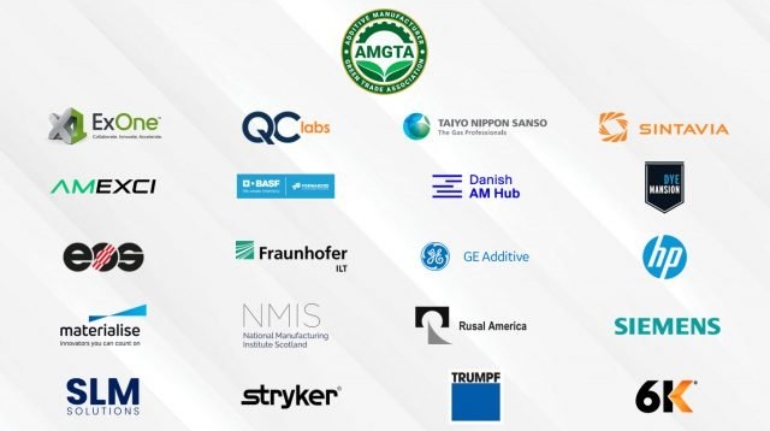
The Additive Manufacturer Green Trade Association (AMGTA), a global trade organization created to promote the environmental benefits of additive manufacturing (AM), announced that eight additional leading AM organizations joined the trade group to advance sustainable AM. The AMGTA’s now has twenty members.
XPRIZE launched the $100M XPRIZE Carbon Removal sponsored by Elon Musk and the Musk Foundation and there is little doubt that 3D printing will accelerate and enable reaching this objective. This four-year global competition invites innovators and teams from anywhere on the planet to create and demonstrate a solution that can pull carbon dioxide directly from the atmosphere or oceans and lock it away permanently in an environmentally benign way.
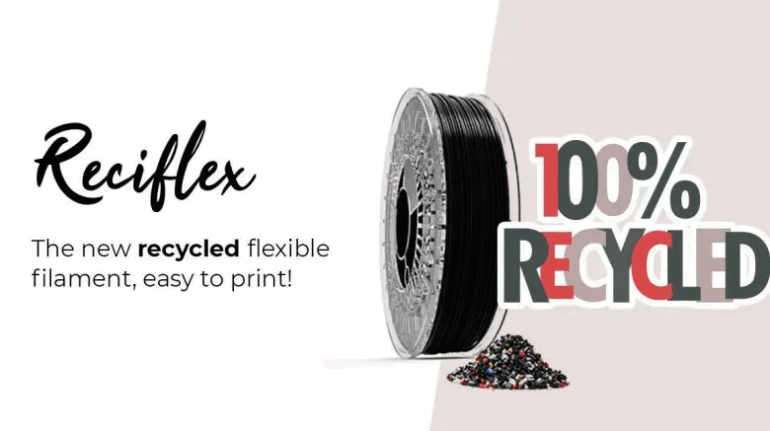
Recreus introduced Reciflex, a new flexible TPU filament that is 100% recycled. This flexible TP ...
Architect and professor Ronald Rael joined a movement championed by Alight that aims to bring radical hospitality to stretches of the U.S.-Mexico border. The move further extends Rael’s additive manufacturing profile into the humanitarian space. His architecture studio, Rael San Fratello, recently bridged the border using seesaws in a living art project called Teeter-Totter Wall.
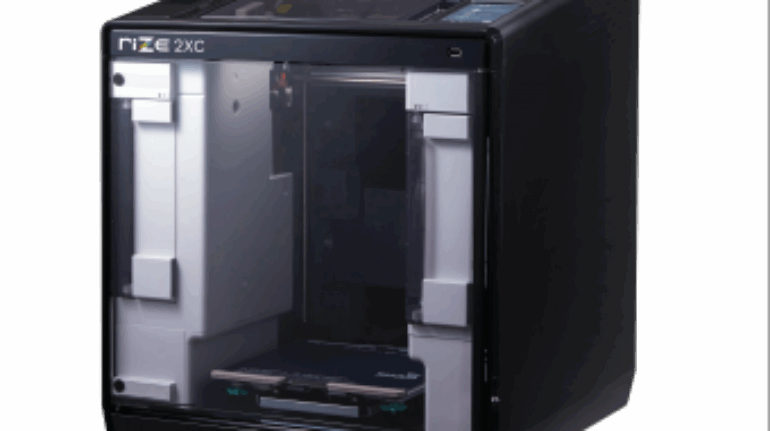
RIZE‘s 2XC desktop industrial 3D printer with its RIZIUM Carbon Filament material has received Greenguard certification. The certification is based on the ANSI/CAN/UL 2904, “Standard Method for Testing and Assessing Particle and Chemical Emissions from 3D Printers.”
In a surprising and quite interesting turn of events, Canon Ecology Industry Co., Ltd. (a company founded in 2004 for the repair and regeneration of miscellaneous electrical and electronic equipment) has independently developed two types of filaments (PC-ABS, HIPS) for 3D printers made of 100% recycled plastic as the first in-house developed products. This filament is made from recycled plastic for the exterior of broken and old Canon multifunction devices, including copiers and toner cartridges collected from the market.
Industrial binder jetting hardware OEM ExOne is introducing a new desanding station for use with the industrial S-Max and S-Max Pro sand 3D printers, the company’s most popular family of printers.
The Additive Manufacturer Green Trade Association (AMGTA), a global trade group created to foster and promote the environmental benefits of additive manufacturing (AM), published its first commissioned university research project, a literature-based systematic review of the environmental benefits of metal AM. The paper, titled, “State of Knowledge on the Environmental Impacts of Metal Additive Manufacturing” was written by Dr. Jeremy Faludi from Delft University of Technology and Corrie Van Sice from Dartmouth College.
Filamentive, a UK based pioneer in recycled 3D printing materials, is partnering with 3D Printlife to make its filaments available for purchase in the US with same day domestic shipping.
Ensuring environmentally friendly manufacturing is ideal for reducing costs and waste, supporting cl ...
In order to welcome the 2024 Olympic Games, the Grand Commune of Paris has awarded the Paris 40-mete ...
3D Printz Limited, a fast-growing Shropshire 3D printing products reseller, has teamed up with Fishy Filaments, which turns recycled nylon fishing nets into engineering-grade filament.
In advance of the International Molded Fiber Association (IMFA) annual conference, the leading event for the molded fiber industry, HP unveiled an innovative and environmentally friendly tooling solution for molded fiber manufacturers. The solution includes the new HP Molded Fiber Advanced Tooling technology, which enables fast and enhanced design and fabrication of high-performance molded fiber tooling in as quickly as two weeks1 compared to four to six weeks experienced by customers using traditional methods2. Combined with HP’s new tooling production service, the end-to-end solution delivers greater production efficiencies via increased production uptime, reduced maintenance, and mass customization capabilities.
While some of us spent months of lockdown binge watching TV, others used the time to come up with innovate solutions to existing problems. Such is the case with Lea Randebrock, a Finnish-German designer from the Royal College of Art in London, who developed a sleek food storage solution using 3D printing and clay materials.
Scientists have developed a method of 3D printing green buildings using local soil, which they say h ...
A team from Oak Ridge National Laboratory invented a 3D printed absorption device made of aluminum t ...
A team from the Oak Ridge National Laboratory has invented a 3D printed absorption device made from aluminum that is capable of capturing carbon dioxide emissions from fossil fuel plants. The innovative device, which can also be used in other industrial processes, could help to curb global emissions of greenhouses gases like CO2 which trap heat in the atmosphere and contribute to global warming.
Just over one year ago, 3D printing company HP inaugurated its 3D Printing and Digital Manufacturing Center of Excellence just outside of Barcelona. The new building, which spans over 150,000 square feet, is one of the world’s largest and most advanced AM facilities. As it turns out, it is also one of the most environmental new builds in Spain.
The Atlanta Botanical Garden is home to many plant species and, as of recently, a sloth-inspired 3D printed robot. You read that right. SlothBot is a 3D printed robot, designed to look like a sloth, that crawls around the botanical garden monitoring environmental factors, such as weather, temperature and carbon dioxide levels.
The Terra-cotta ceramics have been used for thousands of years, but the special application in the 2 ...
Nexa3D is introducing – with immediate commercial availability – xCLEAN, an effective and environmentally friendly washing solvent that is designed to work consistently with most photopolymer 3D printers and resin systems available on the market.
Last fall, Boston-based 3D printing company RIZE, Inc. announced with pride that its RIZE One 3D printer was the first in the world to receive UL 2904 GREENGUARD certification. Now, the company has successfully expanded its portfolio of GREENGUARD certified products, including the XRIZE full-color 3D printer, RIZIUM ST filament and RIZIUM inks.
Microwave plasma technology company 6K (formerly Amastan) has announced that its AM division, 6K Additive, has commissioned the first two commercial UniMelt systems for the production of metal powders. The systems, which will be in operation at the company’s 40,000 square foot manufacturing plant in Bugettstown, PA, are capable of producing 100 tons of powder per year.
In order to fulfill the promise of additive manufacturing of eliminating material waste, the AM industry needs to stop wasting materials. In metal powder bed 3D printing this issue has become more relevant as the technology targets larger production batches. And a viable solution to end material waste now exists: it starts with powder rejuvenation. 6K Additive’s UniMelt microwave plasma technology is promising recycled metal powders for PBF with quality even superior to traditionally atomized materials from ingots. Reducing metal powder waste emerged as a key demand during 3dpbm’s AM Focus on Sustainability so we reached out to 6K’s Chairman and CEO, Aaron Bent, Ph.D. to learn how the Boston-based company is addressing this issue.
After completing the 3D printing of the reefs in the laboratory of the School of Civil Engineering ...
This interview was originally published in the 3dpbm AM Focus eBook on Sustainability.
The Additive Manufacturer Green Trade Association (AMGTA), a global trade group created to promote green benefits of additive manufacturing (AM), announced today that it had selected Jeremy Faludi, Ph.D., a leading researcher of sustainable engineering, to oversee its first commissioned university research project, a literature-based systematic review on the environmental sustainability of metal AM.
Buttons are ubiquitous, and most won’t think twice about the small garment essentials. But today, most buttons are made from plastic and most are not recycled, which means that they to pose an environmental challenge. Thankfully, there is a group that is thinking about how to make buttons and plastic clothing features more sustainable, and one solution lies with 3D printing and injection molding.
As we have seen and will continue to explore in our AM Focus this month, there are many facets to the topic of Sustainability within additive manufacturing. On the one hand, additive manufacturing opens up opportunities for more sustainable processes in many industries through the production of design-optimized and lightweight parts. Due to its additive nature, the technology also tends to result in minimal material waste. On the other hand, it is important to consider how manufacturing operations within AM have an ecological impact and how they can be improved. Beyond the industrial side of AM, there are also many ways in which 3D printing and sustainability have become linked, in large part thanks to the ingenuity of visionaries who understand the need for ecological solutions in all parts of our lives.
Tune in Thursday, May 14, at 8:00 p.m. EDT for a live Q&A with Paola Antonelli, Senior Curator, Department of Architecture and Design, and Director, Research and Development; and designer, artist, and professor Neri Oxman, about the exhibition Neri Oxman: Material Ecology, as part of MOMA’s Virtual Views initiative.
A significant milestone for additive manufacturing has been achieved in the nuclear industry: a first-of-its-kind 3D printed component has successfully been installed into a commercial nuclear reactor. The part, a 3D printed thimble plugging device, was installed by nuclear energy company Westinghouse Electric Company at Exelon’s Byron Unit 1 nuclear plant during its spring refueling outage.
The Additive Manufacturer Green Trade Association (AMGTA), a new green trade organization dedicated to promoting the environmental benefits of AM, has announced the appointment of Sherry Handel as its first Executive Director. First launched in November 2019, the AMGTA is a non-commercial, unaffiliated organization open to any additive manufacturer or industry stakeholder that meets certain criteria relating to sustainability of production or process.
During the company’s annual meeting – AM2020 – which was held this week within a very large dedicated space inside Florence’s Leopolda Station, energy giant Baker Hughes extensively discussed and showed new technological solutions that will enable to company to meet its decarbonization goals by 2030. It may seem almost paradoxical for an oil and gas giant to promise clean and sustainable energy however the exact opposite is true. Baker Hughes, with its partners and senior management teams, are entirely focused on identifying real solutions for clean energy, not the impossible promise of doing away with fossil fuels at once, but a clear strategy toward a sustainable energy mix, which includes all renewables and is enabled by technology. Clean energy does not just mean cleaner energy sources but also a more efficient and streamlined production of energy generating systems – across the entire system manufacturing, energy generation and energy distribution supply chains. And you guessed it: additive manufacturing is at the core of this strategy.
Well if this isn’t an innovative reuse of fast food waste, then I don’t know what is. Researchers from the University of Toronto have achieved an exciting first by turning used cooking oil from McDonald’s into a high-resolution 3D printing resin. The material, which is also biodegradable, could provide a cheaper and more eco-friendly alternative to traditional 3D printing resins.
Canadian materials science company Equispheres has been granted $8 million in funding from Sustainable Development Technology Canada (SDTC). The backing will enable Equispheres to scale up the production capacity for its metal additive manufacturing powder over the course of the next two years.
Lancashire3D Ltd, a large 3D printing studio in the North of England, has become the first UK based studio to deliver on the circular production promise, in which resources are reused again and again to benefit the 3D printing ecosystem, and the environment, by reducing its waste and recycling on site. Called the Sustainable Range, these recycled plastics will complement its existing Filamentive recycled plastics and will be offered to customers at a discounted price, allowing Lancashire3D Ltd to pass on the savings from reclaiming plastics.
Last week, 3D printer manufacturer RIZE became the first company to attain UL 2904 GREENGUARD certification for its RIZE One 3D printer. The certification, which addresses 3D printer particle emissions and safety, followed a multi-year study conducted by the Georgia University of Technology and UL, a leading global safety science company. Now, the Georgia University of Technology has revealed more about the findings of the study and the impact that 3D printing could have on indoor air quality.
Think of her what you will (that she is moved by larger interest groups or that she is being used for notoriety) but there is no doubt that young Greta Thunberg is now in the global spotlight and has done more than anyone to raise awareness on the need for eco-sustainability. By bringing attention to the relative issue of global warming, she has also indirectly driven attention toward the real issue that is affecting life on this planet: pollution. Be it from CO2 emissions, radioactivity, poisonous chemicals or plastic. The issue of plastic pollution – and by extent ocean plastic pollution – is the one that concerns (or should concern) the AM industry more directly. Since 3D printing provided a new way to process plastic, it can be a part of the problem or a part of the solution. Plastic Bank, an entity created in 2013, has carried out some interesting activities to enable recycling of ocean-bound plastic in some of the world’s poorest communities, by attempting to transform used plastic into currency. In the organization’s initial idea, 3D printing was expected to play a part as a means to process used plastic. That may not have happened yet, however, it could, in the future, be used to process some of the 5 million kilograms of plastic that Plastic Bank has recovered over the past 6 years.
Your morning cup of OJ could become a lot more eco-friendly in the future thanks to a novel (or navel!) circular juice bar developed by Italian design studio Carlo Ratti Associati. The system, which was created for Italy-based global energy company Eni, juices oranges and then turns the unused orange rind into 3D printed bioplastic cups. The machine, charmingly called Feel the Peel, is a prototype system that hopes to make one small part of our daily life more circular.
Independent footwear brand Oliver Cabell has entered the blossoming market of 3D printed shoes with the release of its new “Phoenix” sneaker. Priced at $95, the simple but stylish shoe is 3D printed from recycled water bottles and can be machine washed.
Food waste is a growing issue, with estimates suggesting that nearly one-third of all food produced is scrapped. In the UK, for instance, which has a population of about 66 million, eight million tonnes of food are wasted a year. Like most environmental problems, a significant part of the food waste is caused at an industrial level, but that doesn’t mean that there aren’t things that consumers can do on an individual basis to help reduce, reuse and recycle.
Though technology is often thought of in contrast to the natural world, certain innovations—such as generative design and 3D printing—are helping to connect us to nature in new and exciting ways. Large-format 3D printing company BigRep, for instance, recently unveiled a project called BANYAN ECO WALL, the world’s first fully 3D printed green wall.
Julia Daviy, a fashion designer with an inclination towards 3D printing and sustainable practices, has introduced a new wearable product that combines all three elements: a zero-waste, fully customizable 3D printed skirt. The garment is now available to order on the designer’s website.
Rotterdam-based design studio The New Raw is no stranger to environmental causes—it’s whole mandate is to raise awareness about eco issues such as plastic waste with innovative design and technologies like 3D printing. Most recently, the group teamed up with the Aikaterini Laskaridis Foundation in Greece to highlight the specific problem of abandoned fishing nets in marine ecosystems.
German chemicals company Henkel Corporation is expanding its novel Recycling Program for its additive manufacturing customers. The program, established in collaboration with TerraCycle, will enable Henkel clients to easily recycle 3D printing materials and adhesives from its Loctite brands, pushing sustainable 3D printing further ahead.
One of the primary ecological concerns of our time is plastic consumption and waste. Of the plastic we use on a day-to-day basis, less than 10% is recycled, with the rest going into landfills and, as it becoming increasingly clear, the ocean. In addition to curbing plastic consumption and reducing what we use, there is also a growing effort to find sustainable alternatives to the ecologically taxing material. One such effort is coming out of MIT, where the Mediated Matter lab is developing a technology for 3D printing water-based biopolymer composites.
AMT-Specavia, a Russian company specializing in construction 3D printing technologies, is partnering with a team in South Korea with the aim of producing artificial coral reefs for the Yellow Sea. The 3D printing effort, which it utilizing high-strength hydrophobic concrete to create the artificial coral, aims to rehabilitate the quickly deteriorating coral reef ecosystem in the Yellow Sea.
UPM, a Finnish biopolymer specialist, is demonstrating large scale robotic 3D printing of wood composite applications, using its granulate biocompatible cellulose material. The project was developed in collaboration with ABB and Prenta and is being presented at the Nordic 3D Expo in the Espoo Dipoli Congress Centre.
The rate at which the world’s oceans are filling with plastic is unsustainable. Every minute, the equivalent of one garbage truck of plastic reportedly enters the ocean, polluting the many ecosystems it contains. And though cleanup efforts do make small differences, the scale of the crisis makes it impossible to remove all the plastic. Because of this, alternative methods for improving biodiversity in the ocean are becoming increasingly important.
UK-based filament producer Filamentive has released a declaration of recycled content for its products. The announcement comes in response to the globe’s climate crisis and plastic consumption and waste problem.
While many innovative designers are looking for ways to slow the environmental destruction of our planet, some are looking ahead to come up with products that could serve humankind when climate change consumes the earth. Biomimicry designer Jun Kamei from the RCA-IIS Tokyo Design Lab falls into the latter category as he has designed a 3D printed amphibious garment which enables humans to breathe under water.
If you’re nostalgic for the days of Chia Pets, you might be very excited to learn about filament pioneer Kai Parthy’s latest 3D printing material. Called GROWLAY, the new filament can be printed into various structures and then functions as a breeding ground. Unlike the famous 1980s toy, which could sprout chia sprouts and grass, GROWLAY objects can be used to breed a wide number of things including grass, moss, fungus, mildew, lichen, mycelium, phama-cultures and mother cells.
As forest fires increasingly rage through forests and towns around the world—currently Colorado and New Mexico are battling intense wildfires—it is starting to sink in that they are a reality of climate change and something we will inevitably be seeing more of. To reckon with increasingly powerful and frequent wildfires, firefighters require more powerful and high-quality equipment that they can rely on.
In a proof-of-concept study, researchers from ETH Zurich and Caltech in Pasadena, CA have demonstrated a new propulsion system for motorless swimming robots. Unlike traditional aquatic mechanisms which rely on propellants or engines to move in water, the swimming robots—made entirely from 3D printed parts—use fluctuations in water temperature to propel themselves.
Led by innovative architect and designer Neri Oxman, MIT’s Mediated Matter lab is responsible for some of the most inventive and avant-garde additive manufacturing research out there. From 3D printed glass technology to its responsive and bioinspired mask collections, Mediated Matter has a complex vision for 3D printing and digital fabrication which it continually brings to the table in compelling ways.
UPM, a Finnish company specializing in driving the forest-based bioindustry into a sustainable, innovation-driven and exciting future, is introducing its new UPM Formi 3D filament. The new product is based on a new type of biocomposite that has been specially developed for 3D printing. It brings together advanced cellulose fibre and biopolymer technologies.
Living in increasingly contaminated cities, people are using protective masks more and more frequently. While there are many styles for adults, there are far fewer designed especially for children, for whom pollution is definitely more harmful. At least on a massive scale.
The wait it over – 3D print with hemp filament! Entwined is 3D printing filament produced from USA-grown and processed industrial hemp. Industrial hemp crops require no herbicides, no pesticides and grow more densely compared to corn.
Led by the Catalonia Institute for Energy Research (IREC), the main goal of the Cell3Ditor project is the development of a 3D printing technology for the industrial production of SOFC (Solid Oxide Fuel Cells) stacks by covering research and innovation in all the stages of the industrial value chain. The 3D printed SOFC stacks will be cost-effective and flexible for commercial applications.
The potential for additive manufacturing is as great as the challenges that adopters have to face in order to integrate it into an automated production workflow. Few companies in the world have done more research on these issues as Siemens and few people have studied the industrialization of AM as much as Ulli Klenk, former Head of OEM Strategy at Siemens Digital Factory
Eager to sustain its customers’ strong growth, in particular in automotive, 3D-printing, and in consumer goods markets such as sports and electronics, Arkema has made an investment plan of some 300 million euros over five years in the biosourced polyamide 11 chain. This major investment will enable the Group to increase by 50% its polyamide 11 global production capacities. The project falls in line with Arkema’s strategy to speed up its development in advanced materials, one of the key pillars of its future growth, sustained by a unique portfolio of innovations around the main sustainable development trends.
Nano Dimension, a leader in the field of 3D printed electronics has supplied its flagship DragonFly 2020 3D Printer to a renewable energy company in the field of solar energy, located in Israel. This customer joins the growing ranks of Nano Dimension’s beta customers and will examine Nano Dimension’s cutting-edge technology.
The Dubai Electricity and Water Authority (DEWA) has signed a Memorandum of Understanding (MoU) with GE Additive (NYSE: GE) to collaborate on 3D printing, additive manufacturing and digital technologies for the forthcoming ‘Industrial Internet’. This is in line with DEWA’s vision to be a sustainable innovative world-class utility and strengthen the efficiency of electricity generation, distribution and transmission.
Tesla’s mission is to accelerate the world’s transition to sustainable energy through increasingly affordable electric vehicles in addition to renewable energy generation and storage. At the heart of these products are batteries. Today at the Gigafactory, Tesla and Panasonic begin mass production of lithium-ion battery cells, which will be used in Tesla’s energy storage products and Model 3.
Today, the Office of Energy Efficiency and Renewable Energy (EERE) announced up to $35 million in available funding to support early-stage, innovative technologies and solutions in advanced manufacturing that are not significantly represented in EERE’s current portfolio.
Additive manufacturing and 3D printing safety is a subject that is often ‘glossed’ over. And this applies both at the industrial level and the personal level, as well as everything in between — a consequence of the breadth of 3D printing platforms and materials accessible across many market segments today.
The Instituto Nacional de Tecnología Industrial in Buenos Aires, Argentina, has partnered with Argentina based 3D printing companies PRINTALOT, ENYE TECH (b-pet) and CHIMAK to carry out a study which set out the demonstrate that post consumer recycled (PCR) plastics can actually be used in 3D printing to produce fully functional, mechanically advanced devices. […]
Sometimes you read news on generalist media about 3D printing and it’s hard to understand whether it is something real or just media hype. Most of the times it is media or social media hype (or inverse hype as in the recent “3D printing is dead” cases) especially when it concerns bioprinting applications. One of the biggest recent stories was the 3D printed rhino horn by a startup specializing in 3D printed wildlife products called Pembient. The idea is just perfect: using bioprinting and 3D printing technologies in order to produce a rhino horn that is sufficiently similar to the real thing that it would drive down the price of it so much that it would make it not worth going out and killing the rhinos for it. But can it really be done or is it just a stunt? Using bioprinting and bioreactors to produce animal products without the animals is the best chance we have (beside the whole world going vegan) to face to upcoming food crisis as well as the ethical and environmental issues that inevitably derive from intensive animal farming. A company called New Harvest has been leasing the bioficial food revolution and while progress is effectively taking place, a real solutions seems still decades away. This does not mean that some projects, such as Pembient’s rhino horn, might not become reality much sooner. Through Ourobotics Jemma Redmond I got in touch with Matthew Markus, the founder and CEO at Pembient to find out just what kind of timeline they expect. The premises are pretty good. As Markus writes in the Pembient white paper “Rhinoceros horn mainly consists of calcium and melanin embedded in a keratin matrix. It is produced by epidermal cells that undergo keratinization in a manner similar to the growth of human hair and nails (Nowell, 2012, p. 6). There are two basic ways to biofabricate rhinoceros horn. The first way involves 3D printing a biodegradable scaffold in the shape of a horn. Next, stem cells taken from a rhinoceros are cultured, differentiated into keratinocytes, and seeded onto the scaffold. Over time, the keratinocytes become filled with keratin protein filaments and die leaving behind a solid object. The second way starts with the production of rhinospecific keratins in genetically engineered microorganisms. Once purified, these keratins are then amalgamated with rhinoceros DNA and other biomolecules into a solid using a proprietary 3D printer. Whatever the process, the intent is the same, namely to produce an artefact that is physically and forensically identical to rhinoceros horn.” So the science and the technology are in the right place. The economics for this project appear to be in the right place as well. “… Suppose a seller can either obtain rhinoceros horn from the wild at $12,000 per kilogram or from a biofab at $8,000 per kilogram,” Markus writes citing a previous 1970 study by Akerlof. “Further suppose – he goes on – the seller can sell the acquired horn at $35,000 per kilogram. In this case, the markup for the wildsourced horn is 192% versus 338% for the biofabsourced horn. So, all things being equal, it is in the seller’s interest to sell biofabricated horn. On the other hand, assume a buyer knows there are biofabricated horns on the market. Further assume the buyer estimates that about 75% of the horns being sold are biofabricated. In this case, the expected value of any given horn is $8,750 per kilogram. Thus, it is in the buyer’s interest to either push for a price reduction or not transact at all.” Now the big question. When will this be possible and is it truly feasible from in terms of business model? “So far we have created what I would call “low-fidelity prototypes” using various different technologies either based on liquid resins or ceramics powders, as well as a more tissue-engineering based route whereby we created the biodegradable scaffold and applied the bioinks to it,” Markus said. This was the first approach in order Pembient to assess the market. The goal is to produce the rhino horns with the same exact materials, down to a DNA level, as the real ones, making it virtually impossible to distinguish. The powder Pembient developed contained a mix of keratine along with the ceramics, which represented a first step toward that goal.” “We want to be a commodity supplier, selling in Eastern and Western markets. We want to create a global, open market with significant business development opportunities for bioficial rhino horns. However – Markus points out – this is still far away and will require investments from others who believe in the benefits that it could bring in the long run. “The sad part is that if the rhinos were to become extinct, which is exactly what we would like to avoid, this business would make even more sense as the prices of the remaining horns would go sky high.” “We were really bullish when we first developed the powder and expected to be in the market within a year. This may not be the case but I do think that we could be able to present a valid product within five years at most.” Furthermore, as is the case with other forward looking 3D printing projects, the experience acquired will be used in other applications, especially in many other keratin based animal products that are in demand on the black market. So unfortunately the answer is no, the 3D printed rhino horn is not yet ready to save all the black rhinos as generalist media would have you believe, However the answer is also yes: Pembient is really working toward this goal and has thus acquired significant experience in 3D printing keratin based products. Hopefully they will perfect their method before the last rhino is killed.
The world’s leading cellular agriculture innovators are taking part in the first-ever g ...
In order to fully take advantage of working with a biodegradable material, and the ethos of reducing, reusing and recycling, a team from Barcelona’s IAAC investigated how to incorporate food-waste, including orange peels, shrimp peels and used ground coffee into, bio-plastic. Food-waste is generally perceived as unwanted matter, unless used for compost. The team, made up of senior faculty member Areti Markopolou, fabrication expert Alexandre Dubor, computational expert Anfgelos Chronis, and students Christopher Wong, Lili Tayefi and Noor Elgewely (with external support from bioplastic expert Atanassia Atanassiou) has the aim was to incorporate local food waste from urban environment, and local context, in order to divert this matter from ending up in landfill. Some of the local produce initially considered were orange peel and shrimp peel, since Spain is known for its oranges, and Barcelona for its seafood. In addition to merely up-cycling food-waste, the organic matter would actually provide added beneficial properties to the bio-plastic.
Optimizing the use of Earth’s resources in order to ensure sustainability is a hot topic and 3D printing has a big part in it. At the annual World Economic Forum held in Davos, Switzerland, in 2016, for the 55th year since its foundation, the world’s foremost political and economic leaders sat down and discuss how to improve on the use of the world’s resources, shaping global, regional and industry agendas.