Gallery
About Project
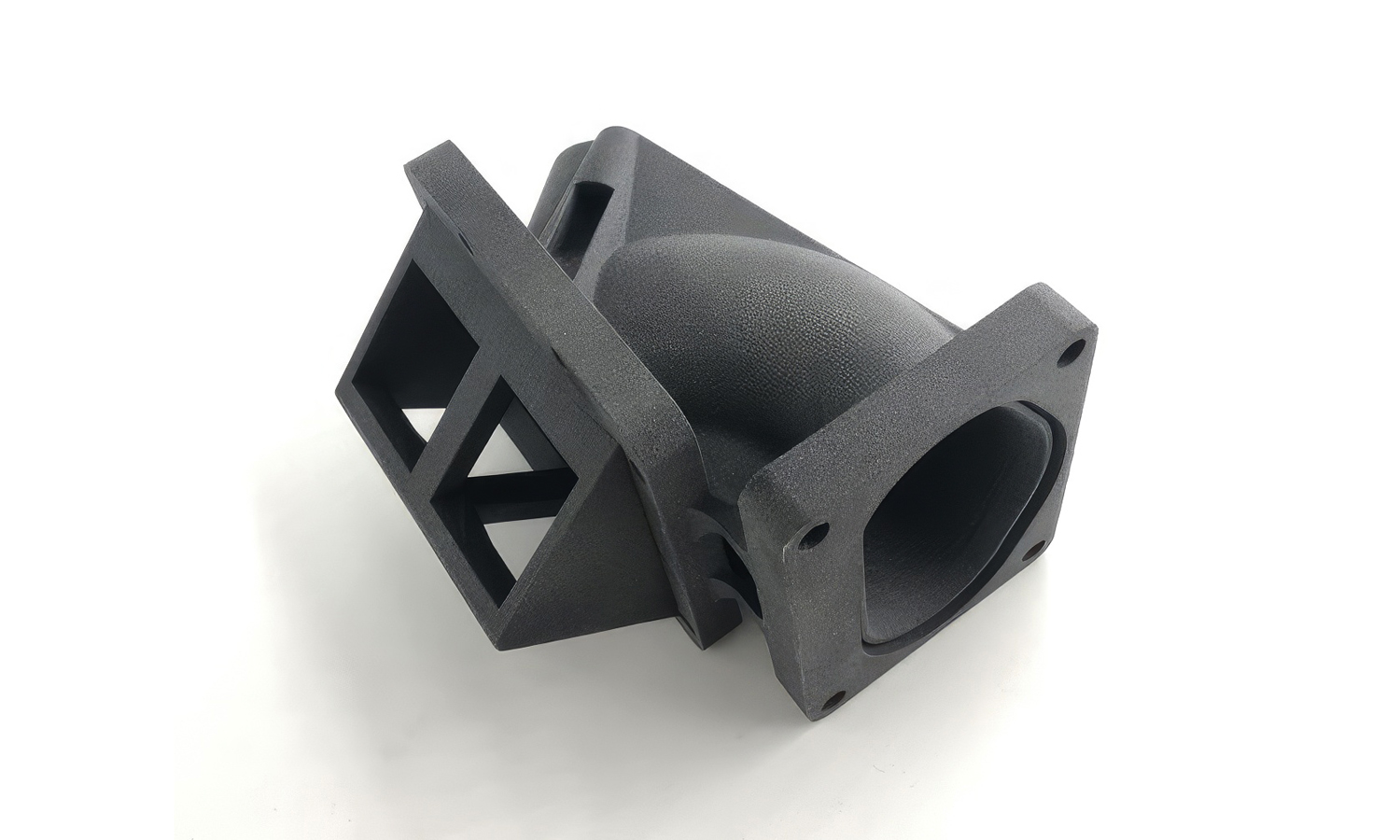
When it comes to demanding automotive environments, standard plastics often fall short. Recent breakthroughs in PA6GF (Nylon 6 reinforced with Glass Fiber) 3D printing have enabled the production of industrial-grade components that rival traditional injection molding in both strength and thermal resistance. Two standout examples include the Fuel Injection Pipe and the High-Temperature Battery Bracket.
Case 1: Fuel Injection Pipe
- The Challenge: This component requires a smooth internal cavity to facilitate high-speed fluid flow. It must withstand extreme internal pressures and high engine temperatures without any dimensional deformation.
- The Solution: Utilizing 6000GF material, a specialized Nylon 6 and glass fiber composite, the pipe achieves exceptional thermal stability.
- The Result: To ensure the interior is free of particles and friction, a specialized post-processing technique was applied, resulting in a surface finish that meets strict aerospace and automotive flow requirements.
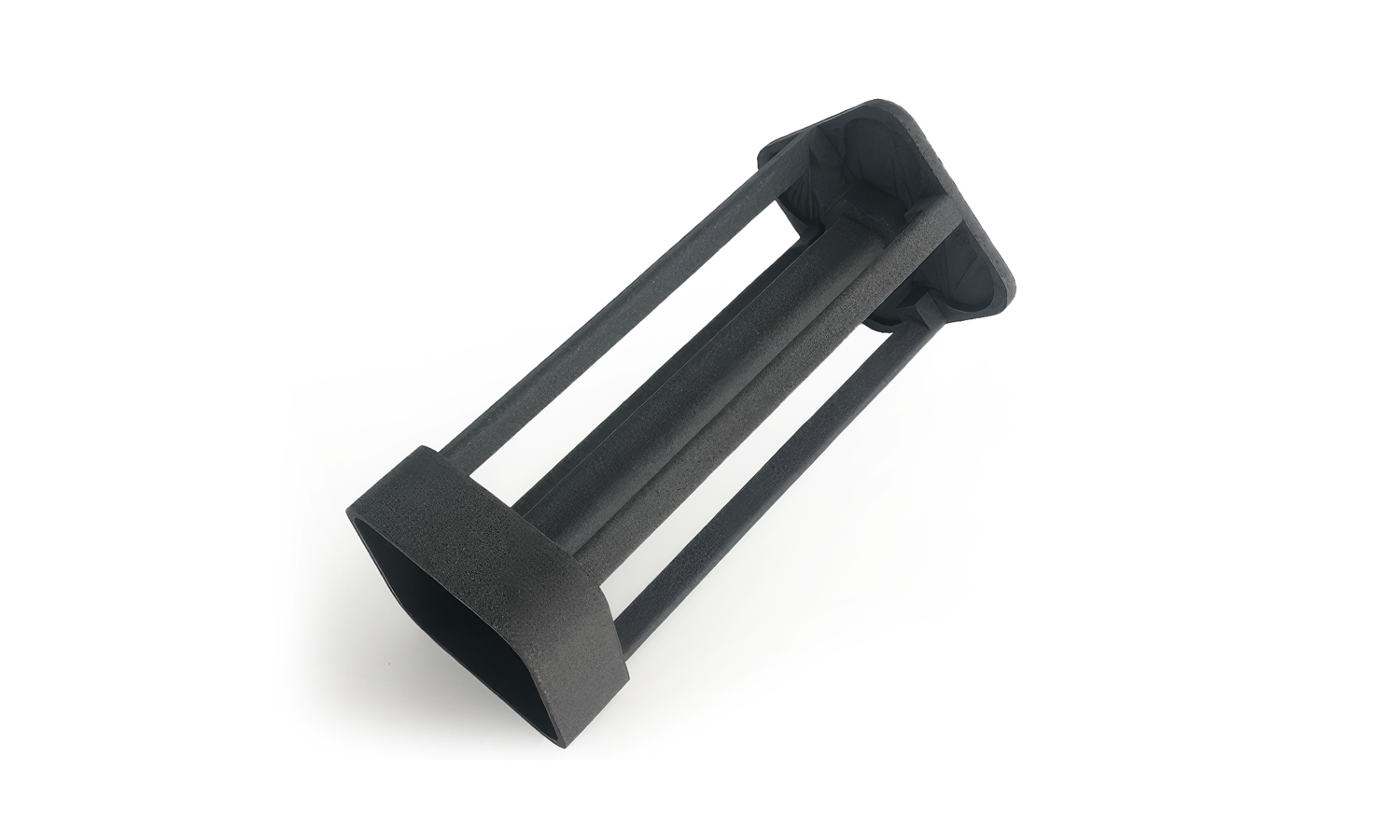
Case 2: Automotive Battery Bracket
- The Challenge: Battery brackets must maintain rigid structural integrity in environments exceeding 150°C. Any softening of the material could lead to battery loosening or catastrophic failure.
- The Solution: The 6000GF composite was chosen for its superior stiffness-to-weight ratio and its ability to resist heat distortion at high temperatures.
- The Result: The 3D-printed bracket successfully holds the battery assembly securely in place, proving that PA6GF is an ideal candidate for under-the-hood structural applications.
Optimize Your Production with FacFox
Are you looking to accelerate your product development with high-performance composites? FacFox offers professional 3D printing services specializing in PA6GF and other engineering-grade materials. From complex internal geometries to high-temp structural components, our advanced SLS and MJF capabilities ensure your parts are durable, precise, and ready for the road.
Would you like me to provide a quote or help you select the best material for your specific project requirements?
Solution
- Step 1: The 3D models for the fuel injection pipe and battery bracket were optimized for the Selective Laser Sintering (SLS) process to ensure structural integrity.
- Step 2: A composite powder consisting of Nylon 6 and glass fiber (6000GF) was uniformly spread across the build platform in thin layers.
- Step 3: Each layer was selectively fused by a high-precision CO2 laser, following the cross-sectional geometry of the digital design.
- Step 4: The completed parts were cooled slowly within the nitrogen-purged build chamber to prevent warping and internal thermal stress.
- Step 5: The components were extracted from the powder bed and excess non-sintered material was removed via bead blasting.
- Step 6: For the fuel injection pipe, a specialized post-processing treatment was performed on the internal cavity to achieve a smooth, particle-free surface finish.
- Step 7: Final quality inspections were conducted to verify that the parts could withstand temperatures of 150°C and high-pressure fluid flow.