Gallery
About Project
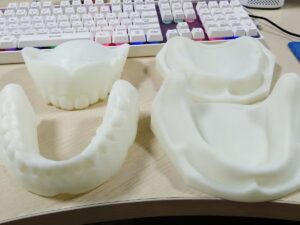
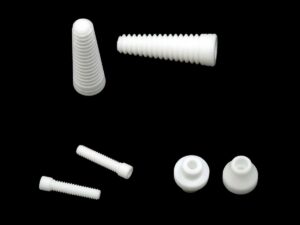
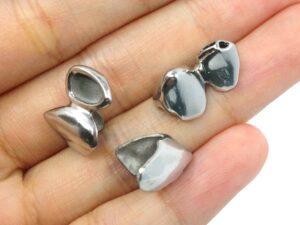
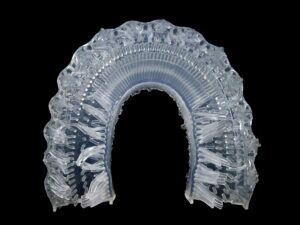
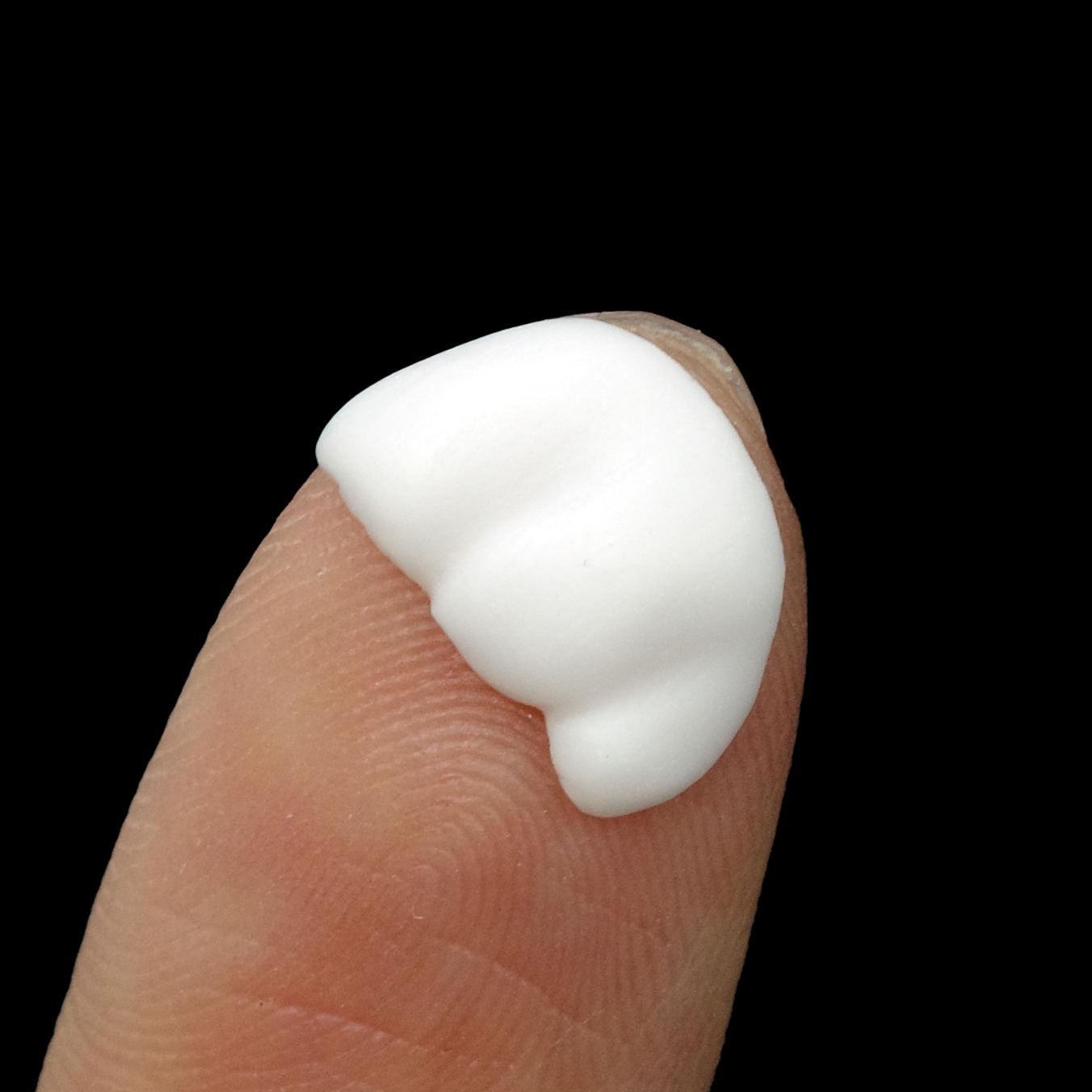
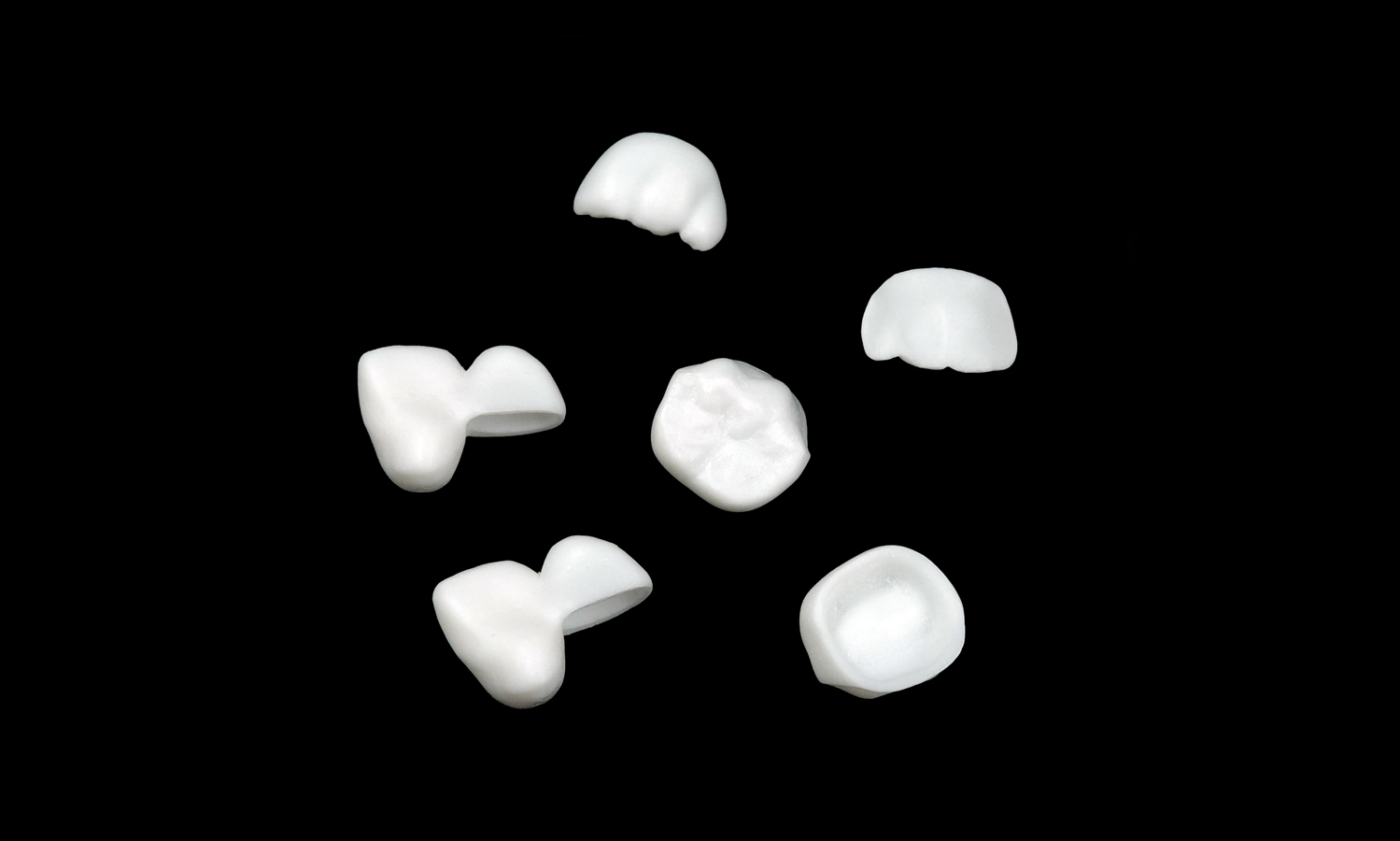
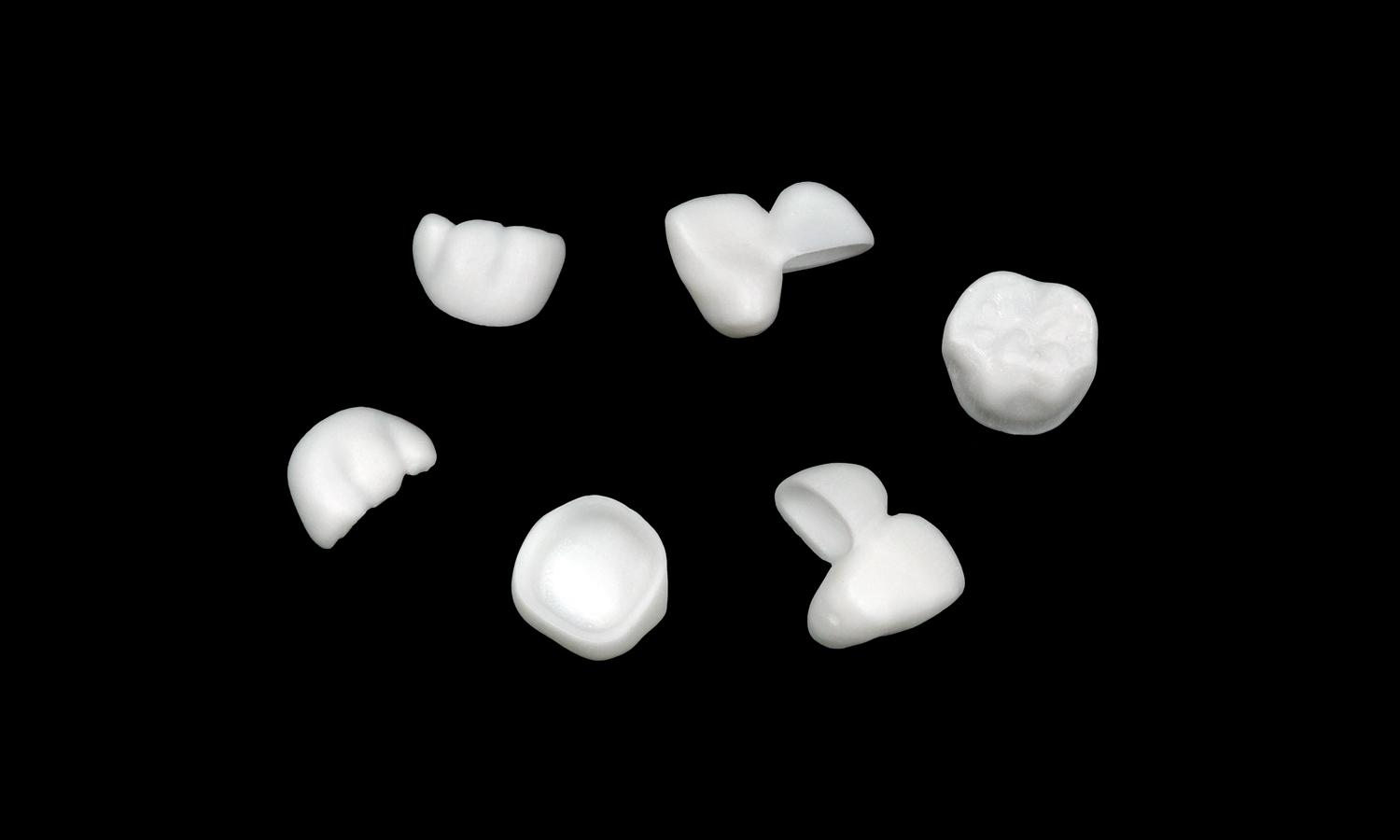
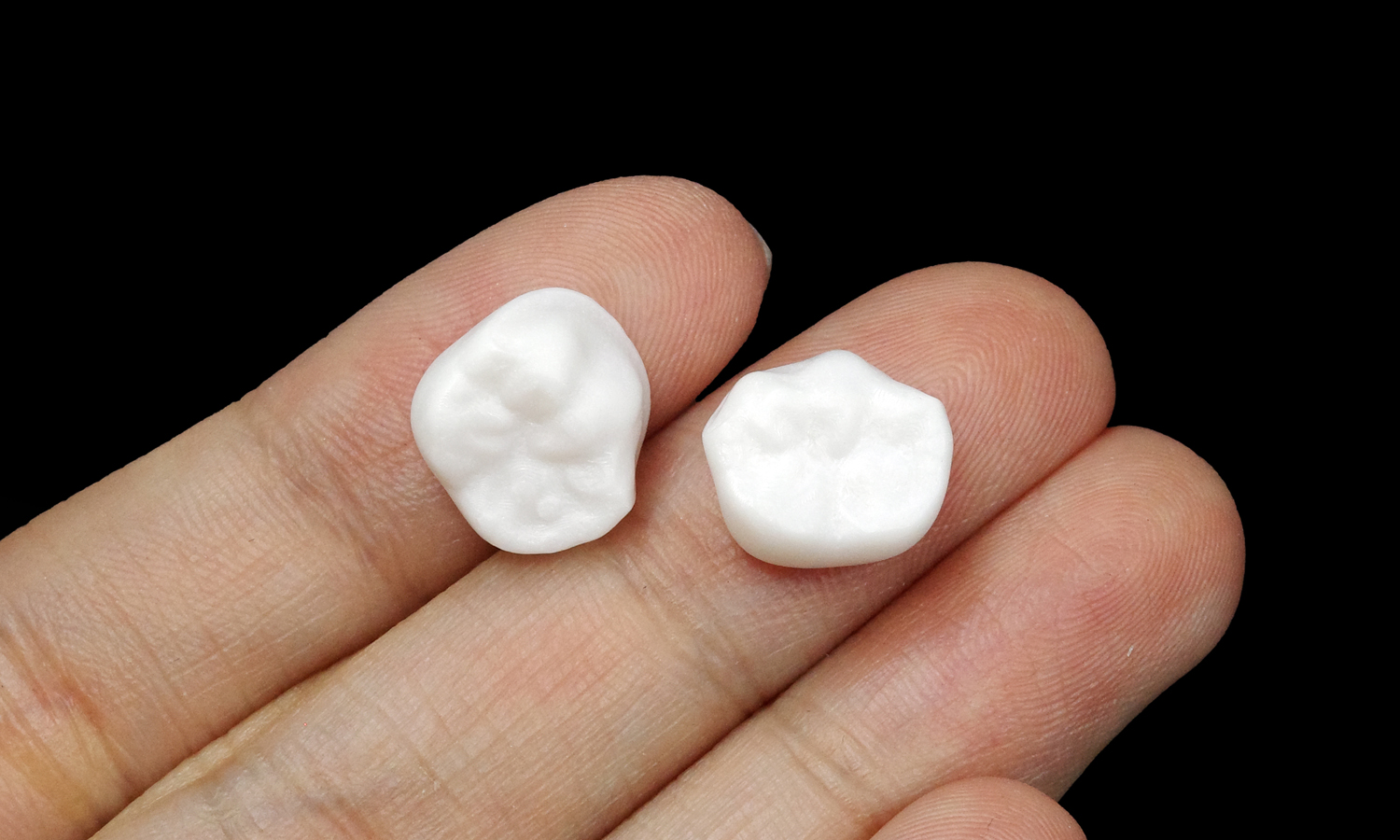
When it comes to dental restorations, Zirconia (ZrO2) is often called “ceramic steel.” As seen in the images, these 3D-printed dental crowns and bridges showcase a level of precision and biological mimicry that traditional milling simply can’t match.
Why Zirconia?
Zirconia ceramic is the gold standard for modern dentistry due to its incredible fracture toughness and biocompatibility. Unlike older metal-fused crowns, zirconia is 100% metal-free, eliminating that “dark line” at the gum tissue and ensuring no allergic reactions. Its natural translucency allows it to blend seamlessly with surrounding teeth, reflecting light just like real enamel.
Precision Meets Strength
3D printing these parts—specifically using technologies like Lithography-based Ceramic Manufacturing (LCM)—allows for ultra-thin occlusal veneers and complex internal geometries. This means dentists can preserve more of the patient’s natural tooth structure while providing a restoration that can withstand the intense forces of chewing. As shown in the finger-tip comparison, the scale is minute, yet the structural integrity is world-class.
At FacFox, we are at the forefront of this digital dental revolution. Our advanced ceramic 3D printing services empower dental labs and clinics to produce high-performance zirconia restorations with zero material waste and unmatched accuracy. Whether you need customized crowns, bridges, or complex dental implants, FacFox provides the professional-grade manufacturing tools to bring your digital designs to life. Partner with FacFox today to elevate your dental practice with the power of 3D-printed ceramics.
Solution
- Step 1: Digital Design and Scaling The patient’s dental anatomy was captured via intraoral scanning, and a 3D model was designed using CAD software. To compensate for material shrinkage during the final firing, the digital model was scaled up by approximately 20–25%.
- Step 2: Slurry Preparation A specialized photosensitive slurry was prepared by dispersing high-purity zirconia powder into a liquid monomer resin. This mixture was formulated to ensure a high solid loading of ceramic particles for maximum density.
- Step 3: Layer-by-Layer Printing The ceramic slurry was placed into the vat of a Digital Light Processing (DLP) printer. Each layer was selectively cured by a UV light projector, which hardened the resin and trapped the zirconia particles in the desired geometry, resulting in a “green body.”
- Step 4: Cleaning and Post-Curing The printed parts were removed from the build platform and cleaned in a solvent bath to remove excess uncured slurry. A final UV post-curing cycle was performed to ensure the polymer matrix was fully stabilized.
- Step 5: Thermal Debinding The green bodies were placed in a furnace for the debinding stage. The temperature was slowly increased to thermally decompose and remove the organic resin binders, leaving behind a porous “brown body” composed entirely of ceramic.
- Step 6: High-Temperature Sintering The parts were subjected to a final sintering process at temperatures exceeding 1,400°C. During this stage, the zirconia particles were fused together, the pores were eliminated, and the restorations reached their final dimensions and full mechanical strength.
- Step 7: Final Finishing The sintered crowns were polished and glazed to achieve a smooth surface finish and natural translucency. Each piece was then inspected for dimensional accuracy and fit.