
45a690129f03ca158daea2b32af74cc8.jpg

Visser Precision purchases two Velo3D Sapphire printers Additive Manufacturing

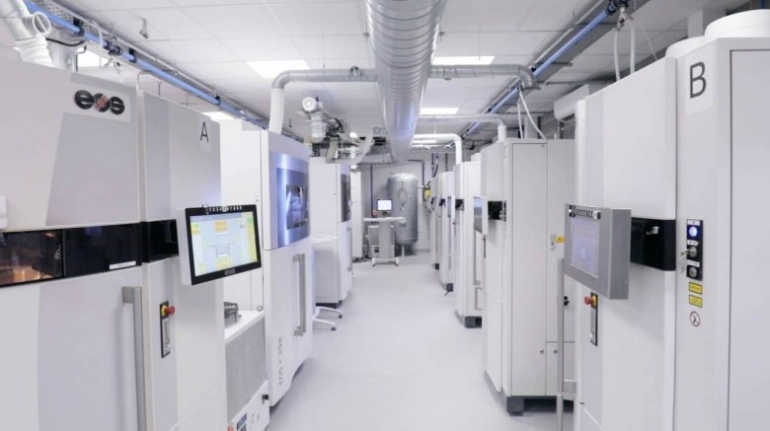
Visser Precision, a contract manufacturer serving major industries from the racetrack to outer space, has purchased and received two Velo3D Sapphire printers – expanding its 3D printing capabilities for its aerospace customers. One of the printers is the first Sapphire printer calibrated for Haynes 214 (UNS N07214), a nickel-based superalloy that is now available as a powder option for all Velo3D customers. The other Sapphire printer is calibrated for Inconel 718, which is commonly used in many aerospace and industrial applications for its high strength and corrosion resistance.
bd8c1ad716fd3212a5d150d572e76deb.jpg

3D Systems introduces ProJet MJP 2500W Plus Consumer Products

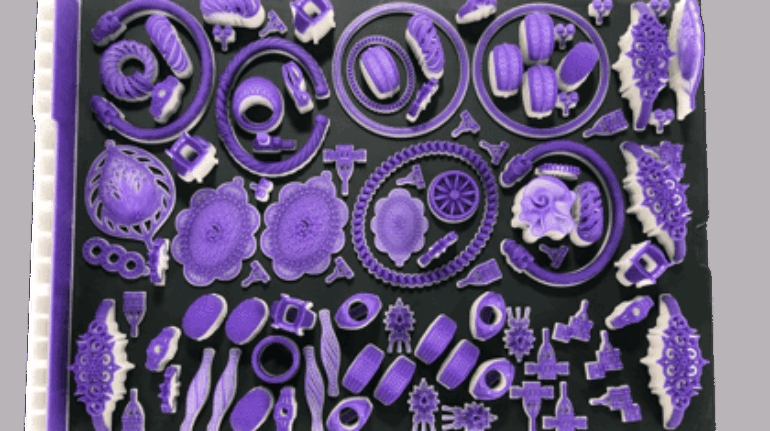
3D Systems’ ProJet MJP 2500W Plus is now available for purchase and immediate shipping. The new solution is specifically designed to produce complex, high-quality, pure wax 3D printed jewelry patterns with speed and precision for use in the lost wax casting process. Engineered specifically to meet the unique requirements of the jewelry industry, the ProJet MJP 2500W Plus can produce high-resolution, 100% wax casting patterns, in hours. This enables the quick and cost-effective creation, iteration, and production of all jewelry styles, including the most complex geometries.

Beacon, the world’s first ultra-rapid surface scanner for 3D printers. Decision Makers

Picture yourself walking away from your 3D printer as the first layer is being printed. There’s no babysitting your machine, hoping the filament won’t peel off the surface or the nozzle doesn’t get too close to the bed. That’s because of the Beacon sensor by Beacon3D that was mounted on the 3D printer. Seconds before your print, you generate a mesh of your bed surface that’s precise down to the sub-micron level. This is the same mesh that your printer software will use to make micro-adjustments during your print; ensuring the perfect first layer.

A closer look at Orion AM’s Thermal Radiation Fusion  3D Printer Hardware

You may not have heard of Germany-based Orion AM, and that’s likely because they were formed just before the pandemic. Their goal is to produce parts for advanced applications using aerospace-grade polymers, like PEEK and similar high-temperature engineering materials [the company was recently in the news, as its technology is being used for the first known 3D printed parts to ever touch down on the Moon’s surface]`.

e5245d2d89edab7e74a65a3d9f95d01d.jpg

Impossible Objects’ CBAM-2 installed at Weber State University Industrial Additive Manufacturing

Weber State University is using 3D printing to advance its research on composite materials that support northern Utah’s aerospace and defense ecosystem. The university’s Miller Advanced Research and Solutions Center recently upgraded and installed the Impossible Objects’ Composite-Based Additive Manufacturing system, or CBAM-2. The machine prints composite materials that can then be used to design parts for a range of high-tech applications.

Nano Dimension sells first Admaflex130 Evolution to KIT Research & Education

Nano Dimension, a leading supplier of additively manufactured electronics (AME) and multi-dimensional polymer, metal, and ceramic 3D printers, has delivered the company’s Admaflex130 Evolution – the first of its next-generation high-precision ceramics and metal fabrication systems – to the Karlsruhe Institute of Technology (KIT), in Germany, one of the leading technical universities in Europe.