
Some manufacturing processes get all the attention.
Metal 3D printing sounds futuristic. CNC machining sounds precise and powerful. Injection molding sounds like serious mass production. And then there is vacuum casting, standing quietly in the corner, looking slightly unglamorous, not trying too hard to impress anyone.
In other words, vacuum casting might be the Slow Horses of low-volume manufacturing.
Like the overlooked agents in Slough House, vacuum casting is not always the first process people brag about. It is not the flashiest option in the room. It does not arrive with a dramatic entrance or a shiny new buzzword. But when a project gets complicated, time gets short, and the parts still need to look real, vacuum casting often becomes the process that actually gets the job done.
The Unflashy Process That Solves Real Problems
Vacuum casting is commonly used to produce small batches of plastic parts from a silicone mold. The process usually starts with a high-quality master model, often made by SLA 3D printing or CNC machining. A silicone mold is then created around that master, and polyurethane resin is cast into the mold under vacuum to reduce bubbles and improve part quality.
That may not sound as exciting as a robot-filled smart factory, but it solves a very common product development problem:
What if you need 10, 30, or 80 plastic parts that look and feel close to production, but you are not ready to pay for injection molding tooling?
That is where vacuum casting earns its place.
For early product launches, trade show samples, user testing, engineering validation, and investor demos, teams often need parts that are more polished than raw 3D prints, but more flexible and affordable than injection-molded parts. Vacuum casting sits right in that practical middle ground.
Why It Gets Underestimated
Vacuum casting is sometimes confused with simple resin casting or hobby mold-making. And yes, silicone molds and casting resins are used by artists, prop makers, model builders, and small workshops too. That is part of what makes the process approachable.
But industrial vacuum casting is a different level of control.
Getting clean, repeatable parts is not just a matter of “pouring plastic into a mold.” The final quality depends on the master pattern, mold design, wall thickness, venting, resin selection, curing, color matching, transparency, surface texture, and finishing work. Small details can decide whether a part looks like a serious product sample or a weekend experiment.
That is very Slough House energy: not glamorous from the outside, but full of hidden skill once the real work begins.
When Vacuum Casting Makes Sense
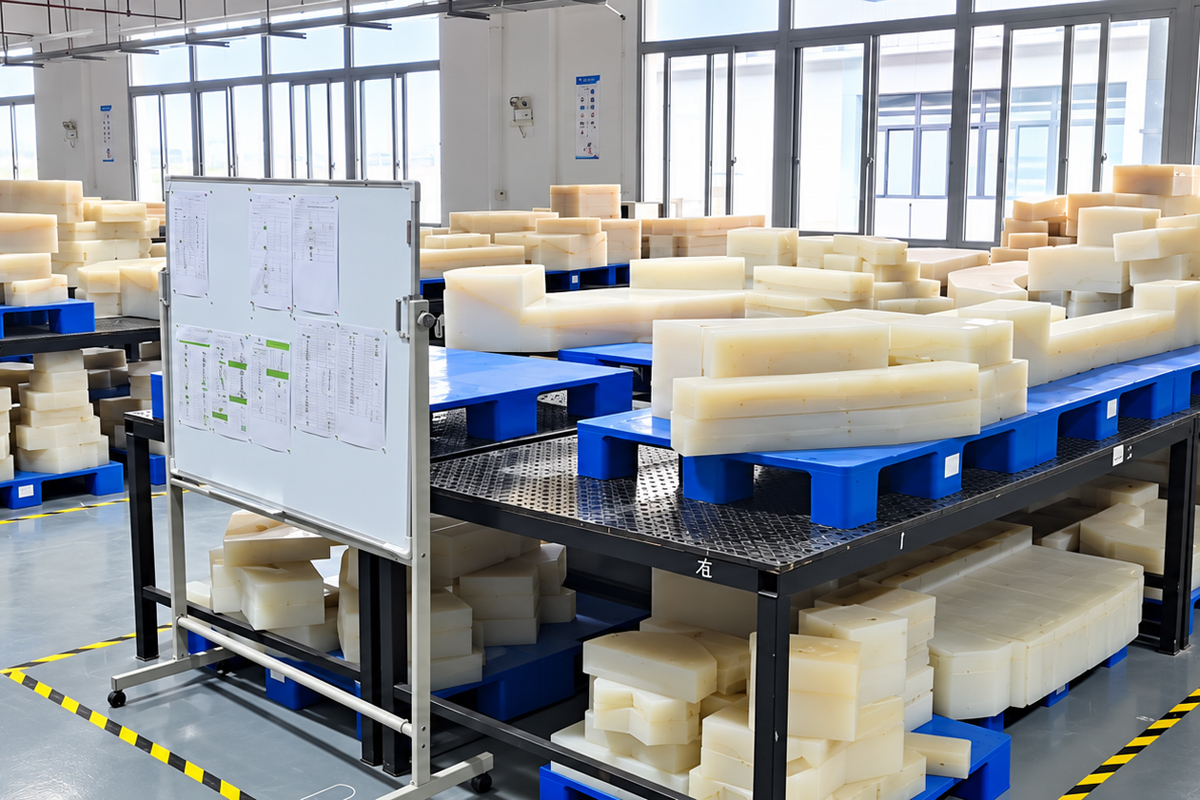
Vacuum casting is especially useful when you need low-volume plastic parts with a production-like appearance. It can be a strong choice for:
- Consumer electronics housings
- Medical device enclosures
- Automotive interior parts
- Display models and presentation samples
- Wearable device prototypes
- Transparent or tinted plastic parts
- Rubber-like parts and soft-touch components
- Small-batch products before mass production
It also works well when a design may still change. If the product is not finalized, jumping straight into injection molding can be expensive and risky. Vacuum casting gives teams a way to test the look, fit, feel, and user response before committing to hard tooling.
It is not the right answer for every project. The mold life is limited, tolerances are not the same as precision CNC machining, and very high-volume production still belongs to injection molding. But for the right batch size and product stage, vacuum casting is often one of the most efficient ways to make realistic plastic parts.
The Process That Saves the Deadline
Every product team eventually meets a deadline that does not care about perfect conditions.
The trade show is next month. The client needs samples. The sales team wants something that looks finished. The design is almost ready, but not quite ready for tooling. The 3D printed version is fine for internal review, but not polished enough for public presentation.
This is where vacuum casting quietly walks in, mutters something unrepeatable, and gets to work.
At FacFox, we often see vacuum casting used as a bridge between prototype and production. It helps teams move from “this is the idea” to “this feels like a real product” without forcing them into full-scale manufacturing too early.
So yes, vacuum casting may be the slow horse of manufacturing.
Not the loudest. Not the trendiest. Not the one getting all the headlines.
But when you need low-volume plastic parts that look good, feel convincing, and arrive before the project goes sideways, it might be exactly the process you want on your side.
Leave A Comment
You must be logged in to post a comment