

Put a transparent human figure on a table and people lean closer.
The outline is familiar. The material makes it strange. You can look through the chest, follow the curve of a shoulder, and see reflections where you expect skin. It feels like access to something normally hidden.
Then comes the useful question: what, exactly, are you looking at?

A24’s You Can See Everything, directed by Nathan Fielder and Lance Oppenheim, begins with Elizabeth Holmes inviting a skeptical film crew into her life before her prison sentence. The premise gives the title an uneasy edge. An invitation to look still leaves the viewer with work to do.
For anyone making models of the human body, that is a surprisingly practical starting point.
Consider FacFox’s clear resin male mannequin. Its transparent form is immediately compelling. But the base model contains no internal organs. You can see through the body without seeing the systems that make a body work.

That is worth establishing before the presentation starts.
As a physical form, the mannequin offers something concrete: scale, proportion, shape, and a way to discuss how a transparent body might be used in a larger display. Any anatomy added inside must come from the project’s digital information and design work. Clear resin has many talents. Filling in missing research is outside its job description.
Move closer, to a hollow transparent skull, and the questions change. Now the interest lies in the relationship between the outer form, openings, and hollow volume.
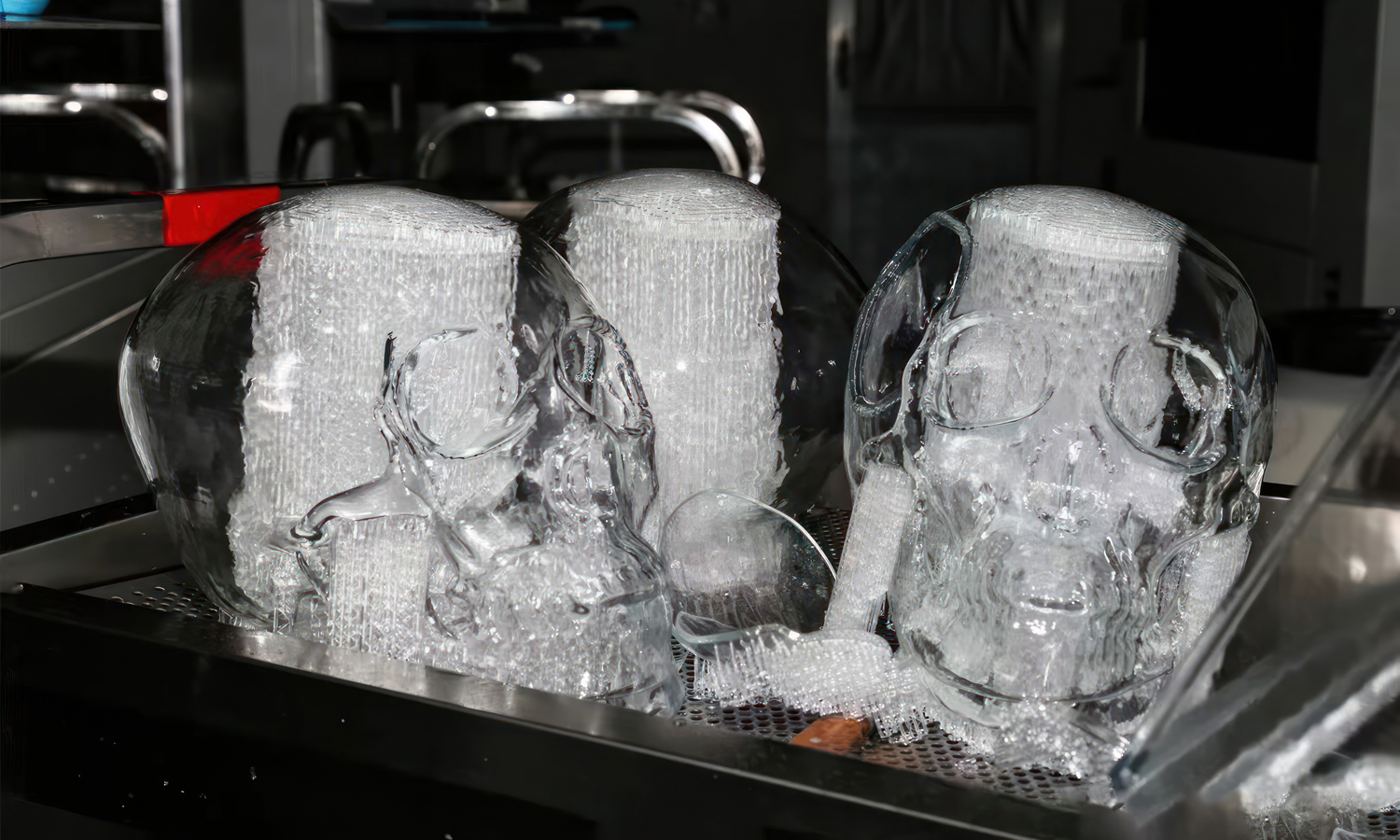
The material makes that relationship visually accessible. Getting there takes manufacturing decisions: wall thickness, drainage, support placement, and polishing. Deep recesses are harder to finish than open surfaces. Reflections can reveal one contour while obscuring another.
A photograph offers one carefully chosen view. A physical model lets someone turn it around and ask about the awkward side.
The most revealing comparison may be FacFox’s three versions of the same brain model. The project used silicone, PolyJet rubber-like material, and SLA clear resin. The silicone version was soft and highly elastic; the PolyJet version was translucent with some elasticity; the transparent SLA version was comparatively rigid.

Same anatomy. Different answers to the hand.
Looking at the clear version tells you little about how the softer versions behave. Handling them makes the difference obvious. Choosing among them begins with the task: showing a shape, explaining a spatial relationship, or exploring a particular tactile quality.
That is where a medical model earns its place on the table. Its value comes from helping someone examine a specific question. Anatomical fidelity depends on the source data and manufacturing checks; the intended use determines what else needs to be verified.

FacFox offers SLA clear resin and PolyJet printing, material selection support, and surface finishing for anatomical displays, educational models, and development projects. Bring the model files—and the question you need the physical object to answer.
“Can we make it transparent?” is a useful beginning.
“What will that help someone understand?” is the question worth staying for.
Leave A Comment
You must be logged in to post a comment