Material Resin
Quantity 1 pcs
Price Range $1-100
Lead Time 1 workdays
Gallery
About Project
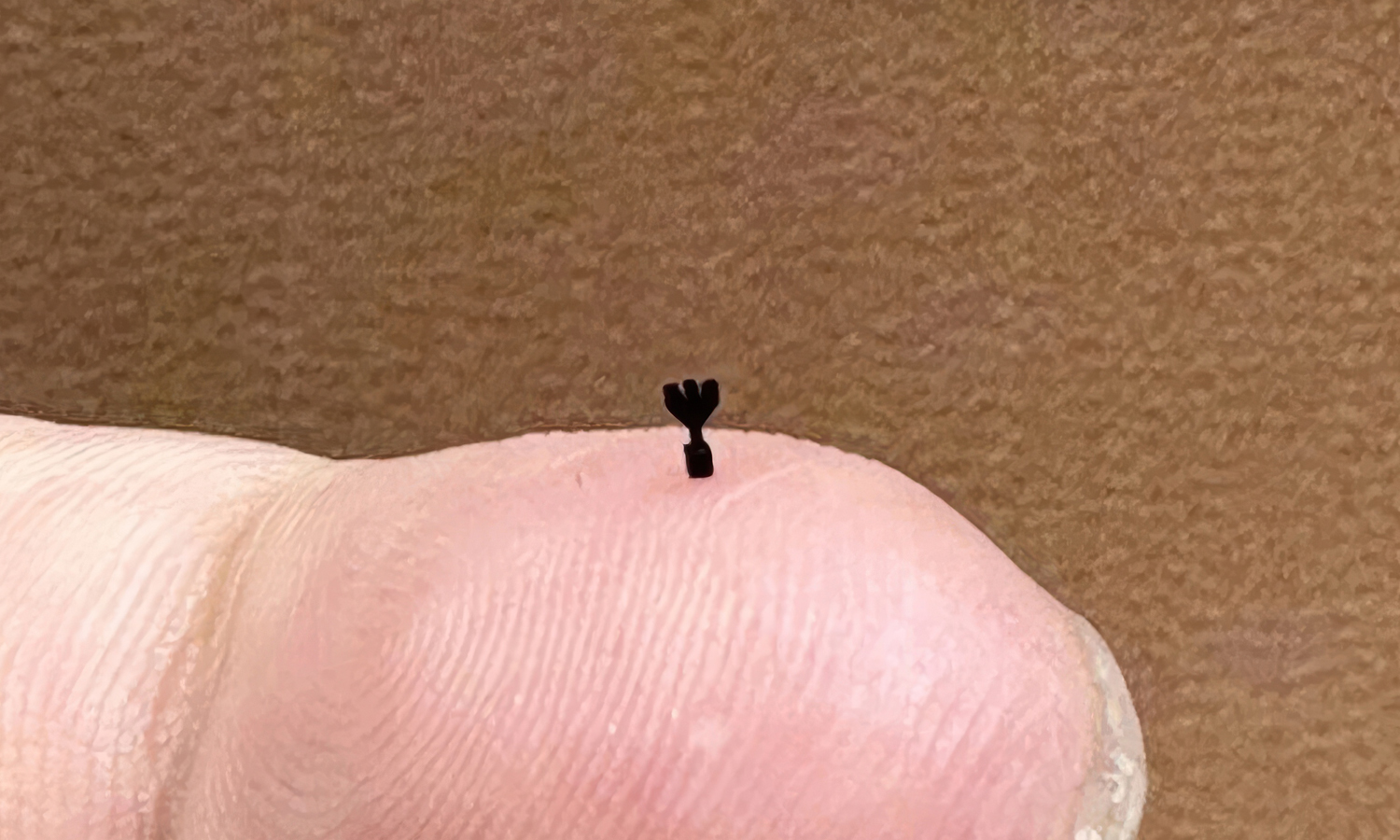
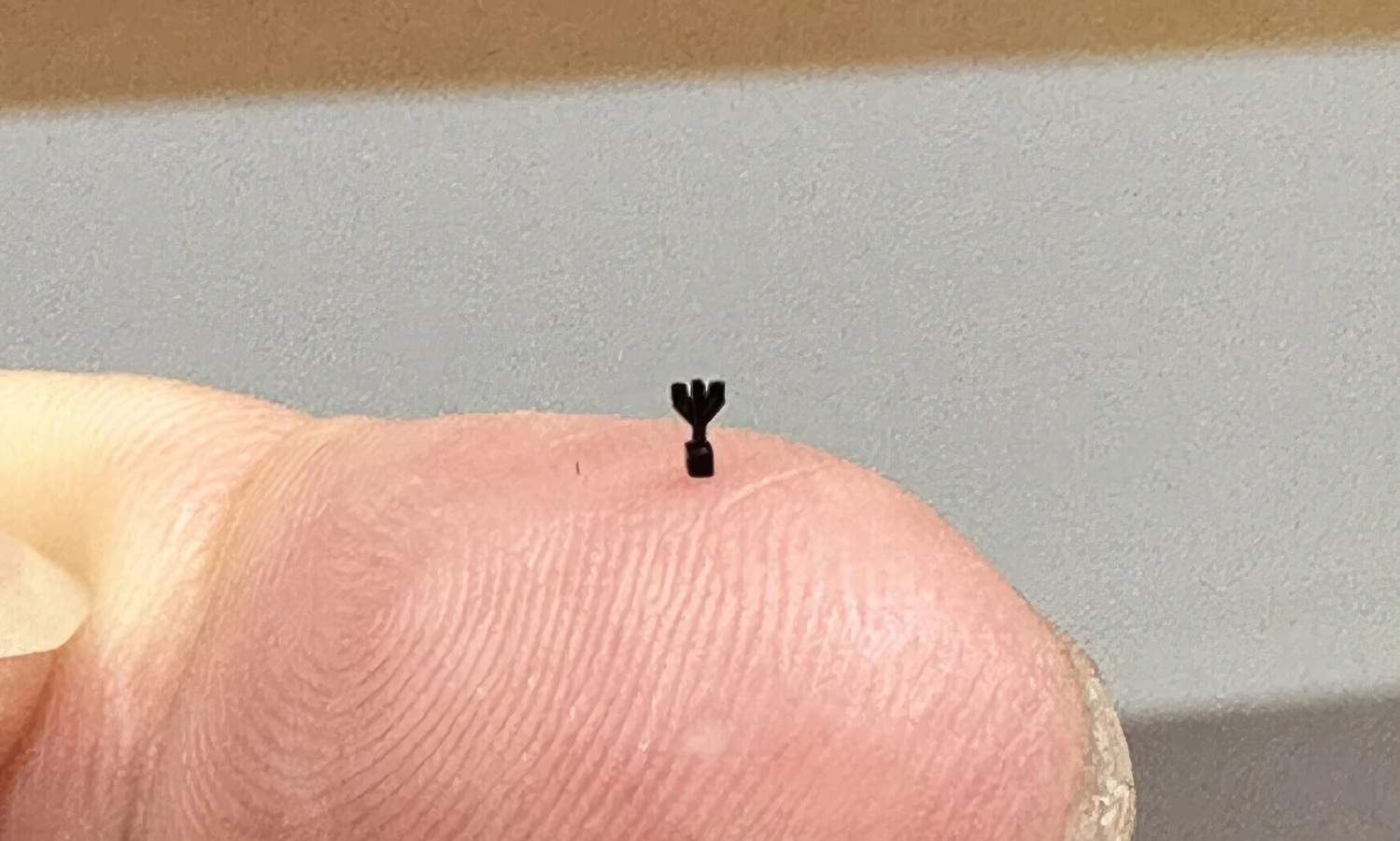
This project features a PµSL 3D printed micro gripper made from black photopolymer resin. Placed on a fingertip, the part is only around the millimeter scale, with a compact lower base, a slender vertical stem, and several petal-like branches opening at the top. This geometry is especially relevant to micro-gripper concepts, micro-actuator research, and miniature mechanical structures used in micro-robotics, lab-on-a-chip systems, or minimally invasive device development.
At this size, the key value is not simply that the part is small. The important point is that the upper branches remain separated, readable, and upright. The narrow gaps, thin stem, and angled overhanging tips would be difficult to prototype through conventional machining or manual assembly. PµSL micro 3D printing was suitable for this part because projected UV light can cure photosensitive resin layer by layer with micron-level resolution, allowing complex micro-scale geometry to be produced directly from a digital file.
From the fingertip photos, the printed part shows a clear overall silhouette, visible branch separation, and a stable standing form despite its extremely small size. The black resin also makes the outline easier to evaluate against the skin. For research teams developing micro-mechanical parts, experimental grippers, micro-scale fixtures, or precision resin structures, this approach is useful when the first goal is to turn a difficult micro-scale concept into a physical sample for handling and visual evaluation. If you are working on your own micro-scale resin parts, send your files to info@facfox.com or visit FacFox to discuss your project.
Challenge
The main challenge of this project was the stable fabrication of a millimeter-scale branched microstructure. The small base, slender vertical stem, and separated upper “claws” required careful control during printing and cleaning. At this scale, excessive resin residue or slight deformation could easily reduce the readability of the open gripper-like geometry.
Solution
- Step 1: The microstructure file was reviewed to check the base, vertical stem, upper branch geometry, and the narrow gaps between the separated tips before PµSL printing.
- Step 2: The part was oriented and prepared for projection micro stereolithography so that the slender stem and angled branch features could be formed with controlled exposure and reduced risk of deformation.
- Step 3: Black photopolymer resin was selectively cured layer by layer using projected UV patterns, building the base, stem, and micro-gripper top as one integrated micro-scale resin structure.
- Step 4: After printing, uncured resin was carefully removed from the surface and from the small spaces between the branches to keep the separated top geometry visible.
- Step 5: The printed part was dried and post-cured according to the resin requirements, then inspected under close lighting to confirm the standing form, branch separation, and overall readability of the microstructure.