Gallery
About Project
When working on older motorcycles or heavily-modified builds, one of the most frustrating problems isn’t the engine, wiring, or accessories-it’s the connectors. Many OEM plugs are discontinued, impossible to source, or simply don’t match the layout of modern LED headlights, sensors, or aftermarket modules.
This project came from exactly that situation: a rider needed a robust, quick-release connector housing to cleanly integrate an upgraded component into an existing harness. The original plug had long been out of production, so a custom replacement was the only path forward.
A Connector Built for Real Riding Conditions
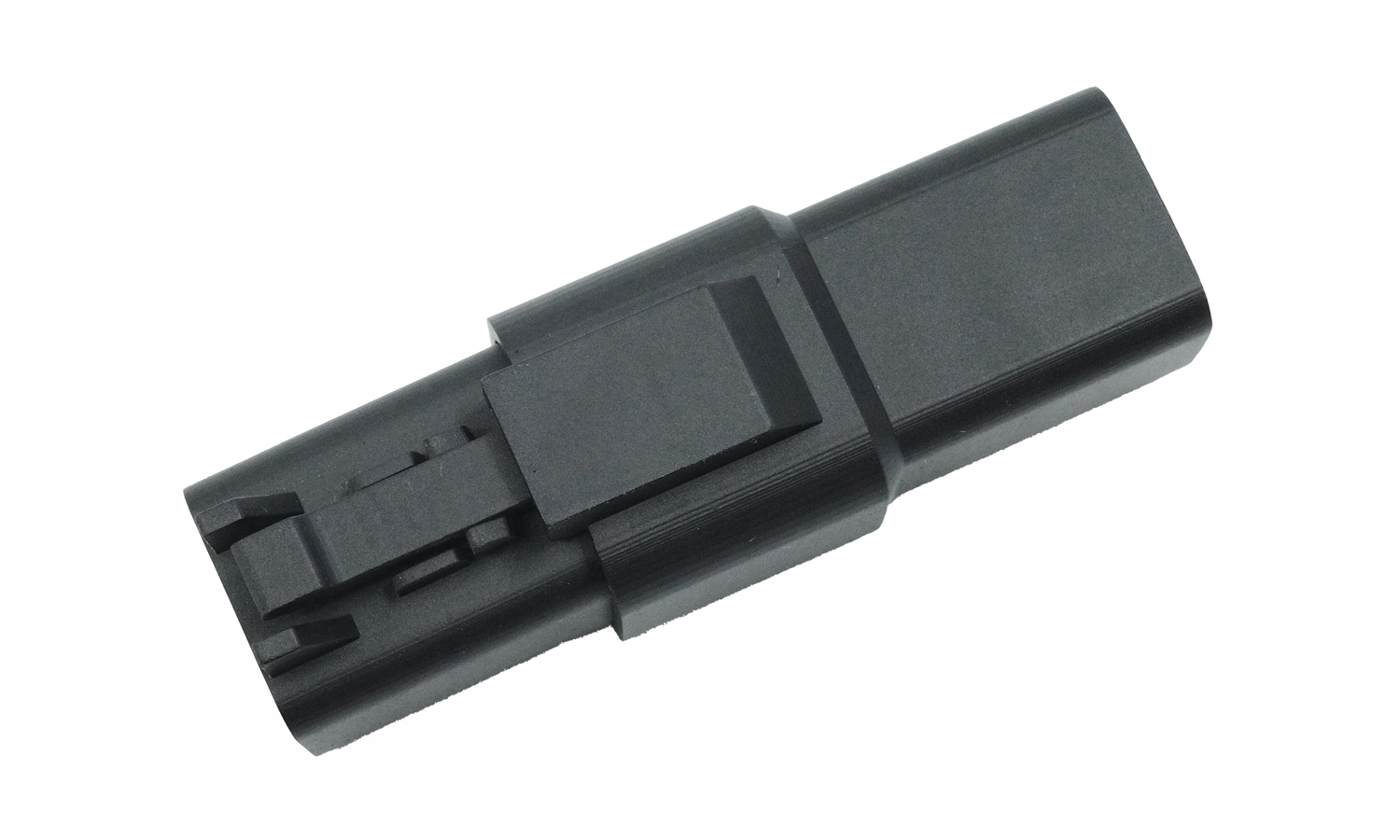
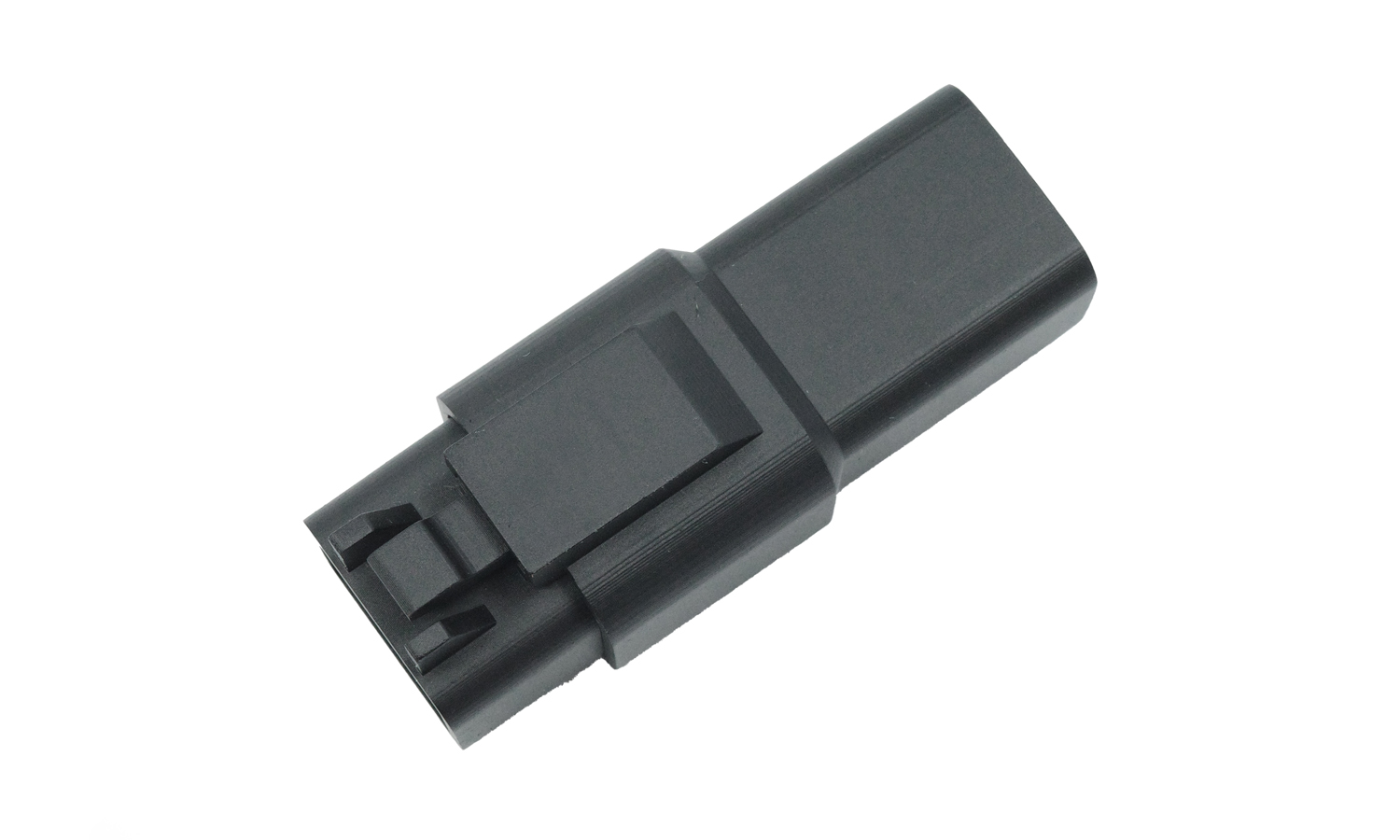
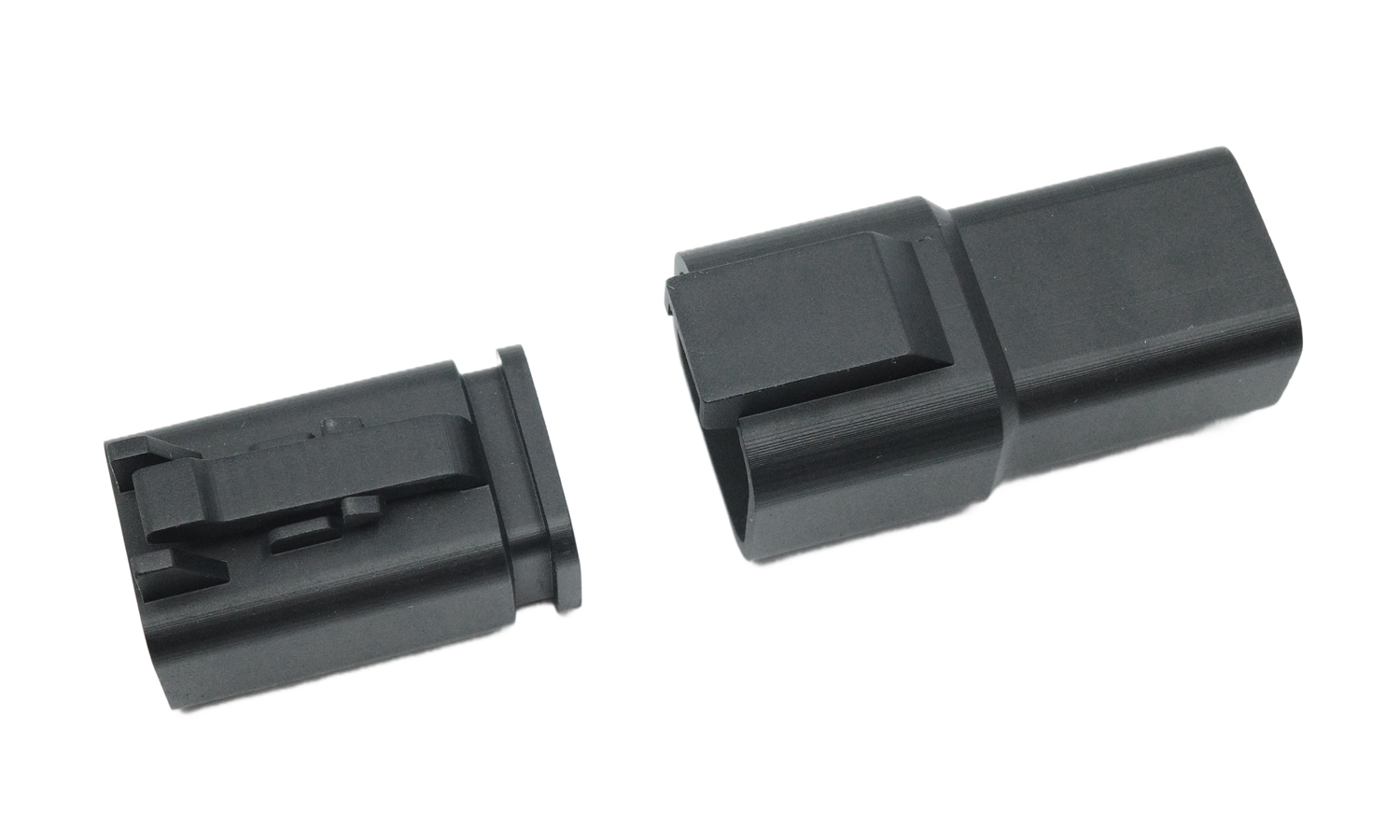
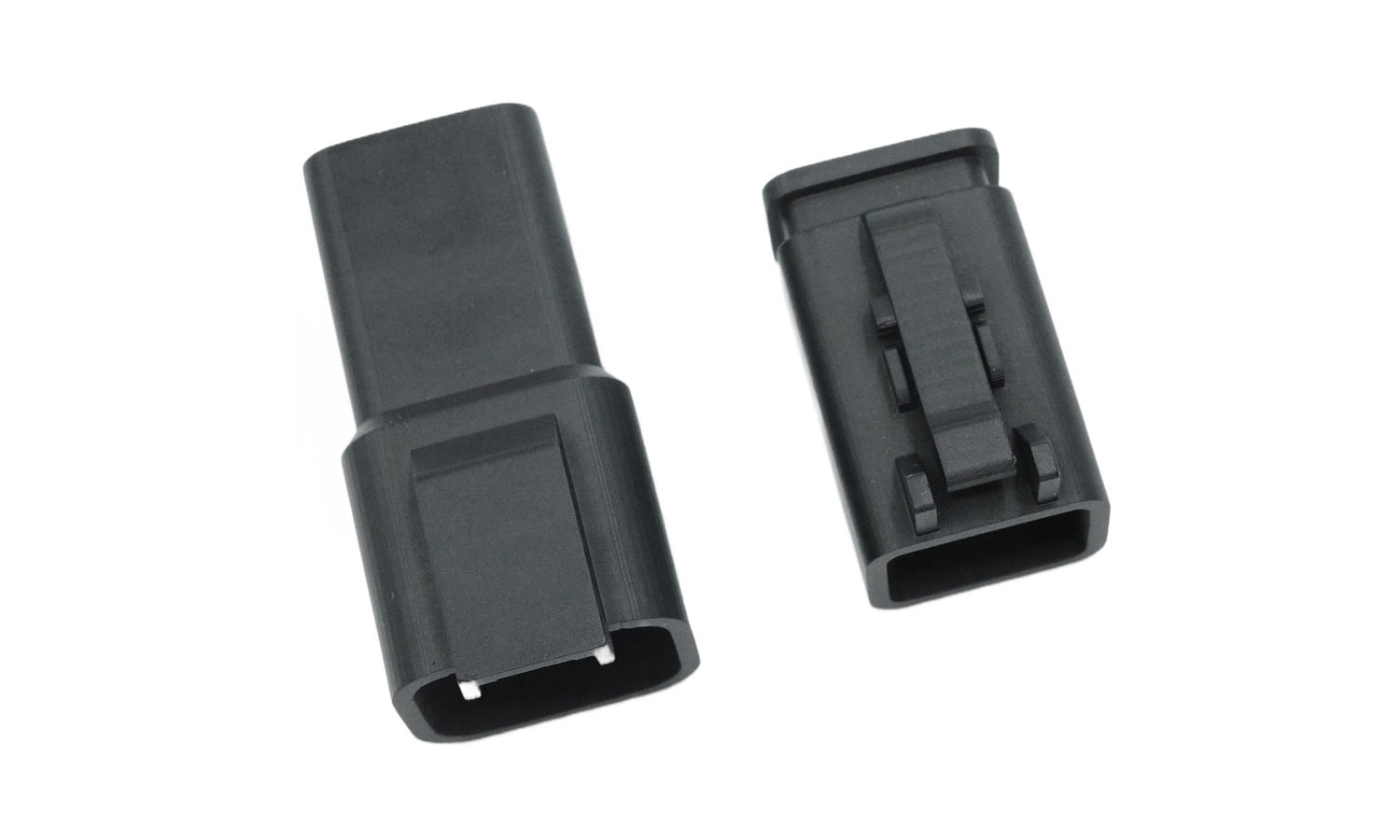
The part features a male-female locking design with a positive clip mechanism. When pushed together, the two halves click into place securely, and can be released only by pressing the tab-exactly like the high-quality connectors you’d expect to see on factory looms.
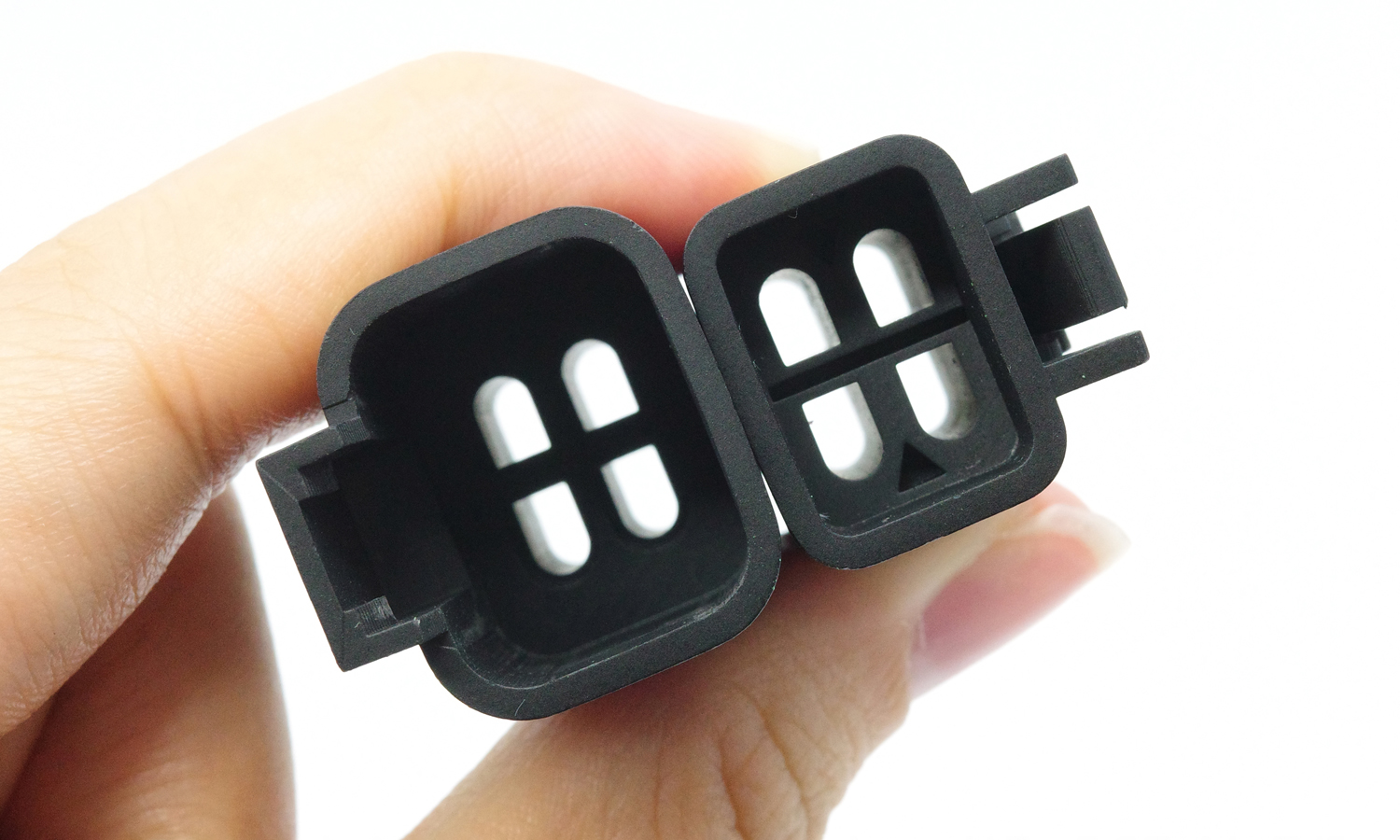
Inside the housing, structural ribs and dual elongated slots guide and protect the terminals. The exterior has reinforced walls to handle vibration, heat cycles, and the occasional roadside tug during maintenance.
To keep the piece durable and dimensionally stable, the client chose a rigid engineering-grade filament, ideal for small mechanical components that need both stiffness and reliable tolerances.
Why 3D Printing Was the Perfect Solution
For a niche custom connector like this, traditional injection molding would be unrealistic-high cost, long lead time, and tooling for a single part simply doesn’t make sense.
With 3D printing:
- The design was prototyped and refined quickly
- Wall thickness, clip strength, and internal geometry were tuned with real test fits
- The final part was delivered without any need for tooling or minimum order quantities
This is exactly the kind of small-batch, high-precision job where additive manufacturing shines.
Built by FacFox for Riders Who Need Custom Solutions
FacFox supported the production of this connector housing with professional-grade FDM printing, ensuring:
- Clean dimensional accuracy
- Strong, functional locking features
- Smooth fit between mating halves
- Durable material performance for on-bike use
Whether you’re a motorcycle builder, restorer, or electrical systems specialist, FacFox can help you reproduce discontinued parts, prototype custom connectors, or build one-off components that simply don’t exist in the catalog.
From wiring adapters to full custom housings-if you can design it, FacFox can print it.
Solution
- Step 1: 3D Model Preparation. The connector housing was digitally modeled, and all locking features and internal channels were defined in CAD. The final geometry was exported as an STL file for production.
- Step 2: File Slicing. The STL file was processed through slicing software, where layer height, infill density, and print orientation were configured to ensure optimal strength in the clip and mating interfaces.
- Step 3: FDM Printing. The part was printed using an FDM 3D printer. Rigid filament was loaded, heated, and extruded layer by layer to form the housing structure. Both the male and female halves were produced in the same print job to ensure dimensional consistency.
- Step 4: Support Removal. After printing, the model was removed from the build plate. Supporting structures, where required, were carefully detached without damaging the thin locking tab or interior ribs.
- Step 5: Surface Finishing. Minor stringing and layer particles were trimmed, and the surface was lightly cleaned to achieve a uniform matte finish typical of rigid FDM materials.
- Step 6: Fit Testing. The two printed halves were assembled to verify that the locking clip engaged correctly. Terminal cavities and internal guides were checked to ensure proper alignment.
- Step 7: Final Inspection. All edges, latch flexibility, and mating tolerances were inspected. The part was approved once consistent engagement and smooth release were confirmed.