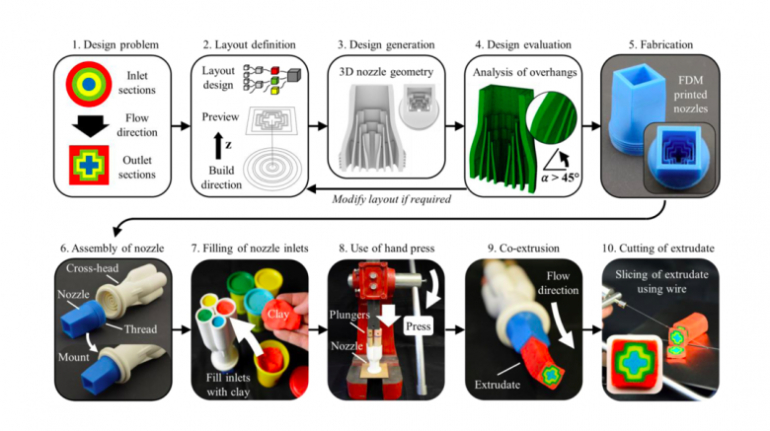
There is no question about additive manufacturing’s ability to produce complex, highly integrated geometries: in fact, this capability is one of the technology’s main advantages. Despite this, one of the hurdles to the broad implementation of AM has been actually creating these complex designs in the first place. That is, many parts with complex 3D printed structures are realized thanks to the deep application-specific knowledge of engineers and entail a fairly time-consuming modeling process. In recent years, we’ve seen the emergence of topology optimization software, which generates structures based on the requirements input by the user. However, even this approach often requires some degree of manual interpretation.