Material Plastic
Quantity 2 pcs
Price Range $100-1,000
Lead Time 2 workdays
Gallery
About Project
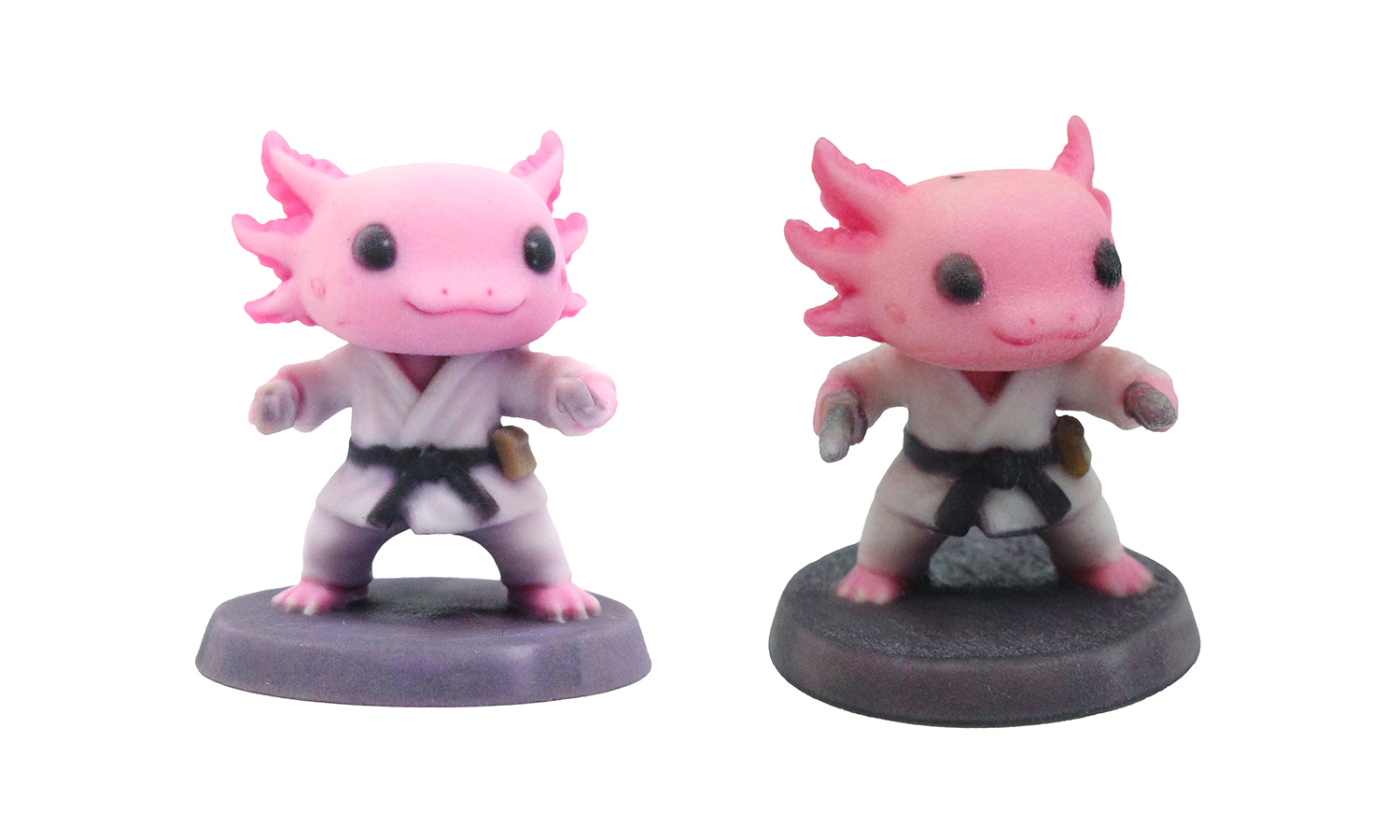
This comparison features a cute Axolotl martial artist printed using two full-color resin technologies:
- Left: WJP Full-Color
- Right: Mimaki Full-Color
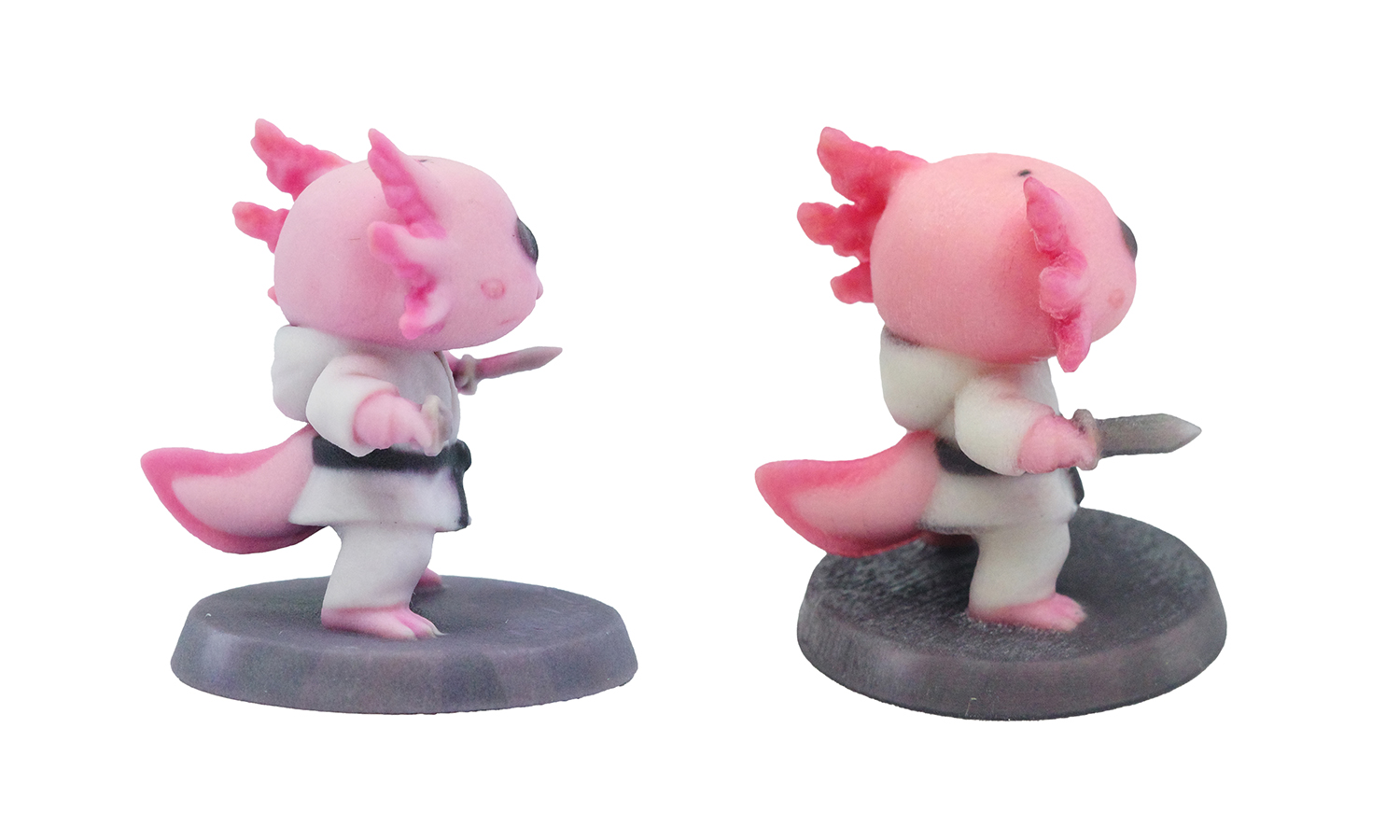
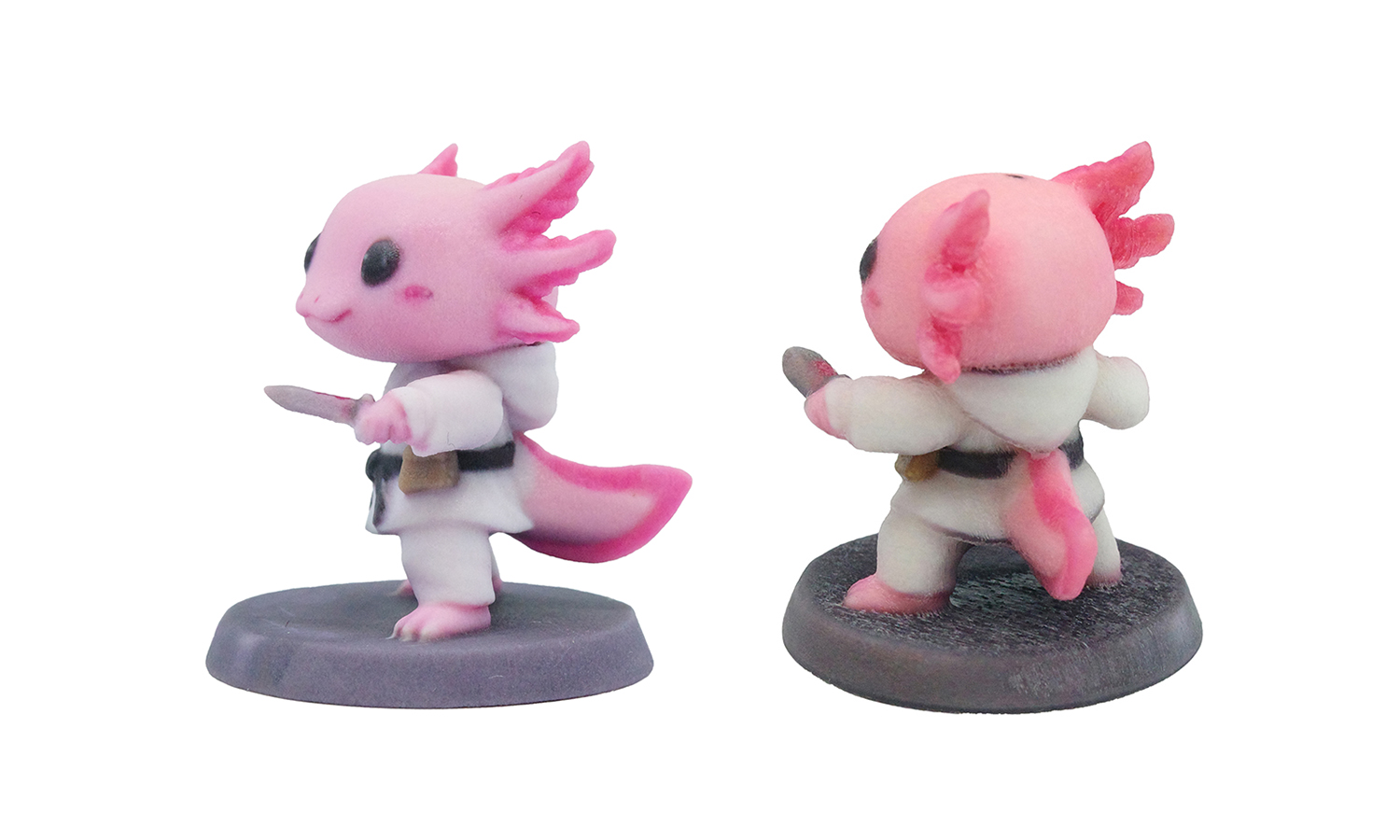
Both prints come from the same 3D model but show noticeable differences in surface quality, color vibrancy, and overall character expression.
1. Surface Finish & Detail Clarity
WJP Full-Color (Left)
- Produces a smoother overall finish, especially visible on the face, gills, and gi (outfit).
- The color boundaries on the belt and tail appear cleaner.
- The print has a soft, matte look that supports pastel-style characters like this one.
Mimaki Full-Color (Right)
- Surface shows more grain and texture, particularly on the base and limbs.
- Detail edges are slightly softer, giving a more diffused, painterly appearance.
- Gills and tail shading display stronger color transitions.
2. Color Tone & Style
Both prints deliver a recognizable pink axolotl, but each has its own style:
WJP
- Colors are lighter and more pastel, matching the cute, soft expression of the character.
- The gi (white uniform) is cleaner and brighter.
Mimaki
- Colors are darker and stronger, with deeper reds on the gills and hands.
- The gi appears slightly greyed and warmer.
Note: Neither process is perfectly color-faithful to the digital model-
- WJP tends toward cooler/lighter tones.
- Mimaki tends toward warmer/darker tones.
3. Base & Overall Character Impression
- The WJP base is smoother and blends well with the character’s soft aesthetic.
- The Mimaki base has a rougher texture that makes the figure look more grounded or weathered.
The WJP version appears “cute and clean,” while the Mimaki version feels “bold and lively.”
Conclusion
Both prints successfully capture the playful axolotl fighter, but they emphasize different visual strengths:
- WJP Full-Color is ideal if you prefer ✔Smooth surfaces ✔Cleaner pastel colors ✔A softer, cuter appearance
- Mimaki Full-Color works better if you like ✔Darker, stronger tones ✔A more textured surface ✔A slightly more dramatic look
Since both are in a similar price range, choosing between them depends on which visual style best suits your miniature project.
If you’d like help selecting a full-color process for your next figure, the FacFox team is always ready to assist.
Solution
- Step 1: The Axolotl Fighter 3D model was inspected and prepared, ensuring that the mesh was watertight and suitable for full-color printing.
- Step 2: All color textures were applied and baked onto the model, then exported in formats compatible with both WJP and Mimaki printers.
- Step 3: The file was imported into the WJP full-color printing software, where scale, orientation, and print resolution were adjusted.
- Step 4: A second build file was generated in the Mimaki software using identical scale settings to produce comparable results.
- Step 5: The WJP version was printed layer by layer in full-color resin, with geometry and color deposited simultaneously.
- Step 6: The Mimaki version was printed next using its own slicing setup and color management parameters.
- Step 7: Both prints were removed from their machines, and residual resin and support structures were carefully cleaned away.
- Step 8: The miniatures were post-cured under UV light so that the resin hardened and the colors stabilized.