Material Metal
Quantity 7 pcs
Price Range $100-1,000
Lead Time 3 workdays
Gallery
About Project
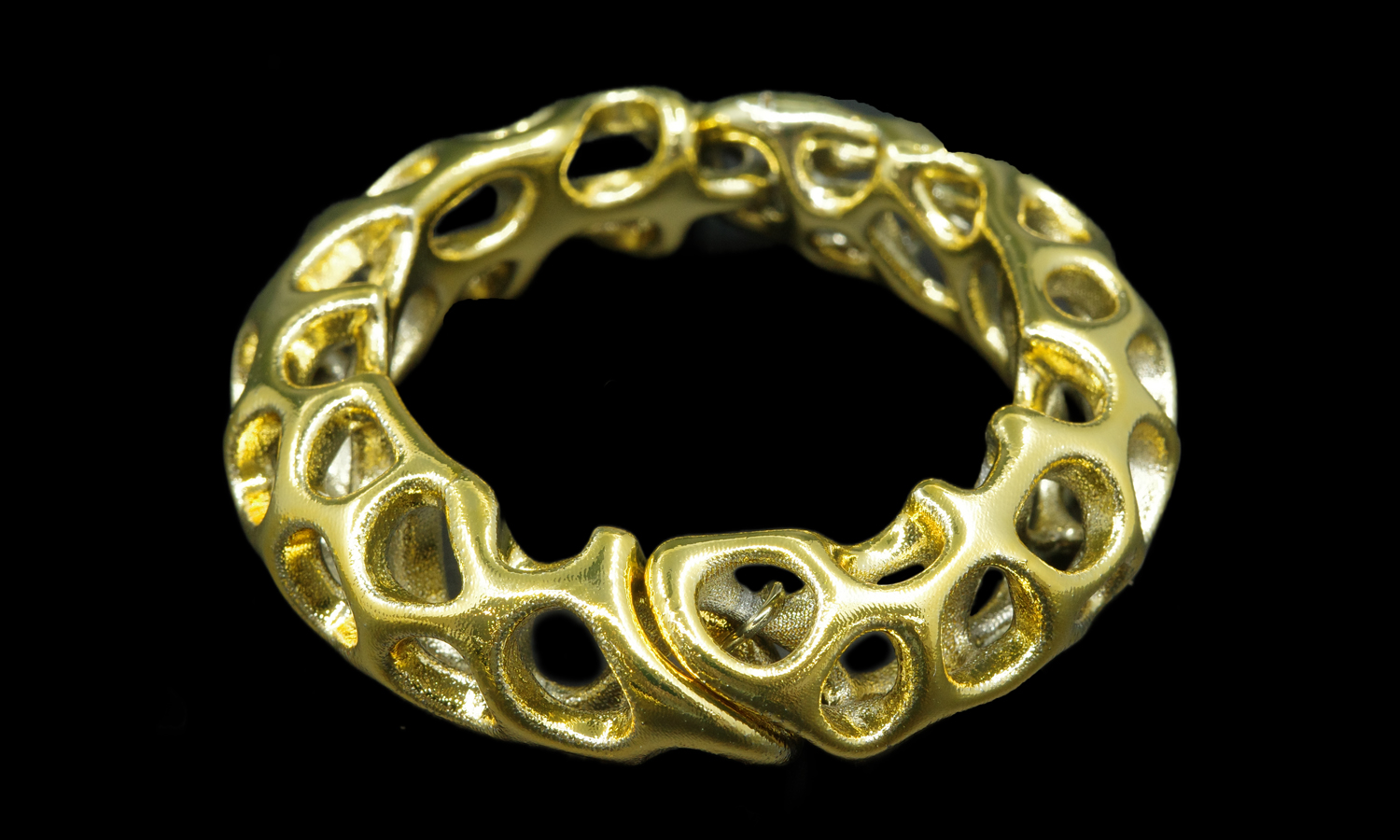
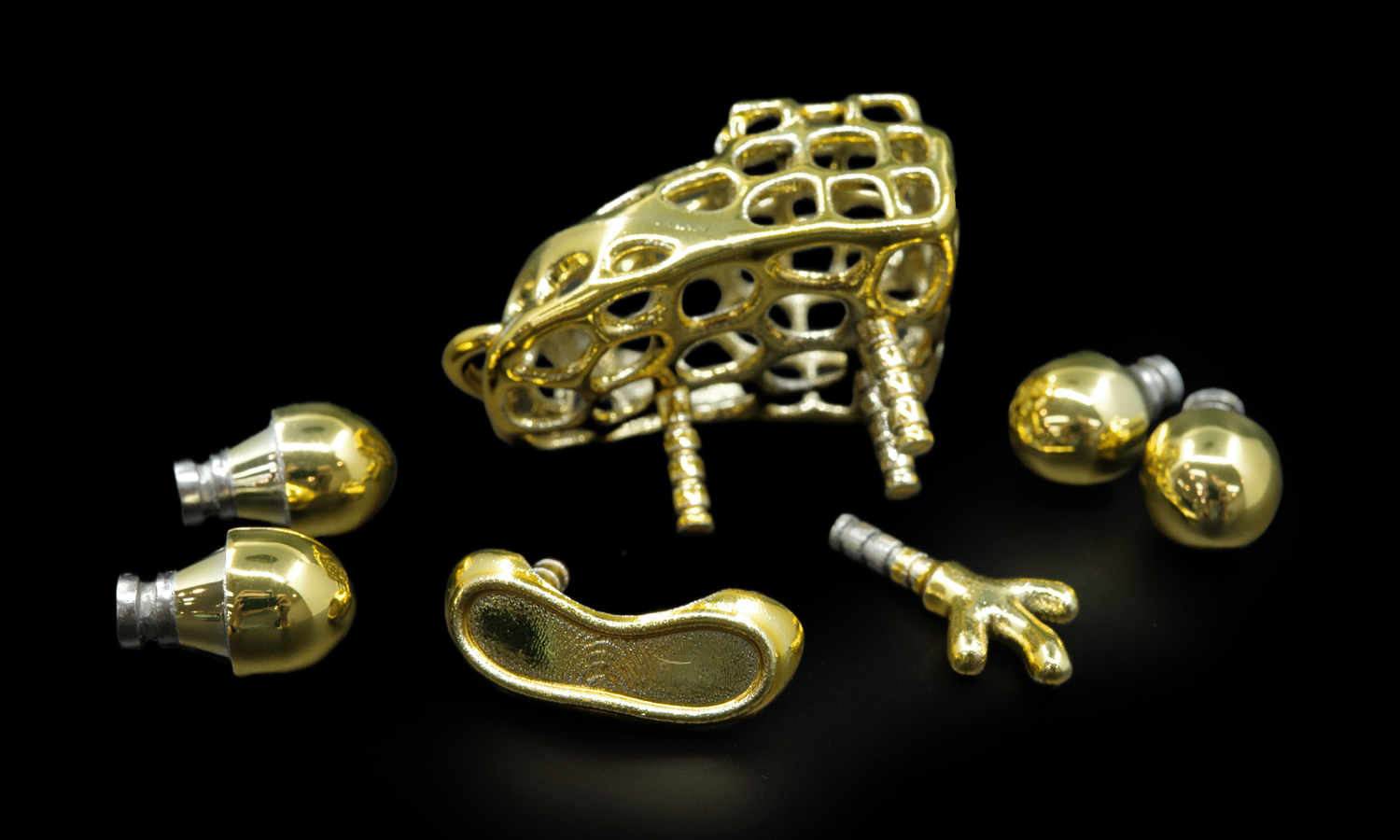
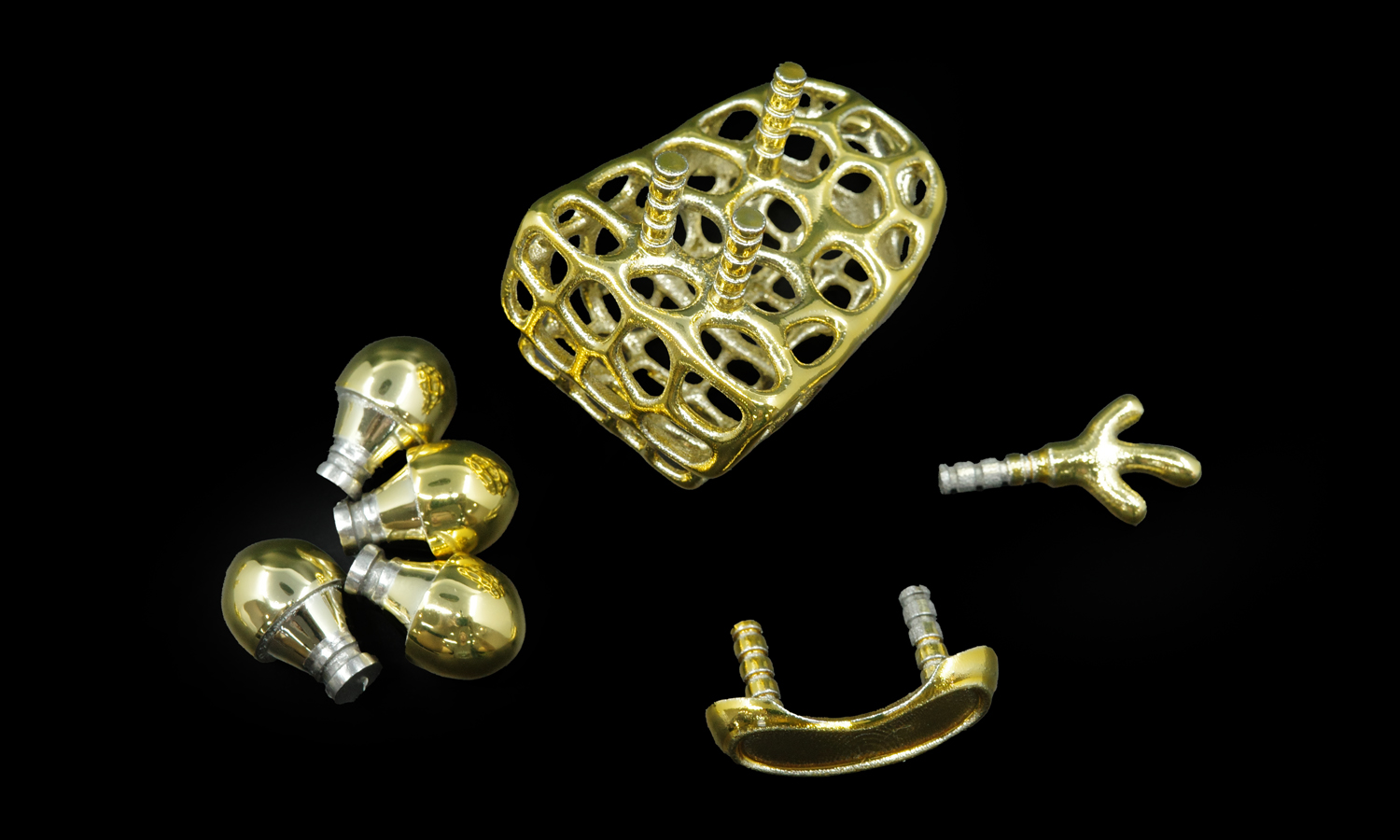
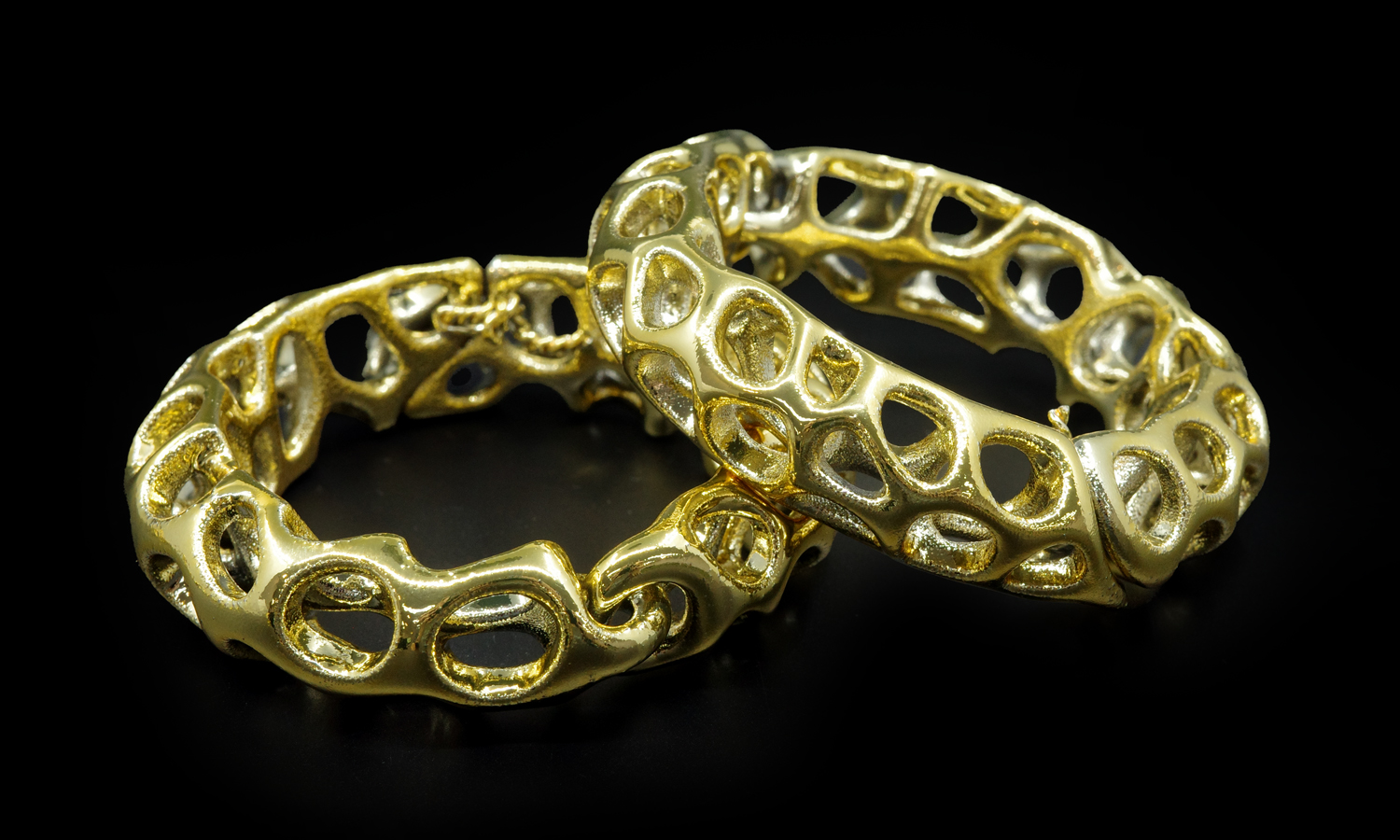
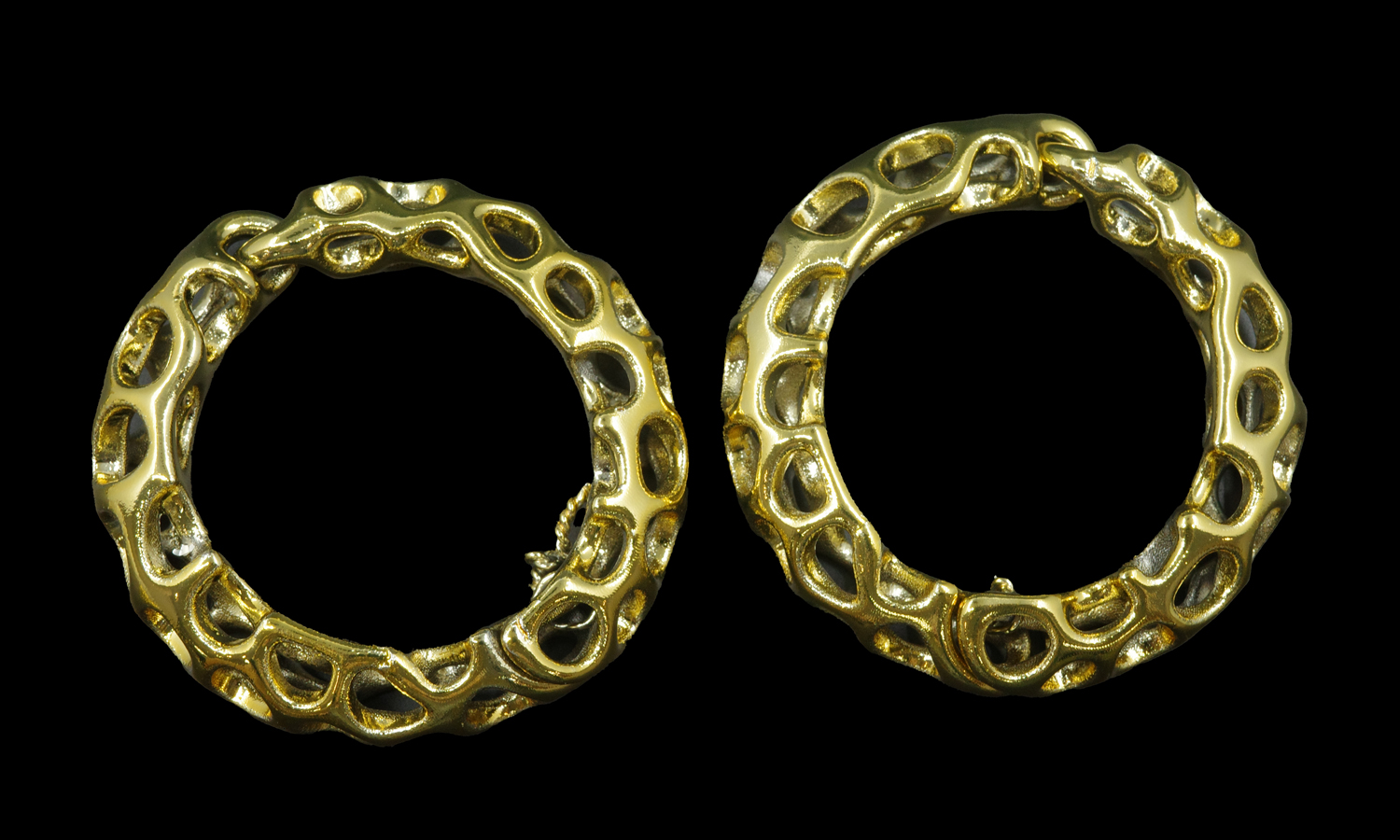
This project features binder jetting 3D printed openwork jewelry pieces made from stainless steel, then polished and gold plated. The parts include ring-shaped accessories with organic hollow openings and several smaller decorative components with mixed gold and exposed stainless steel surfaces.
The focus of this case is slightly different from the previous gold-plated animal figurines. Instead of emphasizing character silhouettes, this project is more about wearable-scale decorative geometry: repeated openings, rounded metal edges, compact part size, and how gold plating behaves on complex jewelry-like forms.
Binder jetting metal 3D printing was used because it can produce stainless steel parts with complex open structures without traditional tooling. Compared with SLM, binder jetting can be a more cost-effective choice for certain stainless steel decorative parts, especially when the design does not require fully dense laser-melted metal. Since binder-jetted stainless steel shrinks during sintering, the model needs to be prepared with process compensation before production.
After printing, curing, depowdering, and sintering, the parts were polished where accessible and then electroplated in gold. From the photos, the outer high points show a bright reflective finish, while the recessed interiors and inner hole surfaces still reveal a more granular printed-metal texture. This is a realistic result for openwork metal parts: gold plating improves the visual richness, but it follows the underlying surface instead of hiding every rough area.
This workflow is suitable for jewelry prototypes, fashion accessories, decorative metal components, art objects, and small-batch stainless steel design samples. If you are developing complex metal accessories and want to compare binder jetting with SLM or other manufacturing routes, send your files to info@facfox.com or visit FacFox to discuss your project.
Challenge
The challenge was to produce small stainless steel jewelry pieces with an openwork, organic surface pattern while still keeping the overall shape clean enough for a decorative gold-plated finish. The ring-like parts have many irregular holes around a curved body, and the smaller components include tiny stems, rounded bulb forms, and recessed areas. These features make the design visually distinctive, but they also make polishing much harder before plating.
Solution
- Step 1: The jewelry files were reviewed before production, including the ring-shaped bodies, openwork cell distribution, wall thickness, small connection features, and expected shrinkage after sintering.
- Step 2: The models were prepared for binder jetting metal 3D printing, with process compensation considered because stainless steel parts shrink during the sintering stage.
- Step 3: The green parts were printed by selectively depositing binder onto stainless steel powder layer by layer, forming the openwork jewelry geometries and small accessory components.
- Step 4: After printing, the parts were cured and depowdered carefully so loose powder could be removed from the openings, recesses, and small internal areas.
- Step 5: The stainless steel parts were sintered to achieve the final metal structure, with dimensional shrinkage controlled through the binder jetting workflow.
- Step 6: Accessible outer surfaces were polished to improve brightness and reduce roughness, while the inner walls and recessed areas remained more difficult to reach.
- Step 7: Gold plating was applied to create the final decorative metal appearance, with some exposed stainless steel areas visible on selected smaller components.
- Step 8: The finished parts were inspected for openwork pattern clarity, plating coverage, surface texture, edge definition, and overall jewelry-like presentation.