Material Resin
Quantity 1 pcs
Price Range $100-1,000
Lead Time 2 workdays
Gallery
About Project
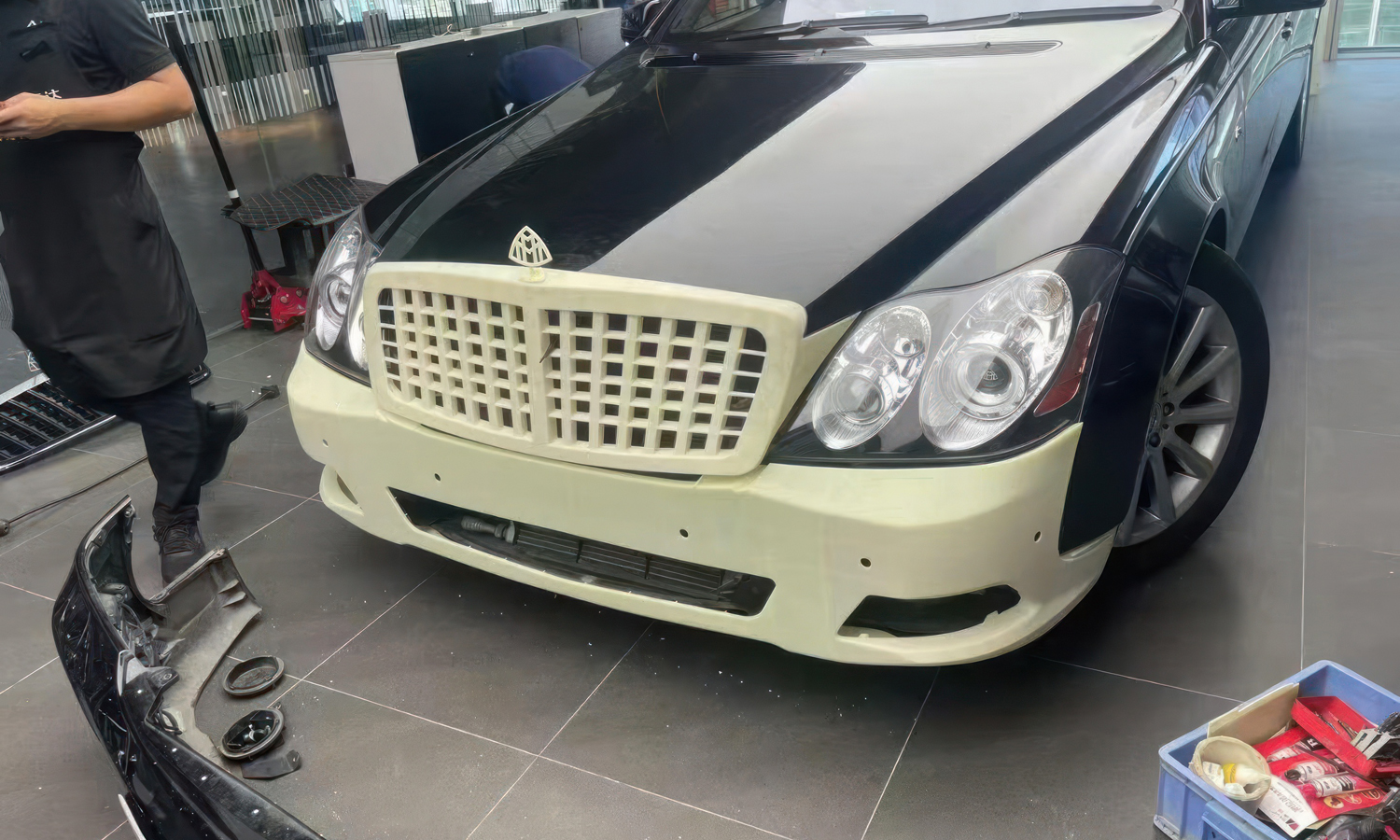
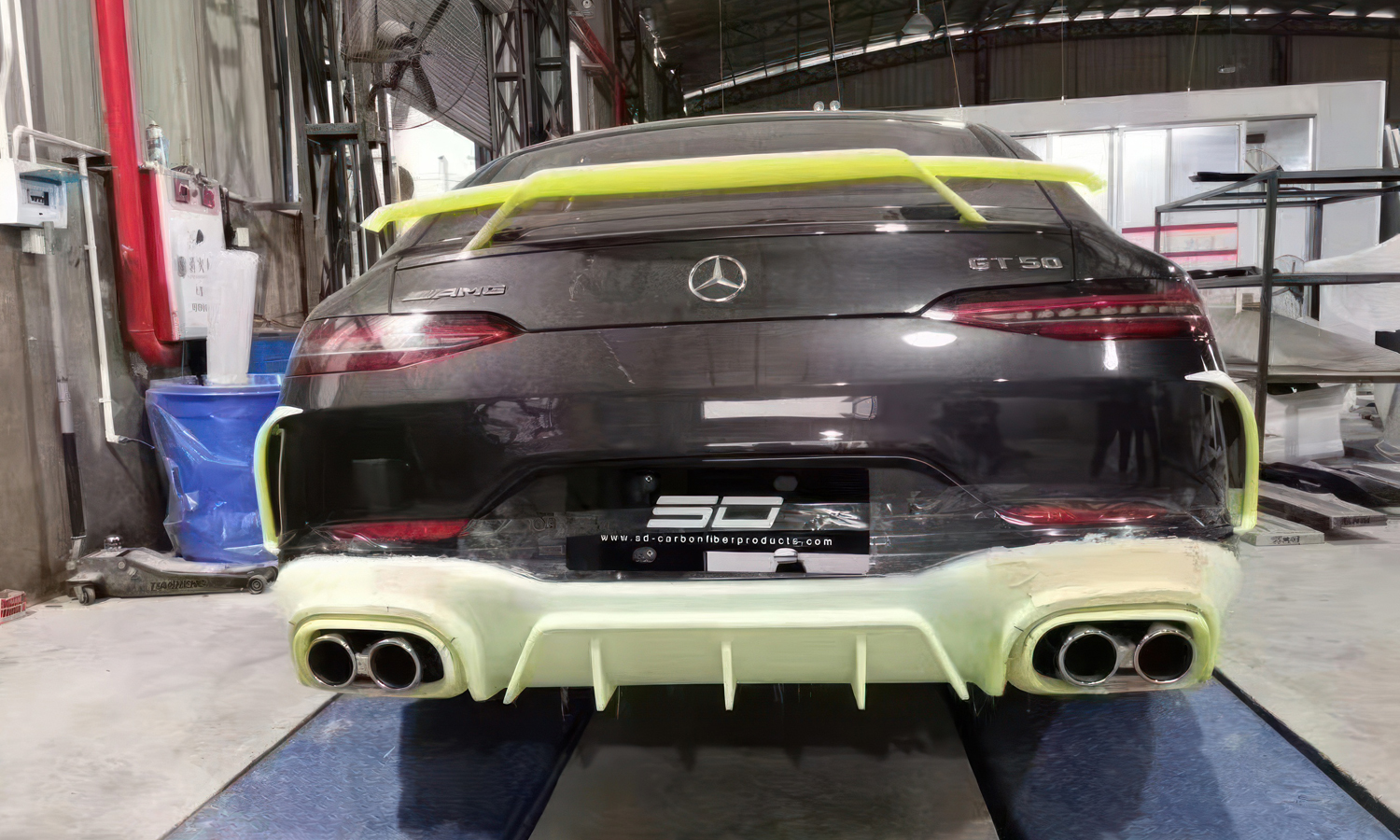
From concept to the shop floor, the automotive aftermarket is undergoing a massive digital revolution driven by large-format SLA 3D printing. These striking images of a Mercedes-AMG GT 50 and a luxury Maybach showcase the exact moment custom automotive styling meets advanced manufacturing.
The light-green body panels and spoilers clamped onto these vehicles are produced using industrial, large-format Stereolithography (SLA). This process utilizes a high-precision UV laser to cure liquid photopolymer resin layer by layer. The result is a master pattern with exceptional dimensional accuracy and an ultra-smooth surface finish straight off the print bed. For elite vehicles where a single millimeter of misalignment can ruin a silhouette, SLA ensures flawless panel gaps and body contours before any permanent production begins.
Rather than being the final road-facing components, these resin prints serve as the ultimate master patterns. Once vehicle fitment and aerodynamic lines are fully verified on the car, these high-fidelity patterns are utilized in the mold-making and casting process. By transitioning the design from SLA resin to final materials like ABS or Polycarbonate (PC) via vacuum casting or rapid tooling, the resulting body kits gain the high impact strength, flexibility, and thermal resistance required to withstand high speeds and road debris. This workflow completely bypasses traditional, time-consuming hand-sculpting methods.
Accelerate your automotive product development with FacFox’s advanced large-format 3D printing and custom tooling services, delivering precision-engineered components from digital CAD to final road-ready production.
Solution
- Step 1: The original vehicle dimensions were captured via 3D scanning, and the custom body kit components were digitally designed using CAD software.
- Step 2: The full-scale master patterns were printed using large-format Stereolithography (SLA) technology, where liquid photopolymer resin was cured layer by layer using a high-precision UV laser.
- Step 3: The temporary support structures were removed, after which the resin parts were washed, fully post-cured, and meticulously sanded to achieve an ultra-smooth surface finish.
- Step 4: The finished SLA components were temporarily mounted onto the vehicles so that panel gaps, aerodynamic lines, and clearances could be rigorously verified.
- Step 5: Once perfect fitment was confirmed, the SLA prints were utilized as master plugs, and production-grade molds were created around them during the mold-making phase.
- Step 6: The final, road-ready body kits were cast and duplicated inside the new molds using high-performance ABS and Polycarbonate (PC) to ensure maximum impact resistance and thermal durability.