Material Resin
Quantity 1 pcs
Price Range $1-100
Lead Time 3 workdays
Gallery
About Project
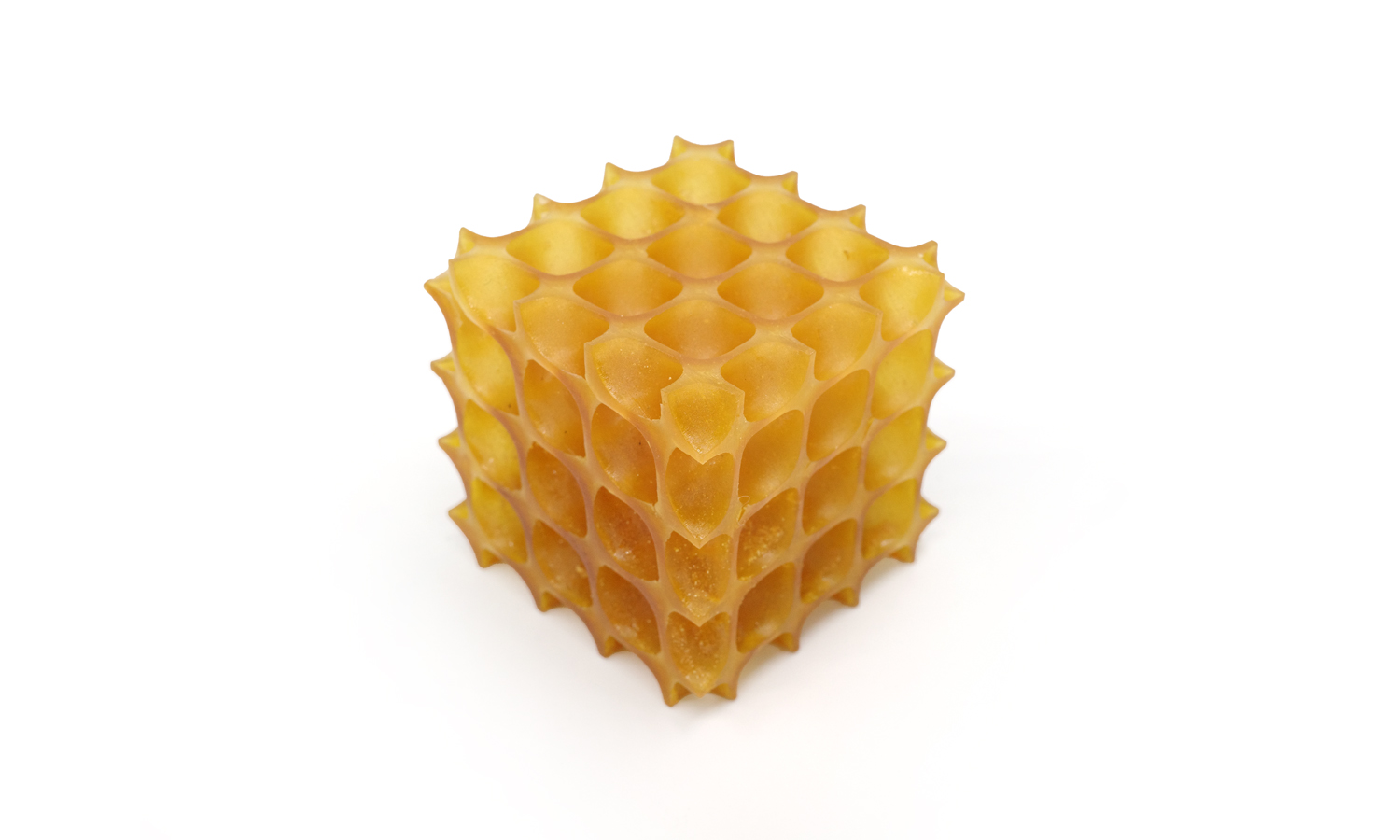
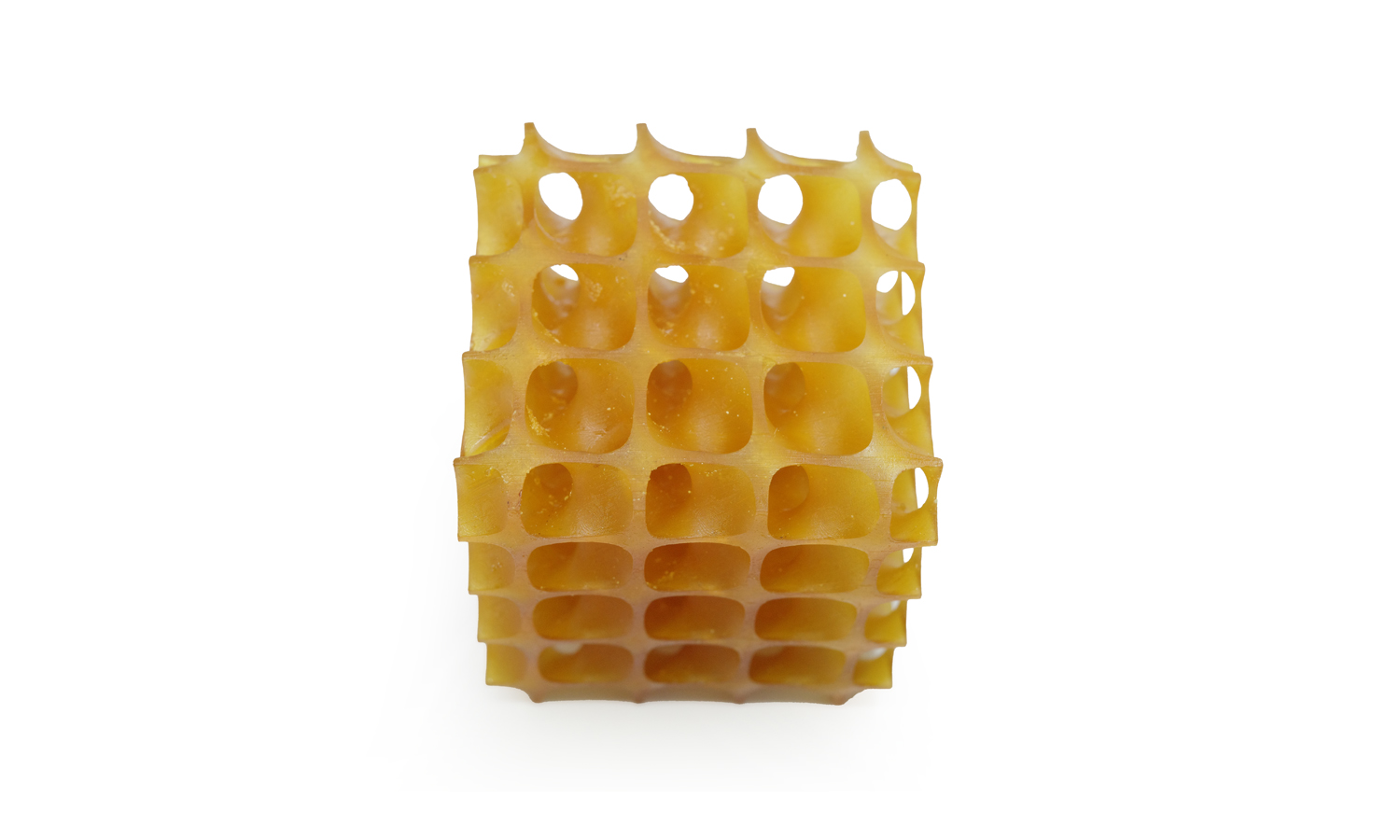
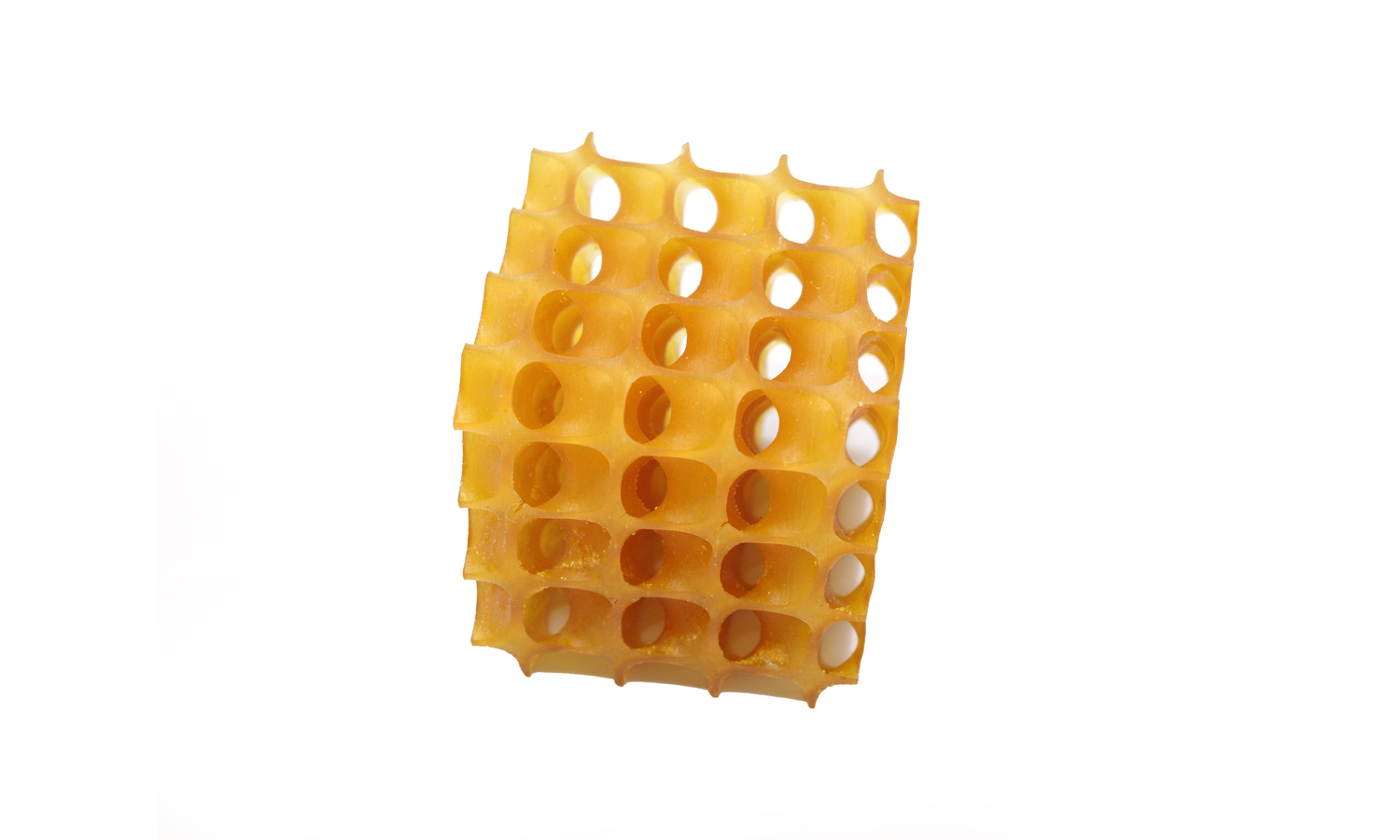
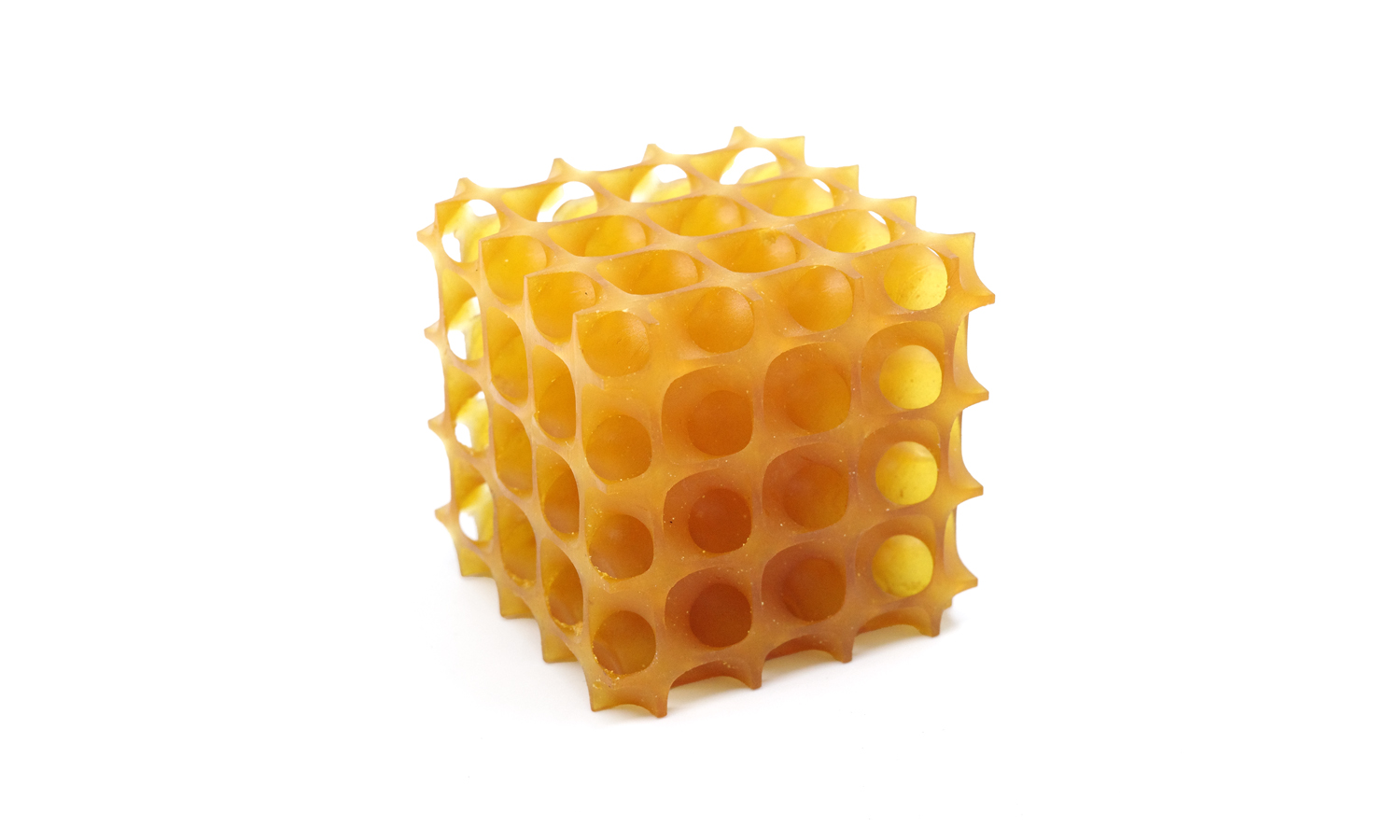
This isn’t just a 3D print; it is a masterclass in modern geometric engineering. Feast your eyes on this striking, translucent amber block—a Triply Periodic Minimal Surface (TPMS) lattice structure. Replicating cellular forms found in nature, this complex Schwarz P/Gyroid geometry manages to achieve an extraordinary strength-to-weight ratio and unmatched energy absorption capabilities. By distributing impact forces evenly across its perfectly smooth, curved surfaces, it functions as the ultimate lightweight structural component.
What makes this specific piece truly spectacular is the manufacturing method. Achieving this level of fluid, organic curvature with absolute dimensional accuracy—and zero messy layer lines—is impossible with traditional filament printers. Instead, this piece leverages cutting-edge Vat Photopolymerization (DLP) technology using specialized high-performance photopolymers engineered to replicate the stellar thermal stability, chemical resistance, and rigidity of amorphous PEEK. The result is a flawless, isotropic engineering marvel that looks less like a 3D print and more like a sculpted gemstone.
Turn Your Advanced Concepts Into Reality with FacFox
Whether you are designing bio-mimetic orthopedic implants, aerospace skins, or high-performance industrial baffles, FacFox is your ultimate manufacturing partner. As a leading global online 3D printing service, we specialize in bridging the gap between highly complex CAD designs and rugged, end-use components. Our state-of-the-art DLP, SLA, SLS, and specialized high-temperature FDM capabilities ensure your high-performance plastic prototypes and production parts are delivered with microscopic accuracy, rapid turnaround times, and competitive pricing. Ready to elevate your next project? Upload your files to FacFox today for an instant quote, and let our experts bring your boldest innovations to life!
Solution
- Step 1: The complex Triply Periodic Minimal Surface (TPMS) geometry was digitally generated and optimized using advanced CAD software to ensure perfect mathematical curvature.
- Step 2: The 3D model was imported into slicing software, where it was oriented at the optimal angle and sliced into hundreds of microscopic, digital horizontal layers.
- Step 3: A high-performance, amber-colored photopolymer resin—specifically formulated to replicate the mechanical and thermal properties of amorphous PEEK—was prepared and poured into the vat of a Digital Light Processing (DLP) 3D printer.
- Step 4: The build platform was lowered into the liquid resin, leaving a microscopic gap between the platform and the bottom of the vat equal to the thickness of a single layer.
- Step 5: A high-resolution digital projector screen beneath the vat was illuminated, exposing the entire cross-section of the first layer simultaneously with UV light to selectively cure and solidify the liquid resin.
- Step 6: The build platform was raised slightly to detach the cured layer from the bottom of the vat, allowing fresh, uncured liquid resin to flow underneath.
- Step 7: Steps 4 through 6 were repeated sequentially for hundreds of layers, building the intricate, hollow lattice structure from the bottom up without the need for internal support materials.
- Step 8: The completed block was raised out of the resin vat, detached from the build platform, and submerged in an isopropyl alcohol (IPA) bath to thoroughly wash away any remaining uncured liquid resin from the complex internal channels.
- Step 9: The washed part was placed inside a specialized UV curing chamber, where it was exposed to controlled light and heat to fully cross-link the polymer chains and finalize its material strength.
- Step 10: The final block was inspected for dimensional accuracy and surface smoothness, resulting in the flawless, translucent component shown in the photographs.