Material Rubber
Quantity 1 pcs
Price Range $1-100
Lead Time 2 workdays
Gallery
About Project
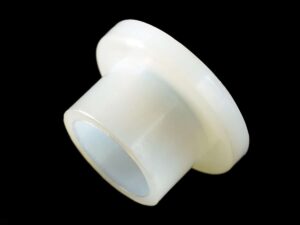
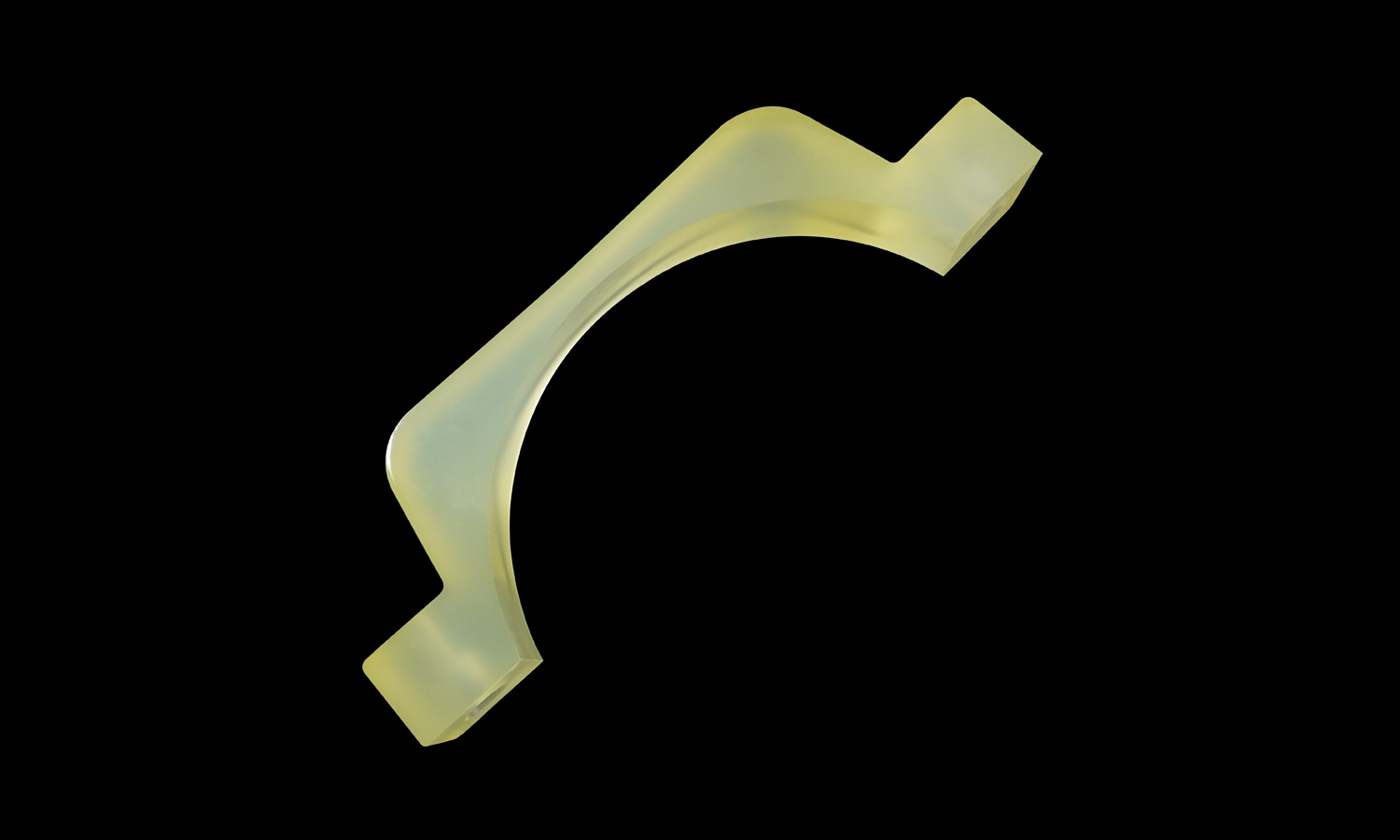
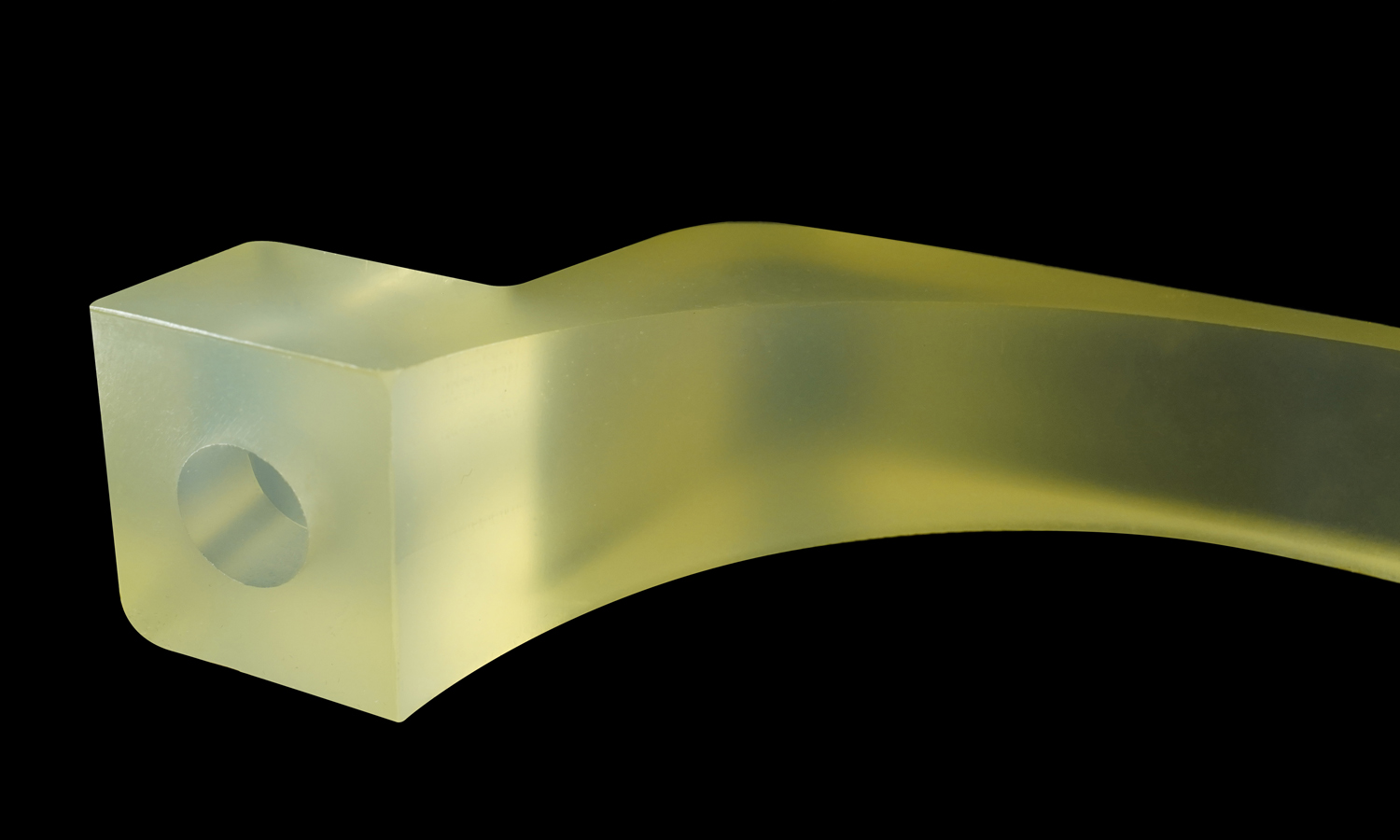
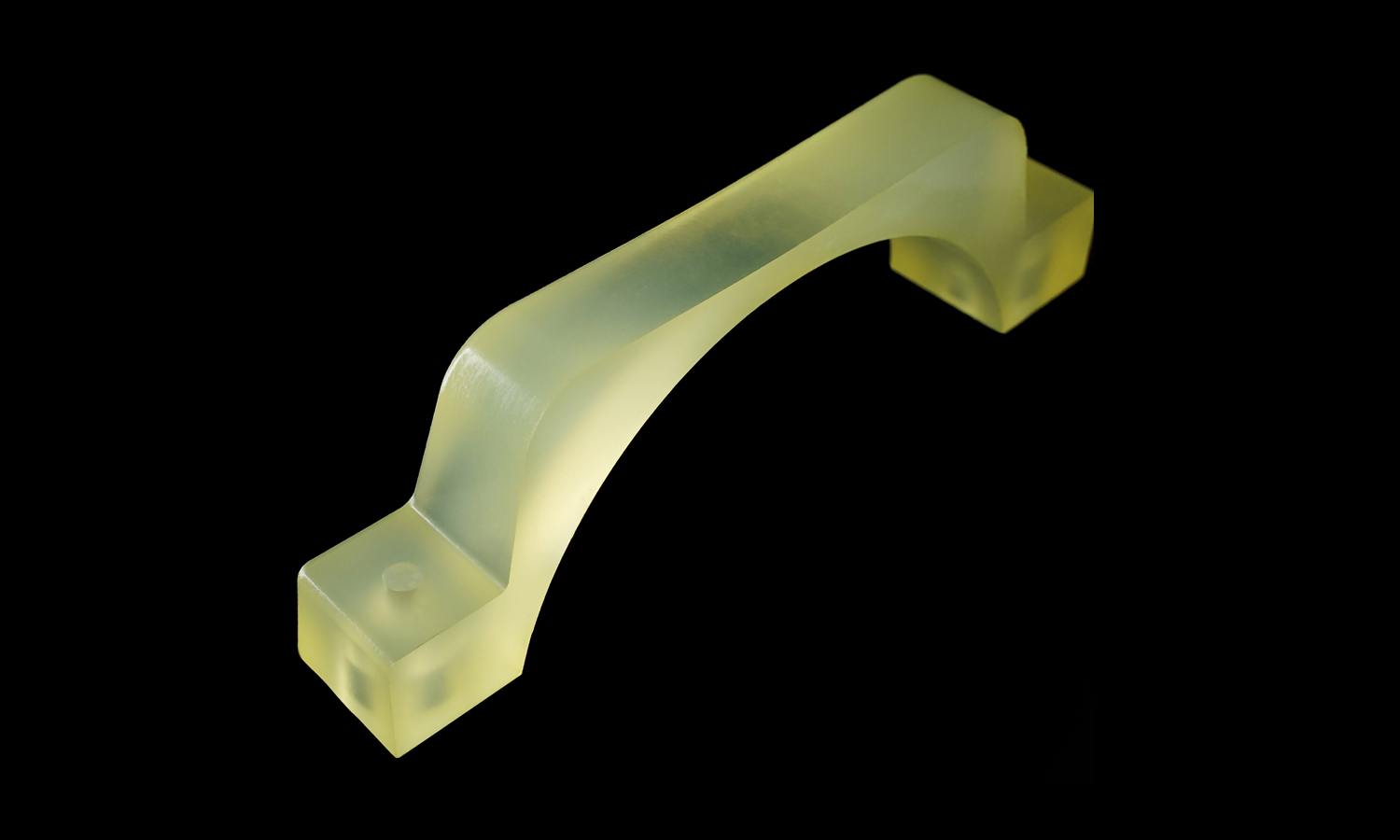
Check out this custom component we recently handled. At first glance, you’ll notice its distinct amber translucency and smooth, matte finish—telltale signs of high-quality Polyurethane (PU) casting.
This specific part features a robust, curved “bridge” design anchored by two solid mounting blocks. Looking closely at the boreholes, you can see the incredible level of detail captured; every edge is crisp, and the geometry is perfectly balanced for industrial application. Whether this serves as an ergonomic machine handle, a vibration-dampening bracket, or a heavy-duty bumper, it’s built to withstand mechanical stress that would shatter lesser plastics.
Why Polyurethane?
Polyurethane is the “chameleon” of the manufacturing world. It bridges the gap between rubber and plastic, offering a unique set of properties:
- Impact Resistance: Unlike brittle plastics, PU can absorb energy and resist cracking under heavy loads.
- Custom Hardness: It can be formulated anywhere from “rubber-band soft” to “bone-hard” (Shore A to Shore D).
- Chemical Stability: It stands up to oils, greases, and many chemicals, making it ideal for factory floors.
- Cost-Effective Prototypes: Because it’s cast in silicone molds, you get injection-molded quality without the five-figure price tag of steel tooling.
Bring Your Designs to Life with FacFox
If your project requires the durability and precision seen in this part, FacFox is your go-to partner for professional PU manufacturing and vacuum casting services. We specialize in turning your 3D models into high-fidelity functional parts with a wide range of material simulations, including ABS-like, PC-like, and flexible elastomers. From rapid prototyping to small-batch production, our team ensures your parts are delivered with industry-leading turnarounds and meticulous quality control.
Ready to start your next project? Contact FacFox today to see how our PU casting expertise can streamline your production.
Solution
- Step 1: A high-resolution master pattern of the part was created using 3D printing (typically SLA) and was meticulously sanded to achieve the desired surface finish.
- Step 2: The master pattern was suspended inside a casting box, and liquid silicone rubber was poured around it to encapsulate the part entirely.
- Step 3: Once the silicone was fully cured, the mold was precisely cut open and the master pattern was removed, leaving behind a hollow cavity that perfectly mirrored the original design.
- Step 4: The silicone mold was placed inside a vacuum chamber, and a two-part polyurethane resin was mixed and degassed to ensure no air bubbles remained in the liquid.
- Step 5: The resin was poured into the mold under vacuum pressure, ensuring that the liquid flowed into every intricate detail, including the mounting blocks and boreholes.
- Step 6: The filled mold was placed into a curing oven where the PU material was thermoset until it reached its final hardness and structural integrity.
- Step 7: The finished part was extracted from the mold, and the gating system (excess material) was trimmed away. Finally, the part was inspected for dimensional accuracy and translucency before being cleared for use.