Gallery
About Project
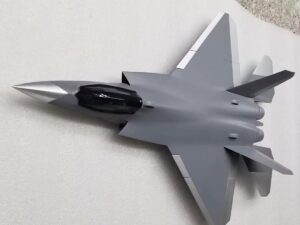
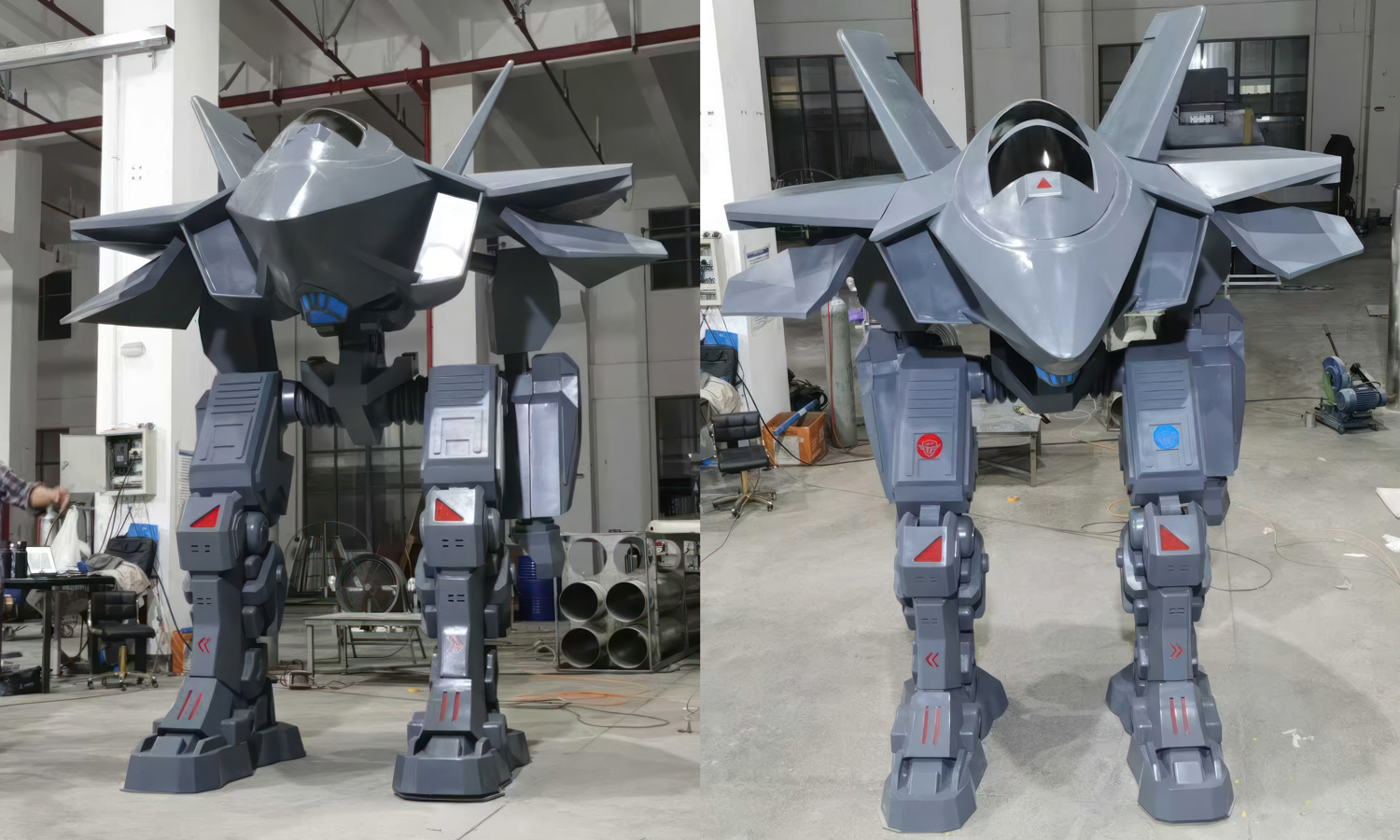
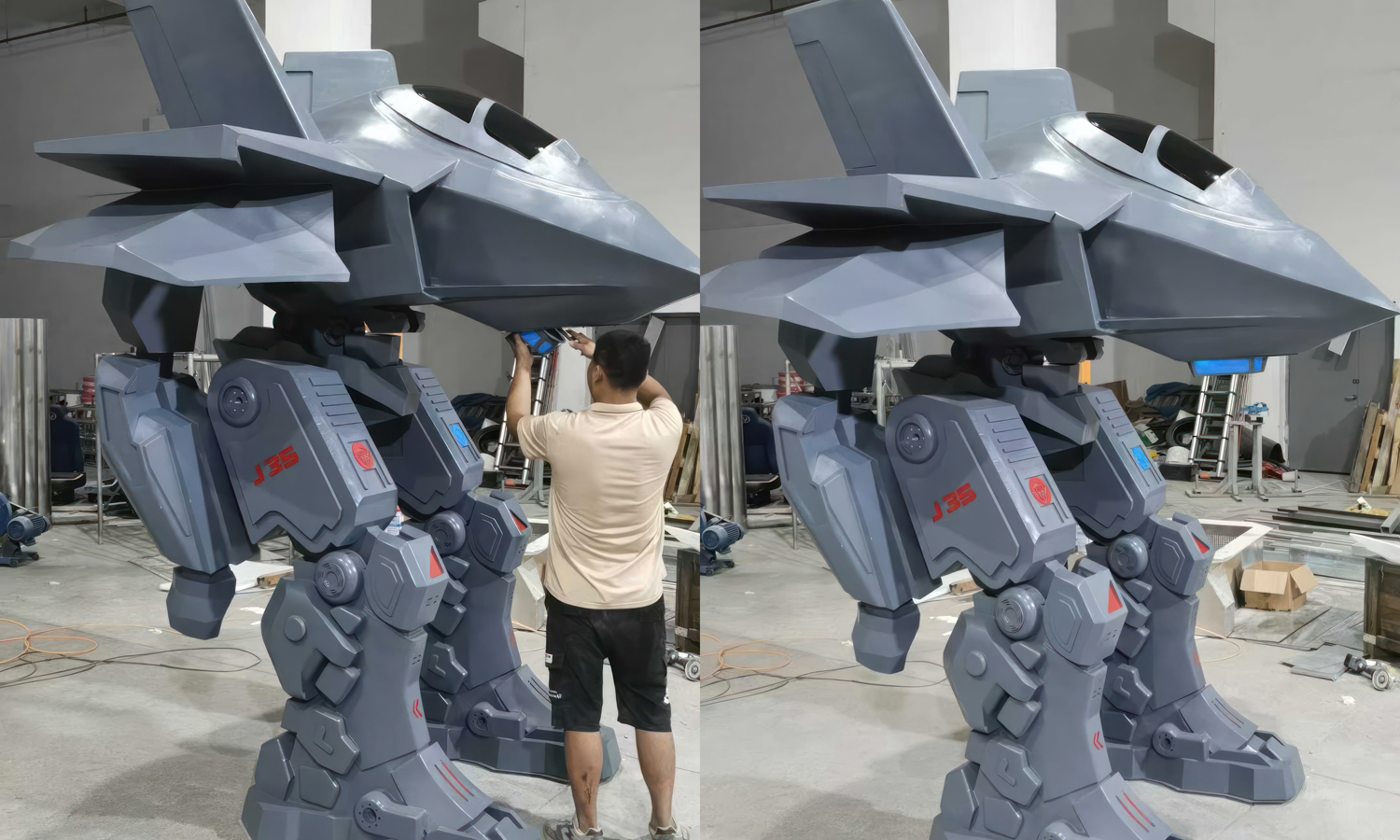
We’re absolutely blown away by this incredible project: a colossal, highly detailed mecha model inspired by the cutting-edge J-35 stealth fighter jet!
This isn’t just any model; it’s a stunning fusion of aviation engineering and futuristic sci-fi design, bringing the popular “Gerwalk” concept (a jet that transforms into a bipedal robot) into the real world on an epic scale.
What makes this even more mind-blowing? This impressive beast was brought to life using advanced 3D printing technology! Imagine the precision and scale required to print components for something this massive, then assemble them into such a seamless and imposing structure. It’s a testament to how 3D printing is revolutionizing manufacturing and enabling creators to build things previously thought impossible outside of movies.
From the sleek lines of the J-35’s cockpit to the intricate articulation of its robotic legs, every detail screams power and innovation. We can’t wait to see where this magnificent mecha ends up – whether it’s guarding a tech expo, starring in a blockbuster, or inspiring the next generation of engineers and designers.
What do you think of this amazing J-35 Mecha? Let us know in the comments!
Solution
- Step 1: Digital Design and Optimization. A comprehensive 3D model was developed, blending the geometry of a stealth fighter with a bipedal robot chassis. The design was optimized for FDM (Fused Deposition Modeling) printing, with specific tolerances calculated for the integration of the internal skeleton.
- Step 2: Component Segmentation. The digital model was partitioned into numerous sections to accommodate the build plates of the 3D printers. Strategic “cut lines” were placed in areas where seams could be easily hidden or reinforced during the later stages of assembly.
- Step 3: FDM Printing with PLA. Each segment was printed using PLA filament. Large-nozzle FDM printers were utilized to increase print speed and structural wall thickness, ensuring that the large exterior panels remained rigid despite their size.
- Step 4: Aluminum Framework Fabrication. An internal support structure was constructed from aluminum tubing. This lightweight yet strong skeleton was engineered to bear the primary load of the upper torso and wings, preventing the PLA shell from deforming under its own weight over time.
- Step 5: Integration of Print and Frame. The hollow PLA segments were carefully slid over or bolted onto the aluminum framework. This hybrid construction method allowed the model to maintain the complex, organic shapes of a jet while benefiting from the structural stability of a metal core.
- Step 6: Seam Welding and Surface Finishing. The joints between the 3D-printed parts were bonded using industrial adhesives and reinforced with PLA “welding.” The entire surface was then sanded and treated with filler to eliminate the characteristic layer lines produced by the FDM process.
- Step 7: Painting and Marking. A matte grey finish was applied to the exterior to mimic the radar-absorbent coating of a stealth aircraft. The “J35” identifiers and red cautionary markings were stenciled onto the legs and torso, completing the industrial aesthetic.