Large-Format SLA White Resin Model Kits of Traditional Chinese Boats

Large-Format SLA White Resin Model Kits of Traditional Chinese Boats

facfox-case-study
Process 3D Print, Post Curing
Material Resin
Quantity 7 pcs
Price Range $1-100
Lead Time 4 workdays

Gallery

About Project

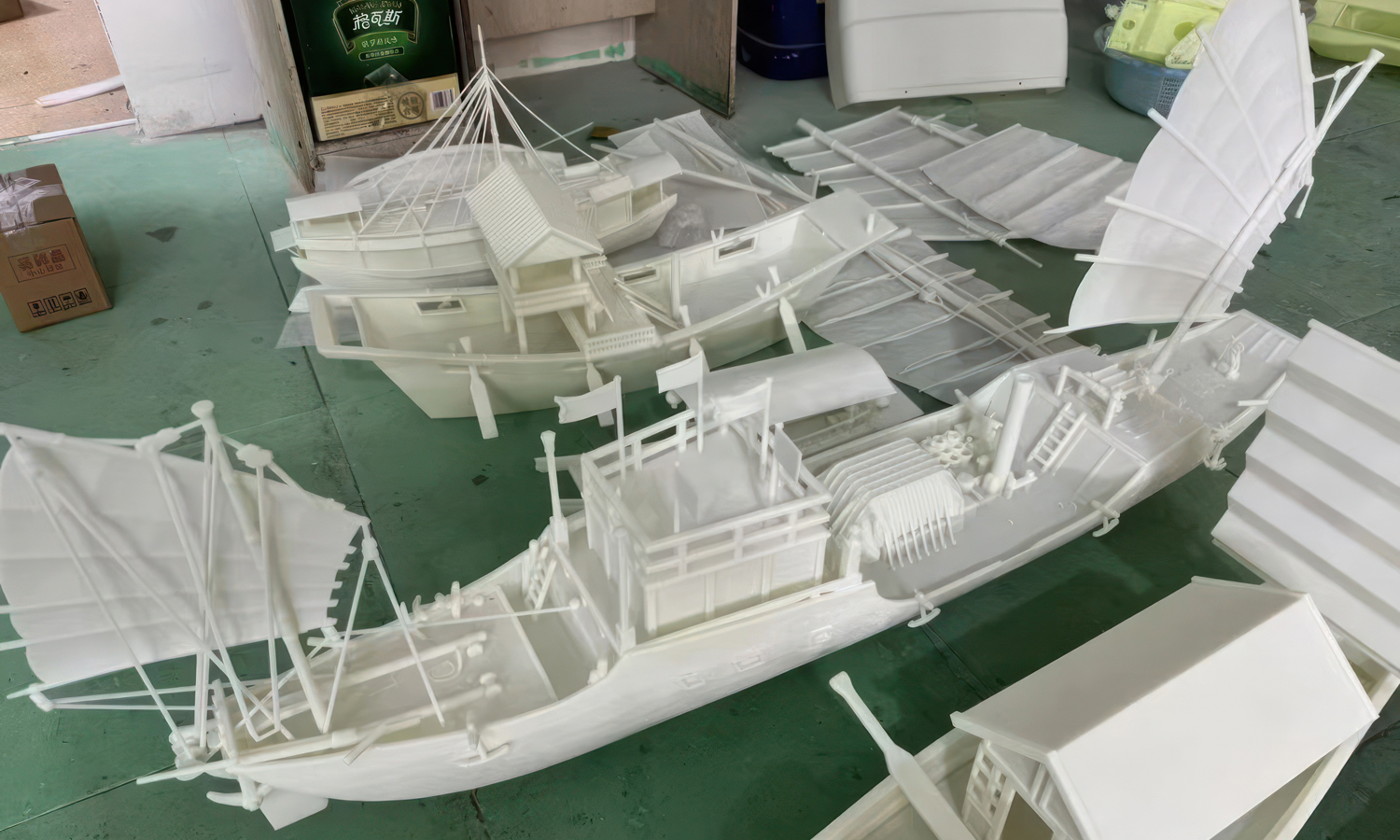
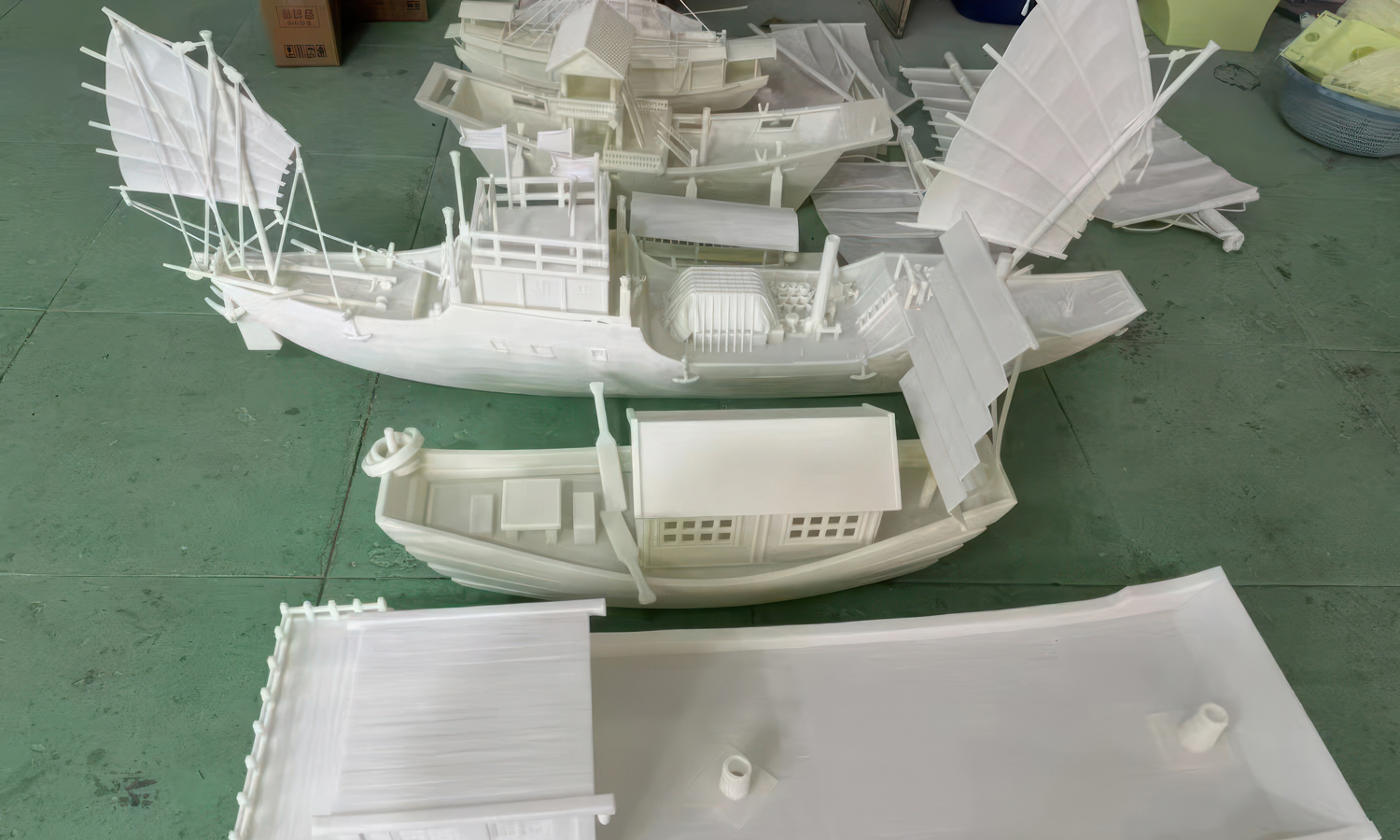
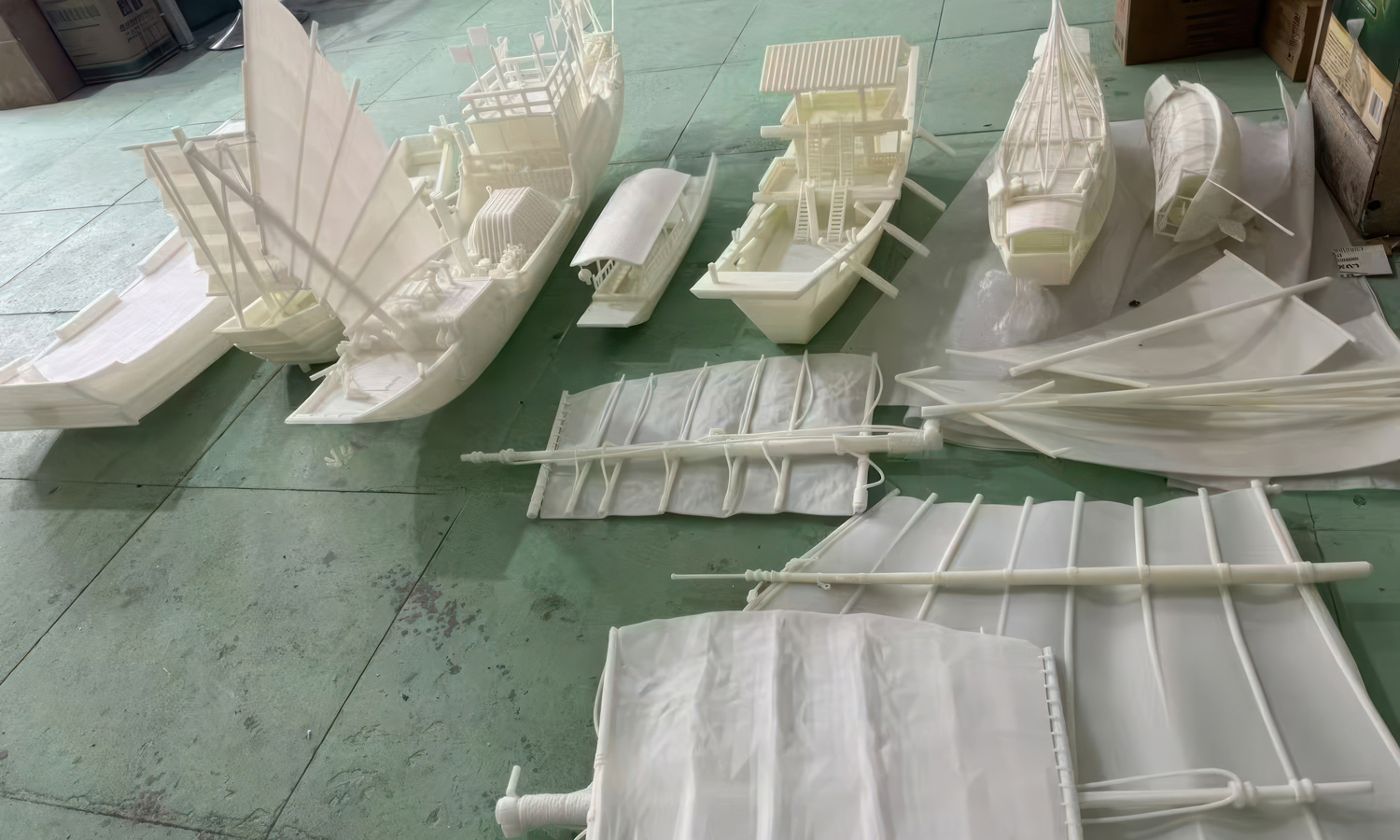
These traditional Chinese boat kits are designed for miniature scenes such as museum dioramas, cultural tourism displays, and physical sets based on historical film or game environments. The collection depicts boats of different sizes for river and coastal scenes.

The centerpiece is a large sailing vessel with battened sails, fine rigging, raised deck structures, railings, and covered cargo. The fleet also includes a mid-sized cabin boat with a pitched roof and lattice windows, a smaller boat with an arched canopy and stern sculling oar, and an unassembled flat-bottom hull with stepped deck areas and mast sockets. Large-format industrial SLA printing in standard white resin captures these details across both complete forms and separate modules. The photographs show the kits at the unpainted preassembly stage.

For a miniature fleet or historical display, FacFox can help plan how to divide hulls, sails, and deck structures for printing, handling, and later painting. Share your model files and display scale to discuss production. FacFox website · info@facfox.com

Challenge

The batch combines broad hull surfaces with fine sail battens, rigging, railings, and cabin details. Those small features must survive support removal and handling, while the separate sails and masts need to locate cleanly on their hulls at the preassembly stage.

Solution

  • Step 1: Review the display scale and assembly sequence. Check the hull edges, sail battens, rigging, railings, window lattice, and stern oar for details that could be damaged during handling.
  • Step 2: Plan which structures to print together and which to produce as modules. Where sails and masts are separate, check the mast sockets and locating surfaces before slicing.
  • Step 3: Orient the hulls and sail modules to keep support marks away from visible faces where practical. Position supports so they can be reached without levering against slender battens or railings.
  • Step 4: Print the hulls and modules in standard white photopolymer resin on a large-format industrial SLA printer. The laser cures each layer, forming the broad hull surfaces alongside fine features such as roof tiles and sail battens.
  • Step 5: Clean the printed parts, remove supports carefully around the rigging and rails, and lightly sand accessible support marks. Preserve the crisp edges of the window lattice and roof details.
  • Step 6: Dry-fit the relevant hull, cabin, mast, and sail modules at the white-model stage. Check mast seating, deck alignment, and the condition of thin features before any painting.
  • Step 7: If a painted display finish is required, use the white models as the base for simulated wood grain, aged beige sail tones, and selective weathering around deck and hull details.