5c852d1f6868eb9f3b38e8383dc170ae.jpg

A 3Design on New Zealand 3D Printer Hardware

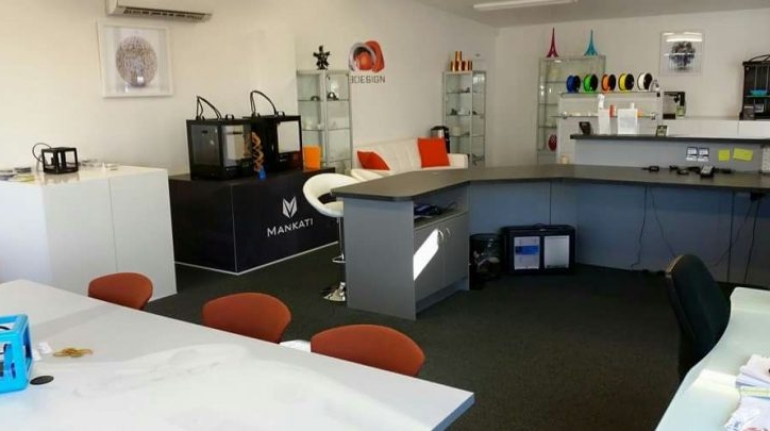
As a 3D printing writer based in South Korea I frequently have the chance to test and review new machines from around East Asia. While most are pretty good, I had the opportunity a while back to test the Cubicon Style from HyVision and absolutely fell in love with it. I was excited to discover others, outside of Korea, who were likewise thrilled with it too. 3Design in New Zealand is one of them This led me one night to a lengthy discussion on Twitter with a gregarious Kiwi named Robert Reid. Robert, as things would have it, is the CEO of 3Design (@info_3design), a New Zealand 3D printing company who had recently started to import the Cubicon. As I learned, 3Design was the first company in NZ to stock, sell, and service 3D printers fulltime. Other general merchandise retailers were selling some machines, but as Robert tells it, once you bought the machine and took it home…you were on your own. Having taken the lead in mainstreaming 3D printing in New Zealand, their path was littered with challenges. Many of the tasks they faced came from the fact that New Zealand’s economy is currently in flux, as the nation transitions from a traditionally agrarian economy, to one based on high technology. This presented some unique problems, so the first thing Robert and his crew did was to focus on building a 3D printing team of experts to assist their customers with whatever challenges they experienced. Robert noted that, “many of the big stores just didn’t realize that 3D printing, with all of its quirks, is about service and knowledge…not numbers.” The team members were all trained in CAD, Solidworks, Magics, and Rino. They also developed and provide 3D training courses for customers of all skills; from beginner to advanced levels. And for customers who need extra help, 3Design offers 3D printing services in-house, on a file-by-file basis and turns customer files into solid objects. Past clients have included architects, engineers, product designers, and fashion designers.

eb52725003fd12b558af65a07e78e5d4.jpg

Hans Fouche Gets Serious with Cheetah 3D Printer at Decorex in Johannesburg 3D Printer Hardware

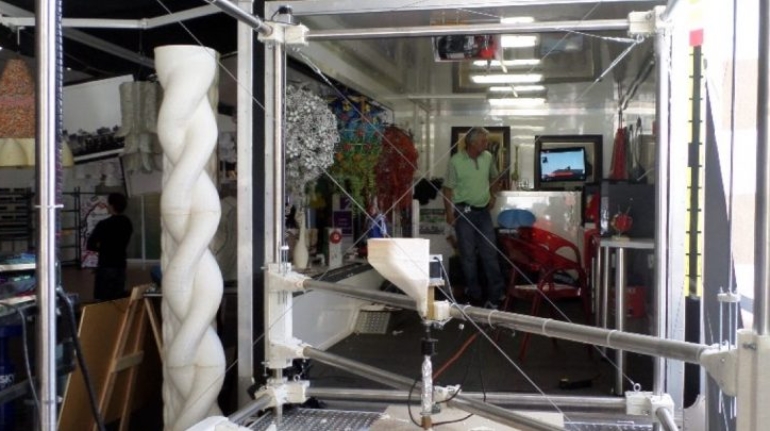
Hans Fouche’s Cheetah 3D Printer was on show at Decorex 2016 in Johannesburg South Africa for the first time. With it were some 3 meter tall pillars that were 3D printed in just 9 hours, along with some colorful and creative Bar Stools, with unique bottle shapes, hand painted by Sam, a talented artist from the I Make Makers Village of Irene. Fouche 3D Printing, Hans Fouche’s company, is now working with them, to turn the large size 3D prints of the Cheetah into some stunning decorative and display products, with the help of the Craftsman and Artists of the I Make Makers village, thereby advancing both the high tech 3D printing and traditional crafts, to the benefit of both parties. The objective of Fouche’s participation at Decorex was to show that the Cheetah, with a price of just $9,900 (US), and the fact that it prints using affordable ABS granules instead of filament, is clearly a market leader cost wise, and with it’s 1 cubic meter print volume, it represents a true bargain for the large size 3D Printer segment. “We know that we have a unique product,” Fouche stated. “We hope and trust that it will provide jobs, change the way that products are manufactured- small batches that require less storeage, and that it will inspire creativity! We use at least 25kg pellets a month. That is at least $80 worth of plastic. To do that with filament would cost $625, with spools priced at $25.” The Cheetah uses ABS granules as the raw product for filament, therefore cost per print is significantly lower. Cost per kilo is less than $4/kg for ABS granules. As standard, Fouche uses a 3mm nozzle in order to achieve a 0.5 KgHour flow rate. 1mm, 2mm, 4mm, 5 mm, and 6mm nozzles are also available.

aab3ed00431136d577889417a9237445.jpg

Formlabs Raises $35 Million in Series B Funding, Announces Autodesk Partnership 3D Printer Hardware

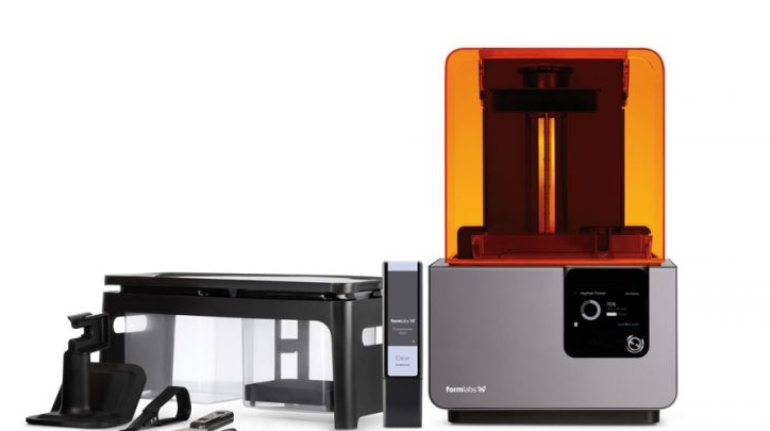
Formlabs, the company founded in 2012 by MIT graduates that changed the SLA market forever when it introduced the first low cost SLA system, has raised $35 million in Series B funding. The round came from Foundry Group and Autodesk, as Formlabs also announced plans to collaborate strategically with the global CAD software leader. The investment includes participation from existing investors DFJ Growth, Pitango Venture Capital, and Pascal Cagni, bringing Formlabs’ total investment to date to $55 million. Beside giving yet another demonstration of the ever clearer potential of 3D printing, these newly injected resource will enable Formlabs to scale its operations to meet growing customer demand worldwide, grow R&D efforts, and to extend Formlabs’ reach in the market and ecosystem. “Formlabs’ efforts over the years in introducing new materials and capabilities have defined the category of professional desktop 3D printing, resulting in significant growth for the company along the way,” said Max Lobovsky, co-founder and CEO of Formlabs. “With the new investment, we’re excited to develop more powerful tools to enable anyone working with 3D content to create remarkable things. Formlabs will continue to grow the stereolithography business and bring new tools to the world to advance our goal of making digital fabrication more powerful and accessible.” Joining Formlabs’ board will be Brad Feld, co-founder of Foundry Group whose investments include MakerBot and Fitbit. Feld has been an early stage investor and entrepreneur for over 20 years and was co-founder of Techstars. “From the moment of its founding, Formlabs saw the opportunity in making professional desktop 3D printing accessible and was a key pioneer in the category,” said Brad Feld, co-founder of Foundry Group. “While the excitement and hype around consumer 3D printing has waned, the professional 3D printing category has had unabated demand, with Formlabs emerging as the leader in desktop 3D printing.” With Autodesk’s investment in Formlabs, the two companies plan to strategically collaborate on software integration and joint marketing initiatives. “Formlabs has brought a lot of innovation and great execution to the desktop 3D printing market, and Autodesk is excited to invest in the company’s future,” said Carl Bass, CEO of Autodesk. “But even more importantly, we’re eager to work together to improve digital design and manufacturing for product designers everywhere.” Pascal Cagni, who was head of Apple in Europe, will be joining as a strategic advisor to help bolster Formlabs’ expansion efforts across the EMEA territory. Through an expanding network of distribution partners, Formlabs’ global reach now extends across five continents in Africa, Asia, Australia, Europe, and North America. With rapid growth across all business fronts, Formlabs has seen 100 percent growth in annual sales for the third consecutive year and is shipping over 1,000 printers a month. Formlabs printers are now the top-selling 3D printers in stereolithography worldwide. Earlier this year, Formlabs acquired Pinshape, the fast-growing 3D printing community online that hosts a flourishing marketplace of 3D designs. Most recently opening a location in Japan, Formlabs now has over 190 employees across offices in North America, Europe, and Asia. About Formlabs Formlabs designs and manufactures powerful and accessible 3D printing systems for engineers, designers, and artists. Their flagship product, the Form 2 3D printer, uses stereolithography (SLA) to create high-resolution physical objects from digital designs. The company was founded in 2012 by a team of engineers and designers from the MIT Media Lab and Center for Bits and Atoms. With its powerful, intuitive, and affordable machines, Formlabs is establishing a new benchmark in professional desktop 3D printing. Formlabs also develops its own suite of high-performance materials for 3D printing, as well as best-in-class 3D printing software. About Foundry Group Foundry Group is a venture capital firm that invests in information technology, Internet, and software startups. It works alongside entrepreneurs to give birth to new technologies and to build those technologies into industry-leading companies. It is located in Boulder, CO but invests in companies across North America. About Autodesk Autodesk makes software for people who make things. If you’ve ever driven a high-performance car, admired a towering skyscraper, used a smartphone, or watched a great film, chances are you’ve experienced what millions of Autodesk customers are doing with our software. Autodesk gives you the power to make anything. For more information visit autodesk.com or follow @autodesk.

75db4ed2dbb17326c23e379f2a8d4621.jpg

Zortrax Confirms Dell Deal Never Happened, Maintains Investors Were Informed 3D Printer Hardware

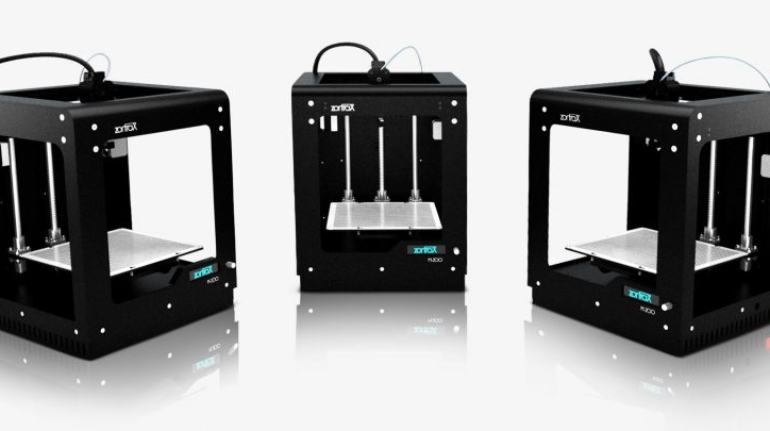
One of 3D printing’s biggest stories, i.e. the sale of some 5,000 Zortrax M200 machines to Dell Computers in Asia, was recently discovered not to have never actually happened by 3DPrintingBusiness.Directory contributor Mike Molitch-Hou. Now – as reported by 3DPrintingMedia.Network partner 3D Printing Center -Zortrax has responded to Mike, confirming that the Dell deal never actually happened while maintaining that, although the media were not, all investors were fully and timely informed.

e41d0c9ac34d387c7a38c75d14e03be8.jpg

Nanoscribe’s 3D Printer Established on the US market 3D Printer Hardware

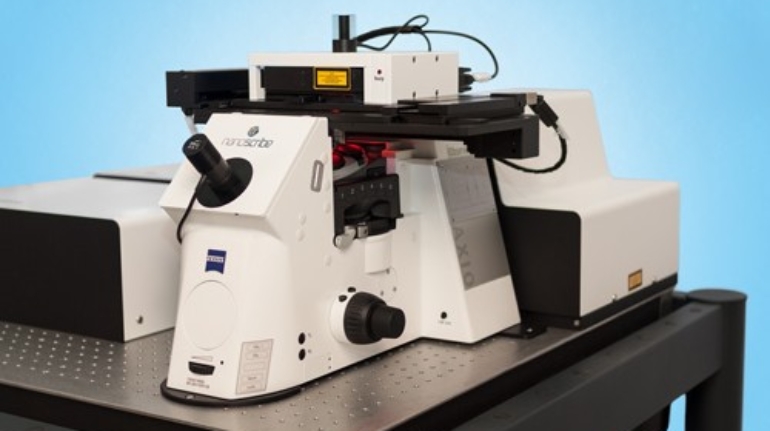
In June, the 3D printer manufacturer Nanoscribe held its first user meeting in the US at Harvard University in Cambridge, Massachusetts. In collaboration with the institution’s Center for Nanoscale Systems (CNS), which makes a Nanoscribe laser lithography system available both to internal and external users in its multi-user facility, the market and technology leader invited its clients to a two-day seminar. Besides being treated to a glimpse of the latest software and hardware developments, attendees were shown a vast array of areas of application for the Photonic Professional GT 3D printer, ranging from maskless lithography to additive manufacturing. The technological possibilities range from the manufacture of extremely high-resolution mesoscale objects to applications in photonics and plasmonics, requiring structure sizes of just a few hundred nanometers. The CEO of Nanoscribe, Martin Hermatschweiler, reports, “The presentations by our clients on their various applications were the absolute highlight for me. It is incredibly fascinating and enlightening to discover firsthand what different disciplinary fields are making use of our devices, which operate based on the principle of two-photon polymerization. The full scope of applications ranged from printing nanostructures at the CNS, to producing plasmonic displays at the University of Florida, to engineering new types of materials whose creation would have previously been impossible, as the scientists at Caltech presented.” As a standard for microfabrication, the high-precision Nanoscribe systems are furthermore utilized at universities, research institutes, and in R&D departments for many other tasks in the areas of medical technology, micro-optics and microfluidics as well as for micro-rapid prototyping. Already half of the top 10 universities across the globe are Nanoscribe clients. This makes the company the global player on the market for 3D printers of nano- and microstructures. Within a just a few years, Nanoscribe has managed to turn from a spin-off of the Karlsruhe Institute of Technology (KIT, Germany) to a medium-sized company. A broad array of honors and awards, such as the 2014 Prism Award or 2015 WTN Award as well as Nanoscribe’s finalist position for the Deutscher Gründerpreis 2015 (2015 German Founders’ Award), underscore the extraordinary performance and significance of this expanding high-tech company.

5ecacf57f3b88f8539ff10bfb7a2a45e.jpg

AM Europe Show, the Biggest Announcements in Photos 3D Printer Hardware

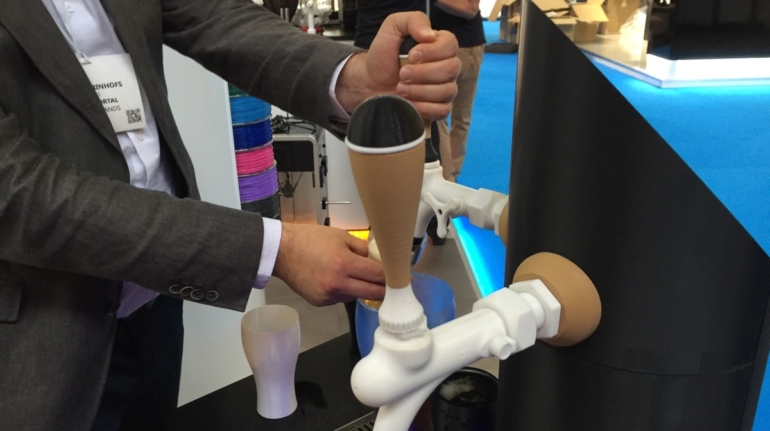
Even though the first edition was a difficult – but necessary – transition from the consumer-focused 3DPrintshow to a more professional level trade show, the first AM Europe show can be considered a success. Not many visitors, numerically speaking, but a much more qualified professional target which makes for better business. For many companies – Ultimaker and Zortrax in particular – the show was an opportunity to make some big announcement (quite literally in the case of Zortrax’s M300). These two companies, more than others, represent the possibilities that the consumer 3D printing hype created. They were born as consumer projects and they were able to evolve into real and structured multinational companies. Jos Burger, Ultimaker’s CEO, is perhaps one of the best representations of this trend as he brought a global multinational mentality to a young startup. He explained that “there is no doubt that people are moving away from the hyped up consumer 3D printing idea. No one is talking about it any more. Now it is all about the industry and the incredible possibilities that 3D printing can offer to professionals at all levels.” The truth is that desktop 3D printing is far from dead: instead of bringing a 3D printer in every house, it made it possible for every one who wanted to to invent a new profession, opening up the previously unaccessible manufacturing and prototyping market to more people than ever before. This is resulting and will continue to result in more innovation than ever. Here are some photogalleries from the best new things we saw at the show.

35c6dfe888eda1ccef9d3b7f5ab3eb6d.jpg

3DPrinterOS Moves Cloud Service to Microsoft Azure, Set to Expand Virtual Factory Across the Globe 3D Printing Processes

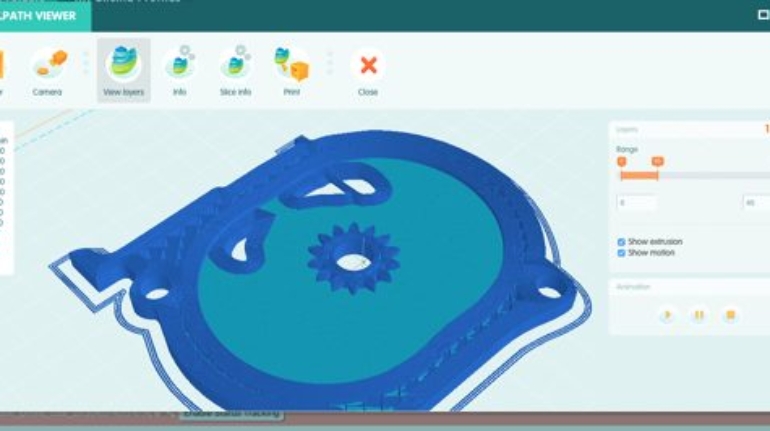
After spending a bulk of the last few years developing one of the most powerful and all-encompassing 3D printing cloud services on the entire market, 3DPrinterOS seems prepared to unleash their platform to the global 3D printing community. This week, the Silicon Valley-based company 3DPrinterOS announced that they would expanding their cloud operating platform on a global level by moving their service to Microsoft Azure, which is an open, flexible, professional-grade cloud computing platform. The recent move to Microsoft should certainly help 3DPrinterOS garner some much-deserved attention, as their cloud infrastructure is already utilized by the likes of Ford, Cisco, Duke University, CalTech, and many other businesses and educational institutions. Focused on integrating their platform into universities and enterprises around the globe, Microsoft Azure seems to be the optimal choice for the 3DPrinterOS platform. “We are extremely excited to collaborate with Microsoft Azure to serve our Enterprise Clients with its highly secure, hyper-scale global cloud,” said 3DPrinterOS CEO John Dogru. “It was a challenge to find the right company that had the cloud infrastructure, compliance, security, and reliability around the world including countries like China and Europe.” So, those who are unfamiliar with the cloud service may be asking, what exactly does the 3DPrinterOS platform do? Well, in all honesty, it’d be much easier to explain what it doesn’t do. Their virtual factory enhances the entire 3D printing process, all the way from the CAD file to the print bed. By offering a centralized workflow, anyone from IT managers to students can manage a wide-range of 3D printers and designs directly from a web-based browser or through the 3DPrinterOS smartphone app. On Azure’s secure and globally connected network, the 3DPrinterOS platform will be able to continue providing customers with an efficient way to manage up to 1000’s of networked 3D printers, users, and designs, essentially revolutionizing the fragmented world of 3D printing software, which oftentimes requires a handful of different programs and processes to complete one goal. But, with 3DPrinterOS, users are able to manage every part of the 3D printing process from where ever they happen to be, and are able to instantly change print settings, watch a live-stream of the many print jobs taking place from their smartphone, and even use the built-in slicer and instantaneously queue up a new print on the fly. “The cloud is transforming entire industries and creating new opportunities for even the most innovative new businesses,” said Senior Director of Microsoft Azure, Nicole Herskowitz. “The market leading scale and speed of Microsoft Azure helps spur global growth opportunities for companies like 3DPrinterOS who are utilizing cloud computing and IoT connected devices in a completely new model of decentralized manufacturing.” Over the last eight months, the 3DPrinterOS cloud platform has unleashed decentralized manufacturing, building over 62,000 parts in 100 different countries. With this latest move to Microsoft Azure, the future looks extremely promising for 3DPrinterOS, who are taking the limitless and relatively cloud platform and creating the powerful 3D printing management platform that the industry has been in desperate need for. As they continue to expand into universities and enterprises throughout the world, 3DPrinterOS is simplifying the time-consuming and currently fractured 3D printing process, cutting out the middle man and handling everything that happens in between the CAD file and print bed.

20141d72afdf786e5029c3654ed4634c.jpg

3DSPRINT Connect by 3D Systems, 3D Printing Software’s Newest Hero 3D Printing Processes

Embodying the next generation of intuitive and streamlined 3D printing software, 3DSPRINT by industry leader 3D Systems is bridging the gap between 3D designers and manufacturers, one optimized print job after another. After months of extensive beta testing, we’re taking a look at all that the new 3DSPRINT Connect has to offer for 3D printing businesses and individuals alike.