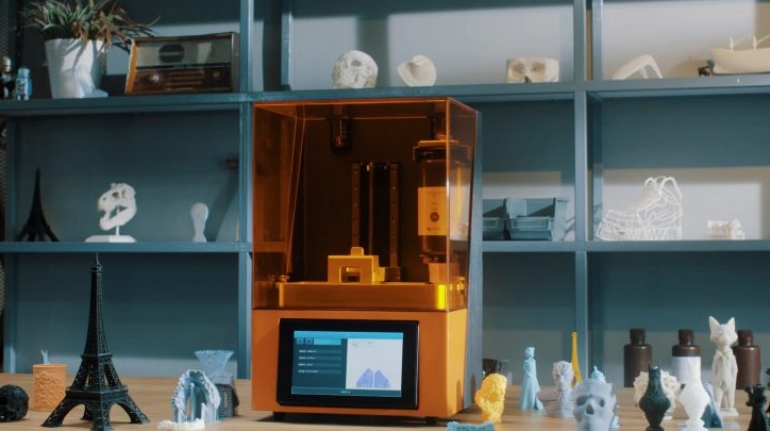
Dazz3D L120 Pro LCD stereolithography 3D printer launches on Kickstarter for $899 3D Printer Hardware
Dazz3D just launched a Kickstarter campaign for its new Dazz3D L120 Pro 3D printer. Described ...

News and Insights of 3D Printing and Manufacturing
Dazz3D just launched a Kickstarter campaign for its new Dazz3D L120 Pro 3D printer. Described ...

With Boston-area based Formlabs closing the latest funding round and achieving a valuation of $1 billion, it now appears clear that the city that is most closely associated with the American Revolution is rapidly becoming the center of another revolution: the additive manufacturing revolution. There are now several leading companies based in the area, with two of them, Desktop Metal and Formlabs, already considered to be “unicorns” (i.e. worth more than $1 billion). Boston 3D printing is leading the charge of startups that are driving the evolution of the AM industry.
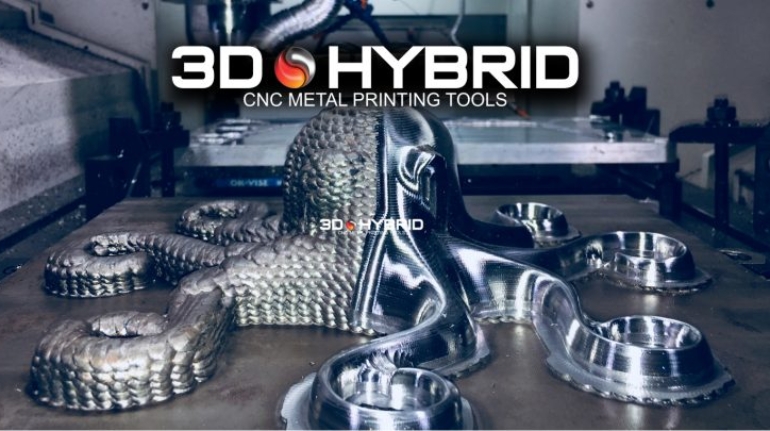
3D-Hybrid, on of the very first providers of third-party metal 3D printing tools that can be installed on any CNC machine, revealed their new Automatic Tool Change (ATC) Solution for systematic 3D hybrid manufacturing. The tool makes its debut with Takumi USA’s H12 double column machining center. 3D Hybrid offers a wide range of solutions for different metal deposition AM processes.
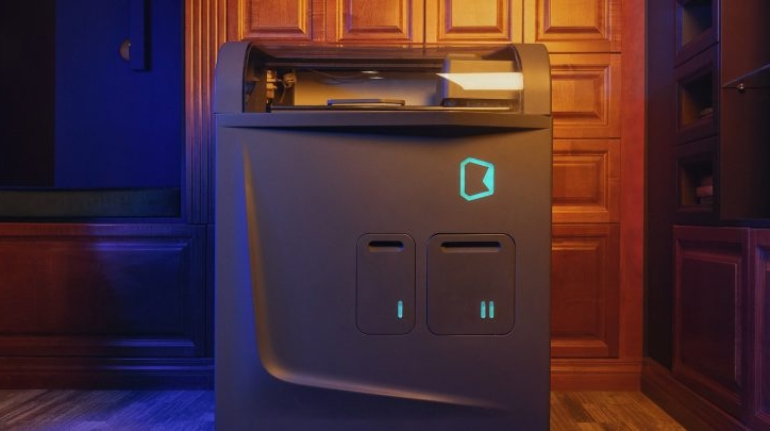
Kwambio, a New York-based company that began as an online marketplace for 3D printed design objects, has over the years transformed into one of the more compelling players in the still niche ceramics 3D printing industry. Somewhat out of necessity—as Kwambio realized that in order to offer 3D printed ceramics at an affordable cost it could not outsource production—the company developed its very own ceramic AM system, the Ceramo One.
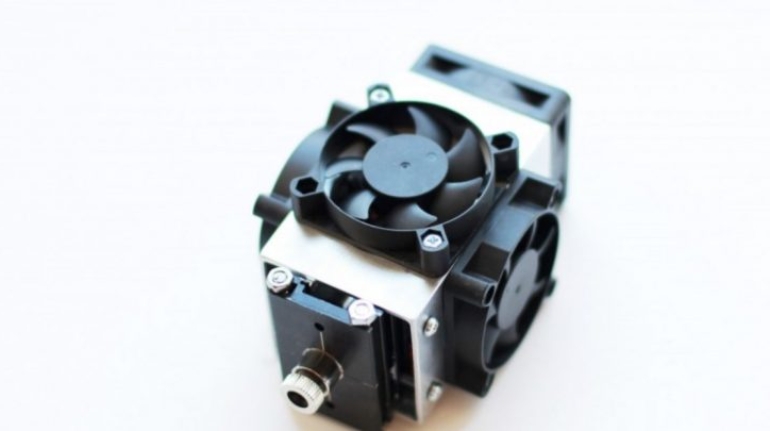
Almost every 3D printer can be used as a laser cutter, as powerful as a CO2 engraving machine and as efficient as a fiber laser device. All that is possible today thanks to powerful diode lasers that first appeared on the market a few years back. Today, there are many powerful 405 / 445 / 808 nm laser diodes which enable laser cutting and laser engraving on almost any material, including wood, plywood, leather, plastic, anodized aluminum and even stainless steel. In addition, these laser diodes are tiny and thus make relatively small lasers that weight less than ½ pound.

Senvol, a New York-based company dedicated to assisting in the adoption of AM technologies, has been awarded a grant from the National Institute of Standards and Technology (NIST). The grant will support its “Continuous Learning for Additive Manufacturing Processes Through Advanced Data Analytics” project.
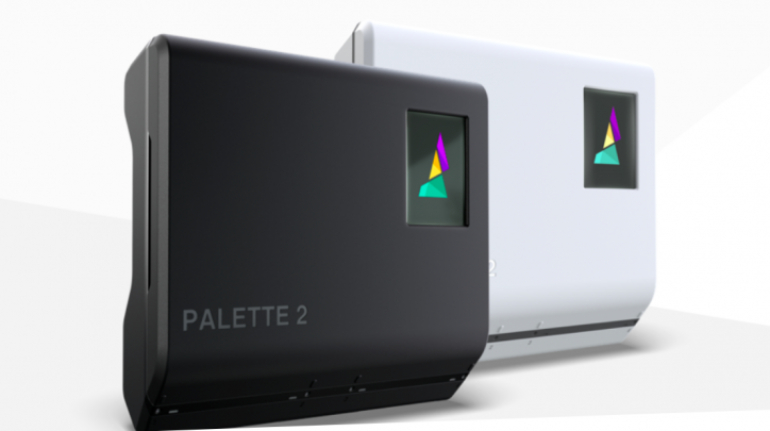
Canadian 3D printer manufacturer Mosaic Manufacturing has launched its latest product: the Palette 2 3D printer accessory. Alongside its CANVAS Software Platform and CANVAS Hub, Mosaic’s new product creates a user-friendly and accessible multi-material 3D printing ecosystem which can give nearly any FDM printer multi-material capabilities. The new product range is available for pre-order on Mosaic’s website for $499.
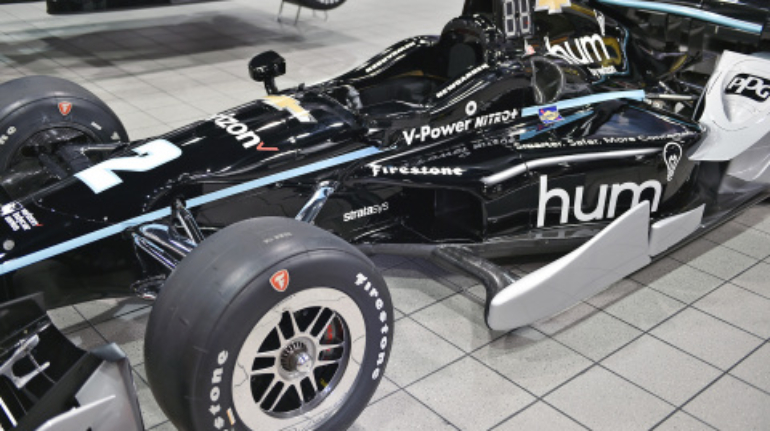
Composite 3D printing, and especially carbon fiber 3D printing, is quickly advancing and gaining more applications within the industry. Presently, the number of companies working on composite 3D printing technologies is relatively small—we recently highlighted many of them—though they are all playing their part in pushing forward innovation. One of the bunch, 3D printing leader Stratasys, has honed in on its composite AM technology, especially of late.
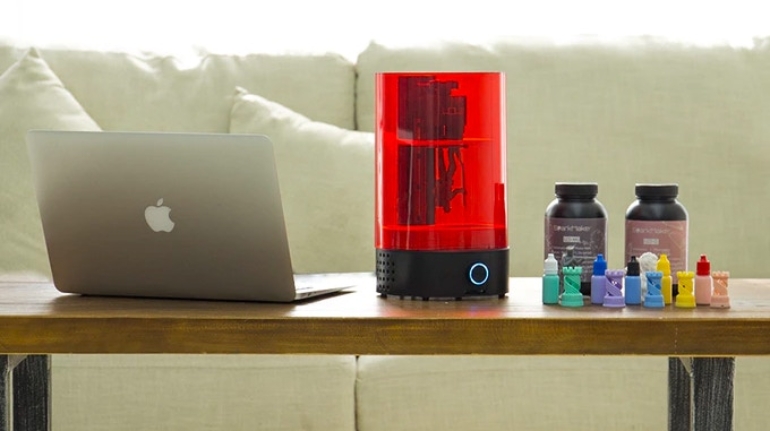
Initially priced at just $100 on Kickstarter, the SparkMaker seemed to be just another one of those too-good-to-be-true 3D printer deals that fail to adequately deliver to their backers like the Buccaneer, the ONO, the Peachy printer or Tiko 3D’s Unibody. Instead, it not only delivered, it also went on to general commercial availability and reportedly sold more than 5,000 units. We at 3dpbm even got one to test through our Italian-language portal Replicatore.it. Now the ultra-affordable LCD photopolymerization 3D printer is coming back with a new and improved 1080p version, the SparkMaker FHD (Full HD).
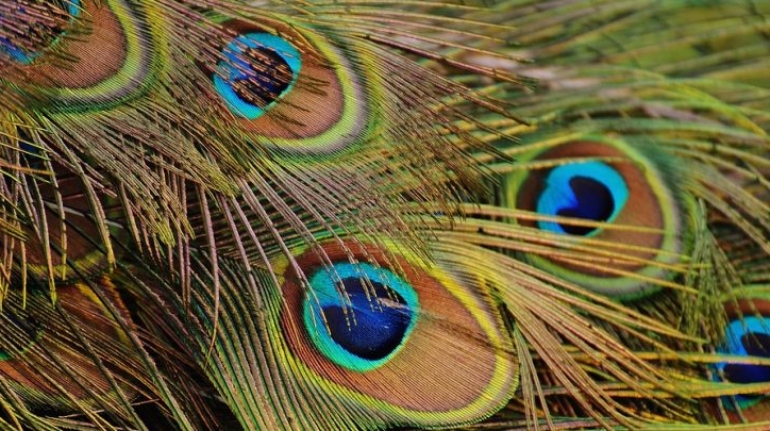
Forget dyes and pigments, researchers from the Institute of Science and Technology Austria (IST Austria) and the King Abdullah University of Science and Technology (KAUST) have developed a new way to create colour effects using a computational design tool and 3D printing. The novel process uses the design tool to automatically generate 3D printable nanostructures which create defined colours when light is shone through them.