cd7601b59aa3b366e0010be0e9ae1102.jpg

Cosine Additive Announces Partnership with Oak Ridge National Laboratory 3D Printer Hardware

Cosine Additive LLC is partnering with the Department of Energy’s (DOE) Oak Ridge National Laboratory (ORNL) in the development of a revolutionary new additive manufacturing platform. The goal of this partnership is to develop and demonstrate the enabling technologies for mid-scale additive manufacturing using Cosine’s AM1 machine. The AM1 has a build chamber of approximately 4’ x 4’ x 4’ and will open up new areas of U.S. manufacturing for rapid production of medium size tooling in support of the transportation, appliance and energy industries, significantly reducing cost and lead time. As with Big Area Additive Manufacturing (BAAM), the initial focus is on the deposition of composite materials. Printing with carbon fiber filament is still in its infancy with its immediate value just starting to be realized by manufacturing industries.

15ea865c5b4713ff42049d8c2803e043.jpg

Conformal Cooling, CAD/CAM Software and Direct Metal Printing Used to Overcome Injection Molding Challenges AM Software

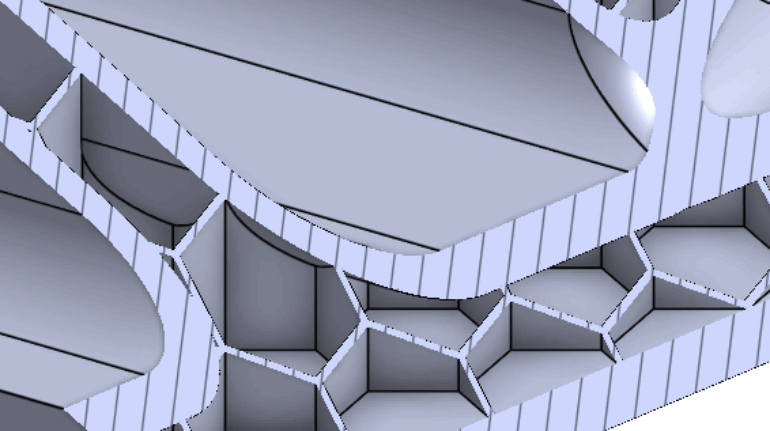
Anyone familiar with injection molding knows that the cooling system design is critical to cycle times, which takes up 70% to 80% of the injection molding cycle. Traditional methods for cooling molds involve secondary machining operations to drill cooling channels that follow straight lines and don’t consistently keep temperatures uniform. A well-designed cooling system can shorten the molding time and improve productivity tremendously. Enter conformal cooling.

0fc42105011deacb1a66c2e215dd9b3f.jpg

Low Cost 3D Printer Sales Grow by 59% in 2015 by Expanding Into “Prosumer” Segment 3D Printer Hardware

The latest “Opportunities in Low-Cost 3D Printers: Technologies, Materials and Markets 2016” report by SmarTech Publishing indicates that, in spite of significant decrements by the traditional leaders in this area, low cost 3D printer sales grew both in terms of unit sales and revenues, driven in part by the new “prosumer” segment and enterprise-level adoption of desktop 3D printing.