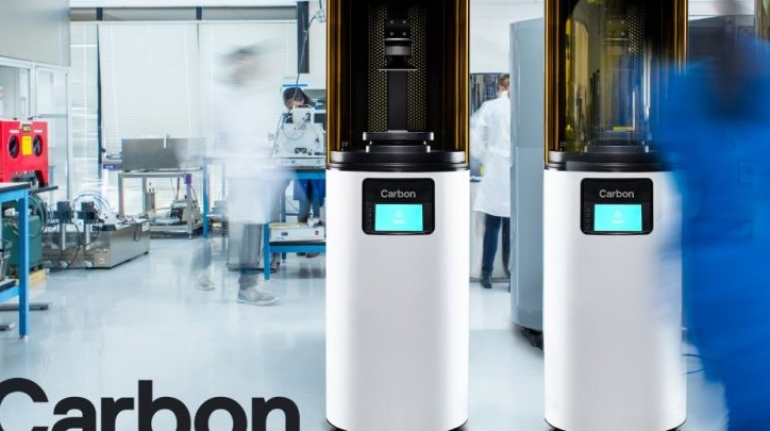
Carbon Announces $81M Funding from GE, BMW, Nikon; Begins International Expansion to Europe and Asia 3D Printer Hardware
Following early successes with customers such as BMW Group and Delphi, Carbon (Carbon 3D Inc. ...

News and Insights of 3D Printing and Manufacturing
Following early successes with customers such as BMW Group and Delphi, Carbon (Carbon 3D Inc. ...
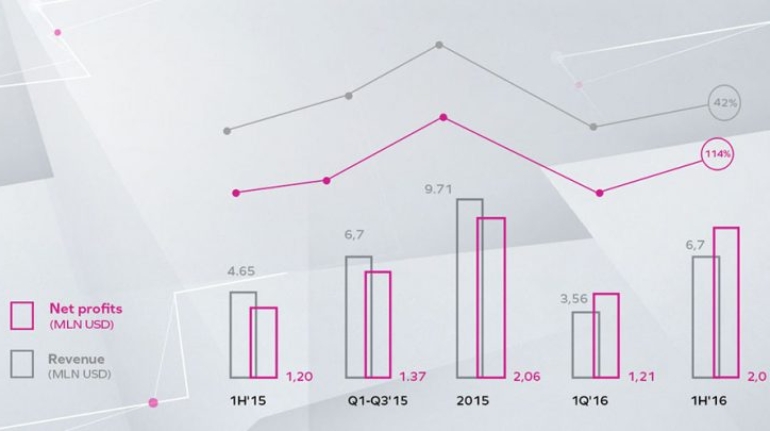
Zortrax reached a record-breaking $6,7M turnover in the first half of 2016, exceeding last year’s first-half result by more than $1.9M Zortrax – one of the leading European providers of 3D printing solutions – recently published its financial results for the first half of 2016. The company’s income level increased by 42% (compared annually), which resulted in more than $6,7 million of turnover. This exceeds last year’s first-half results by more than $1.9 million. The net profits have also increased by 114 percent annually to approximately $2 million. Sales of Zortrax’s key product, the M200 printer, have increased by 40 percent since the second half of 2015. “It was an intensive and demanding six months for us,” said Rafal Tomasiak, CEO of Zortrax. “We were working on the debut of the new M300 model and at the same time closing another financial round.” During that time Dariusz Miłek joined Zortrax as a new shareholder. The successful financial round enabled the company to transfer its research and development department from China to Poland and secure funding for future projects and acquisitions. The company has achieved the same income levels during the first six months of this year as it did during the first nine months of 2015. Zortrax also managed to increase its sales of printing materials, especially in the U.S. market where it noticed a 116-percent increase in sales compared to the same period in 2015. The American market is a top priority for Zortrax, as it plans to further develop the company’s market share in that country.
Samsung Electronics Europe today announces that it is joining forces with MakerBot, a global leader in the desktop 3D printing industry. With this partnership Samsung and MakerBot aim to inspire the next generation of innovators by bringing 3D printers to classrooms across Europe. Samsung and MakerBot are equipping schools, colleges and museums with 3D printers as part of Samsung’s digital skills programme so that students at any grade level can both code and create. The planned first phase launches in Germany, Italy, Spain, UK and Sweden this year and builds on Samsung’s network of 1,300 Smart Classrooms and 65 Digital Academies. The vision behind the partnership is to combine design and coding classes with 3D printing so students can experience the full design cycle as a way to develop ideas and innovate. With MakerBot, educators and students have access to a full set of solutions and services that enables them to tackle real-world problems. “In response to the alarming skills gap and high levels of youth unemployment in 2013, we backed the European Commission’s Grand Coalition for Digital Jobs with a pledge to engage 400,000 young people across Europe by 2019. We will achieve our goal 3 years early so we can now invest further in educating thousands of young people in the latest digital skills.” says Evelyn Nicola, Sustainability & Citizenship Manager, Samsung Europe. “Our partnership with MakerBot will support a network of ‘Lighthouse Schools’ – centres of excellence for digital learning across Europe – to teach technology skills and encourage design and manufacture. Just imagine a 9 year old girl with her idea for a new design, being able to turn her idea at school into reality and take home. Experiencing the entire creation journey, from idea to digital concept to physical object represents the future of learning and R&D.” “Samsung and MakerBot share the same vision of developing new technologies that help prepare students for the jobs of the future,” said Andreas Langfeld, General Manager of MakerBot EMEA. “3D printing can help teach many of the 21st century skills that employers are looking for and applying knowledge to the real world. We’re excited to partner with Samsung to help even more educators and students discover the power of 3D printing.” Europe has particularly high youth unemployment. Many young people leave education without the digital and soft skills that their future jobs demand. At the same time education systems are struggling to respond to the changing needs of employers. Some teachers also lack the support and confidence to adapt how they teach to match the increasingly digital world. To address these challenges, Samsung focused its European citizenship programmes on digital education and employability. It helps young people to experience how digital skills can open new doors to their future through two core programmes: Firstly, Smart Classrooms create new learning opportunities for 6 – 16 year olds. Since 2013, over 1,300 Smart Classrooms have opened across 20 countries in Europe. Samsung not only provide technology, but also offer educational content and teach digital skills, such as coding to students and teachers. The second programme, Digital Academies is Samsung’s targeted contribution to tackling the digital skills gap. There are over 65 across Europe. In these learning centres, 16 – 24 year olds can access smart technology, ICT training and employability programmes to help their transition from education to employment. About Samsung Electronics Co., Ltd. Samsung Electronics Co., Ltd. inspires the world and shapes the future with transformative ideas and technologies, redefining the worlds of TVs, smartphones, wearable devices, tablets, cameras, digital appliances, printers, medical equipment, network systems, and semiconductor and LED solutions. We are also leading in the Internet of Things space through, among others, our Smart Home and Digital Health initiatives. We employ 307,000 people across 84 countries with annual sales of US $196 billion. To discover more, please visit our official website at www.samsung.com and our official blog at global.samsungtomorrow.com About MakerBot MakerBot, a subsidiary of Stratasys Ltd. (Nasdaq: SSYS), believes there’s an innovator in everyone, and sets the standard in reliability and ease of use. As a global leader in the desktop 3D printing industry, MakerBot offers a set of solutions that illuminate and guide every stage of the 3D printing process, making it easy to go from idea to end result. Founded in 2009, MakerBot has one of the largest installed bases in the industry with more than 100,000 MakerBot Desktop 3D Printers sold to date. MakerBot also runs Thingiverse, the largest 3D printing community in the world. The company’s industry-leading customers include designers, educators, engineers, and consumers.
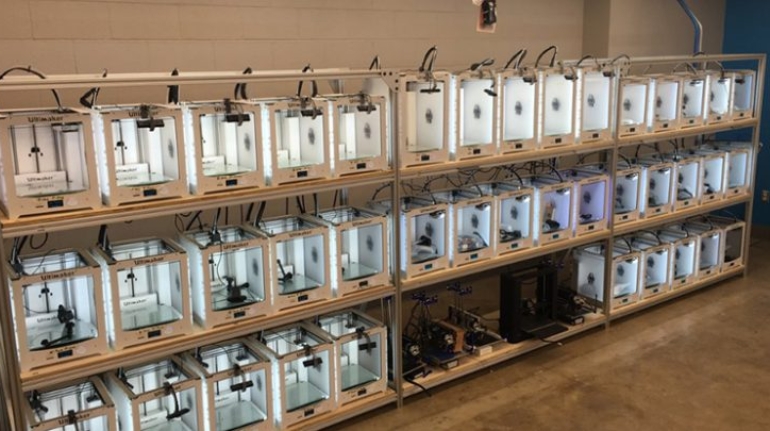
At the 3DPrintingBusiness.Directory we pride ourselves in working with some of the most fascinating and potentially disruptive companies in the industry. One of these is cloud 3D printing software 3DPrinterOS, a startup which offers what is likely to be the most advanced and complete cloud 3D printer networking system. We’ve known its founder John Dogru since the very beginning of his venture into 3D printing cloud software – and have seen his company come a long way – but don’t just take our word for it. Take renowned Duke University’s Innovation CoLab’s. The Innovation Co-Lab is a creativity incubator, focused on exploring how new and emerging technologies can fundamentally reshape the research, academic, and service missions of the university. Working with innovation-minded people around Duke’s campus, the lab is building a model program that will elevate and inspire Duke students who are solving problems, big and small, through ever-changing technological environments. Duke students of all backgrounds, interests, and skill-sets are encouraged to participate. To help the students find solutions to real everyday problems, the Innovation CoLab offers an impressive array of over 60 3D printers including literally a ton of Ultimakers, a few other interesting thermoplastic extrusion systems (MakerBot, Printrbot and a large format Gigabot), some Formlab desktop SLA systems and even a new full color mcor ARKe (find the full list here). All these 3D printers are connected to and managed by 3DprinterOS. The open platformed is licensed by OIT for all of Duke. Any member of the Duke community can use this software to manage their print jobs, even remote printing is possible. Stop into the lab to get an access code and a quick run down about how to use the system. To get started with 3D printing at Duke, there is a full online course available at Duke Extend. The course gets students up and running on the 3DPrinterOS system. Definitely worth checking it out
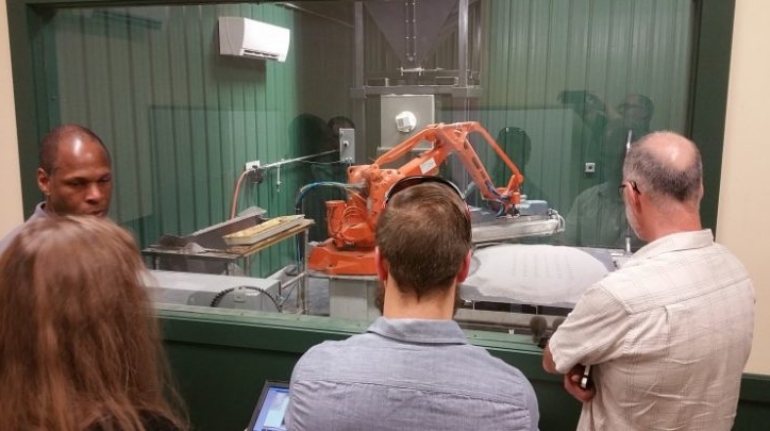
Viridis3D, a supplier of additive manufacturing technology for making sand molds and cores for foundry applications, has teamed up with Palmer Manufacturing and Trident Alloys to provide live demonstrations of its new robotic 3D printing technology. Customers from the United States, Canada and Mexico attended the first demonstration events held in June and August, and were shown the speed and flexibility that the RAM123 printers bring to the foundry industry. Three more events will be held on Sept. 14, Oct. 6, and Nov. 8. Each session will run from 9 a.m. to 1 p.m. Attendees will receive an hour-long live machine demonstration, a foundry tour, and an offsite Q&A at a nearby conference center. Trident Alloys, a jobbing foundry in Springfield, Mass., purchased a Viridis3D RAM123 printer in 2015, and has added 3D printed sand molds as a quick turn service for making production sand castings. The company has produced castings for existing customers, ranging from prototype, production, and legacy spare parts. Jim Galaska, owner of Trident Alloys, said he was “surprised at the new business that we are getting through word of mouth, before we even started advertising.” Will Shambley, Co-founder of Viridis3D, and Jack Palmer, President of Palmer Manufacturing & Supply, will lead the live demonstrations showing how the company makes cores and molds with the robotic 3D printing technology and discuss how Trident Alloys is using the technology in everyday production. “These demonstrations show just how revolutionary and disruptive 3D printing technology is for the foundry industry,” Shambley said. “We have a great product that is already making production sand castings.” Palmer added, “The Viridis3D technology is amazingly simple, rugged, and affordable. Its ability to achieve excellent surface finish with accurate tolerances sets itself apart from anything else on the market today.” Space is limited in each session. For more details and to register, visit www.palmermfg.com/reservation.html. About Viridis3D Founded in 2010, Viridis3D is an all-inclusive supplier of additive manufacturing technology for industrial applications. The company sells complete systems of materials, 3D printing machines, robots, software, and the training needed to successfully deploy functional solutions for metal casting, ceramics, and composites applications. Viridis3D is backed by an exclusive strategic partnership with EnvisionTEC. For more information, please visit Viridis3d.com. About Palmer Manufacturing & Supply Palmer Manufacturing and Supply, a manufacturer of foundry equipment from Springfield, OH, is the official sales partner for the Viridis3D sand casting systems in North and South America. More information at www.palmermfg.com. About EnvisionTEC EnvisionTEC is a leading global provider of professional-grade 3D printing solutions. Founded in 2002 with its pioneering commercial DLP printing technology, EnvisionTEC now sells 40 printers based on six distinct technologies that build objects from digital design files. The company’s premium printers serve a wide variety of medical, professional and industrial markets, and are valued for precision, surface quality, functionality and speed. EnvisionTEC’s intellectual property includes more than 100 patents and 70 proprietary materials. Headquartered in Dearborn, Michigan, and Gladbeck, Germany, EnvisionTEC is privately owned by its founder, who is passionate about advancing the field of additive manufacturing. Learn more at EnvisionTEC.com.
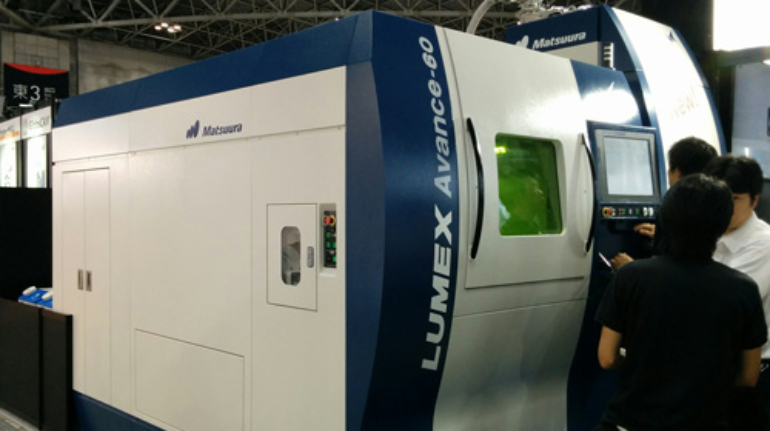
Matsuura just announced the UK launch of the LUMEX Avance-60, the larger sister model to the unique hybrid (SLM additive and CNC subtractive) LUMEX Avance-25. Since the Avance-25 has been present on the market – and has been the Matsuura reference system (and the only hybrid system) for about a decade – this is quite a significant step. Especially since the new machine is truly impressive for its size.
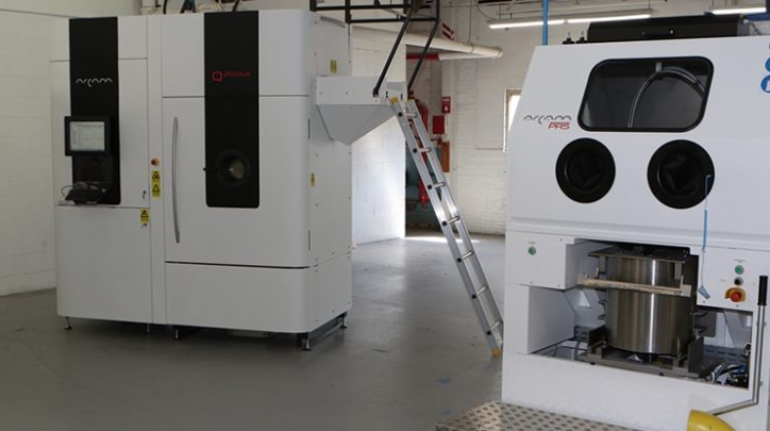
Addaero Manufacturing is pleased to announce that it has completed the installati ...
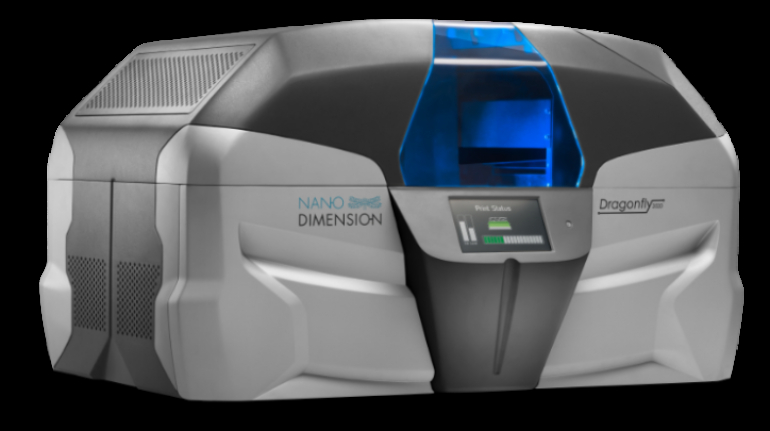
Nano Dimension, a leader in the field of 3D printed electronics, announced today that it has supplied the first DragonFly 2020 system designated for 3D circuitry and PCBs. The supply was made to a leading defense company in Israel for evaluation purposes and is expected to be installed at the partner’s site in the coming days.
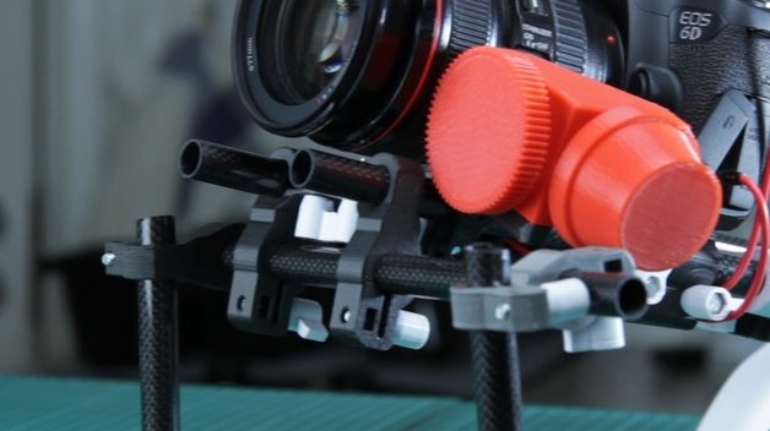
Jenny Chen of 3DHeals, on the Women in 3D Printing Blog, recently said that it is not the technology itself, as much as the people using it, that are driving innovation in 3D printing. That is absolutely true: the paradox is that while so many of us focus on the limits of desktop (and industrial) machines, the true limits are in our heads (and in materials). The Open Camera Project by YouTuber, blogger and 3D Printer Chat FB group administrator Anton Månsson shows exactly that we are just beginning to understand how we can fully exploit the capabilities of even a basic desktop 3D printer fed with PETG. “I’ve always loved filming and cameras,” Anton explains, “I love the idea of creating videos to educate and illustrate things going on. When combining this with a passion for gadgets i suddenly realized you have to cut corners to afford the “important” stuff. One of those things were to mount all the necessary parts around the camera. When moving from visual 3D-creation into more mechanical 3D-creation – he continues – I picked up on the fact that I have all these 3D printers at the Creative Tools office and wanted to create a 3D printable system that I could use instead of buying loads of expensive parts.” DSLR (and GoPro) camera accessories are extremely expensive. Even more so for rigs. And yet rigs are some of the products that can be 3D printed more efficiently. The biggest challenge – as is often the case -is designing them but through open source sharing, it may be enough for one person to begin and let everyone contribute to provide the community with several affordable designs. The most common systems use 15mm Diameter rods (aluminium or carbon fiber usually) that are offset by 60mm (center to center). The idea of a camera rig is to incorporate manually operated focus systems, as well as enabling one or more two persons to operate the camera easily. For low budget film and documentary use it’s common to use a shoulder rig that’s lets one operator rest the camera (and audio recording, light, batteries and more) on this shoulder and arms. This can be combined this with a “follow-focus system” (a knob that you twist to smoothly change focus, instead of turning the lens built-in focus ring). Given all the right tools, a camera operator is able to achieve a lot more with a smaller team (or even alone). “All of this gear is usually very expensive and my goal was to create a system that could be printed for under $100, to be open source, and to work with existing parts while being strong enough to handle a DSLR-camera.”, Anton says. The project is just beginning but it looks promising and there certainly are thousands of professionals out there – in the ever more competitive and low paying world of photography and videomaking – who can benefit a great deal from a significant cut to their accessories expenses list.
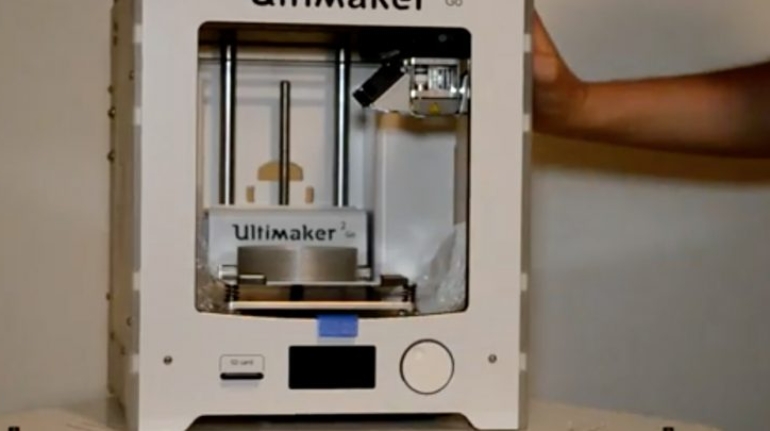
3D Printing Media Network partner, professional 3D designer and and well know 3D printing Youtuber Simone Fontana just released a new video on his FNTSMN YouTube Channel. In the video – which you can see below – just ahead of talking the little Ultimaker out of his stylish portable box, Simone also announced that he will be participating – with his 3D Design studio 3DNA – to INSOMNIA58, the UK’s largest gaming festival. Simone, who has made a name for himself for his skills and intuitions in creating realistic 3D printed props from some of the biggest gaming IP’s around, including games from Bethesda and Blizzard, is participating to the event together with CoolerMaster UK. He will be at the PC accessories manufacturer’s stand designing and 3D printing live with his Ultimaker 2+ and the newly arrived Ultimaker 2Go. Sounds like a great way to combine two of 3D’s best applications: the virtual gaming world and the physical desktop additive manufacturing world. Simone was among the very first to see the value that 3D printing can being to videogames and videogame publishers, let’s hope the gaming giants will soon see it as well. Without further ado, check out the little Ultimaker at work in FNTSMN’s latest video