
Sarco 3D Printed Suicide Pod Passes Legal Review

Sarco 3D Printed Suicide Pod Passes Legal Review

And that’s why you really should never say never in 3D printing. When Sarco was introduced a couple of years ago as a 3D printed assisted suicide pod to simplify euthanasia we wrote that off as a publicity—or at most an artistic—stunt (so much so that we did not even cover the story). But we should not have written it off. Now the Sarco pod has been OK’d by the Swiss authorities (one of the first nations to legalize euthanasia).

Health Canada Authorizes Use of 3D rinted mandibular implant Medical

Health Canada Authorizes Use of 3D Printed Mandibular Implant

The medical 3D printing industry marked an exciting milestone in Canada this week: Health Canada (a government department tasked with national health policies) has approved a 3D printed medical implant made by LARA 3D in Quebec City. The 3D printed device, a patient-specific mandibular plate, is the first made by a Canadian manufacturer to be granted authorization for implantation.

Paragon Medical Breaks Ground on Medical AM Facility in Indiana

Paragon Medical Breaks Ground on Medical AM Facility in Indiana

Paragon Medical, a global provider of medical components and products, announced the groundbreaking on a new additive manufacturing facility in Pierceton, Indiana. Paragon Medical broke ground on the new medical AM facility with local dignitaries in attendance including Joseph Thallemer, Mayor of Warsaw; David Rosenberg, IEDC Executive Vice President; and Mary Martin, Regional Director in the Office of Senator Mike Braun.

Reliable Processes for 3D Printing in the MedTech Industry

Reliable Processes for 3D Printing in the MedTech Industry

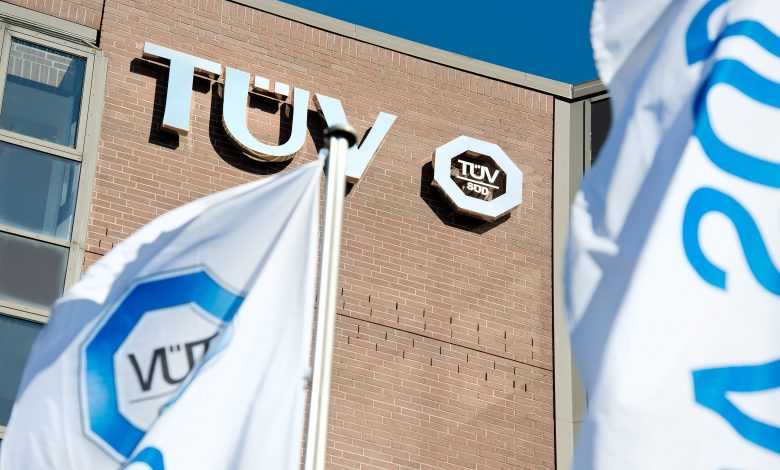
What do certification bodies or notified bodies look at when validating additive manufacturing processes? In the MedTech sector, their focus will be on personnel qualification and, in particular, the process chain. In its new white paper, TÜV SÜD outlines the state-of-the-art manufacturing method and takes a closer look at the applicable standards. “We point out existing gaps and potential issues related to the additive manufacturing of medical devices, and outline feasible procedures”, said Simon Schlagintweit, Lead Auditor Additive Manufacturing at TÜV SÜD. The publication explains the individual steps in process chain qualification and validation and discusses the post-processing of products. The white paper’s target audience includes industry representatives, but also decision-makers in point-of-care diagnostics in areas such as research institutes and hospitals.