
How to Identify Injection Molded Products: A Guide
Believe it or not, many of the items around you in your day-to-day life are created through a proces ...

News and Insights of 3D Printing and Manufacturing
Believe it or not, many of the items around you in your day-to-day life are created through a proces ...
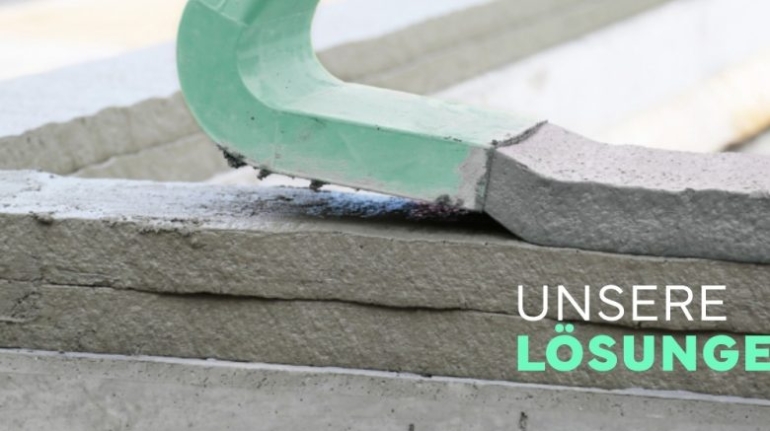
The German company Putzmeister Group is expanding its expertise in concrete pumping to increase its investment in bringing large-scale, industrial-grade 3D printing solutions to the construction industry. With the launch of its new brand, INSTATIQ, the company is taking a major step toward making 3D concrete printing accessible to the mass market.
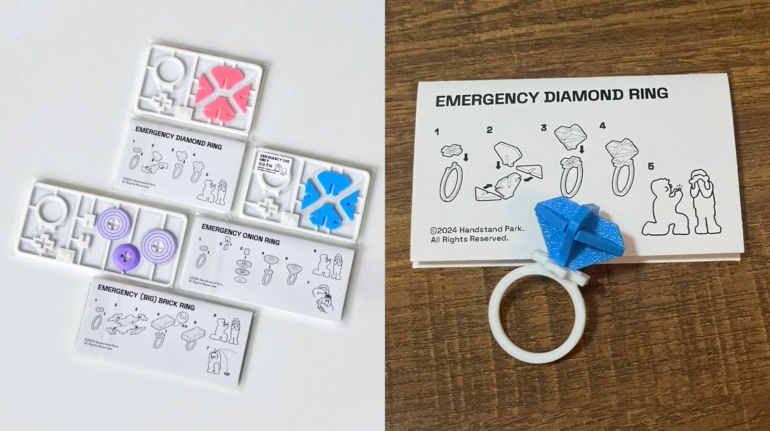
Valentine's Day is fast approaching, and if you're searching for a gift that's as unique and special ...

Luyten, an Australian construction 3D printing firm, is breaking ground on a new project in its home city of Melbourne. When complete, the 350-square-meter build will be Australia’s first multi-storey 3D printed home and will be lived in by none other than Luyten’s CEO and Global President Ahmed Mahil in an effort to demonstrate the viability of 3D printed homes.

The International Code Council (ICC) has announced the development of ICC 1150, the first-ever standard for 3D Automated Construction Technology (3DACT) for 3D Concrete Walls. This standard aims to provide comprehensive structural criteria for interior and exterior 3D printed concrete walls, supporting load-bearing, non-load-bearing, and shear wall applications in single-story and multi-story structures.
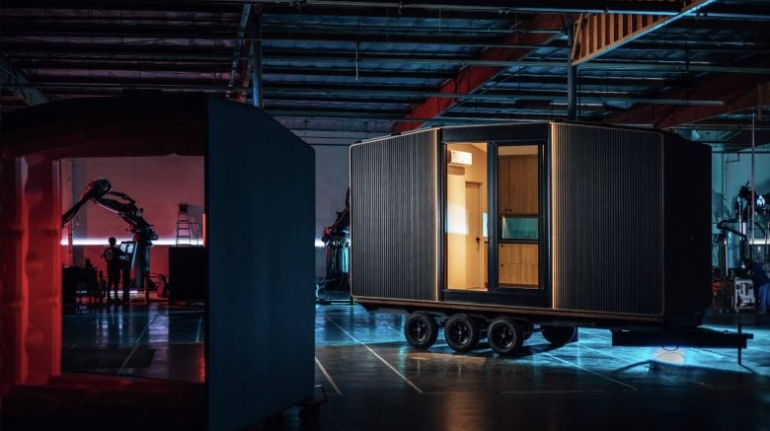
Azure Printed Homes, a 3D printed housing company, has launched a $4.2 million crowdfunding campaign to enable the scaling of its production capacity to rebuild Los Angeles after the recent wildfires.

About a year ago, the U.S. Army announced a pilot program to 3D print a series of barracks at Fort Bliss, Texas with the aim of improving living conditions for soldiers and enhancing overall readiness. Now, the 3D printed barracks, which span 5,700 square feet, are complete, making them the largest 3D printed structures in the Western Hemisphere.
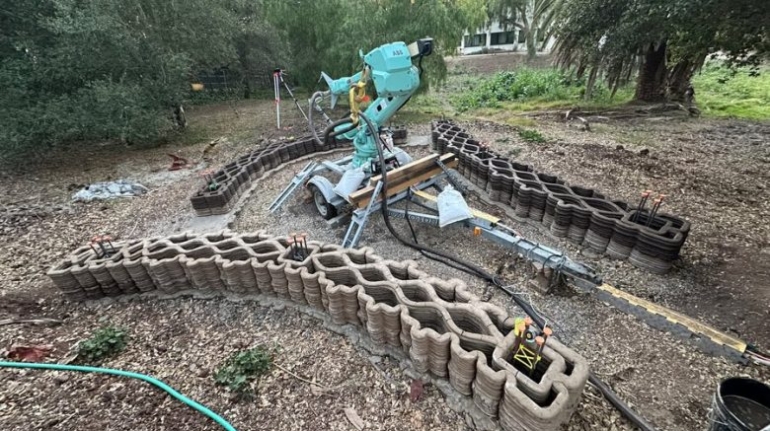
According to MIT, researchers have developed a method to use lightly treated mud, including soil from a building site, as the ‘formwork’ molds into which concrete is poured. The technique deploys 3D printing and can replace the more costly method of building elaborate wood formworks for concrete construction.
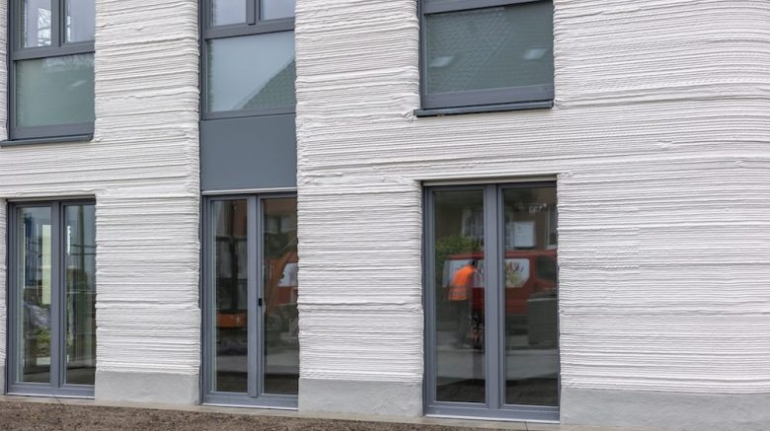
A 3D printed social housing project that broke ground in late 2023 has been completed. The development, based in Lünen, Germany, was funded by the state of North Rhine-Westphalia and consists of six affordable units measuring between 61m² (670 square feet) to 81m² (890 square feet). According to German news sources, the first tenants, Joachim and Constanze Lippmann, moved in in January.

Since the early days of construction 3D printing, there has been a vision to use the technology as a more cost-effective alternative to conventional construction methods to facilitate the creation of affordable housing. Now, we are seeing that vision start to be realized, with a number of 3D printing-based social housing projects breaking ground around the world.