

If Stranger Things has taught us anything, it is that a quiet-looking place can hide an unpleasant surprise.
Manufacturing has its own version. A plastic part comes out of the mold looking promising—until a tiny pit appears on the surface, or an air pocket interrupts a detail that was perfectly clear in the CAD file.
No portal to another dimension. Just trapped air.
Less dramatic than a monster, admittedly. Still capable of ruining someone’s afternoon.
Meet the Smallest Villain in the Workshop
Air can enter materials during mixing and become trapped during mold filling. Once the material cures, those bubbles may leave surface blemishes or internal voids.
For a presentation model, a visible pit can spoil the finish. Around a thin or highly stressed feature, a void may also affect performance.
Painting might disguise a color difference. It cannot reliably persuade a hole to stop being a hole.
That is why bubble control begins before the finished part reaches the inspection table.

What the Vacuum Actually Does
Vacuum casting gets its name from using reduced pressure as part of the casting process.
During vacuum degassing, trapped gas expands and can escape from the liquid material before it cures. Material suitability and working time matter: a resin that starts setting too quickly leaves little time for bubble removal.
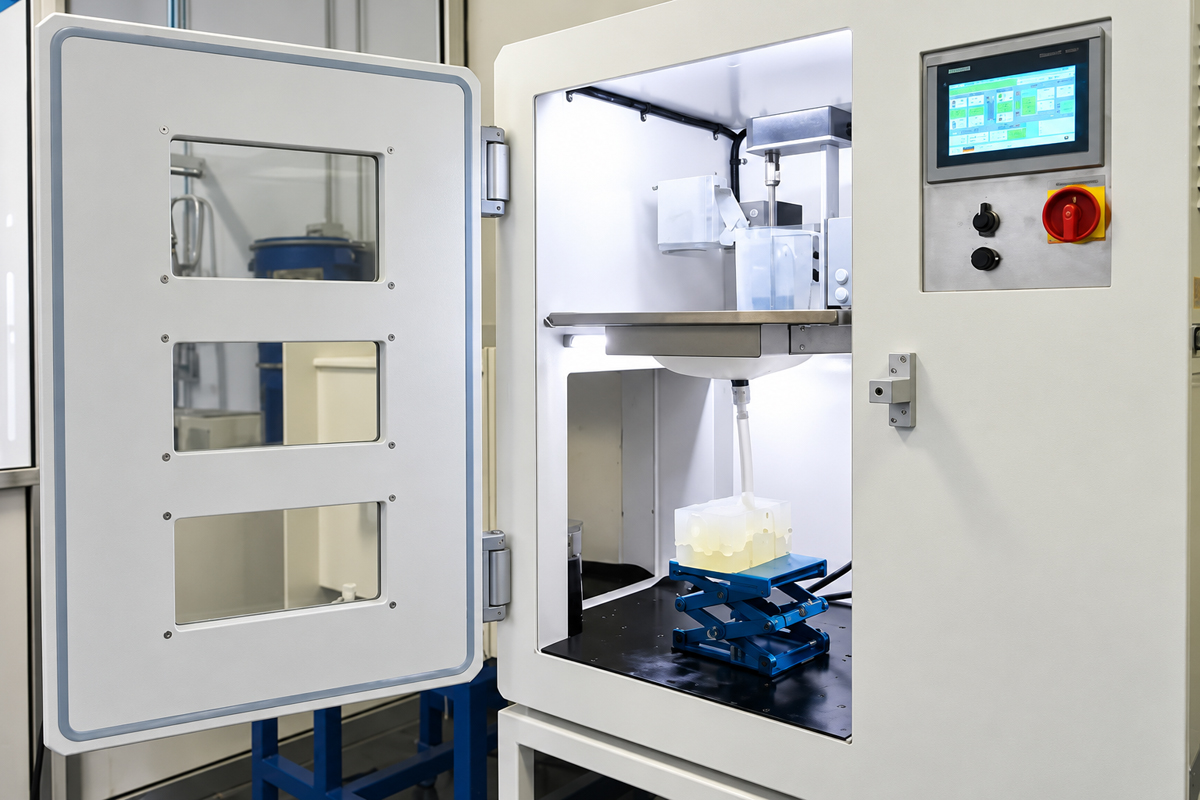
Vacuum can also be used during mold filling to help manage trapped air. The chamber shown in the second photo is where this less glamorous—but very useful—part of the story happens.
There are no flashing Christmas lights required. Process controls are generally more helpful.
The Mold Needs Attention, Too
Bubble control also matters when making the silicone mold itself.
A carefully prepared master establishes the shape and surface to reproduce. Degassing the mixed silicone helps avoid unwanted bubbles that could compromise the mold surface.
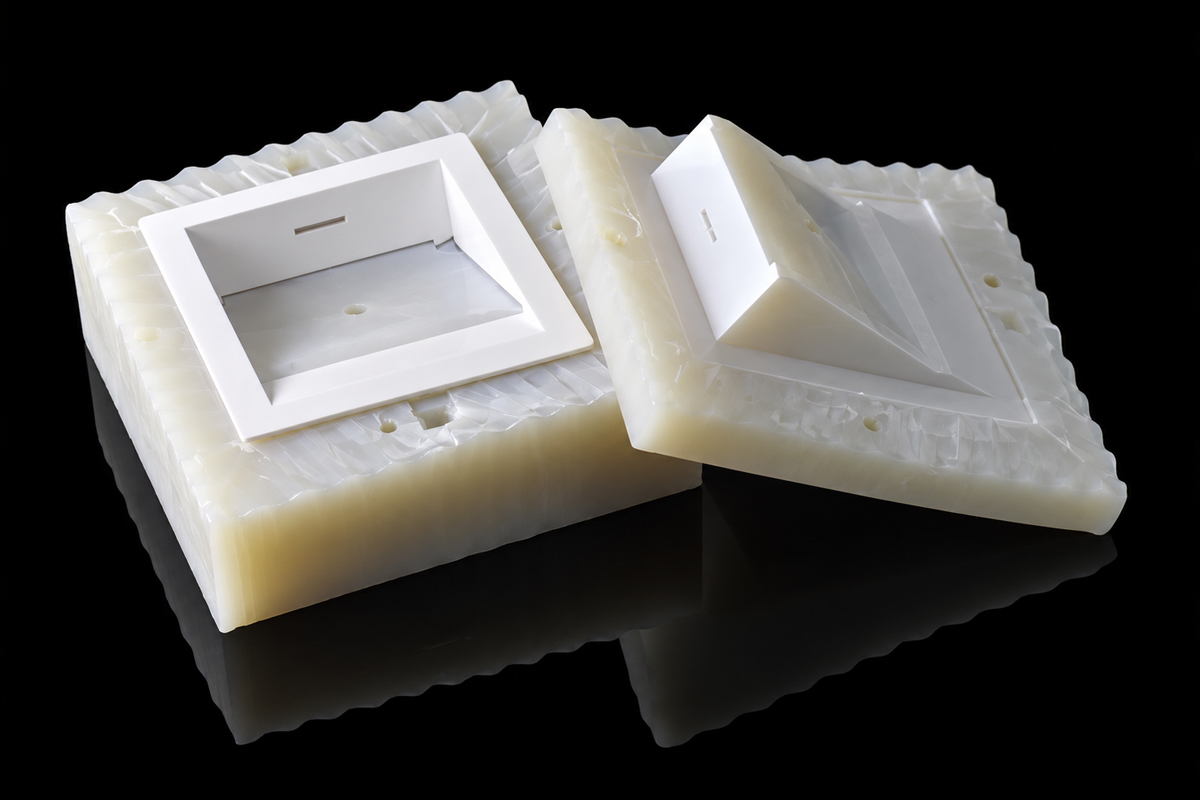
The first photo shows the relationship between shaped white components and their silicone tooling. Flat faces and crisp edges make the quality of surface reproduction easy to appreciate.
Whatever the product eventually does, its surface should reflect the design rather than an accidental collection of tiny craters.
A Chamber Is Only Part of the Team
Vacuum is useful, but successful casting still depends on sensible preparation.
Resin selection, mixing, gate and vent placement, temperature, and curing conditions all influence the result. Moisture-sensitive polyurethane systems also need appropriate handling.
In other words, buying the equipment does not automatically finish the mission. Owning a bicycle did not make anyone the next stunt coordinator for Hawkins.
Inspection still matters, too. Surface appearance, dimensions, and fit should be checked against the project’s requirements.
Bring Your Design Into the Real World
For teams developing housings, covers, or other plastic components, vacuum casting can provide small batches for demonstrations, assembly checks, and suitable functional evaluations.
FacFox offers 3D printing and vacuum casting services, including printed master patterns and cast parts tailored to your project’s material and finish requirements.
Send FacFox your CAD files, target quantity, and critical requirements to discuss a suitable manufacturing approach.
Your product launch may already have enough suspense.
The inside of your plastic parts does not need a subplot.
Leave A Comment
You must be logged in to post a comment