
Copper Chromium Zirconium (CuCrZr) isn’t just another metal powder — it’s one of the rare materials where electrical conductivity, mechanical strength, and thermal stability coexist without compromise. Here’s why engineers are increasingly turning to additive manufacturing to unlock its full potential.
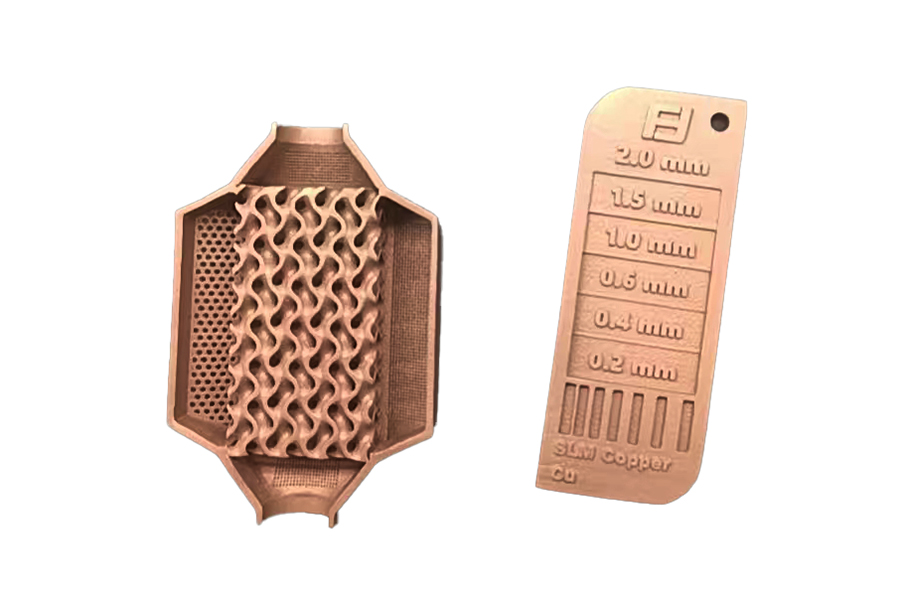
What Is CuCrZr?
CuCrZr is a precipitation-hardened copper alloy composed of a copper base with small additions of chromium (0.5–1.2 wt%) and zirconium (0.03–0.30 wt%). Those trace elements do heavy lifting: zirconium forms coherent precipitates within the copper matrix, while chromium enhances high-temperature stability. The result is a material that standard copper alloys simply cannot match.
Through solution annealing and controlled aging, manufacturers can tune the alloy’s strength — sometimes tripling tensile strength compared to the as-built state — without sacrificing meaningful conductivity.
Key Properties at a Glance
- Electrical Conductivity: ~80% IACS — far above precipitation-hardened stainless steels, making it viable for high-current-density components.
- Thermal Stability: Strength and conductivity hold up to 400–500°C, where most copper alloys begin to soften.
- Mechanical Strength: Post-aging tensile strength reaches 400–500 MPa with good ductility retained — a balance competing alloys rarely achieve.
- Corrosion Resistance: A natural Cr₂O₃ oxide scale provides oxidation and corrosion resistance without sacrificing conductivity.
Why 3D Printing Changes the Game
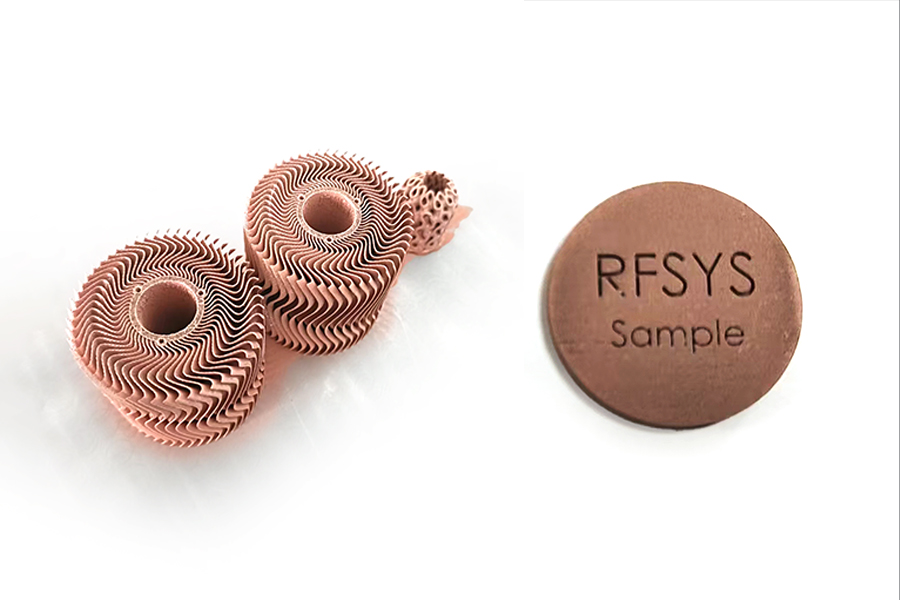
Conventional CuCrZr processing — bar stock, extrusion, machining — limits design freedom. You can make a rod or a strip. You cannot make a conformal cooling channel, a latticed heat exchanger, or a topology-optimized electrode with internal geometry that reduces mass while maximizing surface area.
Laser Powder Bed Fusion (LPBF) and Direct Energy Deposition (DED) change this entirely. With CuCrZr powder — typically 15–53 μm spherical particles — engineers can now build near-net-shape parts with complex internal features that would be impossible to machine. Precise process control is critical: laser power in the 200–400W range, layer thickness of 20–50 μm, and an inert atmosphere to prevent oxidation during the build.
Supported Additive Processes
| Technology | Best For | Key Parameter |
|---|---|---|
| LPBF / SLM | Complex geometries, fine features, heat exchangers | 200–400W laser power |
| EBM | Low residual stress, high-vacuum processing | Vacuum environment required |
| DED | Large parts, repair, cladding onto substrates | Wire or powder feed |
Real-World Applications
Thermal Management
Heat exchangers, heat sinks, and cold plates that need to move heat fast while withstanding mechanical loads. LPBF enables conformal channel geometries that dramatically improve thermal efficiency over machined alternatives.
Resistance Welding Electrodes
CuCrZr’s excellent conductivity reduces heat generation, allowing faster weld cycles. High strength prevents tip mushrooming, and 3D printing enables custom electrode geometries for tight-clearance assemblies.
Aerospace Components
Rocket engine combustion chambers and thrust chamber liners benefit from CuCrZr’s ability to sustain both extreme thermal flux and structural loading simultaneously — a combination few materials can handle.
Electrical Contacts & Bus Bars
A safer, more conductive alternative to beryllium copper for high-current electrical contacts, with additive manufacturing enabling integrated geometries that reduce overall part counts.
High-Temperature Springs & Fixtures
Unlike steel springs, CuCrZr retains its load capacity up to 500°C — valuable in furnace fixtures, electrical connectors, and automotive sensors operating in hot zones.
The Heat Treatment Step You Can’t Skip
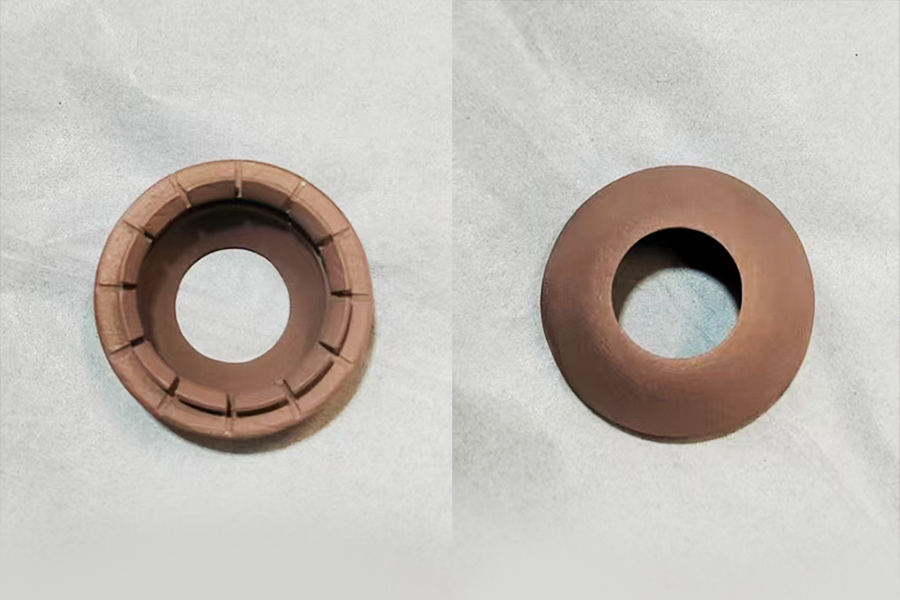
Parts printed in CuCrZr are typically in a supersaturated solid solution state. To realize the alloy’s full mechanical potential, a two-step post-process is required:
- Solution Annealing: Heat to approximately 980–1020°C, then rapidly quench.
- Aging: Hold at 450–520°C to nucleate the fine Cr/Zr precipitates responsible for precipitation hardening.
Aging time and temperature are levers engineers can use to trade strength for conductivity. Under-age to preserve conductivity; peak-age to maximize strength. Over-aging reduces both — so process discipline matters significantly.
CuCrZr vs. the Alternatives
Engineers often compare CuCrZr against beryllium copper (Cu-Be), copper-nickel alloys, and standard brass:
- vs. Beryllium Copper: Cu-Be offers higher strength but at significantly higher cost and with serious health and environmental hazards in powder form — a critical concern for additive manufacturing.
- vs. Copper-Nickel: Cu-Ni excels in marine corrosion resistance but lags significantly on electrical conductivity.
- vs. Brass: Brass is inexpensive but lacks the thermal stability and mechanical performance required in demanding applications.
For applications where conductivity, strength, and heat resistance all matter — and where complex geometry adds value — CuCrZr delivered via LPBF is typically the strongest choice on the market.
Print Your Next Project in CuCrZr with FacFox
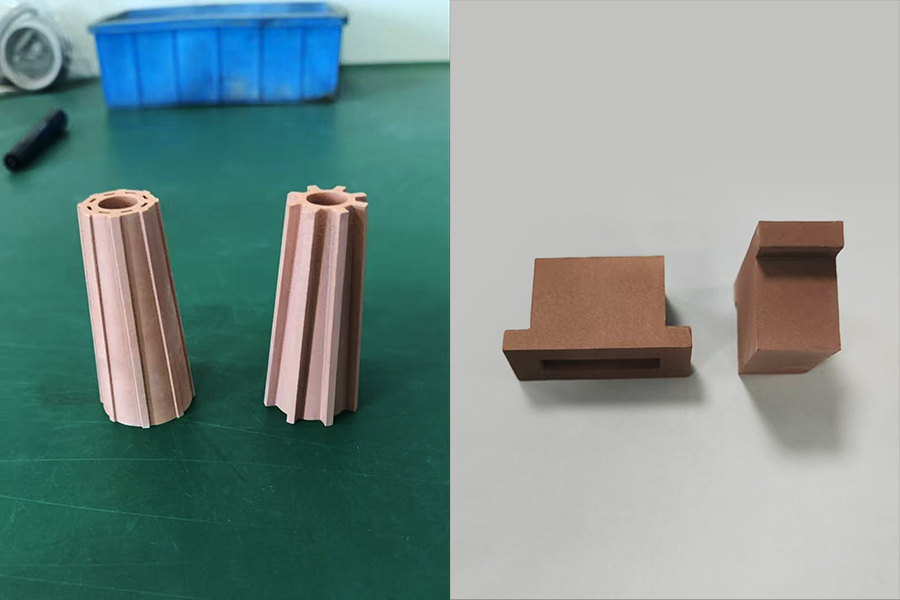
FacFox offers LPBF metal 3D printing with CuCrZr powder, including full post-processing and optimized heat treatment for your specific application. Whether you’re developing a new heat exchanger, electrode, or aerospace component, our metallurgical team will work with you to hit the right balance of strength and conductivity.