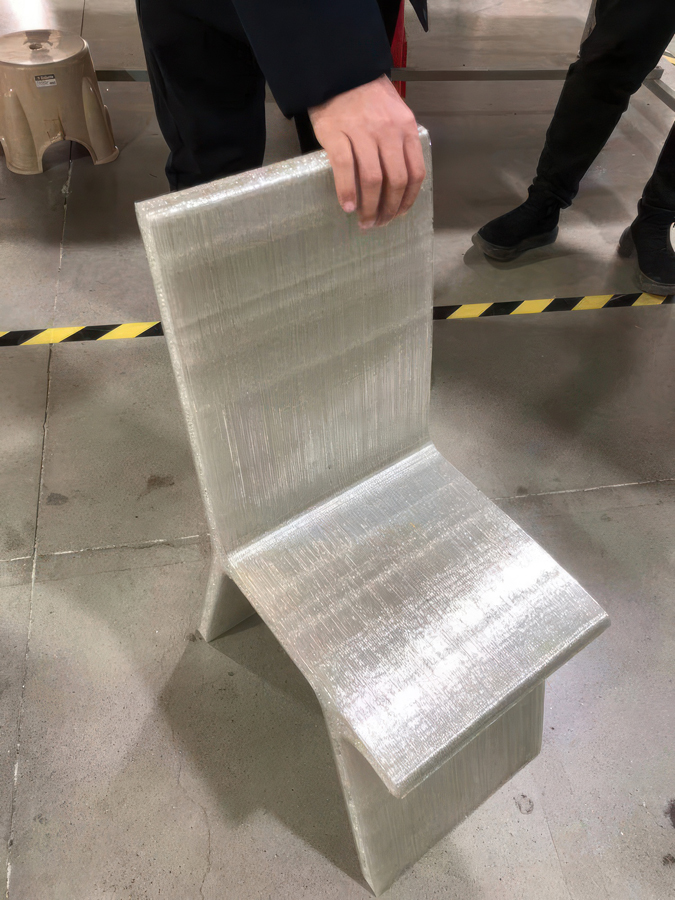
When it comes to large-format manufacturing—such as 2-meter automotive molds, architectural installations, or custom industrial fixtures—traditional 3D printing (FDM) often hits a wall. It is simply too slow, and the cost of specialized filament filaments skyrockets as your part grows.
Enter FGF (Fused Granular Fabrication), also widely known as Pellet 3D Printing.
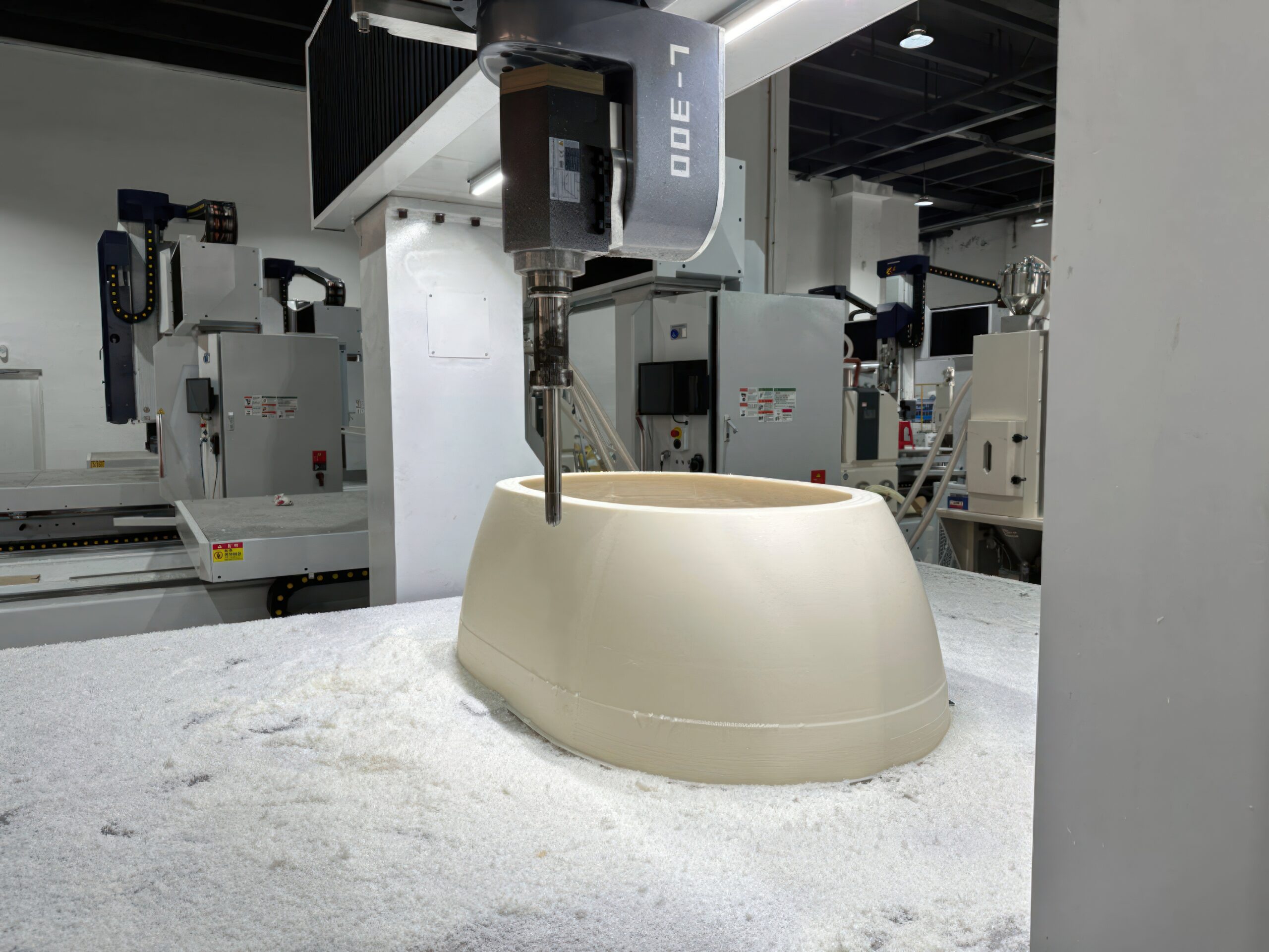
As a global on-demand manufacturing platform, FacFox has seen a massive shift toward this technology from engineering and design teams worldwide. Why? Because FGF completely redefines the economy of scale in additive manufacturing.
Here is everything you need to know about how FGF works, why it saves massive amounts of time and budget, and how FacFox leverages it for your industrial projects.
What is FGF 3D Printing?
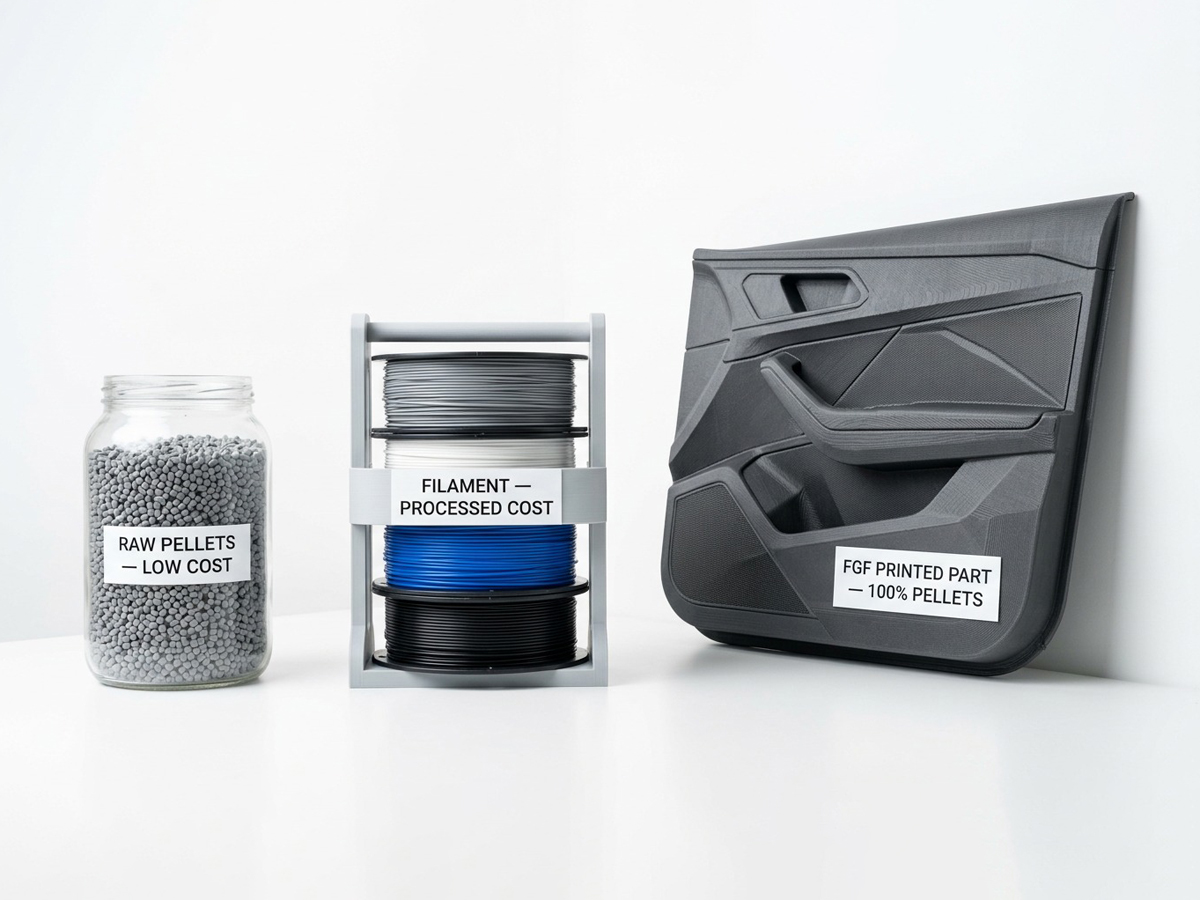
Instead of using wound plastic filament spooling through a small nozzle, FGF 3D printing directly feeds raw plastic pellets (the exact same granules used in traditional injection molding) into a screw-driven extruder.
The rotating screw melts the pellets under high pressure and forces the molten plastic through large-diameter nozzles. This mechanical shift unlocks capabilities that traditional 3D printers can only dream of.
The Commercial Advantages: Translating Technology into ROI
For international procurement and engineering departments, selecting a manufacturing process always comes down to the bottom line: Cost, Speed, and Performance. FGF excels in all three.
1. Slashed Material Costs (Up to 90% Savings)
Plastic pellets are the baseline form of raw polymers. To make FDM filament, manufacturers must extrude, cool, spool, and package those pellets—a process that adds a massive premium. By bypassing filament production completely, FGF reduces raw material expenses by 70% to 90%. When you are printing parts weighing 20 kg to 200 kg (44 lbs to 440 lbs), this material cost differential represents thousands of dollars saved on a single project.
2. Industrial-Grade Production Speed
Standard FDM printers measure their output in grams per hour. FGF printers measure theirs in kilograms or pounds per hour. Featuring nozzle diameters ranging from 2 mm to over 10 mm (0.08″ to 0.4″), FGF deposits thick layers of plastic at blistering speeds. What used to take two weeks of non-stop printing on a filament machine can now be delivered by FacFox in matter of days or even hours.
3. Unmatched Material Choice & Composite Rigidity
Because it utilizes injection-molding pellets, FGF gives you access to a massive catalog of engineering-grade plastics: ABS, PC, PETG, Nylon, and even high-performance PEEK. More importantly, it supports high-percentage fiber reinforcement. At FacFox, we regularly print with Carbon Fiber-filled (CF) or Glass Fiber-filled (GF) pellets. The chopped fibers align during extrusion, giving your massive parts incredible structural rigidity, low thermal expansion, and near-zero warping.
Overcoming the FGF Challenge: FacFox’s Hybrid Workflow
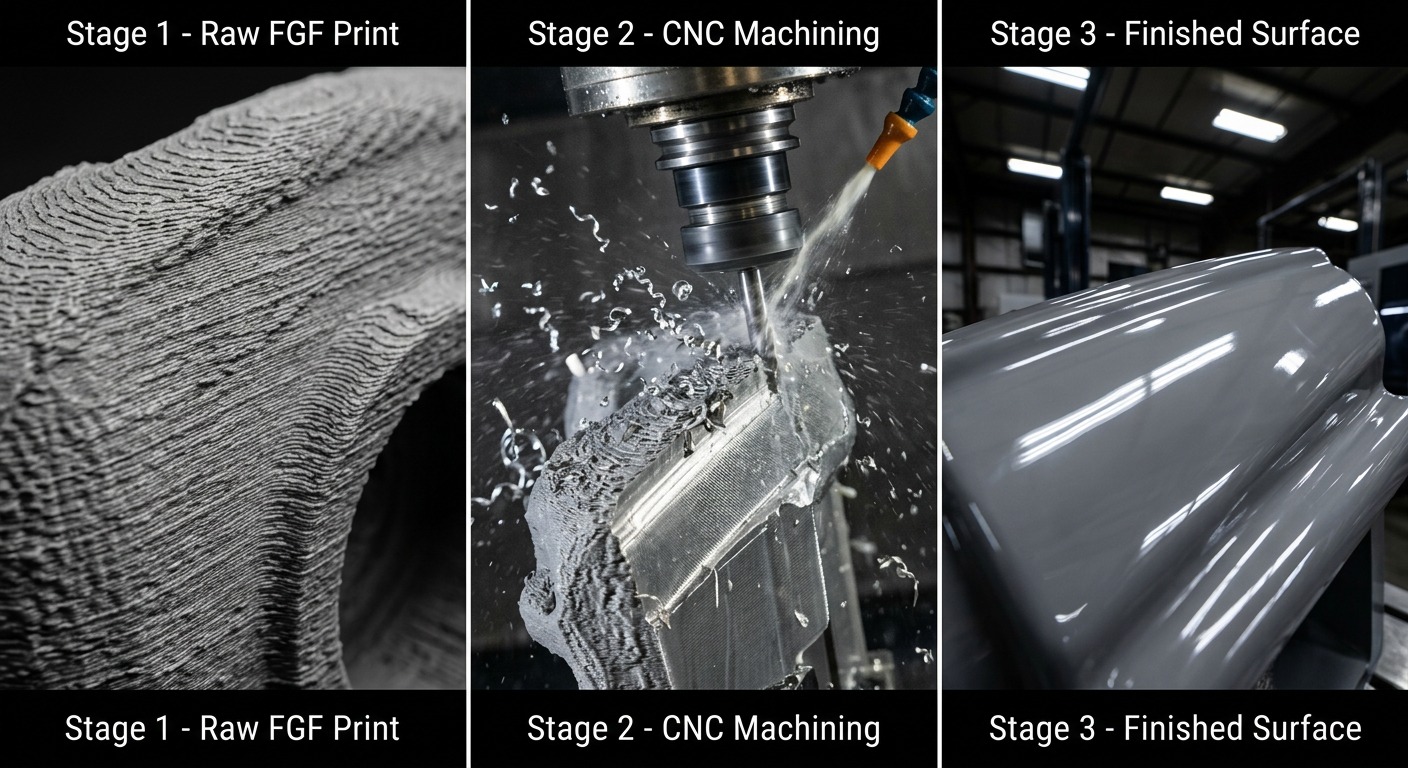
While FGF is highly efficient, it does have a distinct characteristic: visible layer lines. Because the nozzles are so large, the surface finish straight off the printer looks ribbed, resembling a corduroy texture.
For high-precision industrial molds or visual marketing displays, this raw finish won’t cut it. Here is how FacFox solves that challenge:
The FacFox Edge: Near-Net Shape Hybrid Manufacturing
We don’t just print your part; we engineer the final product. FacFox utilizes a Hybrid Workflow. We print your large-scale component slightly oversized using our heavy-duty FGF robotic arms. Once cooled, the part is transferred to our large-format CNC milling machines.
The CNC precisely shaves down the outer skin to your exact CAD tolerances. This gives you the best of both worlds: the lightning speed and low cost of 3D printing, combined with the mirror-smooth precision of CNC machining.
Green Manufacturing for Your ESG Goals
Sustainability is no longer an afterthought in global supply chains; it is a corporate mandate. FGF is inherently one of the most eco-friendly manufacturing methods available.
Because the screw extruder can swallow varied granule shapes, it can directly process Post-Consumer Recycled (PCR) plastics and bio-composites. If your project demands strict environmental compliance, FacFox can source certified recycled pellet streams, turning industrial or ocean plastic waste into durable, long-lasting corporate assets without sacrificing mechanical integrity.
Is FGF Right For Your Project?
| Feature | FGF (Pellet Printing) | FDM (Filament Printing) |
| Best Suited For | Parts > 1 meter (3.3 ft) | Parts < 1 meter (3.3 ft) |
| Material Cost | Extremely Low | Moderate to High |
| Deposition Rate | High (Up to 15+ kg/hr) | Low (Approx. 0.05 kg/hr) |
| Surface Finish | Coarse (Requires CNC Post-Milling) | Smooth to Medium |
| Common Uses | Molds, Jigs, Furniture, Marine Hulls | Detailed Prototypes, Enclosures, Handhelds |

Ready to Scale Your Next Project with FacFox?
Distance is no barrier to high-quality manufacturing. FacFox bridges the gap for our international clients across North America, Europe, and beyond by providing seamless digital communication, transparent DFM (Design for Manufacturing) feedback, and reliable global express shipping.
Whether you need a heavy-duty aerospace layup tool, a large architectural facade, or custom rugged shipping crates, our industrial-grade FGF pellet printing services deliver scale, speed, and savings directly to your doorstep.
Let’s optimize your production budget today. Upload your 3D CAD files (STEP, IGES, or STL formats) to our platform, or contact our engineering desk directly at info@facfox.com. Our specialists will provide a comprehensive quote and manufacturability analysis within 24 hours.