
When people talk about 3D printing wearables, they usually think of helmets, armor, masks, or jewelry. But recently, a much more unexpected idea has been getting attention in cosplay and maker communities: 3D printed hair.
Not realistic hair made strand by strand, of course. Instead, these projects use 3D printing to create stylized hair pieces, anime-style wigs, doll hair shells, pet costume accessories, and even custom head forms for wig makers.
At first glance, it sounds like a joke. A plastic wig? Wouldn’t that be heavy, hot, and uncomfortable?
Sometimes, yes. But in the right use case, 3D printed hair can solve problems that traditional wigs struggle with.
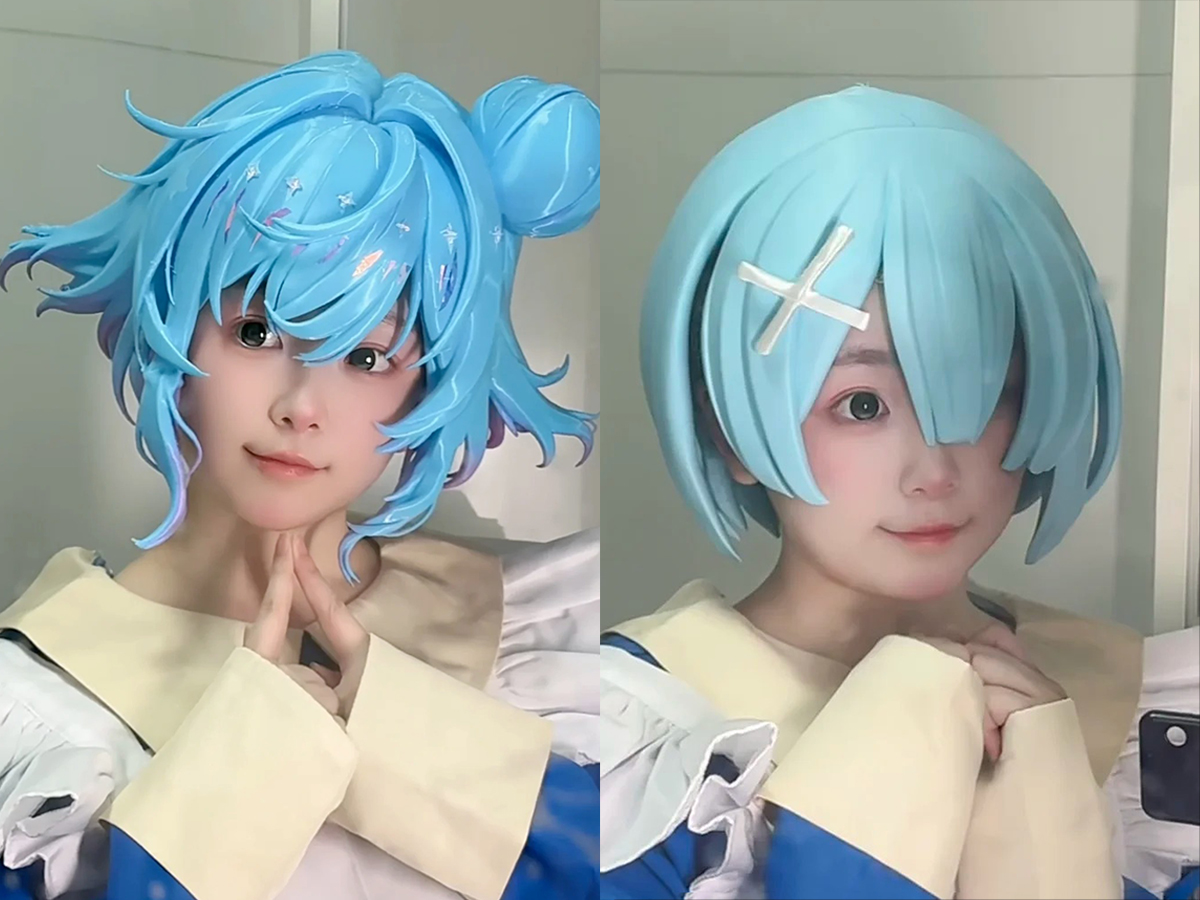
3D Printed Hair Is Not Trying to Replace Real Hair
The most important thing to understand is that 3D printed hair is not usually meant to imitate natural hair. It works best when the goal is stylized shape rather than realistic movement.
Think of anime characters, game avatars, BJD dolls, collectible figures, fantasy creatures, or crystal-like characters with sculptural hair. These designs often have large hair spikes, floating bangs, impossible curves, or glossy surfaces that are difficult to maintain with fiber wigs.
A traditional cosplay wig can look more natural, but it often needs teasing, glue, heat styling, wire supports, and constant maintenance. A 3D printed hairpiece, by contrast, can preserve the exact silhouette every time.
That makes it especially useful for:
- Anime and game cosplay
- Highly stylized character wigs
- Short-term photoshoots
- BJD and doll customization
- Pet costume photography
- Display mannequins and prop heads
- Hair ornaments, bangs, horns, ears, clips, and other accessories
In other words, 3D printed hair is less like a beauty wig and more like a wearable sculpture.
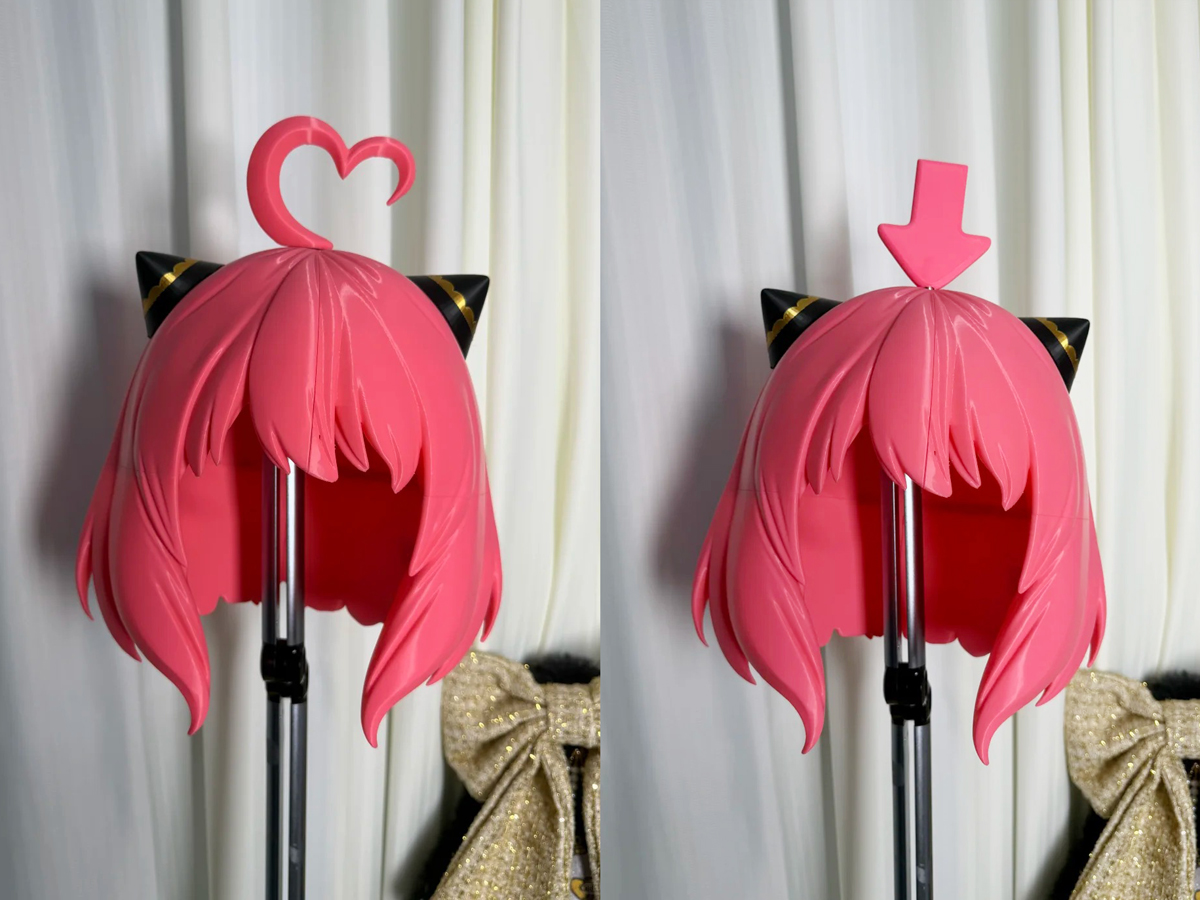
Use Case 1: Full 3D Printed Cosplay Wigs
Some makers are experimenting with full 3D printed cosplay wigs. These are usually modeled as a hard shell or a set of separate hair panels, then printed, assembled, painted, and worn like a headpiece.
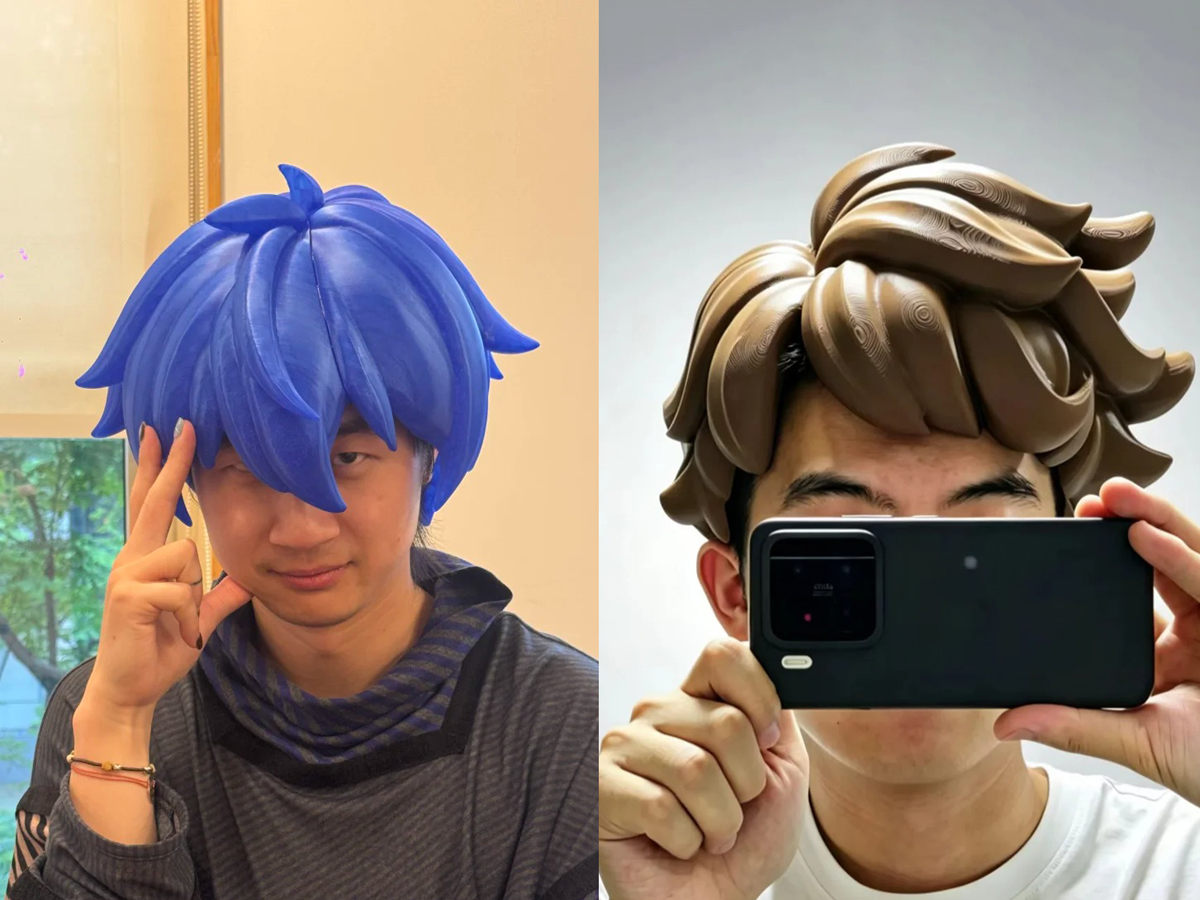
The biggest advantage is shape control. Once the model is finished, the printed result can reproduce a very specific character silhouette. Large bangs, thick hair sections, dramatic curves, and fantasy proportions can all be built directly into the model.
This is why 3D printed wigs can look surprisingly good for characters with “game model” or “anime figure” hair. The rigid form gives the piece a clean, sculptural look.
However, this approach also has obvious limitations. A full printed wig can be heavy, warm, and less comfortable than a traditional wig. It may not sit naturally around the face. If the design is too thick or printed as a solid object, the weight quickly becomes a problem.
For cosplay, full 3D printed hair is usually best for short appearances, photography, or characters where a hard, stylized look is part of the visual language.
Use Case 2: Crystal, Transparent, and High-Gloss Hair
One of the most interesting directions is using 3D printing to create effects that fiber wigs cannot easily achieve.
For characters inspired by gemstones, glass, crystals, or futuristic materials, makers have used translucent or semi-transparent materials, glossy coatings, pearlescent finishes, and post-processing paint effects. The result is not “real hair,” but something closer to a jewel-like helmet or sculpted prop.
This is where 3D printing becomes especially powerful. Traditional wig fibers can be dyed or styled, but they cannot easily create a solid translucent volume. Printed parts can.
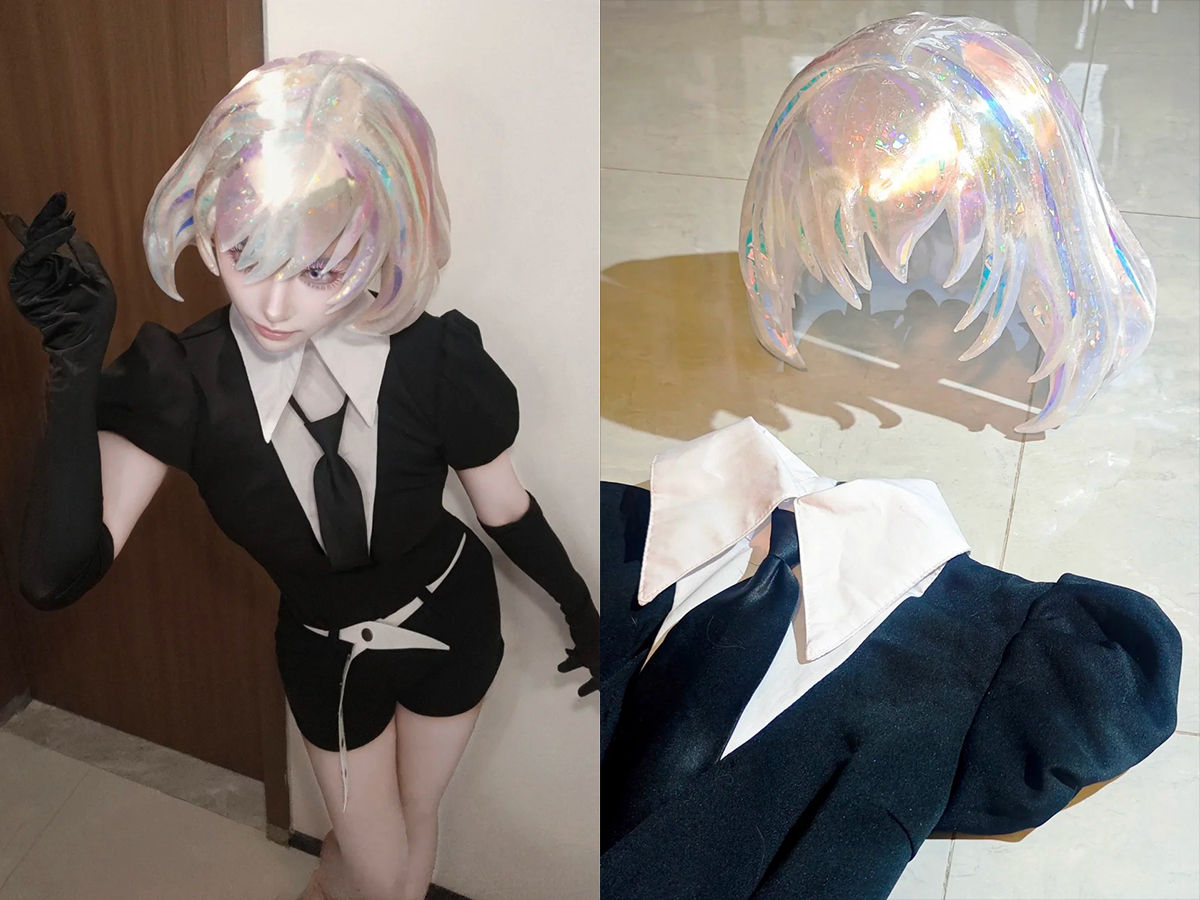
For example, a gemstone-like character wig may use:
- Transparent or semi-transparent resin
- Painted gradient colors
- Gloss coating
- Iridescent film or glitter effects
- Internal hollowing to reduce weight
- Separate panels for easier finishing
The final look can feel closer to a collectible figure or fantasy prop than a normal wig. For certain characters, that is exactly the point.
Use Case 3: 3D Printed Head Forms for Wig Makers
Not every 3D printed “hair” project is about printing the hair itself.
One clever use case is scanning a person’s head, printing a custom head form, and sending that form to a wig maker. This is especially useful for remote wig commissions, where the maker cannot physically fit the wig on the client.
A standard mannequin head is only an approximation. Real head shapes vary: forehead height, skull width, back-of-head volume, hairline, ear position, and face proportions all affect how a wig sits.
With a 3D printed head form, the wig maker can style, pin, trim, and test the wig on a form closer to the actual wearer. This can reduce fitting errors and make remote customization more reliable.
That said, material choice matters. Some wig makers have reported that 3D printed head forms can be difficult to pin into. If the material is too hard, needles may not enter easily. If it is too soft or hollow in the wrong way, the surface may dent or deform.
So the best solution is not simply “print a head.” The model should be designed for the actual workflow: pinning, styling, shipping, repeated use, and stability on a stand.
Use Case 4: BJD and Doll Hair
Dolls may be one of the most practical applications for 3D printed hair.
Unlike human wearables, doll hair pieces do not need to be comfortable on skin. They are smaller, lighter, and easier to display. A printed hair shell can be removed, painted, customized, and reproduced for multiple dolls.
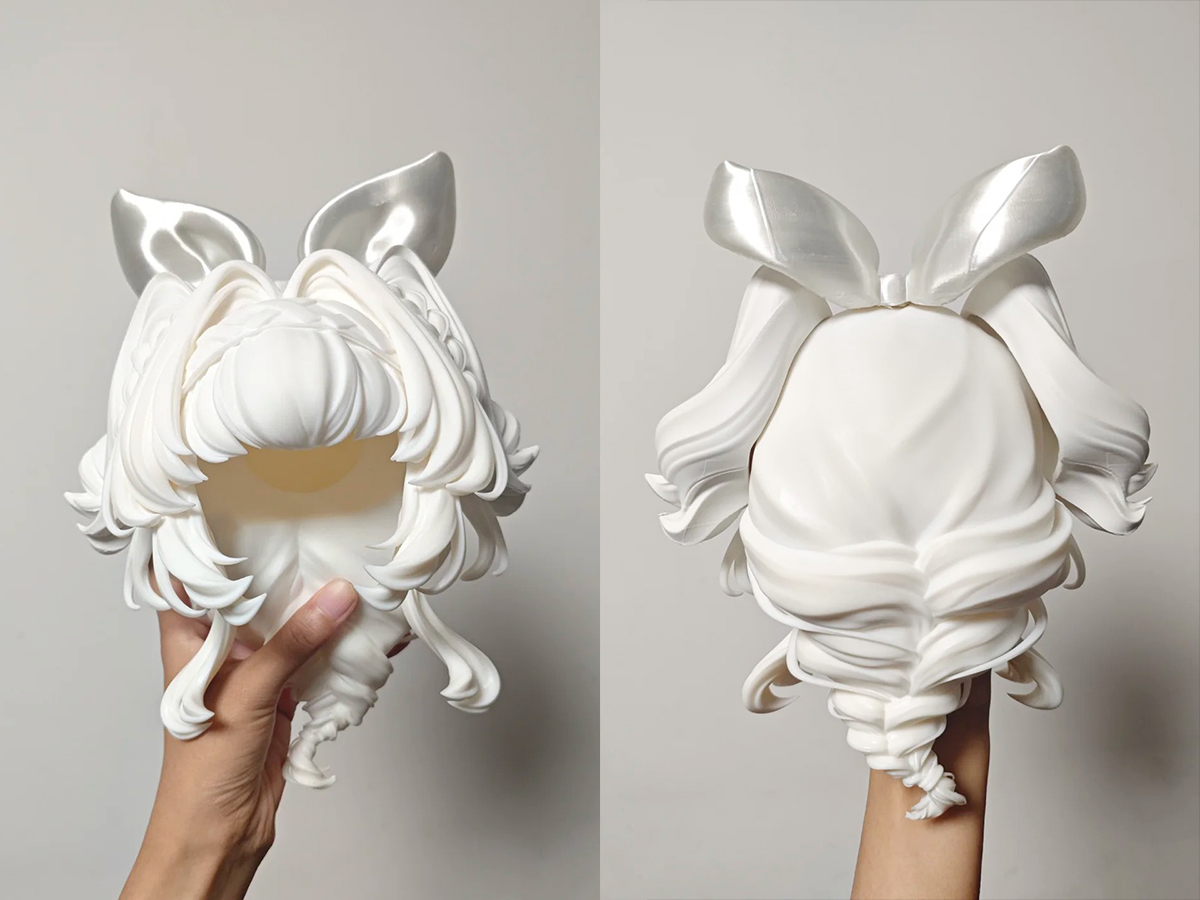
For BJD and figure collectors, 3D printed hair can offer:
- Highly repeatable designs
- Custom fantasy hairstyles
- Small-batch production
- Easy color variation
- Matching accessories such as ears, bows, horns, and clips
- More sculptural detail than fabric or fiber-based options
This is also a good use case for creators selling custom doll parts. Once the model is refined, the same design can be produced in different colors, materials, and sizes.
For small-scale hairpieces, both FDM and resin printing may be used, depending on the budget and desired surface quality. Resin usually offers finer details, while FDM can be more affordable and durable for larger pieces.
Use Case 5: Pet Costume Hair and Headpieces
Another playful category is 3D printed hair for pets.
These pieces are usually not “wigs” in the traditional sense. They are more like lightweight costume headpieces that create an instantly recognizable character look for photos.
For pet use, safety and comfort come first. The part should not block vision, press on the ears, scratch the skin, or restrict movement. It should also be worn only under supervision and for short periods.
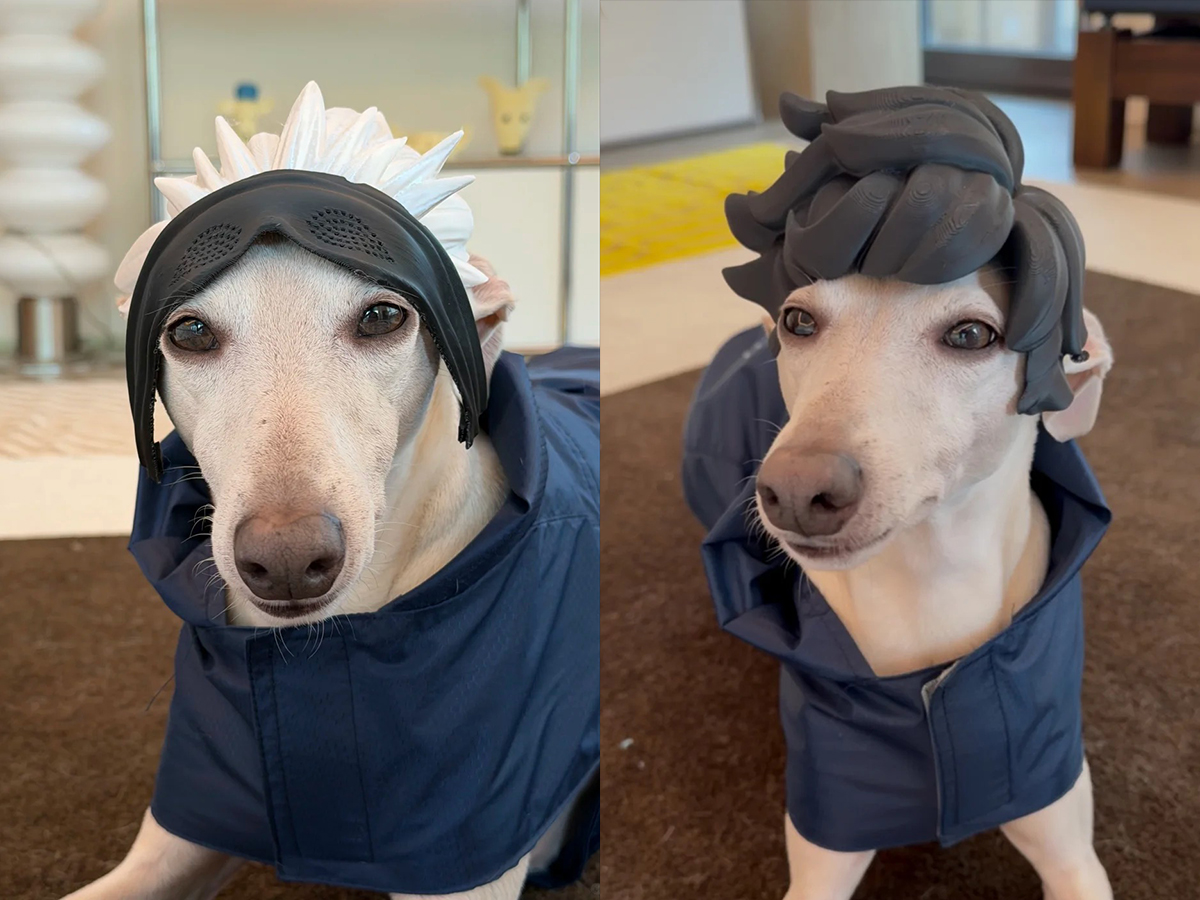
Compared with human cosplay wigs, pet headpieces need extra attention to:
- Rounded edges
- Low weight
- Flexible contact areas
- Easy removal
- Ventilation
- Non-toxic finishes
- Secure but gentle fastening
The appeal is obvious: a small printed hairpiece can completely transform a pet’s look in photos. But the design has to respect the animal’s comfort, not just the visual effect.
Why 3D Printed Wigs Often Get Criticized
Many negative comments about 3D printed wigs are valid. The idea can fail quickly if the project is treated like a normal decorative print.
The main problems are usually:
- The material is too hard
- The part is too he avy
- The model is printed too solid
- The edges are uncomfortable
- There is no inner lining
- The print direction makes thin parts fragile
- The surface finish looks too rough
- The wig is designed as a model, not as something wearable
PLA, ABS, and PETG can all be useful for props, but they are relatively rigid. For wearable areas that need softness, TPU may be a better option. A lower Shore hardness TPU, such as flexible 75A-80A material, can make the part softer and more comfortable, though it may be more difficult to print and process.
Weight also depends heavily on internal structure. A printed wig should usually not be solid. Hollowing, low infill, lattice structures, sectional design, and careful wall thickness can make a major difference.
The key lesson is simple: a 3D printed wig is not just a 3D model. It is a wearable object.
That means the design must consider the head, skin, pressure points, ventilation, balance, assembly, material behavior, and real use time.
FDM vs Resin: Which Process Works Better?
There is no single best process for 3D printed hair. The right choice depends on size, detail, budget, strength, and finish.
FDM printing is often more affordable and suitable for larger pieces. It works well for bold shapes, large hair shells, props, and test models. PLA, PLA Silk, matte PLA, PETG, and TPU can all be considered depending on the desired look and flexibility.
However, FDM prints may show layer lines, especially on curved hair surfaces. Post-processing, sanding, priming, and painting may be needed if the final part needs a clean finish.
Resin printing offers higher detail and smoother surfaces. It can be excellent for small hairpieces, doll parts, ornaments, and highly detailed models. It also works well when a glossy or painted finish is important.
The tradeoff is cost, size limitation, brittleness, and post-processing complexity. Large resin hairpieces can become expensive and may require hollowing, drainage holes, curing, and careful handling.
For many projects, the best approach may combine processes: FDM for large structural parts, resin for detailed accessories, and flexible materials for contact areas.
Design Tips for 3D Printed Hair
If you are planning to make a 3D printed wig, hair shell, or headpiece, here are a few practical design principles:
Start with the use case. A photoshoot prop, a convention costume, a doll part, and a wig-making head form all need different design choices.
Avoid solid prints. Use hollow structures, controlled infill, and smart wall thickness to reduce weight.
Split the model into sections. Large hair shapes are easier to print, sand, paint, ship, and repair when separated into panels.
Plan the attachment method early. Magnets, clips, elastic bands, hidden screws, inner caps, and fabric linings should be considered before printing.
Pay attention to print orientation. Thin hair spikes and long strands may break along layer lines if printed in the wrong direction.
Test before final production. A small section or rough prototype can reveal weight, fit, comfort, and assembly issues before committing to a full print.
Design for post-processing. Sanding, painting, gloss coating, and lining can transform the final look, but only if the model allows access to the surfaces that need finishing.
So, Is 3D Printed Hair Practical?
Yes, but only when it is used for the right purpose.
If you want natural movement, softness, and long-term comfort, a traditional wig is still the better choice. But if you need a fixed anime silhouette, a crystal-like material effect, a custom doll hairstyle, a pet photo prop, or a personalized head form for wig making, 3D printing can be surprisingly useful.
The most successful projects do not ask, “Can we print a wig?”
They ask, “Which part of this hairstyle should be printed?”
Sometimes the answer is the full hair shell. Sometimes it is only the bangs, ears, horns, bow, support frame, or styling form. That distinction is where good results begin.
Need a Custom 3D Printed Hairpiece, Wig Form, or Cosplay Prop?
FacFox helps creators, cosplayers, designers, and studios turn unusual ideas into real parts. Whether you need a wearable cosplay hairpiece, a BJD hair shell, a pet costume accessory, a custom head form, or a small batch of stylized props, we can help evaluate the best material, printing process, wall thickness, hollowing strategy, surface finish, and assembly method.
Send us your 3D model, reference images, dimensions, and usage scenario. Our team can help you choose a practical manufacturing plan before production, so your project looks good not only on screen, but also in real life.