
A lattice structure has become one of the most recognizable features of 3D-printed footwear. However, the presence of a lattice-like pattern does not necessarily mean that a shoe—or even part of it—was produced by additive manufacturing.
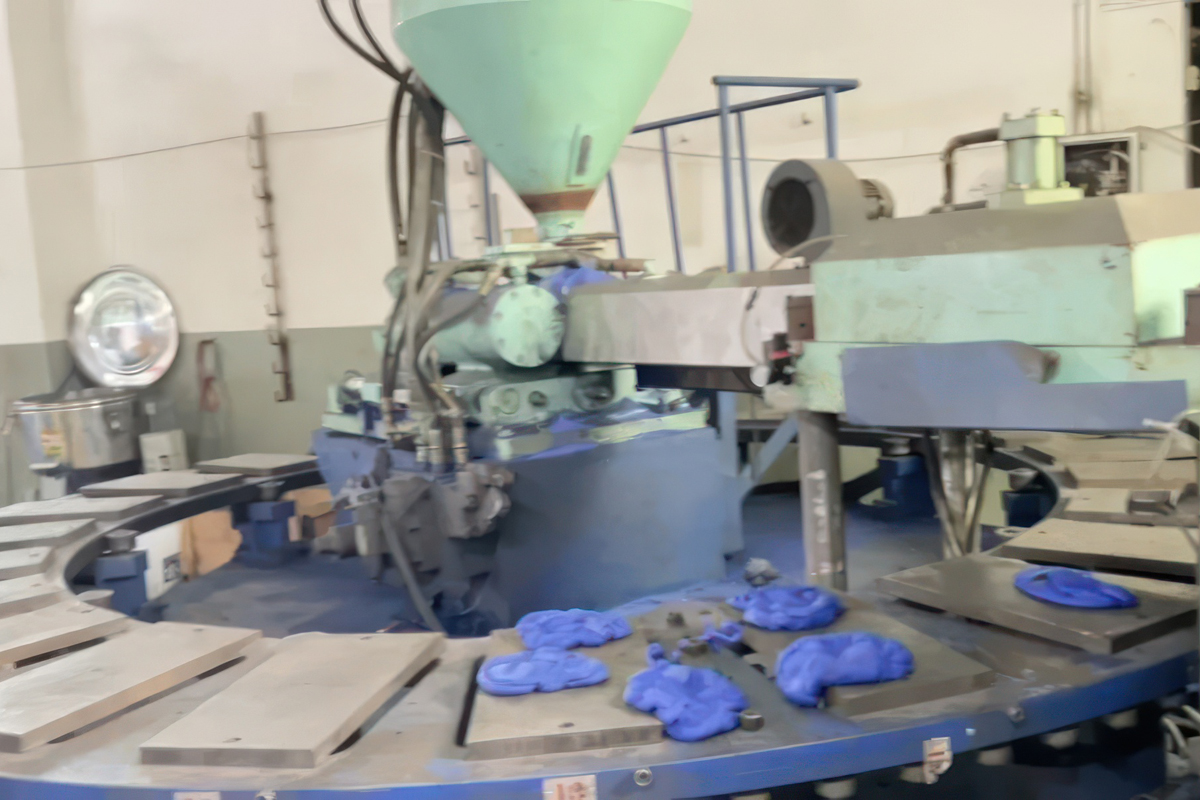
A recent report from China showed how conventional footwear factories can reproduce the appearance of 3D-printed shoes using molds, injection equipment and EVA inserts. According to one factory featured in the report, a 30-station rotary molding line working with EVA production equipment could produce as many as 3,000 pairs in 24 hours.
The figure represents one specific production setup rather than a universal industry benchmark. Nevertheless, it illustrates an important point: once the tooling is ready, conventional molding can reproduce a 3D-printed appearance at a much higher production rate.
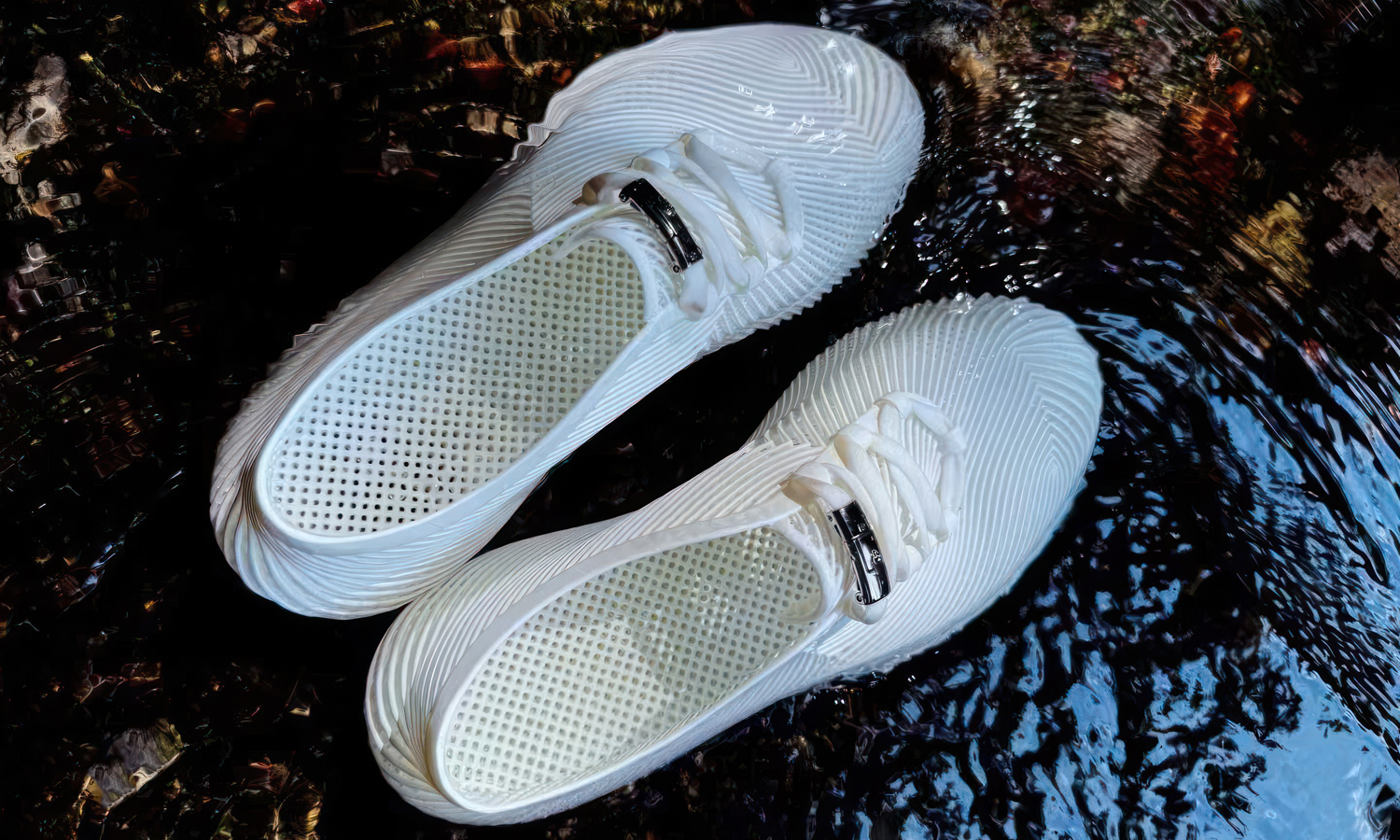
So, how can we determine whether a lattice shoe is actually 3D printed?
The answer requires more than looking at its exterior. We need to understand which components were printed, how the internal structure was created and whether molds were involved.
Three Types of Lattice Footwear
Products commonly described as “3D-printed shoes” can be divided into three categories.
1. Fully 3D-Printed Footwear
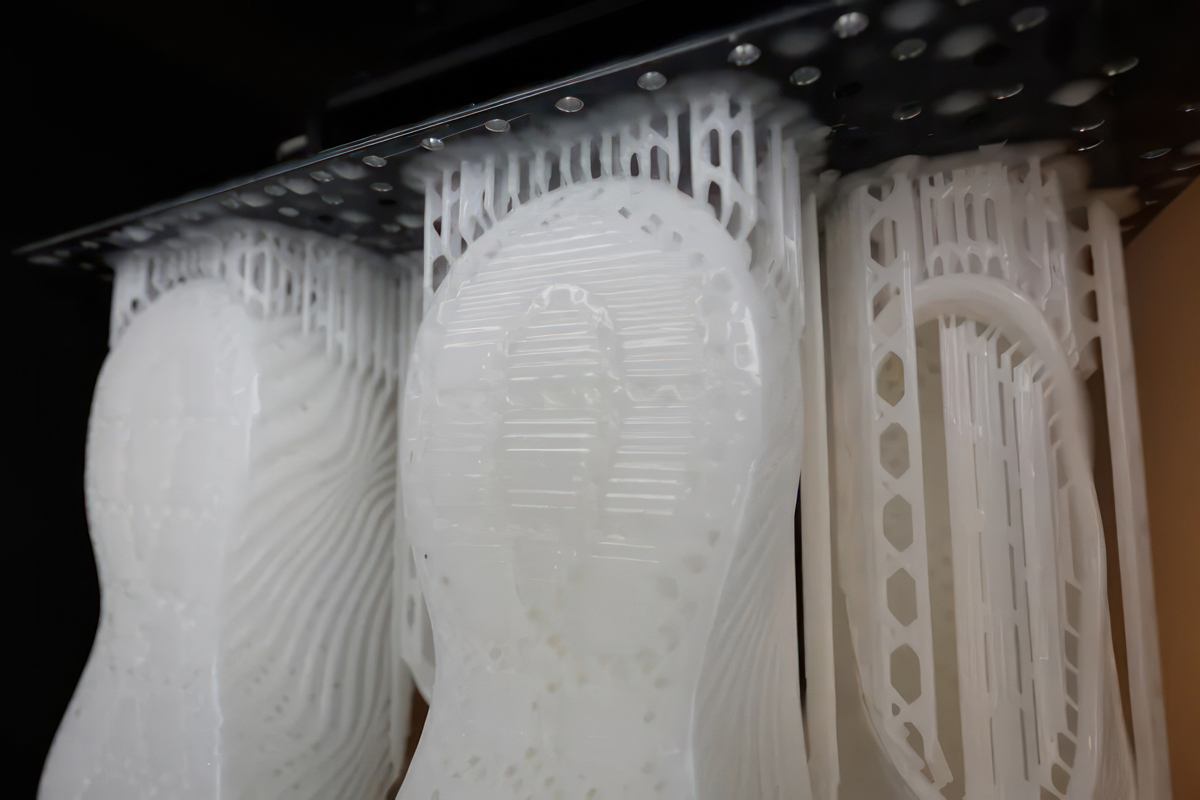
In a fully 3D-printed shoe, most or all of the shoe body is manufactured as one continuous printed component.
Companies such as Zellerfeld produce footwear that is printed in one piece without a separately stitched upper or conventionally molded midsole. The material and internal geometry can change across the shoe to create different levels of flexibility, cushioning and support.
This production method can also reduce the number of components and assembly operations. Instead of manufacturing the upper, midsole and outsole separately, the complete form may be created during one additive manufacturing process.
However, “fully printed” is only one category of 3D-printed footwear. It should not be treated as the only definition of a genuine 3D-printed shoe.
2. Hybrid Footwear with 3D-Printed Components
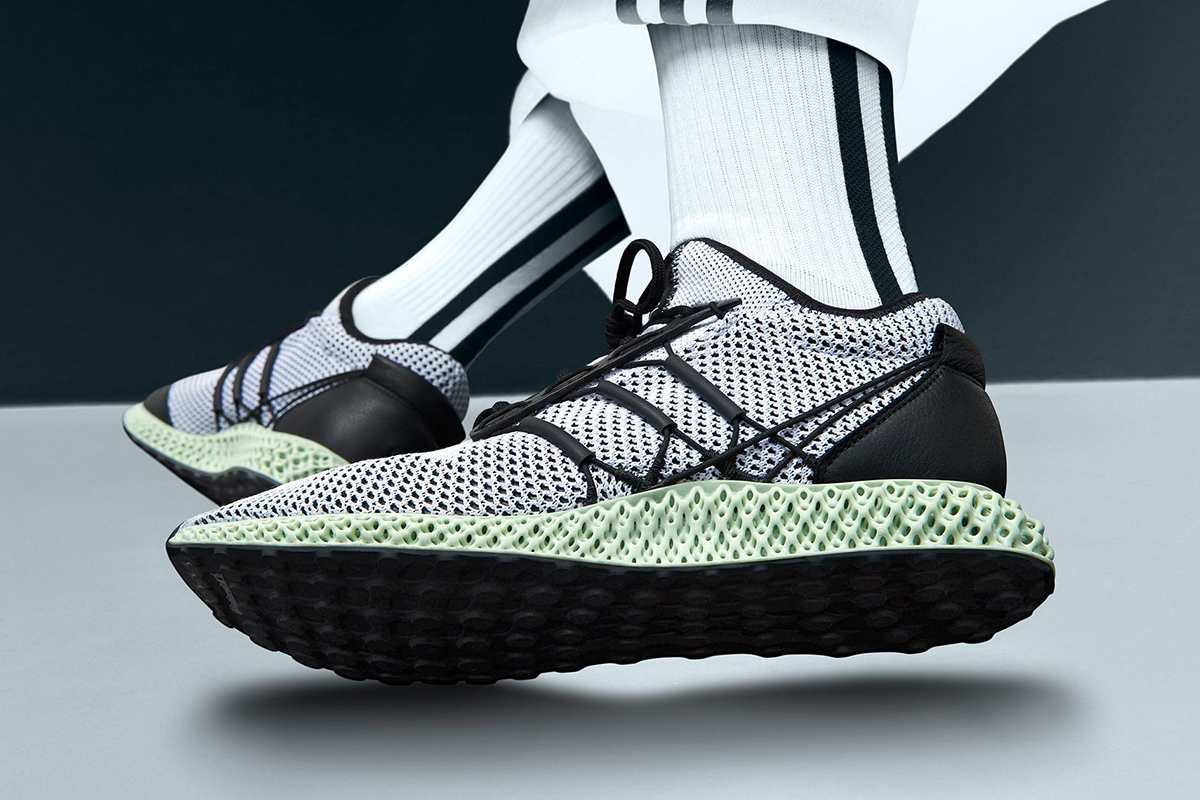
Many well-known 3D-printed footwear products combine additive manufacturing with conventional shoe construction.
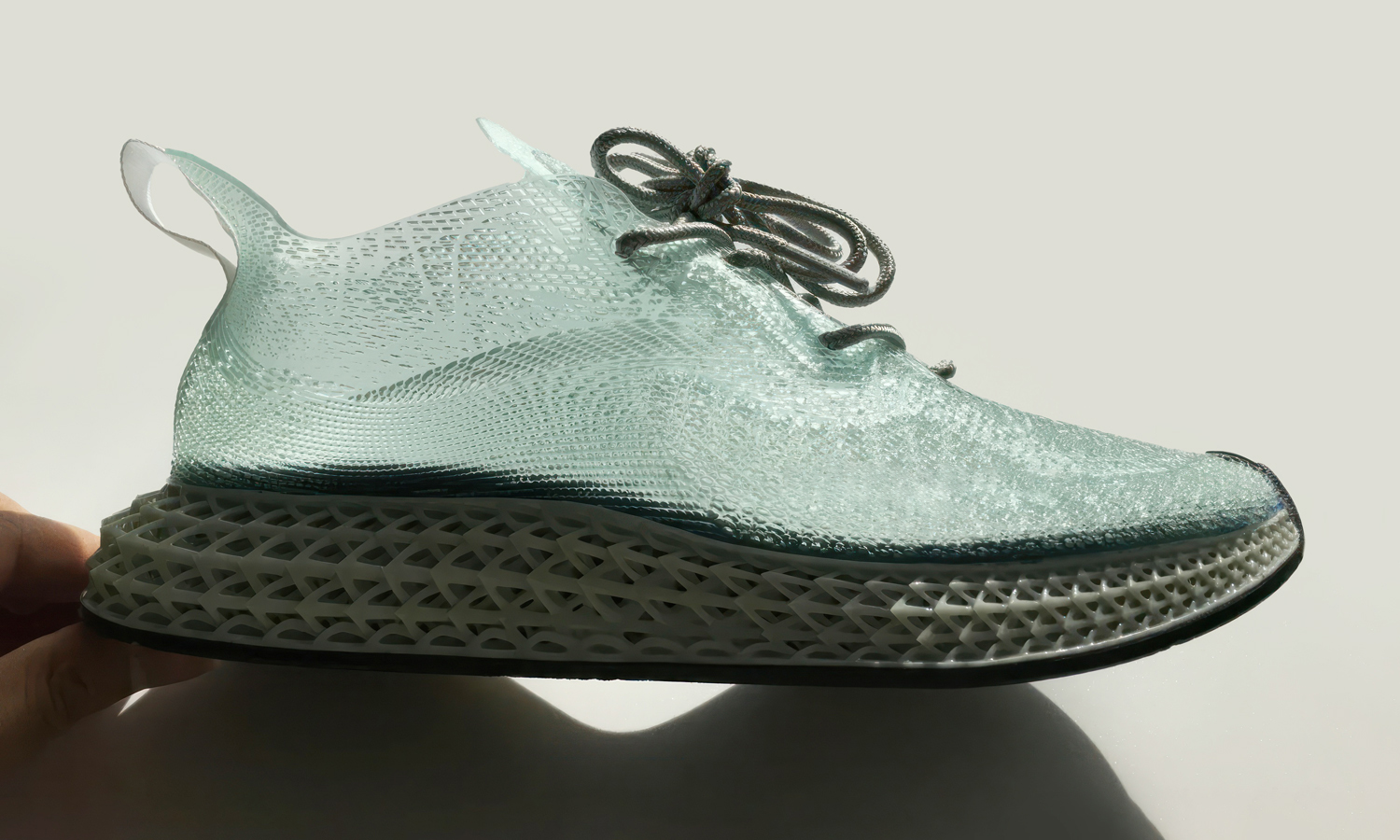
The Adidas Futurecraft 4D, for example, uses an additively manufactured lattice midsole. The printed midsole is then combined with an upper and other conventionally manufactured components.
Similar hybrid designs may use a 3D-printed heel, midsole, cushioning insert or structural support element while retaining traditional textiles, molded outsoles and adhesives elsewhere.
These products are legitimately using 3D printing, even though the entire shoe is not printed in one piece.
When evaluating such footwear, the correct question is therefore not simply:
“Was the whole shoe 3D printed?”
A more useful question is:
“Which component was 3D printed, and what function does it perform?”
3. Molded Lattice-Look Footwear
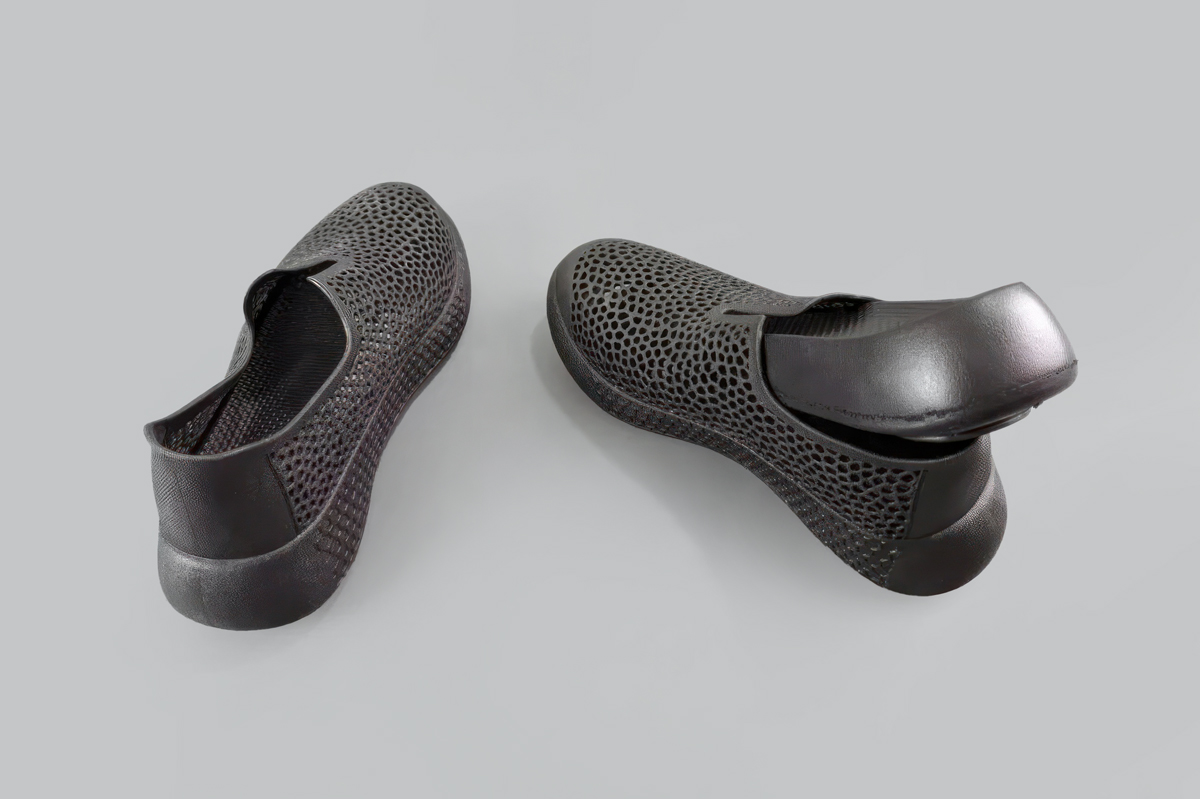
The third category uses no additive manufacturing in the final product.
Instead, molds are used to reproduce a lattice, hollow or transparent visual effect. One production method described by Chinese footwear manufacturers involves molding an exterior shell with lattice-like textures, inserting a solid EVA component and assembling the different parts manually.
Lower-cost versions may use PVC or other modified polymers for the exterior shell. TPU can provide a more flexible feel, although it may require different molding equipment and increase the overall production cost.
These shoes may closely resemble 3D-printed footwear from the outside. Internally, however, the apparent lattice may only be a surface feature surrounding a conventional foam insert.
It is more accurate to call these products “molded lattice-look footwear” than “fake 3D-printed shoes.” Traditional molding is a legitimate and mature manufacturing process. Misrepresentation only occurs when a molded product is marketed as additively manufactured.
How a Functional 3D-Printed Lattice Is Created
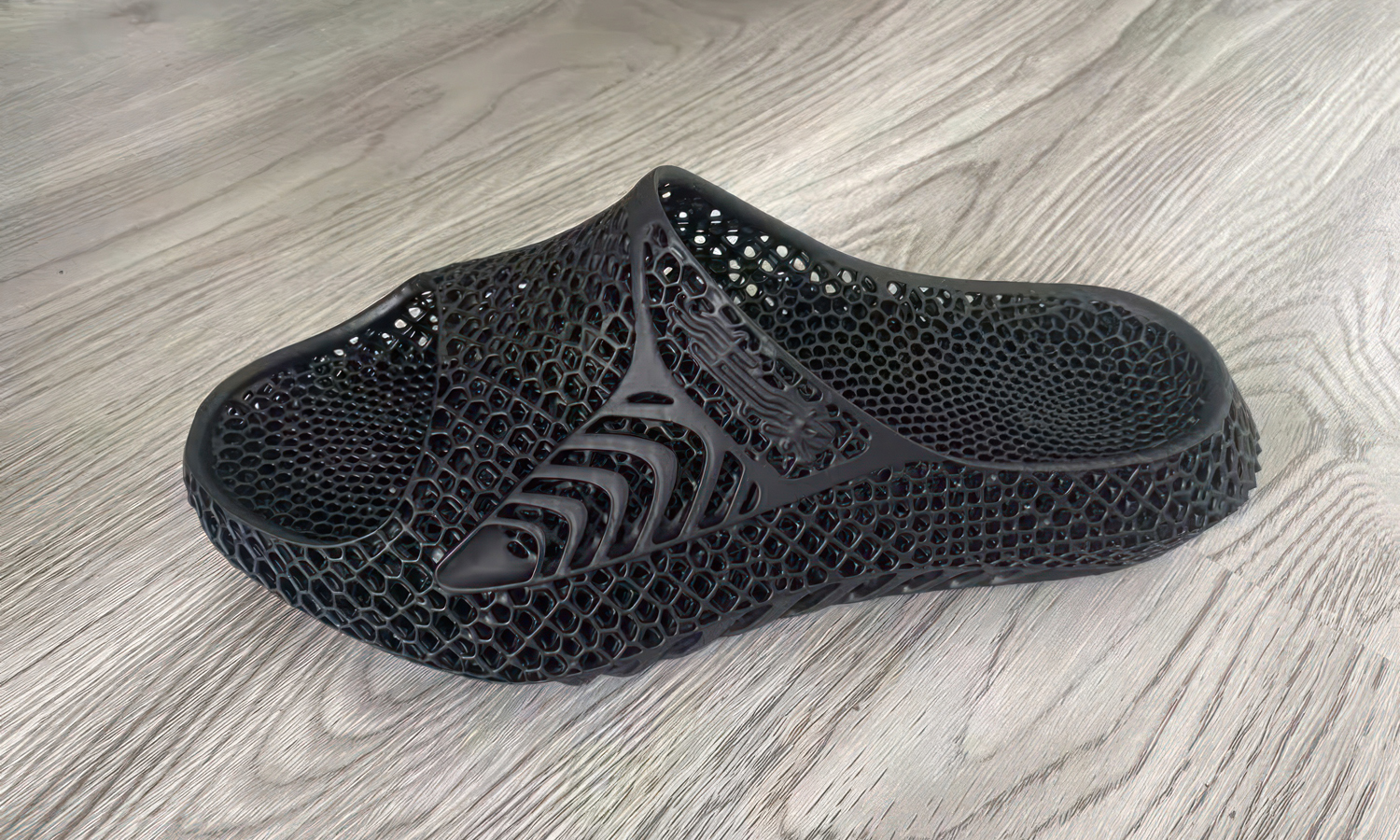
A functional lattice is not simply a decorative pattern applied to the outside of a component.
Designers begin by defining a three-dimensional unit cell and controlling variables such as:
- Cell size
- Strut thickness
- Lattice orientation
- Local density
- Material behavior
- Compression response
- Target stiffness in different zones
These parameters can be varied throughout a midsole. The heel, arch and forefoot can therefore respond differently under load while remaining part of one continuous structure.
The digital design may be evaluated through simulation and physical testing before the final component is manufactured. After printing, additional steps such as cleaning, washing, curing or support removal may be required, depending on the printing technology.
This ability to control internal geometry is one of the primary advantages of additive manufacturing. The value of the lattice comes from its designed mechanical response—not merely from its appearance.
A molded product can also provide cushioning, support and variable hardness. Modern footwear molding systems are capable of using multiple materials and injecting different sections with different properties. The difference is how those properties are created and how much geometric freedom is available inside the component.
How Molded Lattice-Look Shoes Are Produced
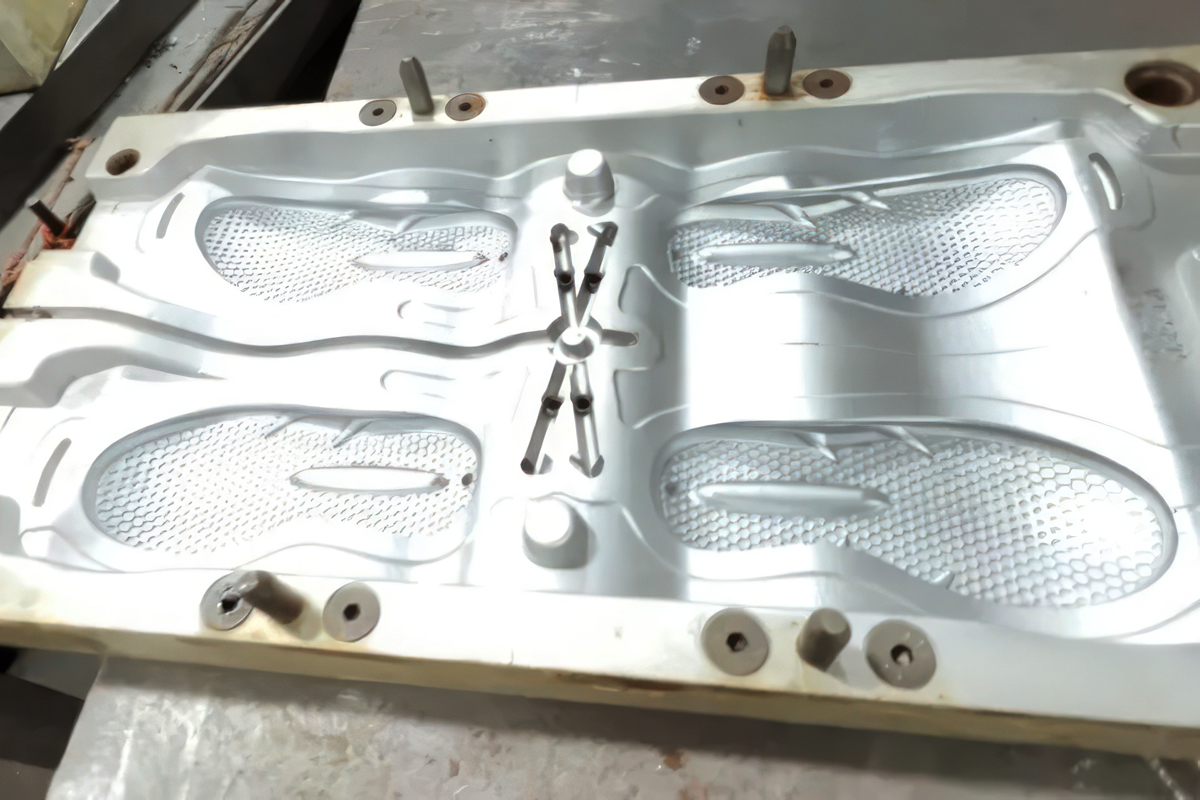
A typical molded production workflow begins with the development of a mold.
Material is injected, poured or foamed into the mold to create the outsole, shell or another footwear component. Depending on the product, manufacturers may then trim the component, add an EVA insert and bond or assemble it with the other parts of the shoe.
This approach offers several advantages:
- Short molding cycles after tooling is completed
- High and repeatable production output
- Mature equipment and supply chains
- Competitive unit costs at large volumes
- A wide selection of established footwear materials
Its main limitation is that the mold must release the part successfully. Deep undercuts, complex interconnected internal channels and continuously varying lattice structures can be difficult or impossible to reproduce using a conventional two-part mold.
Manufacturers can still create highly convincing lattice textures on accessible surfaces. This is why exterior appearance alone is not enough to identify the production process.
Visual Clues: Printing, Molding or Assembly?
No single visual clue provides absolute proof, but several details can help identify the likely process.
Mold Parting Lines
Injection-molded components are produced inside tooling that must open so the part can be removed. A line may remain where different sections of the mold meet.
Visible parting lines, flash, gate marks or ejector marks suggest molding. However, these features can be trimmed or concealed, so their absence does not prove that a component was printed.
Separate Internal Inserts
If the apparent lattice shell surrounds a visibly separate EVA or foam insert, the shoe is probably an assembled molded product rather than a continuous printed lattice.
Look for changes in material, bonding lines, gaps or boundaries between the shell and the internal cushioning component.
Continuous Internal Geometry
A genuinely printed lattice can extend through the interior of a component instead of appearing only on its exterior surfaces.
Complex internal connections and undercuts that could not be released from a conventional mold are strong indications of additive manufacturing. Cross-sectional photographs are generally more informative than exterior product images.
Printing and Support Marks
Depending on the technology, a printed part may show layer patterns, voxel textures or marks left by support removal.
These features are not always visible. Fine printing resolution and post-processing can produce a relatively uniform surface, while molded products can deliberately incorporate textures that resemble printing artifacts.
Component Construction
Examine how the upper, midsole and outsole are connected.
A seamless, single-material body may indicate fully printed footwear. A conventional upper attached to a complex printed midsole is more likely to be a hybrid construction. Multiple molded shells and foam inserts indicate a traditional assembly process.
Does a Printed Lattice Automatically Perform Better?
No.
A visible lattice does not guarantee cushioning, energy return, ventilation or durability. Performance depends on the combination of geometry, material, printing parameters and the conditions under which the shoe is used.
A well-engineered printed lattice can provide controlled deformation and locally adjusted mechanical properties. A poorly designed lattice may be uncomfortable or fail prematurely.
Similarly, a molded EVA or TPU sole can deliver reliable cushioning and durability when it is correctly designed and manufactured.
Performance claims should therefore be supported by testing rather than appearance. Compression behavior, fatigue life, tear resistance, environmental aging and wearer testing may all be relevant when evaluating a footwear component.
Production Speed and Cost
Traditional molding usually becomes most economical when production volumes are high enough to justify the cost and lead time of tooling.
Once a mold and production line are ready, cycle times can be short and thousands of repeatable parts can be produced. This is the context behind the factory claim of producing 3,000 pairs of lattice-look shoes within 24 hours.
Additive manufacturing follows a different economic model.
It can eliminate or reduce the need for product-specific tooling, making it attractive for:
- Design validation
- Functional prototypes
- Limited production runs
- Customized products
- Size and geometry variations
- Designs with complex internal structures
- Products that may change frequently
Printing is not automatically cheaper. Machine time, material costs, post-processing and quality control must all be considered. Its advantage is greatest when geometric complexity, customization or tooling avoidance creates value.
For a stable design manufactured in very large volumes, molding may still provide a lower unit cost. In some projects, 3D printing is used to validate the design before the product transitions to conventional tooling.
Molded Does Not Mean Inferior
The term “fake 3D-printed shoe” can create the impression that conventionally molded footwear is inherently inferior. That is not the case.
Injection molding, direct soling and EVA foaming are established footwear manufacturing processes. They can produce safe, comfortable and durable products when suitable materials and quality controls are used.
The real issue is transparency.
If a shoe is produced by molding, it should be marketed as a molded product. If only the midsole is printed, it should be described as a shoe with a 3D-printed midsole. If the complete shoe is printed as one component, it can accurately be described as fully 3D printed.
Clear terminology allows customers to evaluate the product based on its actual construction instead of its visual style.
Choosing the Right Manufacturing Process
Fully printed, hybrid and molded footwear can all be valid solutions. The right choice depends on the objectives of the project.
Additive manufacturing offers exceptional design freedom and can make complex internal structures, rapid iteration and customization practical. Traditional molding provides established materials, repeatable production and strong economies of scale.
In many footwear development projects, the best strategy is not to choose one technology permanently. A company may use 3D printing to test lattice geometry and product performance, then compare continued additive production with molding once the design and expected volume are understood.
At FacFox, we help designers and product teams evaluate additive manufacturing processes for complex prototypes and functional components. If you are developing a lattice footwear concept, understanding the geometry, material requirements, production volume and testing goals early can help determine the most suitable manufacturing route.