
“Binder Jetting” does not describe just one kind of finished object. The same basic printing principle can be used to make a large sand sculpture or a sintered metal component—but these products do not have the same strength, surface, weight or post-processing requirements.
This guide explains the differences in practical terms. It focuses on directly printed sand sculptures and metal parts, including the very different finishing routes used to achieve their final appearance.
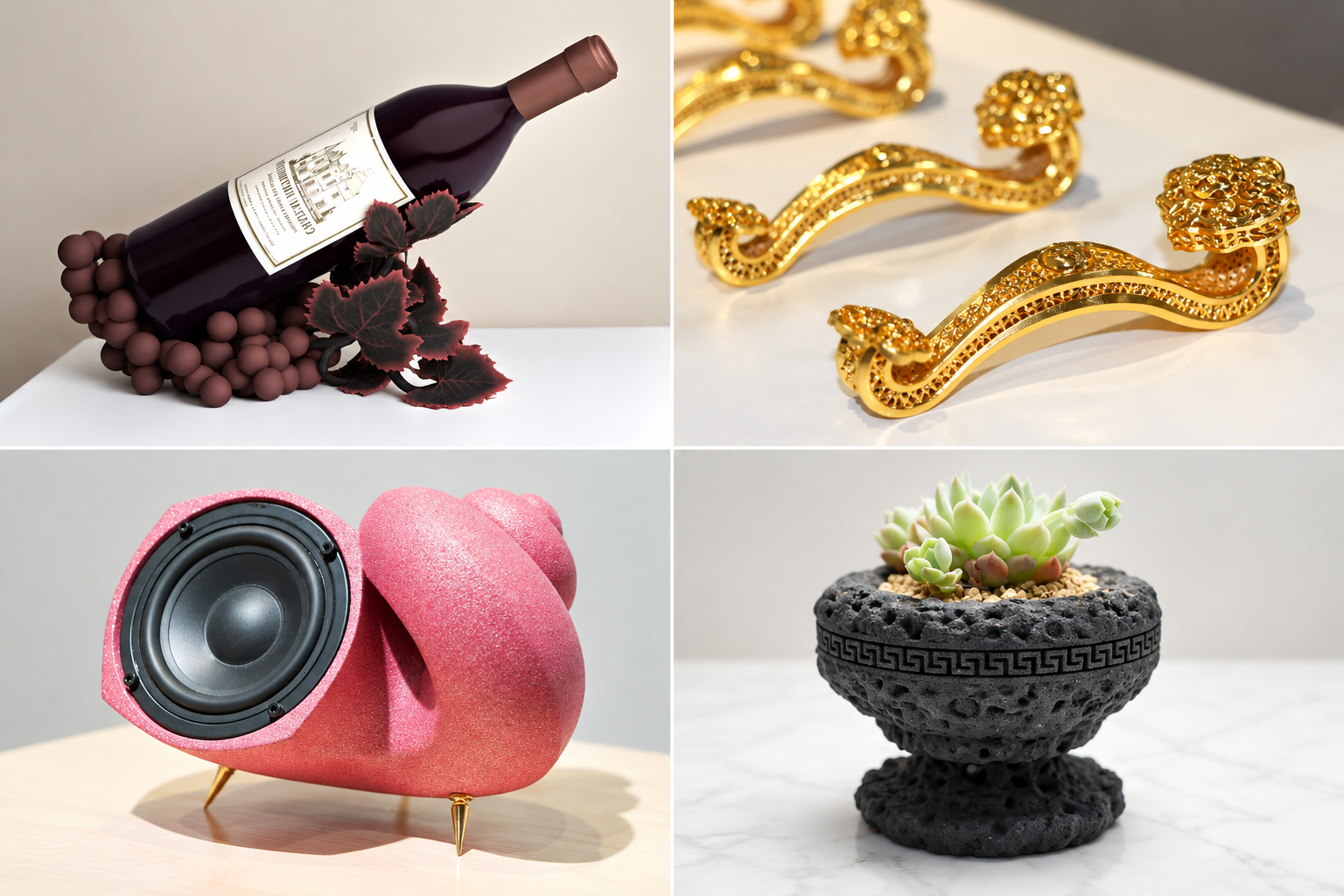
Binder Jetting in One Minute
A Binder Jetting machine spreads a thin layer of powder and selectively deposits a liquid binder where the part should form. The platform lowers, another powder layer is spread, and the cycle repeats. Loose powder surrounds the object during printing, so conventional support structures are generally unnecessary.
What happens next depends on the powder. A sand sculpture may be cleaned, cured, reinforced, sealed and decorated. A metal “green part” must be carefully depowdered, debound and sintered before it becomes a usable metal component. For a broader introduction, see our Binder Jetting process guide.
Quick Comparison
| Route | What Forms the Part | Typical Post-Processing | Common Uses |
|---|---|---|---|
| Direct sand sculpture | Natural silica sand, ceramsite sand or another compatible granular medium joined by a binder | Depowdering, curing or reinforcement as required, sealing, filling, painting and decorative coating | Sculpture, public art, display pieces, themed decoration and large cultural products |
| Metal Binder Jetting | Metal powder temporarily held together by a binder | Curing, depowdering, debinding, sintering and optional polishing or decorative finishing | Metal sculpture, jewelry, accessories, prototypes and suitable functional parts |
Directly Printed Sand Sculptures
In this route, the printed sand body is not broken away as a disposable casting mold. It becomes the substrate of the finished sculpture itself. Natural silica sand and ceramsite sand can provide different particle structures and visual character, while the selected binder holds the grains in the printed geometry.
This makes the process attractive for forms that would be slow to carve or assemble by hand, especially larger sculptures, decorative installations and customized cultural products. The powder bed supports the object during printing, allowing integrated shapes without the support marks associated with many resin and filament processes.
However, a directly printed sand sculpture should not be described as natural stone. Its behavior depends on the sand, binder, wall structure and subsequent reinforcement or coating. Thin projections, sharp edges and poorly supported details may remain vulnerable to impact. Outdoor suitability, water resistance, UV stability and cleaning requirements must be evaluated together with the final coating system rather than assumed from appearance alone.
Four Surface Directions for Sand Sculptures
The following finishes are not four different base materials. They are surface treatments applied over a printed sand substrate. Geometry, accessibility and the desired viewing distance determine which effects can be achieved consistently.
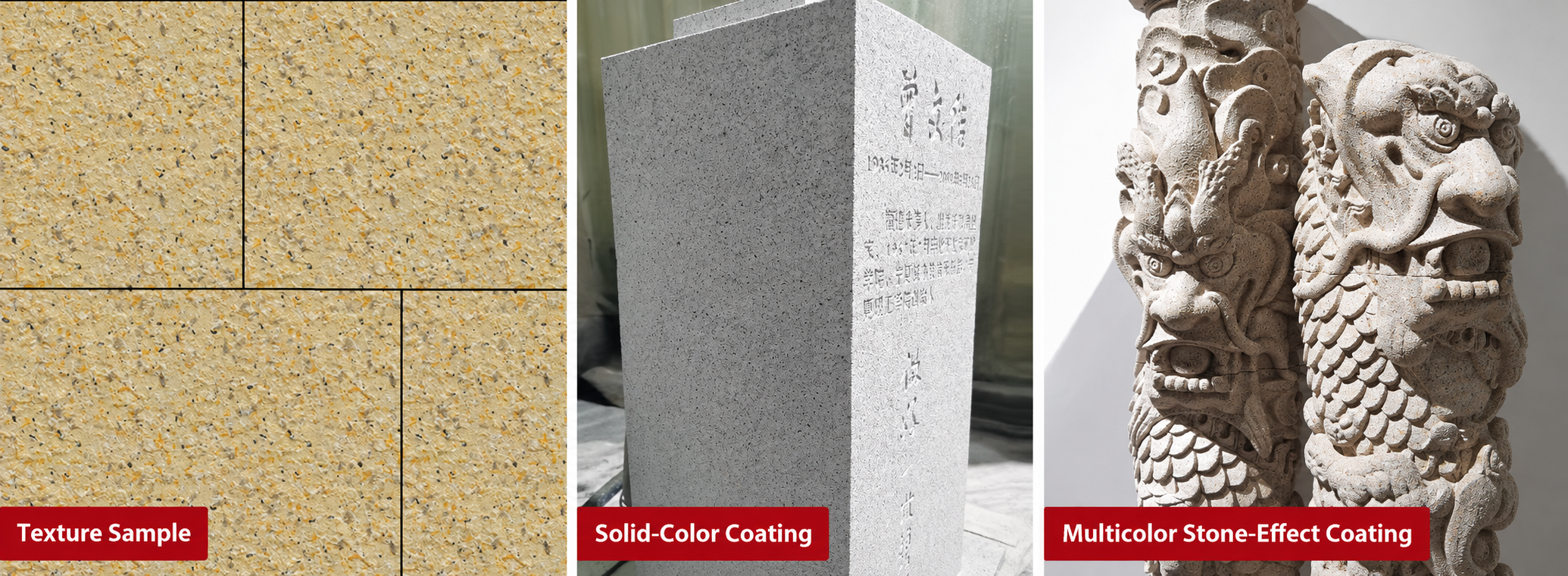
1. Fractured-Stone Texture
This treatment deliberately increases surface roughness to create a broken-stone or cut-stone character. The irregular texture can visually soften minor surface variation, seams and local repair areas, making it useful when a uniformly refined surface is not the objective.
The result is intentionally coarse. Small engraved text and fine facial details may lose clarity if the texture is applied too heavily, so the finishing level must be matched to the scale of the sculpture.
A fractured-stone finish intentionally increases roughness and can visually unify minor seams or surface variation. The underlying object remains a binder-jetted sand sculpture rather than carved natural stone.
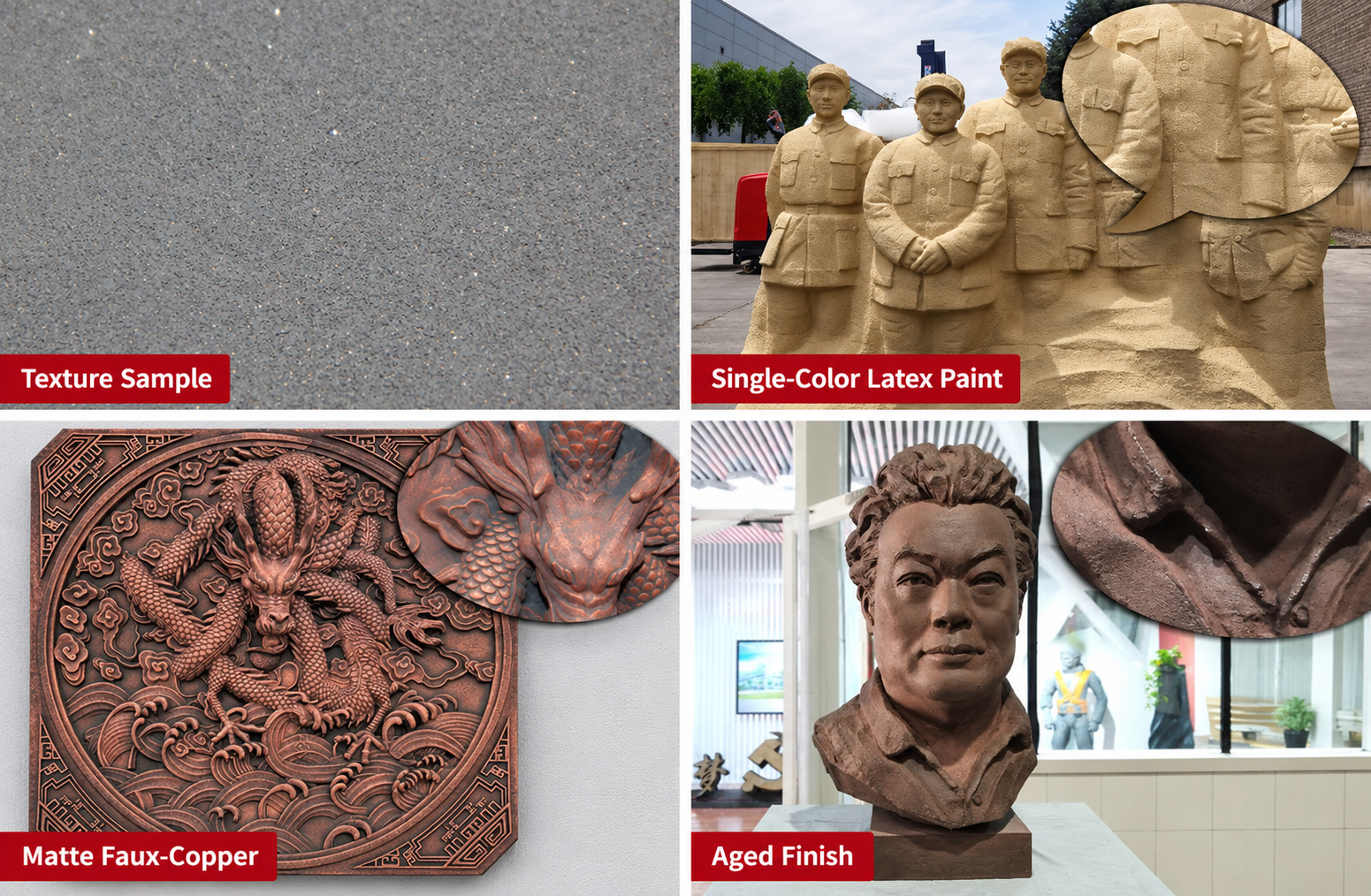
2. Natural or Frosted Sand-Grain Texture
This finish keeps the sand particles clearly visible and is closest to the original printed surface. Its medium roughness can suit monuments, large figures and art pieces where a mineral, earthy or handmade character is desirable.
The same texture may be combined with a single-color coating, matte faux-copper coloring or an aged finish. Decorative coloring changes the appearance, but it does not give the sculpture the weight, strength, conductivity or wear behavior of cast metal.
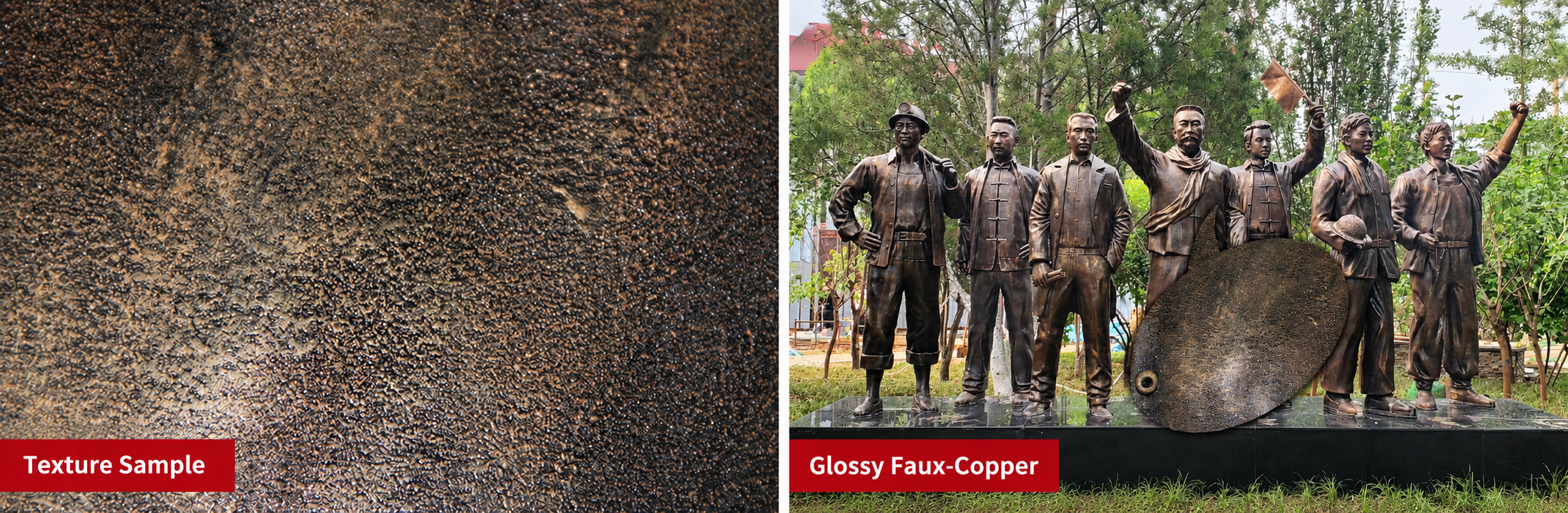
3. Red-Brick-Like Texture
A red-brick-like treatment provides a flatter and more visually compact surface than the raw sand-grain finish. It can also serve as a base for glossy faux-copper colors, including red-copper, green-patina and brass-like appearances.
This treatment is more practical on large, accessible planes and broad curves. Deep recesses, complex hollow forms and tightly enclosed details cannot always be processed to the same level, so uniformity should be evaluated from the model before production.
4. Ceramic-Like Surface
A ceramic-like coating creates the smoothest appearance among these sand-sculpture finishes and may be specified in matte or gloss. It is suitable for stylized figures, retail displays and decorative forms that need a clean, coated presentation rather than an exposed granular texture.
As with the red-brick-like treatment, the finishing tools and coating must reach the surface. Large planes and open curves are easier to refine than narrow channels, deep undercuts or complex hollow structures. Most importantly, a ceramic-like finish does not turn the sand substrate into fired ceramic.
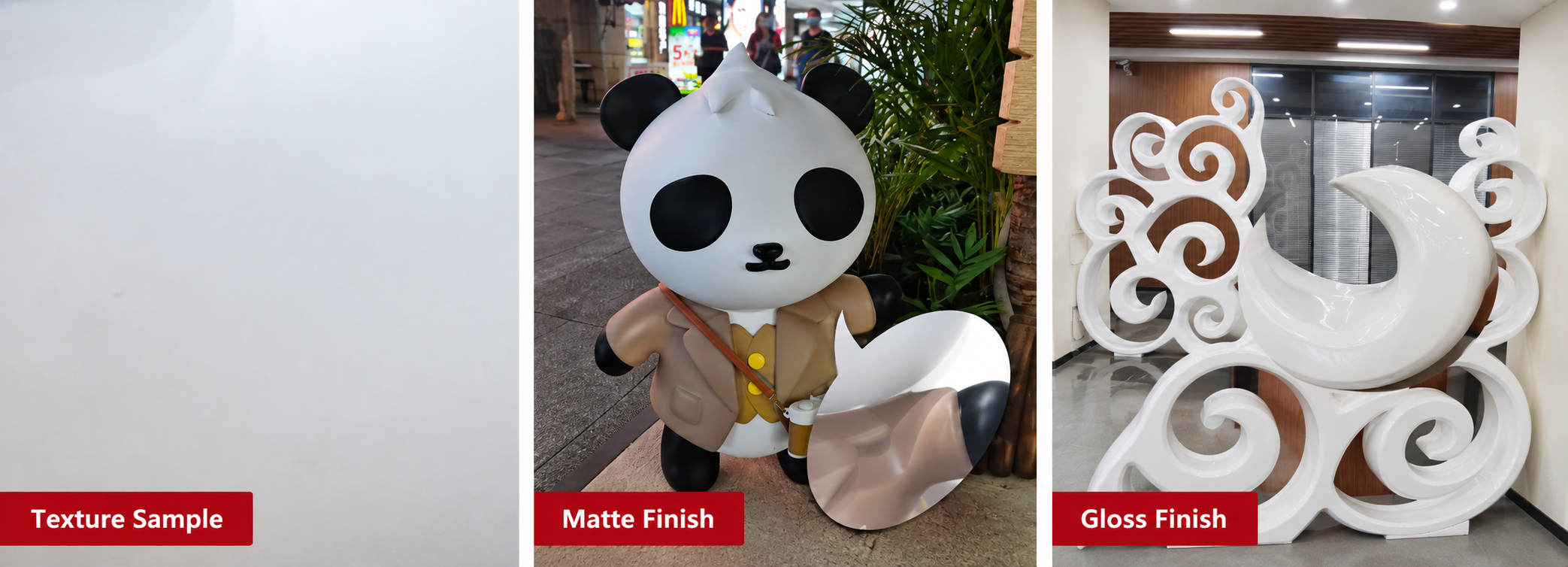
Do not confuse this coating with Ceramic Binder Jetting. A true ceramic Binder Jetting project starts with ceramic powder and follows a separate material-specific debinding and sintering route. FacFox can evaluate ceramic projects separately, but they are outside the sand-versus-metal comparison in this guide.
Metal Binder Jetting Parts
Metal Binder Jetting uses metal powder, but the object taken directly from the printer is not yet a finished metal part. At this “green” stage, powder particles are held together by binder and the part must be handled carefully. After depowdering, the binder is removed and the metal is sintered at high temperature so that the particles consolidate into a metal structure.
Sintering introduces shrinkage, and the amount of compensation depends on the alloy, geometry and production route. Narrow gaps may close, thin features may distort, and trapped powder can make internal cavities difficult to process. These issues should be considered before printing rather than treated only as inspection problems afterward.
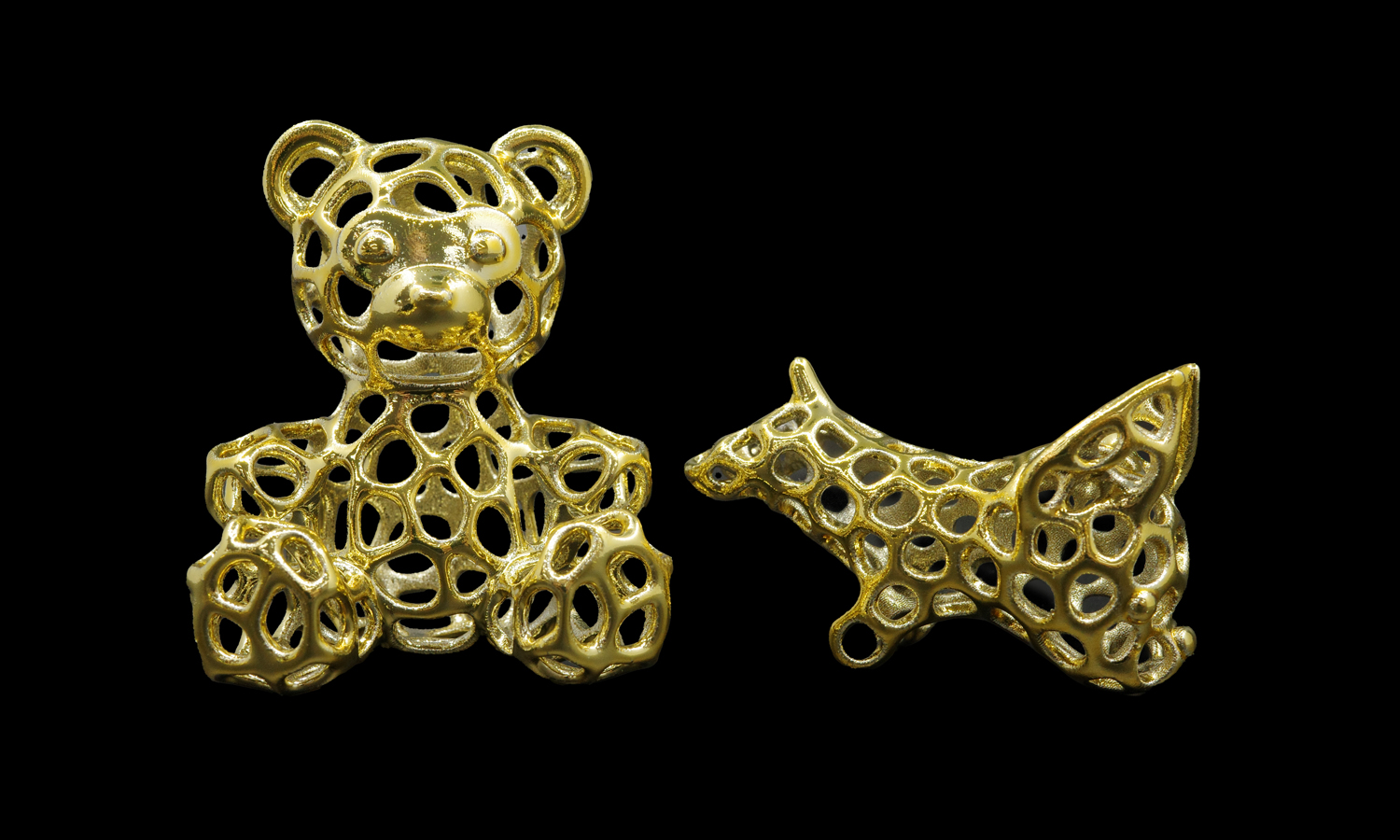
Once sintered, the part has a real metal substrate. It may be supplied with its natural surface or receive polishing, blasting, machining, painting, PVD or plating. These finishes can change color and reflectivity, but they follow the underlying surface: rough internal walls and recessed areas do not automatically become mirror-smooth.
Material and Appearance Are Not the Same Question
A useful way to specify a project is to separate two decisions:
First, choose the substrate. Do you need a lightweight, granular sand sculpture or a sintered metal component?
Then choose the surface. Should it retain a natural sand texture, resemble fractured stone, look like red brick, carry a ceramic-like coating, appear aged, or have a metallic color?
This distinction prevents misleading specifications. A sand sculpture with a bronze-colored finish is not a bronze casting. A ceramic-like coating is not fired ceramic. A gold-plated stainless steel part is real metal, but the thin decorative surface does not give it the properties of solid gold.
Which Route Should You Choose?
Choose a directly printed sand sculpture when the project benefits from a large format, mineral texture, customized form or decorative coating, and when the final mechanical and environmental requirements can be met by the selected structure and finishing system.
Choose metal Binder Jetting when a real metal substrate is required and the geometry, quantity and performance requirements suit a debind-and-sinter workflow. If very high density, tight tolerances or demanding structural performance are essential, Binder Jetting should also be compared with metal powder bed fusion and other manufacturing routes.
What to Send for a Quote
Please provide the 3D model, overall dimensions, quantity and intended use. For decorative projects, include reference images for the desired texture, color, gloss level and degree of aging. For outdoor pieces, state the expected climate, exposure period and maintenance conditions. For metal parts, identify any critical tolerances, assembly interfaces, load conditions and material requirements.
Photographs alone can communicate an appearance, but they cannot define mechanical performance. The more clearly the substrate, finish and working environment are separated in the request, the more accurately the manufacturing route can be evaluated.
Conclusion
Binder Jetting can produce much more than casting molds. With the right powder and post-processing route, it can create directly finished sand sculptures and genuine metal parts. The important question is not simply “Can this be binder jetted?” but rather: Which substrate and finish will deliver the appearance, durability and function the project actually needs?
Send your model and finish references to FacFox for a project-specific review. We can help distinguish between a visual effect and a material requirement before production begins.