
In this article, Facfox will discuss 3D printed materials currently in surgical use and those under research and development, in particular implants for tissue repair and regeneration. This article is broadly organized into metallic, ceramic and organic (polymers and hydrogels for bioinks) biomaterials.

Metal
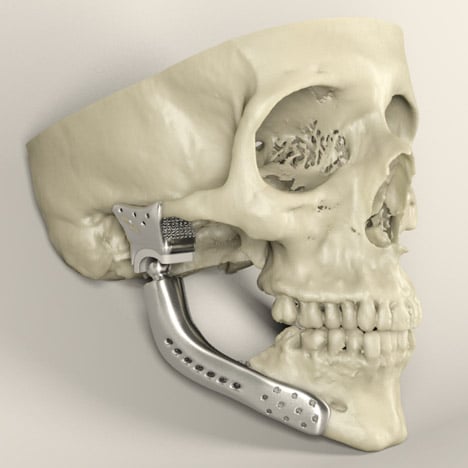
Metal has good toughness, fatigue resistance, and ductility, making it the most widely used type of biomedical materials. It’s mainly used for the treatment of tissues and organs such as bones, teeth and blood vessels.
The melting temperature of the metal is relatively high, and the printing process is highly demanding and challenging. Therefore, 3D printing of metal is generally processed by SLM and SLS. It is produced by metal powder under the irradiation of ultraviolet light or high-energy laser. The high temperature achieves the fusion of metal powders, and the required part is formed layer by layer.
At present, the metal materials used for biomedical 3D printing mainly include titanium alloys, cobalt-chromium alloys, stainless steels, and aluminum alloys. Medical researchers have used titanium alloy to print artificial bones and successfully implant them in human bodies. However, the disadvantage of this technology is that the metal materials suitable for 3D printing are too expensive for patients to bear.
Although metals have been widely used in the medical field due to their good characteristics, they are also subject to corrosion and abrasion after implantation, resulting in poor overall performance and inflammatory body reactions. And matching degree between metal material implants and living organisms is the current problem that needs to be solved in 3D printing medical metal materials.
Ceramic
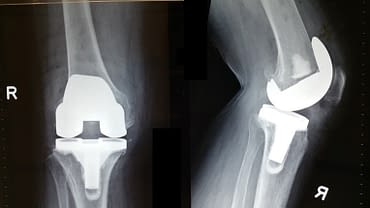
Ceramic materials have the characteristics of low density, high strength, high hardness, high-temperature resistance, corrosion resistance, and good chemical stability. They are mainly used in hard tissues such as oral cavity and bones.
The mainly used ceramic materials are bio-ceramics such as calcium phosphate, calcium di-orthosilicate, biphasic calcium phosphate, calcium silicate / β-tricalcium phosphate, etc. And they are divided based on their activity in the human body into three species: inertia bioceramics, active bioceramics, and absorbable bioceramics.
Calcium silicate ceramics have good biological activity and the ability to induce the deposition of bone-like apatite layers. After the hydroxyapatite bioceramic is implanted into the human body, its porous structure is conducive to blood circulation. Through its microporous structure, the blood provides nutrients for the new bone in the deep part of the hydroxyapatite and promotes the combination and growth of fibrous tissue and new bone. Such an excellent substitute for hard bone tissue.
Duplex calcium phosphate ceramic is a mixture of hydroxyapatite and calcium phosphate in a certain proportion, which has good biocompatibility, biological activity, and degradability. Guo Dagang’s research team at Xi’an Jiaotong University successfully used a rapid prototyping template to modulate a two-phase strontium-doped calcium phosphate ceramic bone scaffold. This ceramic scaffold improves degradability while ensuring strength.
The brittle and hard characteristics of ceramic materials increase the difficulty of processing and forming. Therefore, laser sintering is often used in 3D printing ceramic materials to melt the adhesive powder and make it adhere to the ceramic powder.
At the same time, the brittle and hard characteristics of ceramic materials are also one of the factors limiting their wider application in 3D printing technology in the biomedical field. Nanotechnology is expected to improve this shortcoming of bioceramic materials. Investigating of changing the distribution ratio of ceramic materials, researchers are incorporating nanotechnology into the research to prepare bio-applied ceramic powders for 3D printing.
Polymer Materials
In the field of biomedicine, metal materials and polymer materials are the two most used medical materials. Medical polymer materials are often used to make medical supplies, medicinal polymers and artificial organs that are directly used in the human body. Therefore, in addition to good processing properties and physical and mechanical properties, these materials must also have excellent biocompatibility.
In addition, because 3D printing technology requires a binder component as the “ink”, medical polymer materials used for 3D printing often require high curing speed, curing shrinkage, and the like. There are many types of biomedical polymer materials, of which polylactic acid, polyacrylonitrile, and polytetrafluoroethylene are the most commonly used polymer polymers.
In 2002, Malcolm N. Cooke et al. proposed a new method for manufacturing biodegradable polymer scaffolds for tissue engineering using SLA technology. In this experiment, biodegradable resin mixtures of dimethyl fumarate (DEF), polypropene fumarate (PPF) and a photoinitiator, and bisacylphosphine oxide (BAPO) were used as raw materials. A tissue engineering scaffold was successfully produced.
At present, there are many research and practical application cases of biomedical polymer materials, but the research in the field of biomedical 3D printing polymer materials is still in its preliminary stage. The cost of manufacturing 3D printers using medical polymer materials is relatively high. How to ensure that polymer materials meet the performance required for medical use while reducing costs is a difficult problem for researchers to focus on.

Living Cells
Living cells can be used as 3D bioprinting materials to directly print human tissues and organs. In the field of tissue engineering scaffolds, researchers use 3D printing technology to manufacture tissue engineering scaffolds, precisely control the size of the pores and match the cells, make the cells better adhere to the scaffold, and promote cell proliferation. Directly using living cells for printing, and using 3D printing technology to control the arrangement and distribution of cells at the microscopic scale, compared to planting cells in a formed scaffold, can achieve higher cell density.
However, the in vitro culture of cells requires the support of the outer matrix, so the material for 3D printing of cells is a uniform cell / extracellular matrix complex. Hydrogel and natural soft tissue extracellular matrix are similar in structure, composition, and mechanical properties. They have a highly expanded network structure, the ability to effectively encapsulate cells, good biological activity, and efficient mass transfer capabilities. It can provide molecularly customized biological functions and adjustable mechanical properties, and an extracellular matrix-like microenvironment for cell growth and tissue formation, making it a commonly used extracellular matrix for 3D printing of cells.
Hydrogels are prepared from a variety of polymer materials, including natural, synthetic, and natural/synthetic complex polymers. Common ones include alginate, gelatin, fibrin glue, collagen, hyaluronic acid, polypropylene glycol fumarate (PPF), polyurethane (PU), and polyoxyethylene (PEO).
In 2013, Heriot-Watt University team Alan Faulkner-Jones and others developed a cell printer for forming human embryonic stem cell spheroid aggregates and successfully used the human embryonic stem cells to print artificial liver tissue. However, the 3D printed tissues and organs have a short survival period, and further research is needed.
