
3D printing has quietly become one of the most versatile tools in a car enthusiast’s garage. What started as a hobby for tech-savvy tinkerers has grown into a practical solution for everything from replacing a broken wiper clip to fabricating bespoke interior modules that look factory-installed. Across online communities in China and beyond, car owners are sharing their prints, their failures, their iterations, and their wins — proving that you no longer need a factory, a mold, or a dealer to get the exact part you need. The following 12 cases, collected from real 3D printing fans, showcase the remarkable range of what is possible when desktop manufacturing meets automotive passion.
Case 1: 3D-Printed BMW Forced-Air Intake Duct
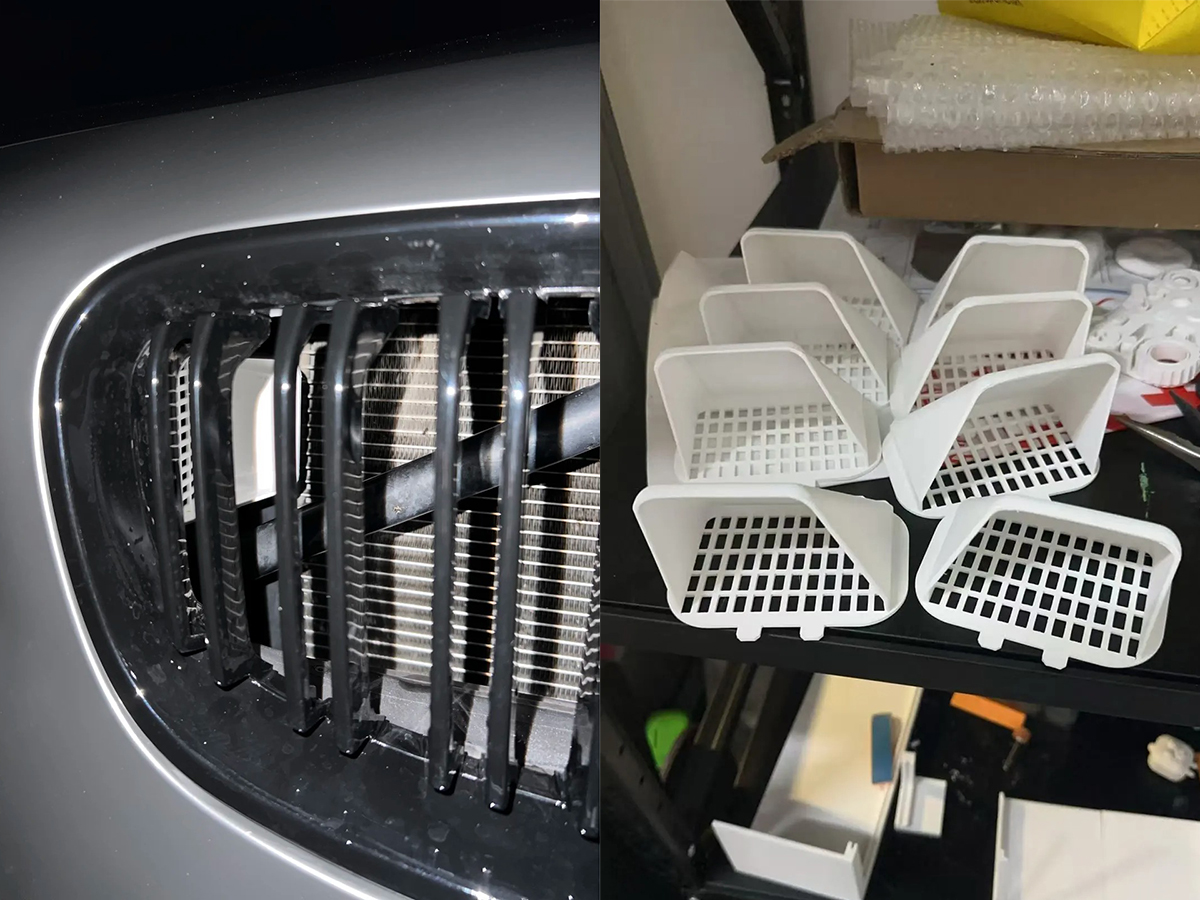
A BMW enthusiast designed and FDM-printed a custom ram-air intake duct that clips directly behind the kidney grille of F20 and F22 chassis cars. The funnel-shaped part channels outside air toward the engine bay, increasing the effective ram-air surface area.
The result: lower coolant temperatures under load and smoother airflow to the intake, a meaningful upgrade for turbocharged N13, B48, and N20 engines that run hot in traffic or on track days.
The design is universal across these engine variants, making it a single STL file that serves a wide range of 1-Series and 2-Series owners. What makes this project a perfect 3D printing use case is the geometry — a tapered duct with an integrated mesh grille is expensive to injection-mold for a one-off, and overkill to CNC from billet.
FDM in ABS or ASA delivers the heat resistance needed for an under-hood application at a fraction of the cost. The maker even batch-printed spares in white filament for friends, proving that once the design is validated, scaling from one to a dozen units is trivial.
Case 2: Magnetic Paddle Shifters Based on 3D Printing Prototyping
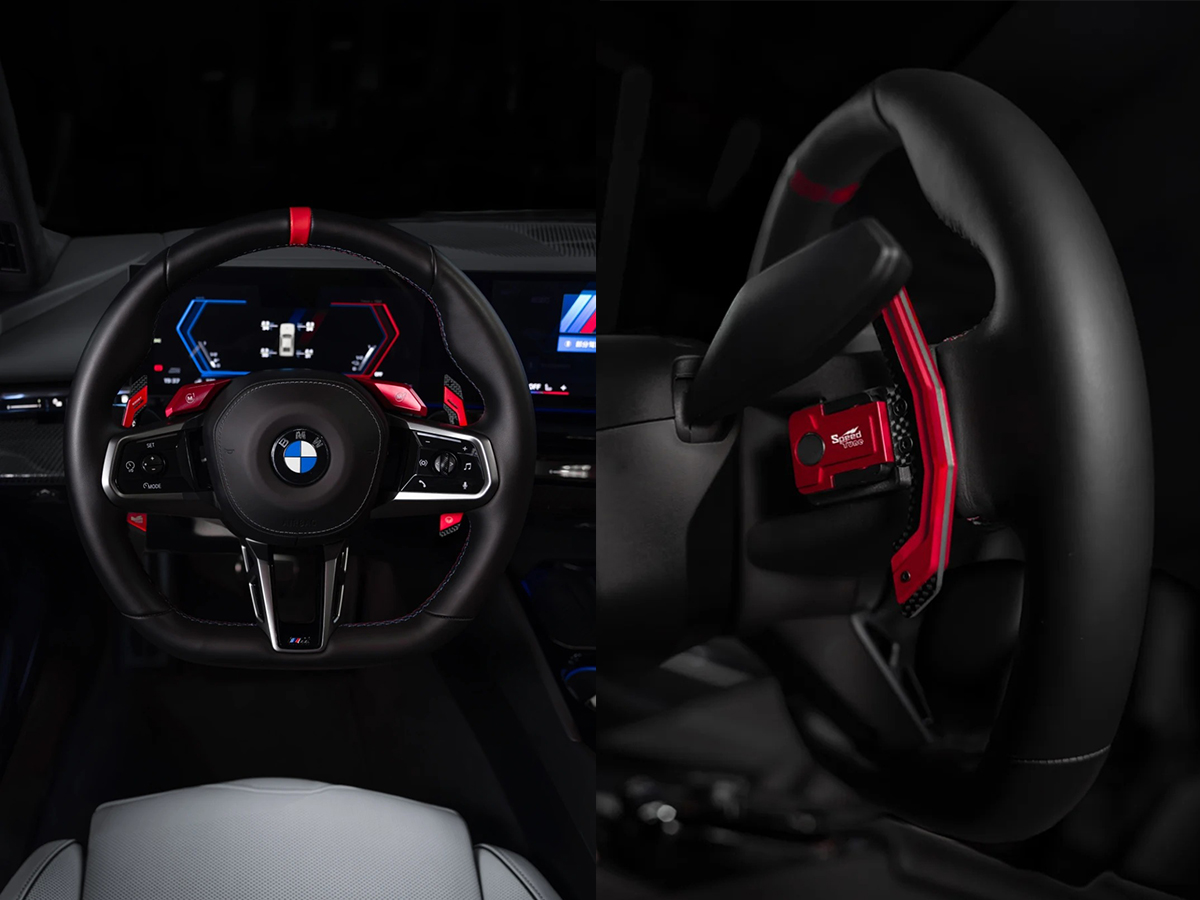
Many modern BMWs and Volvos ship without column-mounted paddle shifters, leaving enthusiast drivers stuck with a console gear selector that breaks the flow of spirited driving. SpeedTune Studio developed a magnetic paddle-shifter kit — CNC-machined from aerospace-grade aluminum and carbon fiber with N52 neodymium magnets — that clips onto the steering wheel in about 15 minutes.
The critical challenge was clearance: the paddles had to deliver a satisfying throw angle and crisp tactile “click” without fouling the headlight stalk or wiper lever on either side. That is where 3D printing proved indispensable during development. Every bracket, mounting boss, and paddle profile went through round after round of 3D-printed prototypes before the final CNC production tooling was committed.
By printing each revision overnight and test-fitting it in the car the next morning, the designer could fine-tune sweep angles, finger reach, and stalk clearance in days rather than the weeks that traditional prototype machining would require. The finished product fits the G60 5-Series, G90 M5, X1, X2, X3, 2-Series, and their M variants.
This is a textbook example of 3D printing as a rapid-iteration bridge to production: the printer does not make the final part, but without it, the final part could never have been perfected this quickly or affordably.
Case 3: 3D-Printed Replacement Trim Clips and Retainer Fasteners
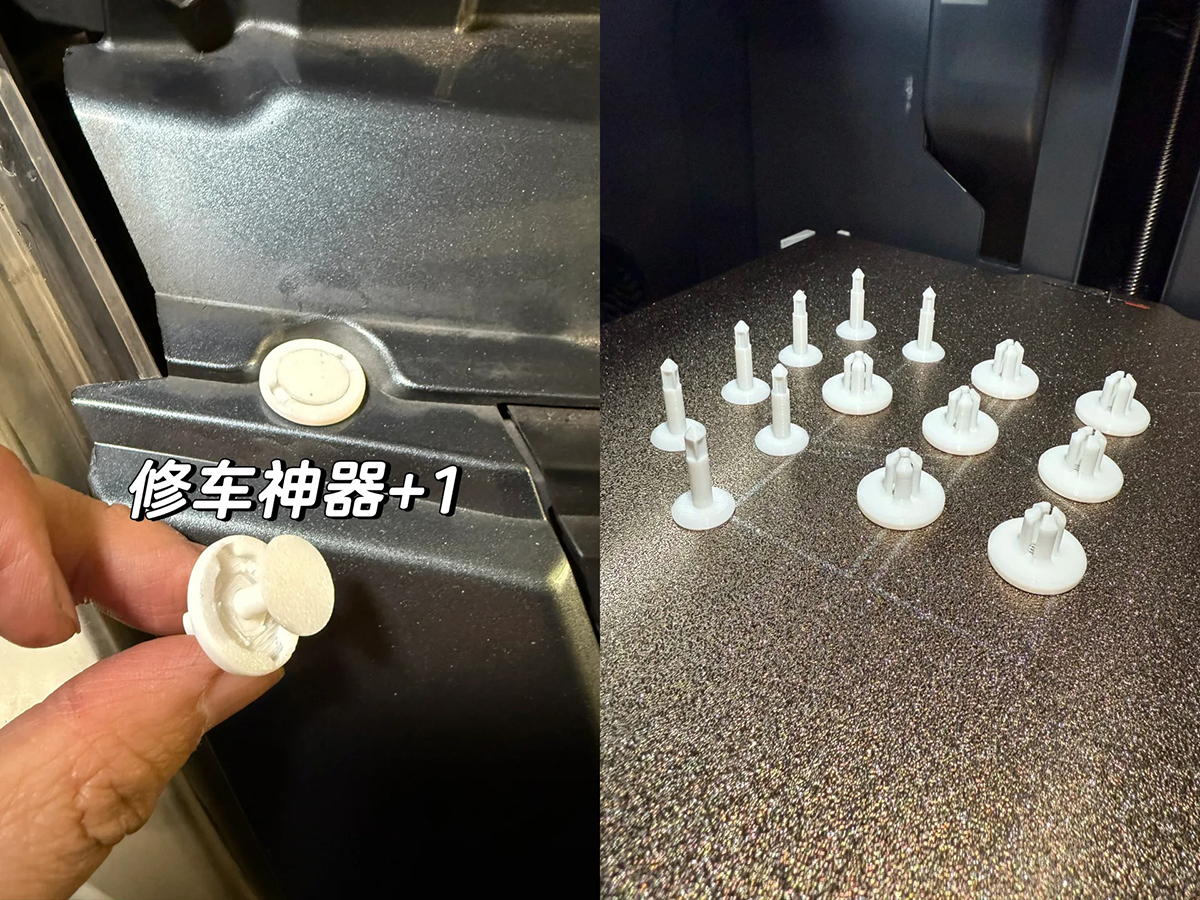
It is one of the most unglamorous yet universally relatable problems in car ownership: plastic trim clips that snap, go missing, or simply disintegrate with age. On older vehicles — ten-plus years on the road — these small retainer fasteners become brittle and crack the moment you try to remove an interior or underbody panel. Worse, many of the original part numbers have been discontinued, and sourcing exact replacements for niche models can be expensive or outright impossible.
An Australia-based automotive mechanic discovered that 3D printing solves this perfectly. Using a desktop FDM printer, he modeled and batch-printed push-pin retainer clips that snap into the original sheet-metal mounting holes with the same flush-head fit as the factory originals. What makes this case compelling is how small and cheap the part is, yet how disproportionately annoying it is when you cannot get one. A single OEM clip might cost several dollars from a dealer — if they even stock it — while a 3D-printed replacement costs virtually nothing in material and prints in minutes.
Case 4: 3D-Printed Nixie-Tube Clock and 50 W Wireless Charging Console for Zeekr 01
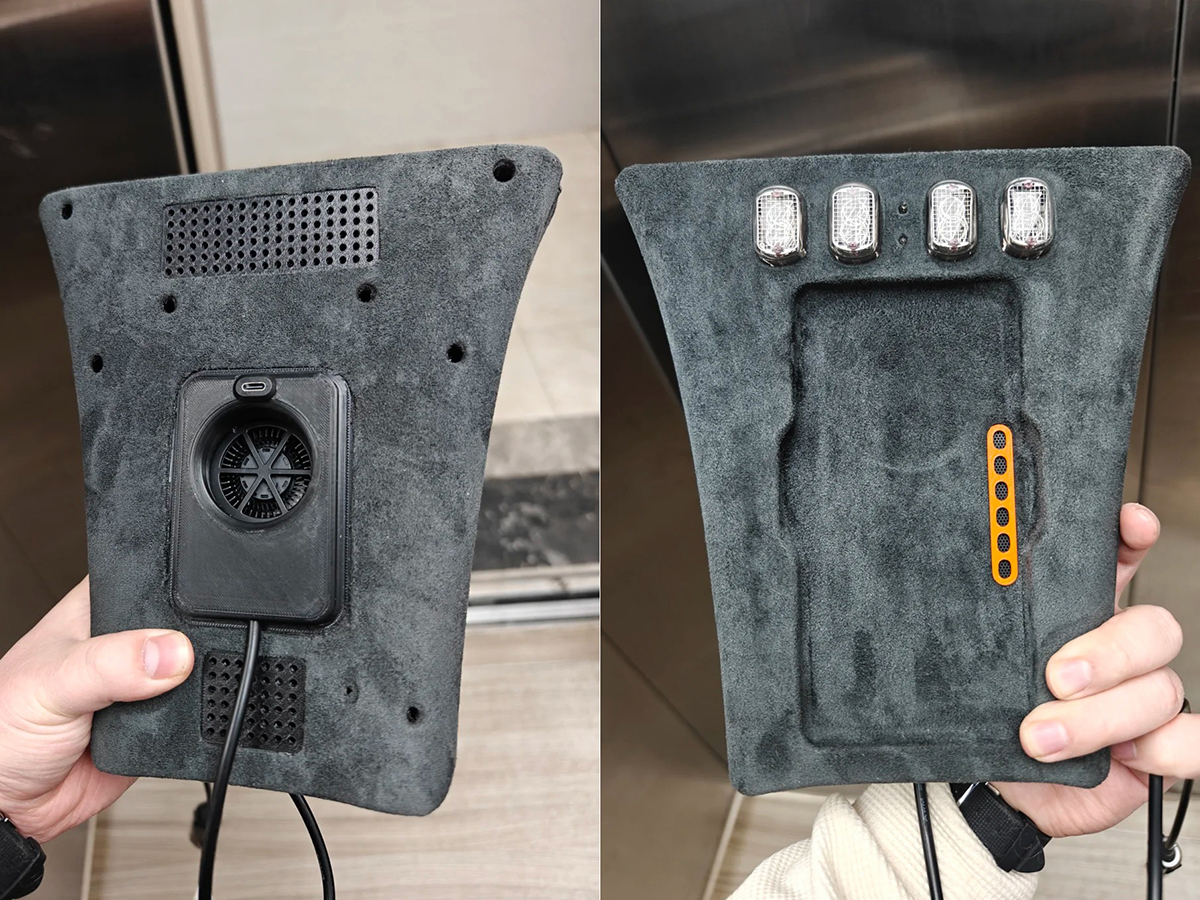
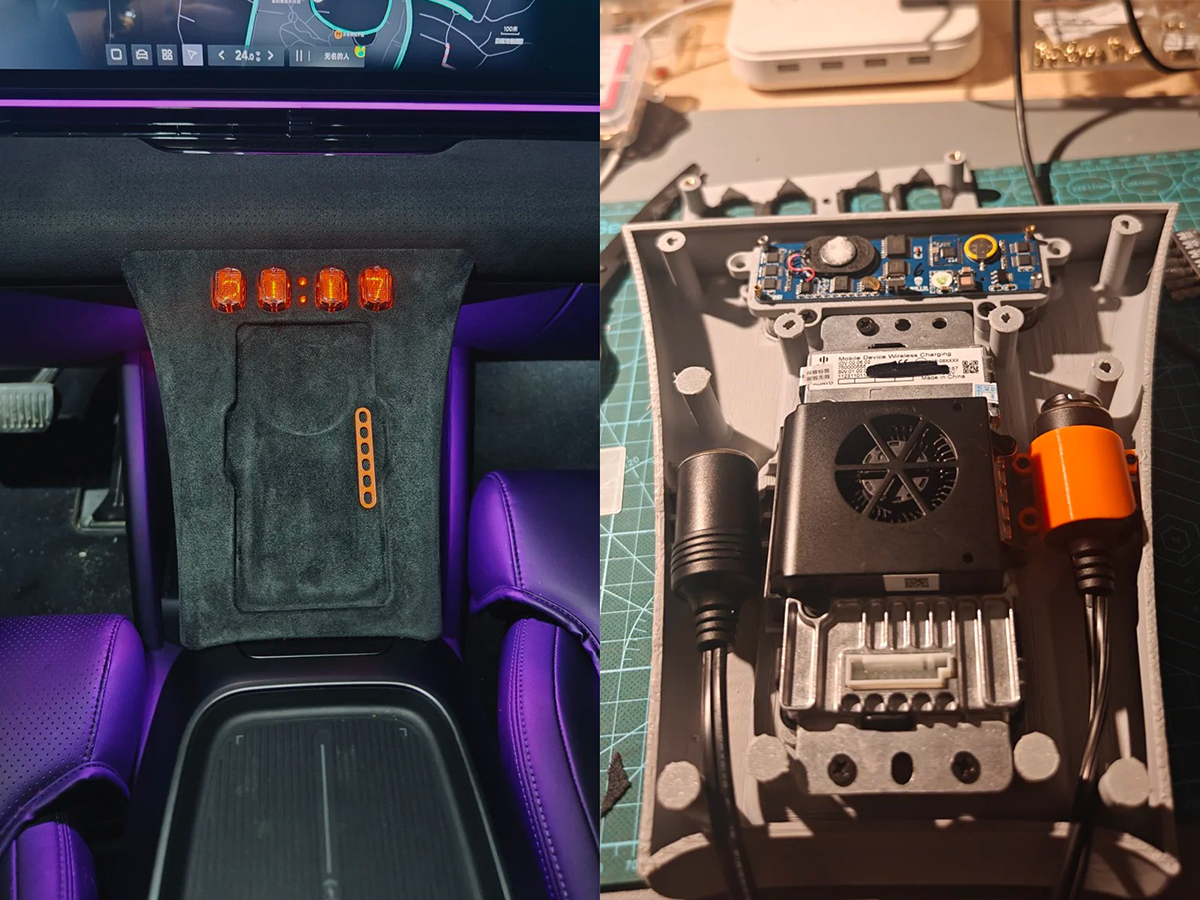
A designer-maker wanted a proper phone mount for his Zeekr 01 (Simo edition) but refused to settle for a generic clip-on holder. Instead, he combined three separate components — a set of Soviet-era-style Nixie glow tubes, a 50 W fan-cooled wireless charging module, and a 3D-printed structural chassis — into a single center-console panel that replaces the stock trim piece.
The front face is wrapped in Alcantara suede to match the car’s interior, with four Nixie tubes glowing warm orange along the top to display the time, a recessed phone cradle in the center for wireless charging, and an orange accent grille on the side for the cooling fan’s airflow. Ambient lighting at the base ties the whole assembly into the Zeekr’s purple cabin mood lighting. The result looks factory-installed, not DIY.
The 3D-printed chassis is the structural backbone that makes this multi-component integration possible. Visible in the workbench photos, the printed shell provides precision-located mounting bosses for the wireless charging coil, fan module, Nixie tube driver board, and USB-C input — all within a form factor that matches the OEM console opening exactly. No off-the-shelf enclosure could accommodate this combination of electronics in the exact footprint of the Zeekr’s center stack. The maker modeled everything to fit, printed the housing, test-fitted it in the car, and only then wrapped it in Alcantara for a premium finish.
Case 5: 3D-Printed Shift Boot Retainer Clip for Manual-Transmission Honda Civic
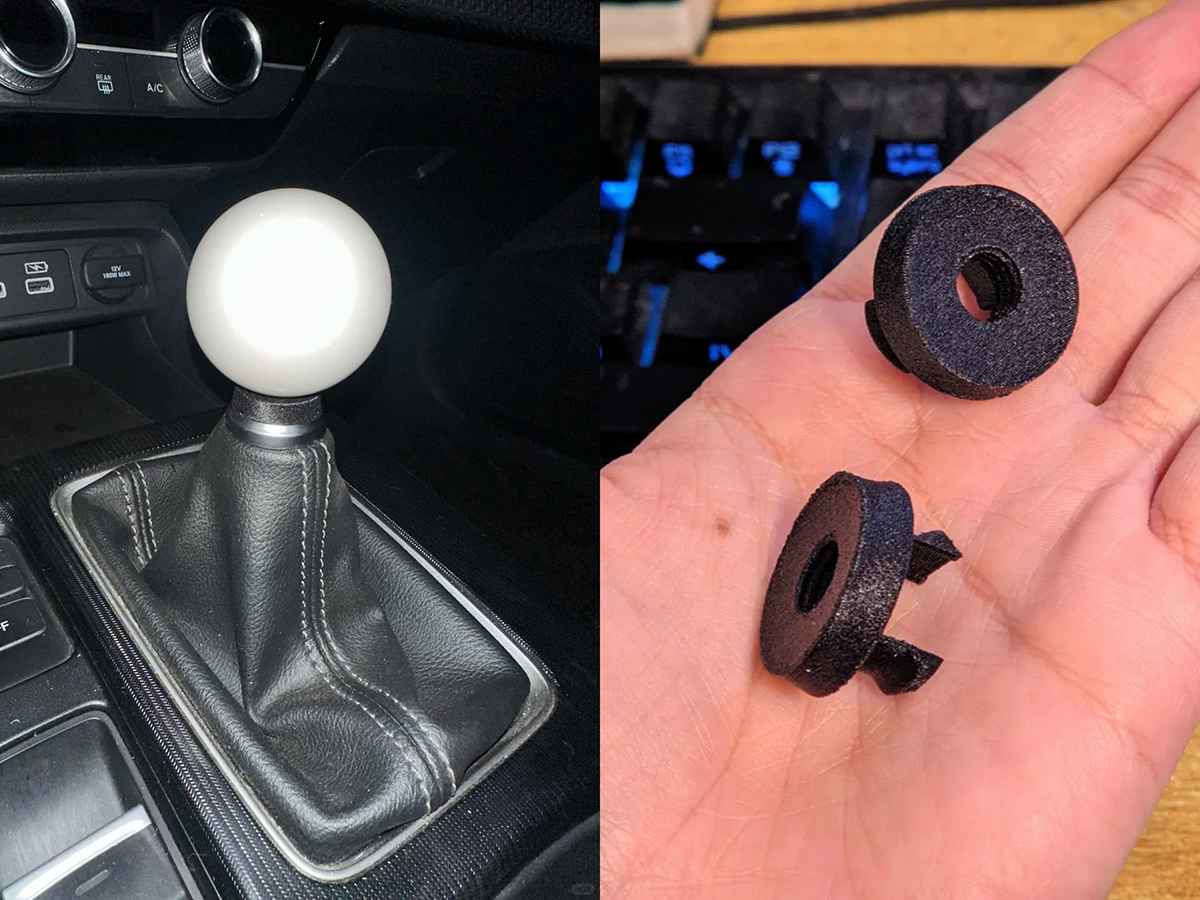
There is a frustrating problem: the shift boot on manual-transmission Honda Civic would not stay properly seated around the shift lever. The OEM retainer — a small clip that locks the leather dust boot to the shifter mechanism and keeps it from riding up or wobbling — had either broken or gone missing, and no straightforward replacement was available.
The maker took on the challenge, measuring the shifter assembly with calipers, modeling a replacement retainer from scratch, and iterating through three rounds of test prints before locking down the final design. The finished parts are tiny — coin-sized discs with integrated snap tabs — but they solve the problem completely: the boot now sits flush and firm, with zero play.
The final retainer was printed in PETG-GF (glass-fiber-reinforced PETG), chosen specifically for its combination of heat resistance and rigidity in the warm environment around a center console. To address Z-axis layer strength — a common weak point for small functional clips printed in FDM — he printed the parts at an angle, orienting the snap tabs so that the clamping force works across layers rather than trying to peel them apart. The threaded features and snap-fit tabs all held tight on the first test install.
As the maker put it, this is exactly what 3D printing is for: lowering development cost, enabling rapid experimentation, and dialing in fit tolerances across multiple revisions — something that would be absurd to do with injection molding for a single pair of clips.
Case 6: 3D-Printed Quarter Window Diorama Display
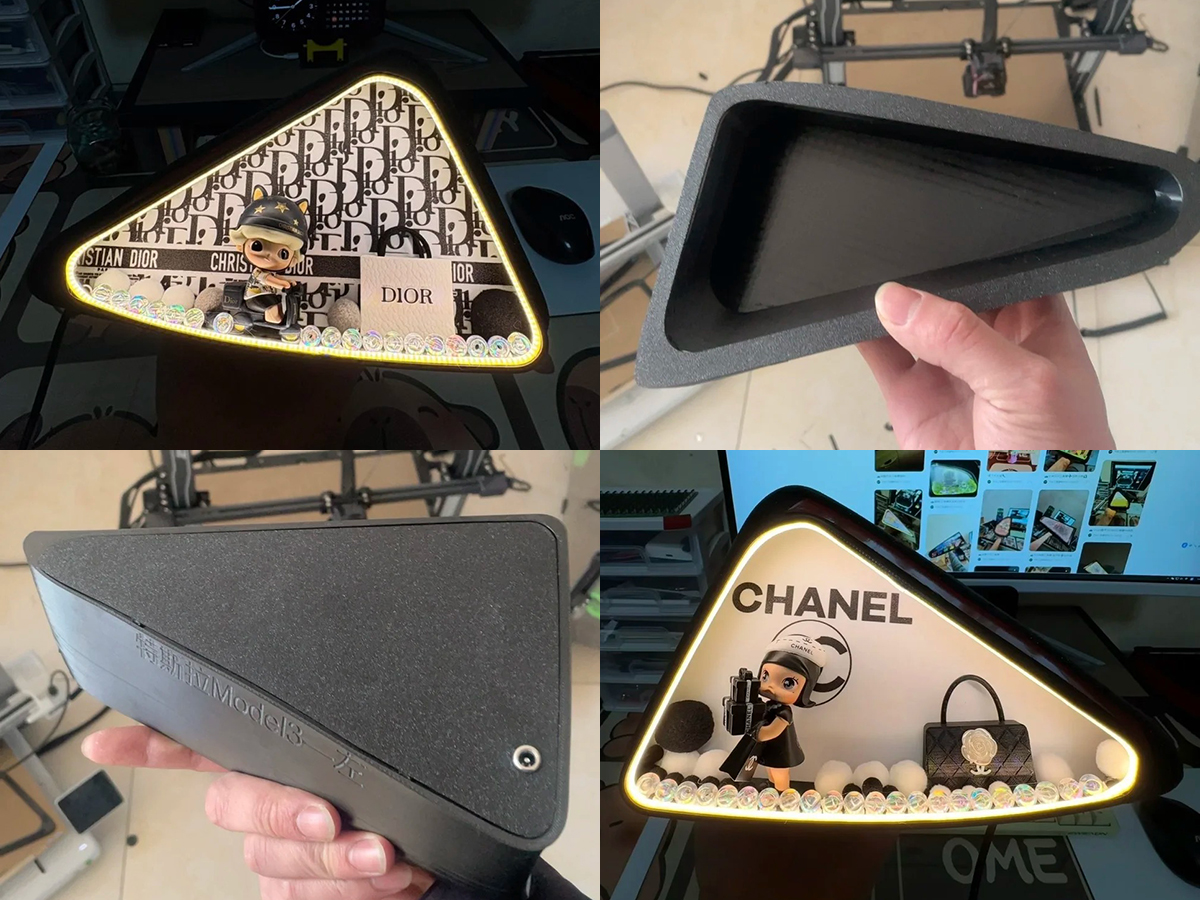
The small triangular quarter windows on cars have long been overlooked — until now. 3D printing enthusiasts have found a way to turn these idle glass panels into miniature stages for self-expression. By designing and printing custom-fit triangular frames (tailored to specific car models like the Tesla Model 3), creators build tiny diorama scenes inside them, complete with themed backdrops, collectible figurines, artificial flowers, and even integrated LED strip lighting powered via USB. The frames are modeled in CAD, sliced in tools like Orca Slicer, and printed in matte black filament for a factory-finished look. They attach to the window with nano adhesive tape, making them fully removable without damaging the car.
The creative possibilities are virtually endless. Some owners go for a luxury brand aesthetic — arranging miniature handbags and fashion figurines against branded backdrops — while others opt for a softer, artistic vibe with roses, butterflies, and blind-box dolls. The warm glow of the embedded LED strips turns each quarter window into an eye-catching display, especially at night.
Case 7: 3D-Printed GTA V Los Santos Customs Garage Diorama
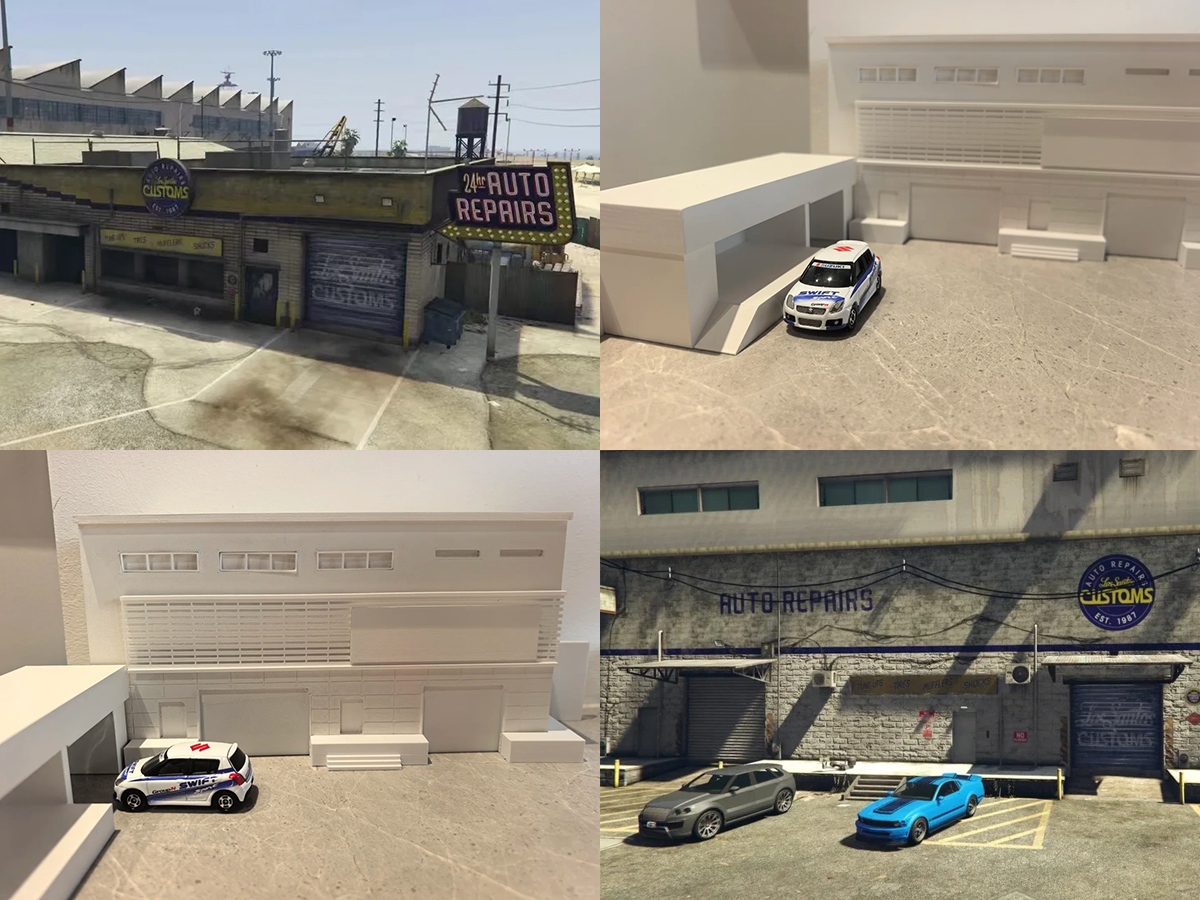
One self-taught 3D printing enthusiast decided to bring the virtual world into reality by recreating the iconic Los Santos Customs garage from Grand Theft Auto V. Inspired by YouTuber Art Beruang’s detailed diorama work, the maker modeled the building facade in SketchUp and printed it on a desktop FDM printer — complete with the garage bays, upper-story windows, brick texturing, and exterior stairs that fans of the game will instantly recognize.
The creator candidly shared the project as a “failed version,” noting that printing the building as a solid piece rather than modular, layered sections wasted material and made it harder to add detail. Still, the unpainted white prototype already captures the proportions and architectural character of the in-game location surprisingly well when paired with a die-cast Suzuki Swift parked in front.
Anothe maker showed a fully finished version of the same concept — painted, weathered, and populated with miniature figures, a Rottweiler, trash cans, ivy-covered walls, and multiple die-cast cars — transforms the 3D-printed shell into a stunningly lifelike scene that looks like a screenshot pulled straight out of the game. The building becomes a proper 1:64 scale diorama backdrop, turning a shelf of Hot Wheels into a storytelling stage.
Projects like this show how 3D printing lowers the barrier for hobbyists to go from “I wish I could build that” to actually holding a physical replica in their hands, iterating on each version as their skills grow.
Case 8: 3D-Printed BMW M4 GT3 in Marble Filament
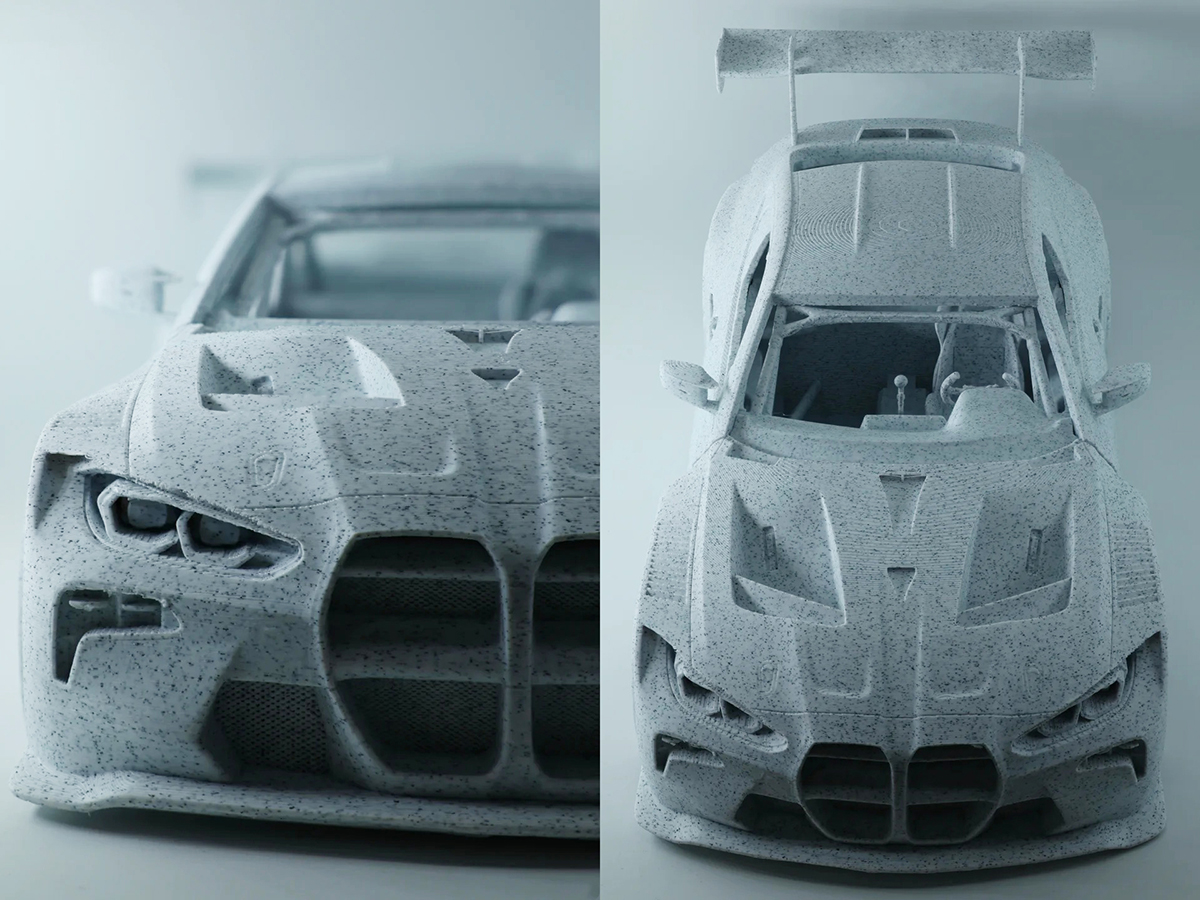
Sometimes the cars we love most are the ones we will never get to drive. For maker WaitingLab, the BMW M4 GT3 race car was exactly that — an unattainable dream machine. The solution? Print one.
Using a marble-effect PLA filament that gives the model a striking granite-like texture, WaitingLab produced an oversized M4 GT3 that weighs nearly 1 kilogram. The 3D model captures the GT3’s aggressive widebody kit in remarkable detail: the signature oversized kidney grilles, complex hood vents, sculpted side intakes, multi-spoke racing wheels, and a towering rear wing are all faithfully reproduced. The speckled stone-like finish turns what could be a typical grey print into something that looks like a miniature marble sculpture, giving the model an unexpectedly premium, gallery-worthy aesthetic.
The technical execution behind this print is worth noting. WaitingLab used a 0.4mm nozzle with an ultra-fine 0.08mm layer height to achieve smooth surfaces, explaining in the comments that a smaller 0.2mm nozzle tends to clog when running marble filament due to its mineral-particle content. To handle the complex overhangs — particularly on the underside of the hood and around the cabin area — a dual-extruder setup with dissolvable support material was employed, making support removal clean and effortless.
Case 9: Custom Cup Holder for the Polestar 4
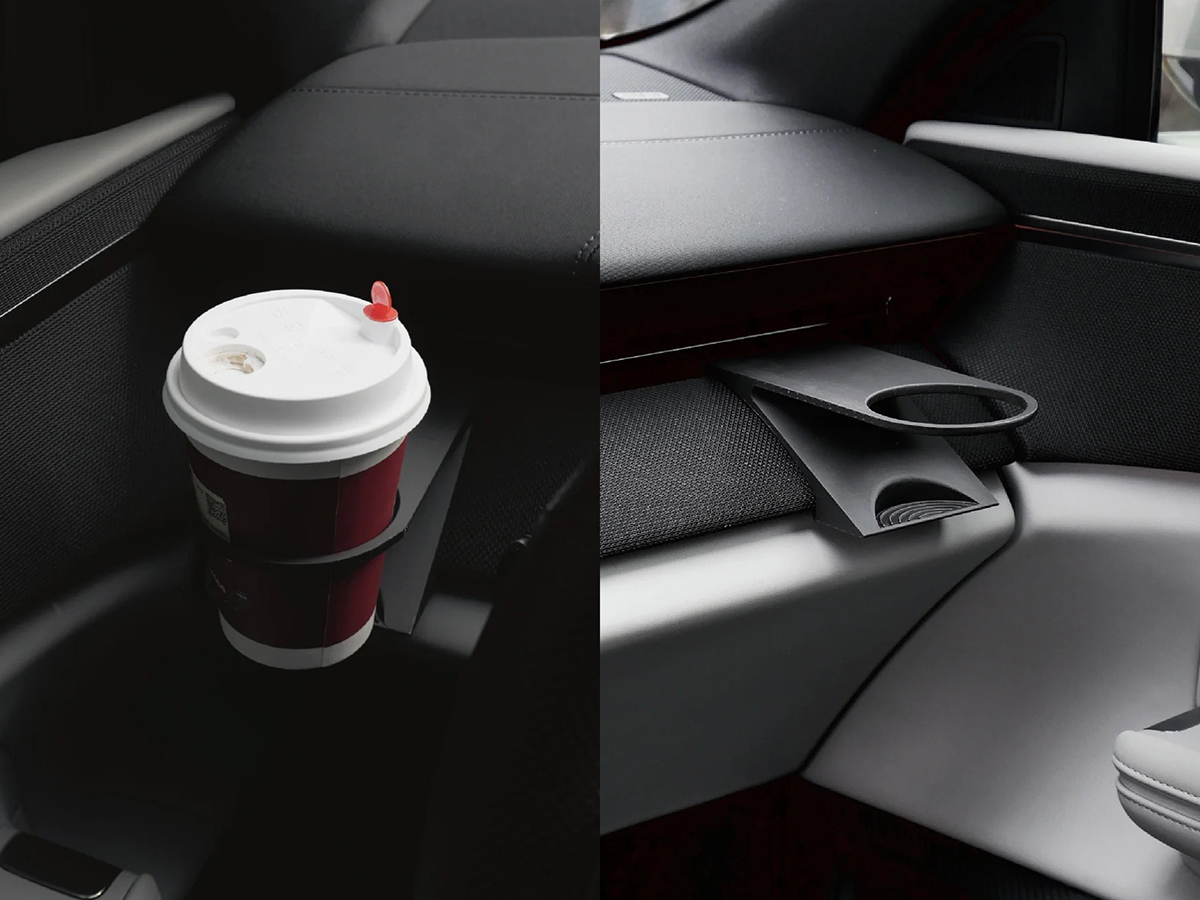
The Polestar 4 is a striking electric vehicle, but like many design-forward cars, it sacrifices some everyday conveniences for aesthetics — including a properly placed cup holder. One resourceful Polestar 4 owner, going by the handle “Star Gazer,” decided to take matters into their own hands with the motto: “We niche car owners just make whatever we’re missing.”
The result is a sleek, minimalist 3D printed cup holder that clips onto the center console, perfectly sized for a coffee cup. Printed in black PLA on a Bambu Lab P1S, it blends seamlessly with the Polestar’s dark interior and looks almost like an OEM accessory. The print took just over two hours with a 0.2mm layer height and 20% infill.
What makes this project relatable is the real-world problem-solving on display. Community feedback was practical too: one commenter pointed out the two sharp points at the bottom edge could jab into knees during summer driving with shorts, prompting the creator to consider rounding them off in a future revision.
Case 10: 3D-Printed BMW M Brake Disc LED Lamp
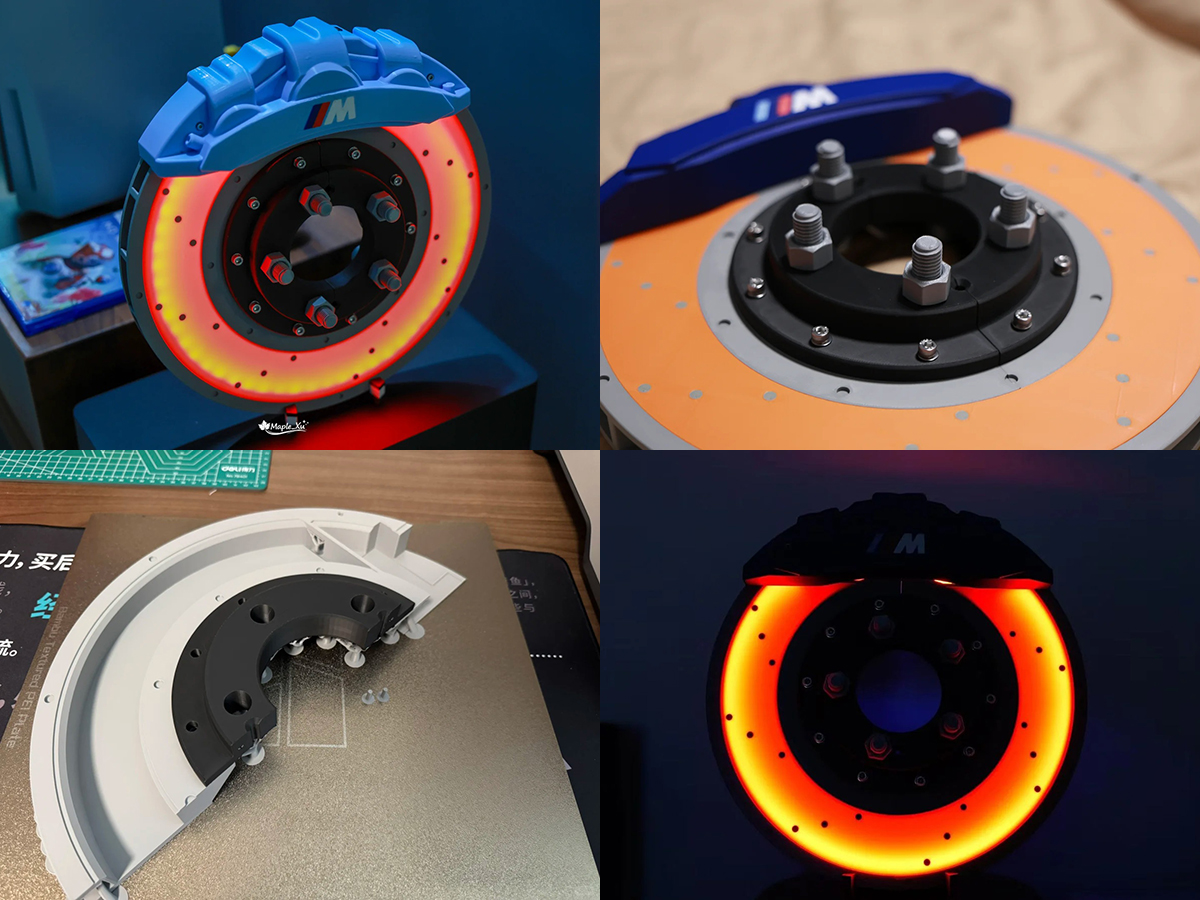
This is where 3D printing crosses from practical into pure automotive art. Maker Maple_Xu built a full-size BMW M brake disc replica complete with an LED-illuminated rotor ring and a detailed multi-piston caliper bearing the iconic M tri-color badge.
The rotor glows a hot red-orange through its ventilation holes — simulating the look of a brake disc under hard track braking — powered by a 1-meter LED strip and a compact 5000mAh USB power bank hidden inside the assembly. The caliper is printed in blue, while the black center hub with hex bolts and washers gives it a convincingly mechanical feel. The whole piece sits on a small printed stand, turning it into a striking desktop lamp or shelf display.
What stands out is the build’s complexity and the creator’s candid documentation of the journey. The project consumed roughly 30 hours of print time and nearly 1 kilogram of filament, with a total bill of materials around 100 RMB including screws, heat-set inserts, LED components, and the power bank. Maple credited a German designer for the original open-source model, noting with humor that no assembly instructions were included — “the cool guy just vibes and figures it out.”
Case 11: Center Console Cable Pass-Through for Volkswagen ID.3
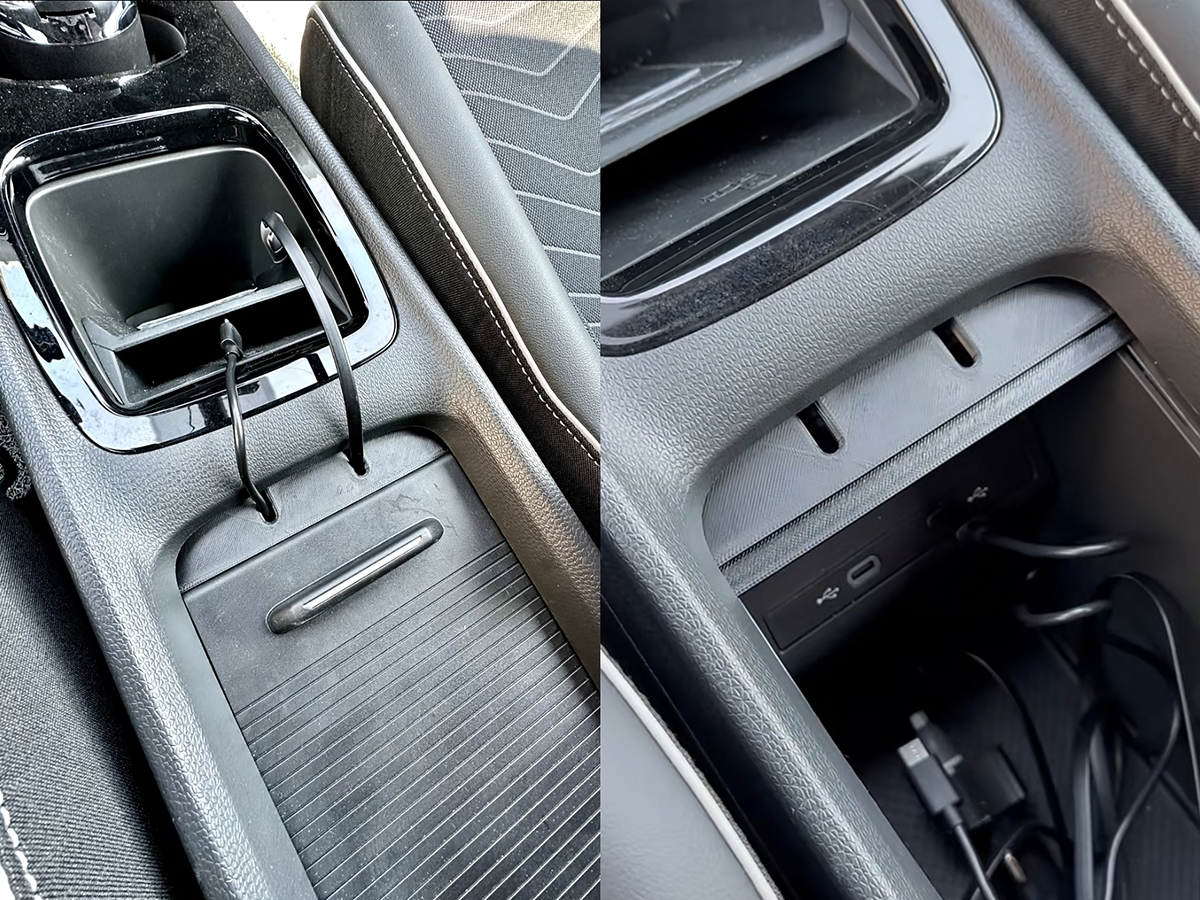
One common annoyance for VW ID.3 owners is routing charging cables through the center console — closing the lid often pinches the cables, causing damage over time and leaving the compartment looking untidy. This maker designed a clever 3D-printed cable pass-through insert that fits neatly into the console storage area. The part features two dedicated cable slots on the front face, allowing USB and charging cables to exit cleanly while the lid opens and closes without any obstruction. As the creator proudly noted: “The lid can open and close normally — no more getting pinched!”
Case 12: 3D-Printed Windshield Wiper Clip for Peugeot/Tesla
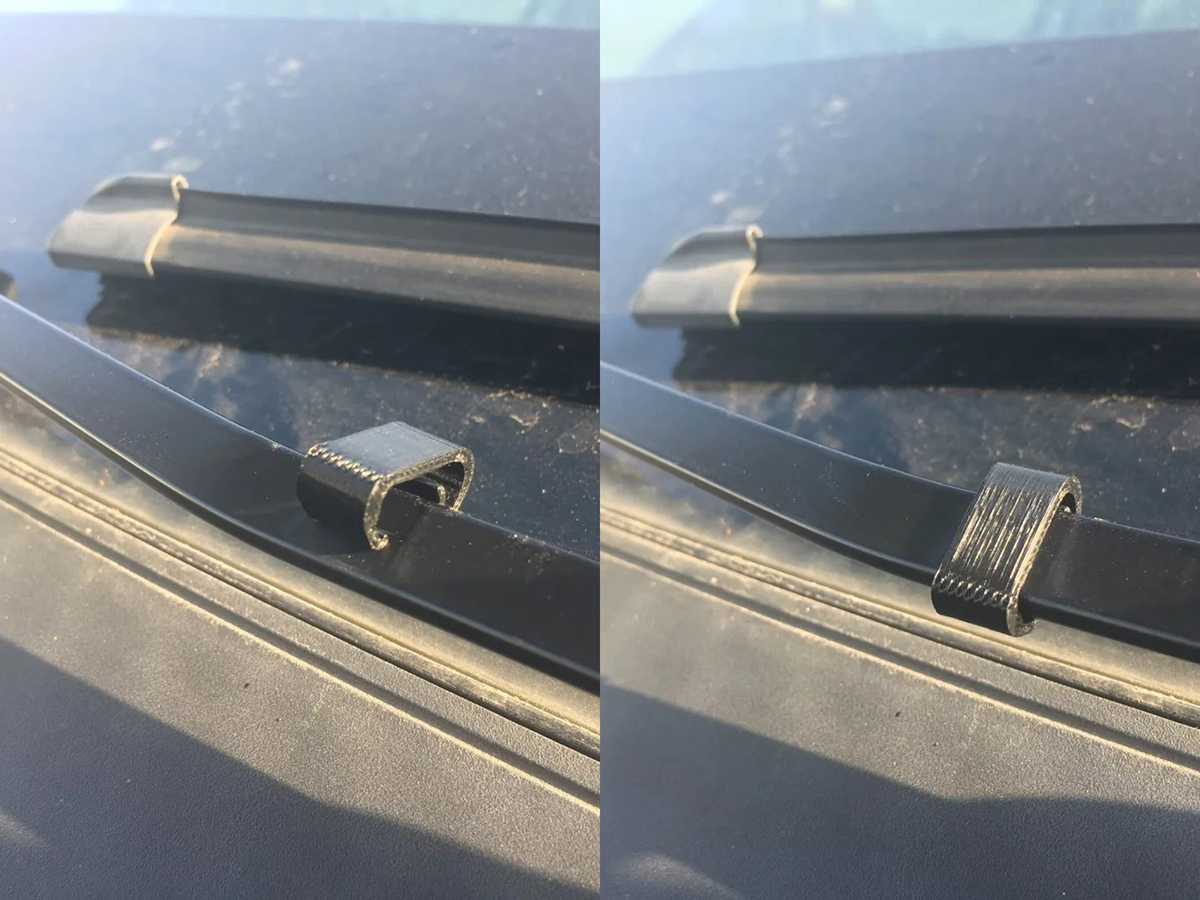
A Peugeot owner was pleasantly surprised to discover that 3D printing had found its way into their car. A fellow enthusiast in an online car group designed and printed a small but essential windshield wiper retaining clip — the kind of tiny plastic part that tends to break or go missing over time.
The 3D printed clip was shared as a freebie among group members, and the Peugeot owner immediately recognized it as the exact front wiper clip they needed. While the surface showed visible layer lines typical of FDM printing, the part fit perfectly and functioned just as intended once snapped into place.
Ready to Print Your Own Automotive Parts?
Whether you need a single replacement clip, a custom console insert, or a show-quality display piece, these 12 cases prove that 3D printing has earned its place in the car enthusiast’s toolkit. But not everyone has a printer at home — and not every project can be handled by a basic desktop machine. That is where FacFox comes in.
FacFox offers professional-grade 3D printing services in a wide range of materials — from tough nylons and glass-fiber composites for functional under-hood parts, to fine-detail resins for display models, to high-temperature ASA and polycarbonate for exterior and engine-bay applications.
Simply upload your STL or STEP file, choose your material and finish, and FacFox handles the rest: printing, post-processing, and shipping directly to your door. Whether you are prototyping a one-off bracket or producing a small batch of accessories for your car club, FacFox gives you factory-quality results without the factory. Turn your next automotive idea into a real, holdable part — visit FacFox and get an instant quote today.